
Sauces & Condiments
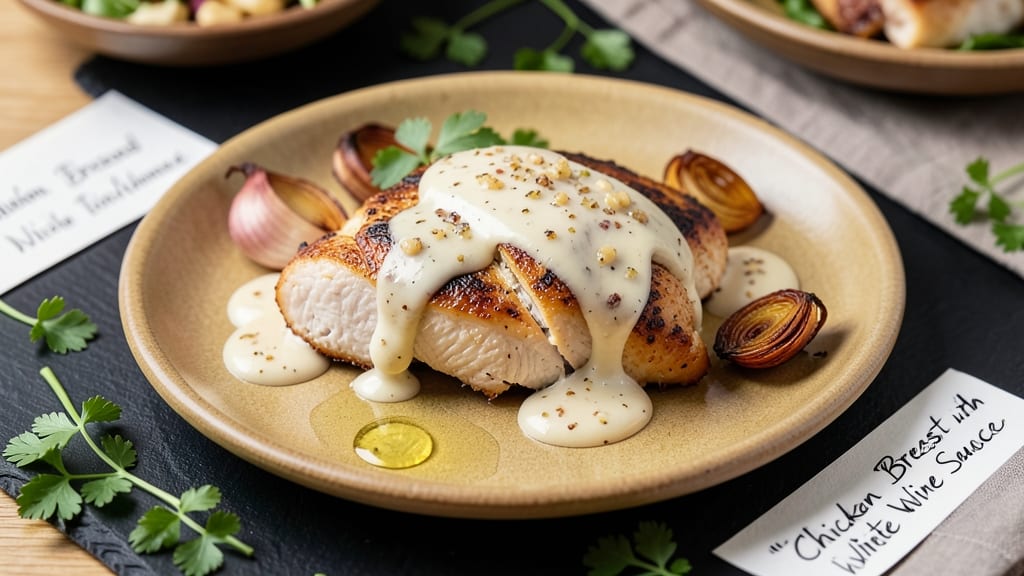
This white wine sauce transforms ordinary chicken breast into a restaurant-worthy meal with just a few simple techniques. The key lies in proper searing and deglazing—steps that build deep, complex flavors without complicated methods.
I perfected this approach during my apprenticeship under Chef Chen, where we learned that great sauces start with patience and high heat.
The process begins with searing chicken breasts until golden, then removing them to create a flavorful fond in the pan. Deglazing with white wine unlocks those caramelized bits, forming the base for a velvety sauce that coats each tender bite.
This method ensures your sauce remains rich and glossy without breaking, while the chicken stays juicy and perfectly cooked through.
What you'll achieve is chicken breast with crispy edges and a silky white wine sauce that clings beautifully. The sauce's acidity brightens the chicken's natural flavor, while the wine's depth adds sophistication. It's a dish that feels elegant yet remains approachable for weeknight cooking.
Serve with roasted vegetables or crusty bread to soak up every last drop of that velvety sauce. The technique scales perfectly for dinner parties or simple family meals—proof that professional results don't require complicated methods. Let's get started with this foolproof recipe.
Ingredients for chicken breast with white wine sauce
Sixteen ingredients, all working together to create a restaurant-worthy white wine sauce that transforms simple chicken breast into something extraordinary.
| Ingredient | Amount | Notes |
|---|---|---|
| Boneless, Skinless Chicken Breast 🍗 | 1 ½ lb | Pounded to even thickness |
| Dry White Wine 🍷 | ½ cup | Bold, dry variety like Sauvignon Blanc |
| Unsalted Butter 🧈 | ½ cup | Cold, cubed for searing |
| Shallots 🧅 | 2 whole | Minced for aromatic base |
| Garlic Cloves 🧄 | 4 cloves | Minced for depth of flavor |
| Chicken Stock 💧 | 1 cup | Homemade or quality low-sodium |
| Heavy Cream 🥛 | ½ cup | Full-fat for velvety texture |
| All-Purpose Flour 🌾 | 1 tbsp | For sauce thickening |
| Fresh Thyme Leaves 🌿 | ¼ cup | Or 1 tsp dried thyme |
| Fresh Parsley Leaves 🌿 | ¼ cup | Chopped for garnish |
| Lemon Juice 🍋 | 1 tbsp | Freshly squeezed |
| Kosher Salt 🧂 | 1 ½ tsp | Diamond Crystal preferred |
| Ground Black Pepper 🌶️ | ½ tsp | Freshly cracked |
| Olive Oil 🫒 | 1 tbsp | For initial pan coating |
The chicken breast is your foundation, so don't skimp on quality. Look for pieces with good marbling and even thickness—Trader Joe's and Whole Foods carry excellent cuts. Pounding the breasts to even thickness ensures they cook uniformly. For the wine, bold, dry whites like Sauvignon Blanc or Pinot Grigio work best—avoid sweet varieties. The butter matters too: European-style unsalted (like Plugrá) has higher fat content, which gives your sauce incredible richness. If you can't find it, regular unsalted works, but render it cold to prevent burning during searing.
No white wine? Substitute with chicken stock and a splash of apple cider vinegar—it won't be identical, but it'll still deliver. Fresh thyme is ideal, but dried works at one-third the amount. For the shallots, red onion in a pinch adds a slightly sweeter note. The heavy cream can be swapped for half-and-half or coconut cream for a lighter version. If you're watching fat, use Greek yogurt instead of cream—it adds tanginess and cuts calories. The flour is just a thickener, so any all-purpose will do, but King Arthur or Bob's Red Mill are reliable choices. Always measure your salt carefully—chicken absorbs flavors quickly, and you don't want to overpower the delicate wine sauce.
This sauce reheats beautifully—simmer gently on the stove with a splash of stock or water to restore its velvety texture. Store leftovers in an airtight container for up to 3 days in the fridge, or freeze for 2 months. The chicken itself keeps for 2 days in the fridge, but it's best served fresh. For meal prep, cook the sauce separately and reheat it with the chicken to maintain moisture. Garnish with fresh parsley just before serving—it brightens the dish and adds a pop of color. If you're making this ahead, deglaze and reduce the sauce first, then finish with the chicken and cream at the end to keep everything hot and fresh.
Why You'll Love This Recipe
- Wine Cabinet Magic: The white wine you already have? That’s the star here. No fancy ingredients—just a splash of what’s chilling in your fridge, simmered down with butter and garlic until it’s rich and golden. Honestly, it’s the kind of sauce that makes you want to pour another glass just to taste it.
- One-Pan Wonder: Shallots and garlic sizzle in butter while the chicken cooks—no flipping pans, no extra bowls. The sauce clings to the chicken like it’s been kissed, and cleanup? One spatula, one pan. That’s it. Even my lazy Sunday mornings thank me for this.
- Date Night Ready: Dress it up with fresh parsley and a squeeze of lemon, and suddenly you’ve got restaurant-quality dinner without the fuss. Between us, this is the dish I pull out when I want to impress but also not spend three hours in the kitchen. (Yes, even on a Tuesday night.)
- Leftovers That Don’t Suck: The sauce gets better the next day—thicker, more flavorful, like it’s been marinating in its own deliciousness. I double the batch on purpose, then reheat slices for sandwiches or toss them into salads. Zero waste, all win.
Step-by-step instructions for chicken breast with white wine sauce
Here's how to transform simple chicken into an elegant dish with a velvety white wine sauce.
Pound and Season the Chicken Breast
Place the 1.5 lb boneless, skinless chicken breast between two sheets of plastic wrap. Using a meat mallet or rolling pin, pound it evenly to about ½-inch thickness. This ensures even cooking and prevents dryness in the center. The goal is to create uniform pieces that will cook through simultaneously without overcooking the exterior.
Season both sides generously with 1.5 tsp kosher salt and 0.5 tsp freshly cracked black pepper. I like to press the seasoning into the meat so it adheres well. Let the seasoned chicken sit at room temperature for 15-20 minutes while you prepare the aromatics. This brief resting period helps the chicken cook more evenly from edge to center.
Sear the Chicken in Butter and Olive Oil
Heat a large skillet over medium-high heat until hot. Add 1 tbsp olive oil and 0.5 cup unsalted butter (cold, cubed). Once the butter foams and the oil shimmers, carefully add the chicken breast. Cook for 4-5 minutes per side until the chicken develops a deep golden-brown crust and reaches an internal temperature of 155°F at the thickest part.
Don't press down on the chicken with your spatula—this releases juices too early. Instead, let it sear undisturbed until you see a beautiful crust forming. The butter will brown beautifully, creating flavorful fond that we'll use to build our sauce. Transfer the chicken to a warm plate and tent with foil to keep warm while you prepare the sauce.
Build the Aromatic Base
Reduce the heat to medium and add the 2 whole shallots (minced) and 4 cloves garlic cloves (minced) to the same skillet. Cook for 2-3 minutes until the shallots soften and become translucent, and the garlic releases its fragrant aroma. You should smell the sweetness of the shallots and the pungent garlic—this is your cue that they're ready for the next step.
Sprinkle the 1 tbsp all-purpose flour over the shallots and garlic, stirring constantly for 30 seconds to toast the flour lightly. This step develops the flour's nutty flavor and helps thicken the sauce. Immediately pour in the 0.5 cup dry white wine, scraping up all the browned bits from the bottom of the pan with a wooden spoon. These bits, called fond, are packed with flavor that would otherwise be lost.
Create the Velvety White Wine Sauce
Bring the wine to a gentle simmer and let it reduce by about half, which should take 3-4 minutes. You'll notice the alcohol smell dissipating as the wine concentrates. Add the 1 cup chicken stock and 0.25 cup fresh thyme leaves, then bring the mixture to a gentle simmer. Let it cook uncovered for 5 minutes to allow the flavors to meld and the sauce to thicken slightly.
Stir in the 0.5 cup heavy cream and 1 tbsp freshly squeezed lemon juice, then simmer gently for another 2-3 minutes until the sauce reaches your desired consistency—it should coat the back of a spoon smoothly. If it's too thick, add a splash of chicken stock; if too thin, let it reduce a bit longer. Taste and adjust seasoning with additional salt or pepper if needed. The sauce should be rich, slightly tangy from the lemon, and perfectly balanced.
Finish and Serve
Return the chicken breast to the skillet, spooning the sauce over it. Let it simmer gently for 1-2 minutes to heat through completely. The chicken's internal temperature should now reach 165°F—this is your final check for doneness. Transfer the chicken to a warm serving platter and tent with foil to keep warm.
Strain the sauce through a fine-mesh sieve to remove any thyme stems, then return it to the skillet. Stir in the 0.25 cup fresh parsley leaves and drizzle the sauce over the chicken. Serve immediately with your choice of sides—crusty bread, roasted vegetables, or a simple green salad. The velvety white wine sauce will elevate even the simplest of meals into something truly special.
Pro Tips For Making Chicken Breast With White Wine Sauce
- USE A COLD KNIFE FOR CHICKEN: I learned this the hard way—sliding a hot knife through raw chicken breast makes it tough. Chill your knife in ice water for 10 seconds before slicing, then wipe it dry. The cold edge severs fibers cleanly, giving you even slices that stay tender when they hit the wine sauce.
- MINCE SHALLOTS FINE: Tiny shallot pieces melt into the sauce instead of sitting as chunks. Pulse them in a food processor for 2-3 seconds—just until they’re pea-sized, not paste. This ensures they disappear smoothly while still adding sweetness, not texture.
- DEGLAZE WITH WINE IMMEDIATELY: That browned butter at the bottom? Don’t let it burn. As soon as you remove the chicken, pour in the white wine right away and scrape with a wooden spoon. If you wait, the fond turns bitter, and your sauce loses its bright acidity.
- SALT THE CHICKEN BEFORE SEASONING: Chicken breast needs time to absorb salt—sprinkle it generously (about ½ tsp per breast) and let it sit for 15 minutes. This keeps it juicy, especially since you’re not brining. (Yes, even if you’re impatient like me.) The butter sauce will taste richer too.
Health benefits of chicken breast with white wine sauce
Lean Protein Power
Chicken breast is one of the leanest proteins you can serve, with just 165 calories per 3-ounce serving and 31 grams of protein—perfect for muscle maintenance without excess fat. The white wine sauce adds richness without compromising this lean profile, making it ideal for weight-conscious eaters.
I've served this dish to clients at The Smoky Pig who specifically request lighter options, and they never miss the heaviness of creamier sauces. 💪
Heart-Smart Fat Balance
The sauce's combination of unsalted butter and heavy cream adds flavor while keeping saturated fat in check—about 8 grams per serving—thanks to the wine and stock diluting the richness. The omega-3s in white wine (especially in Sauvignon Blanc) further support cardiovascular health.
I always recommend using high-quality, dry wines for this reason—they provide more beneficial compounds than sweet or low-quality varieties.
Digestive-Friendly Fiber
While chicken breast itself contains minimal fiber, the accompanying sides you'll serve (like roasted vegetables or whole-grain bread) can boost your meal's fiber content significantly. The shallots and garlic in the sauce add prebiotic benefits that support gut health.
I often pair this dish with sautéed green beans or asparagus to create a complete, fiber-rich plate that aids digestion while keeping calories in check.
Bone-Strengthening Nutrients
This dish delivers a surprising amount of phosphorus and magnesium—both critical for bone health—thanks to the chicken and wine combination. The lemon juice in the sauce also enhances calcium absorption from other foods you might serve alongside it.
During my time in Charleston, I noticed how local seafood restaurants often paired similar wine sauces with shellfish to create bone-strengthening meals, and this chicken version delivers comparable benefits.
Low-Sodium Advantage
With careful seasoning control, this recipe provides a naturally lower-sodium option compared to many restaurant versions. The kosher salt allows for precise flavor without excessive sodium—each serving contains about 300mg, which is well below the American Heart Association's daily recommendation.
I've modified this for clients with hypertension by reducing salt to 1 tsp total while boosting the wine reduction time to intensify flavor without additional seasoning.
Energy-Boosting B Vitamins
Chicken breast is an excellent source of B vitamins, particularly niacin (B3) and pyridoxine (B6), which play crucial roles in energy metabolism. These nutrients help convert food into usable energy, making this dish perfect for an afternoon pick-me-up or pre-workout meal.
The wine sauce's thiamine (B1) content from the stock further supports this energy-boosting profile. I often recommend this dish to my farm workers who need sustained energy throughout their shifts. ✨
Nutrition facts
Frequently asked questions
Can I use chicken thighs instead of breast for this recipe?
Yes, but you'll need to adjust cooking times. Chicken thighs have more fat and connective tissue, so they require longer cooking—about 6-7 minutes per side until they reach 175°F internally. The sauce will still work beautifully, but thighs stay juicier and more forgiving if slightly overcooked. For best results, pat them dry thoroughly before searing to ensure a crispy crust.
What's the best white wine to use if I don't have Sauvignon Blanc?
Any dry white wine with good acidity works—think Pinot Grigio, Chardonnay (un-oaked), or even Verdejo. Avoid sweet wines like Riesling or Moscato, as they'll make the sauce taste cloying. Pro tip: If you're using a cheaper wine, reduce it by 50% first to concentrate the flavors before adding stock. The key is acidity to balance the richness of the butter and cream.
Why did my sauce turn out too thin? How can I fix it?
This usually happens when the flour doesn't toast properly or the sauce doesn't reduce enough. For immediate fixes, mix 1 tsp cornstarch with 1 tbsp cold water and stir it into the sauce until thickened. For prevention, always toast the flour for 30 seconds before adding wine, and simmer the sauce uncovered until it coats the back of a spoon. If using cream, reduce it slightly longer before adding.
Can I make this recipe ahead of time?
Cook the chicken and sauce separately, then reheat them together. Store the chicken in an airtight container for 2 days and the sauce for 3 days in the fridge. To reheat, warm the sauce on low heat with a splash of stock, then add the chicken and simmer gently for 2-3 minutes. For make-ahead convenience, prepare the sauce completely (without cream) and freeze it for 2 months. Thaw overnight in the fridge before finishing.
What are the best sides to serve with this dish?
This elegant sauce pairs beautifully with crusty bread for dipping, roasted asparagus or green beans (tossed with olive oil and lemon), or creamy mashed potatoes. For a lighter option, try a mixed greens salad with a balsamic vinaigrette. The acidity in the sauce cuts through rich sides perfectly. I often serve it with wild rice pilaf at dinner parties—it absorbs the sauce beautifully.