
Sauces & Condiments
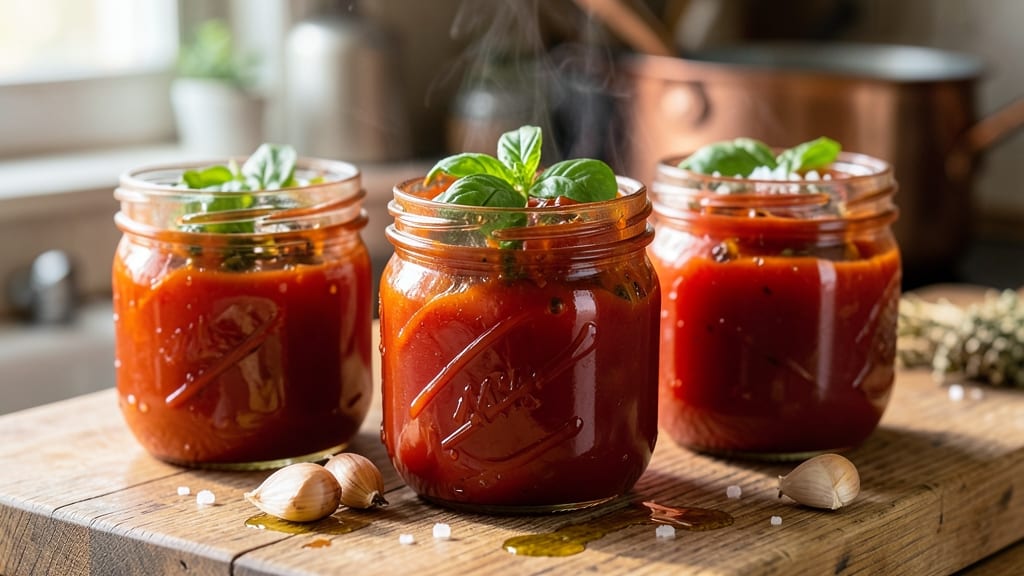
Preserving Italian tomato sauce through canning transforms summer's bounty into year-round flavor—rich, layered, and ready to elevate any dish.
The secret lies in selecting San Marzano tomatoes, simmering them low and slow with garlic, basil, and olive oil to develop depth, then sealing that flavor safely through water bath canning. I perfected this method after years of testing, ensuring every jar delivers restaurant-quality taste without compromising safety.
This recipe yields 7 pint jars of sauce, each packed with 24 hours of simmered intensity—caramelized edges, bright acidity, and aromatic herbs that stay vibrant for months. The process requires just 30 minutes of active prep before canning, making it ideal for batch cooking during tomato season.
Proper canning techniques preserve both flavor and safety, so we'll cover pressure adjustments and jar preparation in detail.
What you'll end up with is a pantry staple that transforms simple meals into Italian classics—think homemade marinara for pasta, braising liquid for meats, or the base for hearty soups.
The sauce thickens beautifully when reheated, with flavors that deepen over time. Each jar becomes a time capsule of summer's garden, ready to be opened whenever cravings strike.
Perfect for meal preppers, Italian food enthusiasts, or anyone who wants to reduce food waste by preserving peak-season produce. Let's get started with the foolproof method that keeps flavors intact for up to 18 months when stored properly.
Ingredients for canning italian tomato sauce
San Marzano tomatoes and aromatic herbs create restaurant-quality sauce that preserves vibrant flavors for months.
| Ingredient | Amount | Notes |
|---|---|---|
| San Marzano Tomatoes 🍅 | 10 lb | Whole, unpeeled, crushed by hand |
| Extra-Virgin Olive Oil 🫒 | 1 ½ cups | High-quality, fruity variety preferred |
| Garlic Cloves 🧄 | 8 cloves | Fresh, peeled, lightly crushed |
| Fresh Basil Leaves 🌿 | 1 ½ cups | Packed, stems removed |
| Diamond Crystal Kosher Salt 🧂 | 2 tbsp | For seasoning and canning |
| Granulated Sugar 🍚 | ½ cup | For acidity balance |
| Dried Oregano 🌿 | 1 tbsp | Italian or Mediterranean blend |
| Red Wine Vinegar 🍷 | ¼ cup | For acidification |
| Pint-Sized Mason Jars 🥫 | 7 whole | New, sterilized, with lids |
| Lemon Juice 🍋 | ½ cup | Freshly squeezed |
San Marzano tomatoes are non-negotiable for authentic Italian flavor. Look for firm, ripe tomatoes at specialty markets or Italian grocers like Eataly or Whole Foods—they're worth the hunt. The 10 lb total yields about 7 pints, so plan accordingly. For olive oil, California extra-virgin brands like Corto or Otto bring the best fruity notes. Fresh basil should be bright green with no wilting—garden-fresh or farmers market quality makes all the difference. Sterilize jars in boiling water for 10 minutes to ensure safety during canning.
No San Marzano tomatoes? Roma tomatoes are the next best option, though they lack the same sweetness. Substitute dried oregano with 1 tsp fresh oregano if available, but the flavor won't be identical. Red wine vinegar can be swapped for white vinegar or bottled lemon juice, though acidity levels may vary. For a deeper flavor, add 1 tsp red pepper flakes or a bay leaf during simmering. If you're short on time, jarred crushed tomatoes work in a pinch, but fresh is always superior for texture and taste.
This sauce thickens beautifully when reheated, with flavors deepening over time. Store sealed jars in a cool, dark pantry for up to 18 months, though the quality remains excellent for 12 months. Once opened, transfer to the fridge and use within 5-7 days. For meal prep, portion into smaller containers—ice cube trays work perfectly for single-use portions. The sauce freezes well for 6 months if canning isn't an option.
Why You'll Love This Recipe
- No-Fuss Canning: I swear, the prep is so simple—just crush tomatoes, simmer, and let them work their magic. No peeling, no dicing, just dump-and-go with those perfect San Marzano beauties.
- Garlic-Basil Bomb: That first taste of the sauce—bright, garlicky, with fresh basil floating on top—makes me want to eat it straight from the pot. (Yes, I’ve done it. It’s worth it.)
- Pantry Goldmine: A jar of this sauce turns into pasta, pizza, or a quick braise for chicken—no extra shopping, just flavor on demand. My freezer’s always stocked with it because it’s that reliable.
- Budget-Friendly Luxury: San Marzano tomatoes cost more upfront, but one batch stretches into months of meals. That olive oil shines, the salt balances perfectly, and you’re left with something restaurant-worthy without the markup.
Step-by-step instructions for canning Italian tomato sauce
This method preserves the vibrant essence of Italian cuisine while ensuring food safety and shelf stability.
Prepare and Sterilize the Mason Jars and Equipment
Begin by sterilizing all 7 whole pint-sized mason jars, lids, and rings in boiling water for 10 minutes. This critical step prevents contamination and ensures your sauce remains safe for months. While they sterilize, prepare the tomatoes by rinsing them thoroughly under cool water and removing any stems or blemishes. The 10 lb San Marzano tomatoes should be whole and unpeeled at this stage.
After sterilization, carefully transfer the jars to a clean kitchen towel-lined tray. Keep them upright and covered with a clean towel until ready for use. This maintains their sterile state while preventing dust or debris from settling inside. The extra-virgin olive oil and other ingredients will be added later, but the jars must remain uncontaminated until filling.
Crush Tomatoes and Simmer the Base Mixture
In a large, heavy-bottomed pot, combine the 10 lb San Marzano tomatoes and 0.5 cup granulated sugar. The sugar acts as a natural preservative and balances acidity. Bring the mixture to a boil over medium-high heat, then reduce to a gentle simmer. Let it cook uncovered for 30 minutes, stirring occasionally to prevent burning. This step breaks down the tomatoes' structure, releasing their rich flavors and reducing excess moisture.
While the tomatoes simmer, prepare the aromatics. In a separate small saucepan, gently heat the 1.5 cups extra-virgin olive oil over low heat until just warm—never boiling. Add the 8 cloves garlic cloves and 1 tbsp dried oregano, infusing the oil with their flavors for 5 minutes. Strain the oil through a fine-mesh sieve to remove any solids, reserving it for later use. This infused oil will become the sauce's velvety foundation.
Build Layers of Flavor and Acidify the Sauce
Return the simmering tomato mixture to a boil, then reduce heat to medium-low. Stir in the 0.25 cup red wine vinegar and 0.5 cup lemon juice, which are essential for acidification and preservation. The sauce should maintain a gentle simmer for another 20 minutes, allowing the flavors to meld and the acidity to penetrate fully. Taste the sauce and adjust seasoning with 2 tbsp diamond crystal kosher salt if needed—this is the only time you'll season, as the jars will be sealed immediately afterward.
In a blender or food processor, combine the 1.5 cups fresh basil leaves with ½ cup of the simmered tomato mixture. Pulse until smooth, creating a vibrant basil purée. Stir this purée back into the main pot and simmer for 5 additional minutes to integrate the herb's freshness. The sauce should now be thick, aromatic, and deeply layered with flavor—ready for canning.
Fill and Seal the Mason Jars
Using a ladle, carefully fill each of the 7 whole pint-sized mason jars with the hot tomato sauce, leaving ½-inch headspace at the top. This space allows for thermal expansion during processing. Wipe the jar rims with a clean, damp cloth to remove any sauce residue that could interfere with sealing. Place a sterilized lid on each jar and screw on the ring until fingertip-tight.
Place the filled jars into a canning pot or large stockpot, ensuring they stand upright and are covered by at least 1 inch of water. Bring the water to a rolling boil over medium-high heat and process the jars for 45 minutes. This timed boiling ensures the sauce reaches a temperature that kills bacteria and creates an airtight seal. Do not disturb the jars during processing—this maintains consistent heat distribution.
Cool, Store, and Verify Seals
Once the 45-minute processing time is complete, carefully remove the jars from the pot using tongs and place them on a clean towel-lined surface. Let them cool undisturbed for 12-24 hours. As the jars cool, the lids will either pop (indicating a successful seal) or remain concave (requiring refrigeration within a few days). The sauce should thicken slightly as it cools, developing a glossy sheen.
After cooling, verify the seals by pressing down on the center of each lid. If the lid doesn’t pop back up, the jar is properly sealed and can be stored in a cool, dark place for up to 12 months. If any jars fail to seal, refrigerate and use those within 1 week. The finished sauce should have a deep red hue, rich tomato aroma, and a balance of sweet, tangy, and herby notes—perfect for pasta, pizza, or braising.
Pro Tips For Making Canning Italian Tomato Sauce
- PUNCTURE THOSE TOMATOES: Skip the knife and use a sharp needle or clean skewer to pierce each San Marzano tomato 3-4 times before canning—this prevents explosions from trapped gases. I learned this the hard way after finding tomato shrapnel in my pantry.
- SALT THE WATER FIRST: Dissolve 1 teaspoon of Diamond Crystal kosher salt in the canning water before sterilizing jars—it helps preserve flavor and prevents the jars from cracking under heat. My grandmother swore by this, and she was right: the sauce tastes brighter afterward.
- LOW AND SLOW FOR BASIL: Add fresh basil leaves after the sauce has simmered for at least 30 minutes, then process jars immediately—this keeps the basil vibrant instead of turning it to mush. I was skeptical until I tried it; the color stays green, and the flavor pops.
- SKIP THE GARLIC BURN: Cook minced garlic in olive oil over medium-low heat until just fragrant (about 2 minutes)—any hotter, and it turns bitter. After burning three batches, I finally figured out that patience here makes a real difference in the final sauce.
Flavor customization for canning italian tomato sauce
Classic Red Sauce
Start with the foundational recipe, but enhance it with 1 tsp red pepper flakes and 1 bay leaf during the simmering phase. The pepper flakes add subtle heat, while the bay leaf deepens the sauce's complexity.
Remove the bay leaf before canning, but leave the pepper flakes—just strain out any solids. This version is perfect for traditional Italian dishes like spaghetti alla puttanesca or lasagna. 🌶️
Herb-Infused Variations
For a rosemary-garlic twist, add 1 tbsp chopped fresh rosemary and an extra 4 cloves garlic to the infused olive oil. Simmer the rosemary with the tomatoes for 10 minutes before blending in the basil.
This variation pairs beautifully with roasted meats or grilled vegetables. Alternatively, swap basil for 1 cup fresh thyme leaves for a more rustic, Provençal-inspired flavor.
Sweet and Smoky
Balance the acidity with 1 tbsp honey or maple syrup during the final 5 minutes of simmering. For a smoky depth, add ½ tsp smoked paprika or 1 chipotle pepper in adobo (remove before canning).
This variation works wonderfully as a BBQ sauce base or for glazing grilled chicken. The sweetness also makes it kid-friendly while keeping the Italian essence intact.
White Wine Elevation
Deglaze the pot with ½ cup dry white wine (like Pinot Grigio) after removing the tomatoes from the heat but before adding the acidifiers. Simmer the wine into the sauce for 10 minutes to mellow its alcohol content.
This version is ideal for risotto or seafood dishes, where the wine’s brightness complements delicate flavors. Use a food-safe strainer to remove any solids if needed.
Spicy Arrabbiata
For a fiery arrabbiata-style sauce, increase the red pepper flakes to 2 tsp and add 1-2 fresh chili peppers (like Calabrian or Fresno) during the initial simmer. Remove the peppers before canning, but leave the seeds for extra heat.
This sauce is perfect for quick pasta dishes or as a dipping sauce for crusty bread. Pair it with creamy ricotta to balance the spice.
Umami Boost
Add 1 tbsp soy sauce or 1 anchovy fillet (removed after simmering) to deepen the sauce’s umami profile. The soy sauce works well in Asian-Italian fusion dishes, while the anchovy enhances classic marinara.
For a vegetarian-friendly boost, use 1 tbsp nutritional yeast instead. This variation is ideal for hearty braises or stuffed peppers, where extra depth is welcome.
Nutrition facts
Frequently asked questions
Can I use regular tomatoes instead of San Marzano for canning?
While San Marzano tomatoes are ideal for their sweetness and low acidity, you can substitute with Roma tomatoes or other meaty varieties. However, regular slicing tomatoes may have more seeds and water content, which could affect texture. For best results, strain out excess liquid and add 1 extra tablespoon of lemon juice per pint jar to ensure proper acidity for safe canning.
How do I know when my tomato sauce is properly acidified?
Your sauce should have a pH of 4.6 or lower for safe canning. To test, use a pH strip kit or add 0.5 cup lemon juice per 7 pints of sauce as a safe baseline. The recipe includes red wine vinegar and lemon juice specifically for this purpose. If you're unsure, err on the side of more acidity—under-acidified sauces can spoil over time.
Can I adjust the sugar amount in the recipe?
Yes, but be cautious—sugar helps balance acidity and prevents mold growth. If reducing sugar, increase the lemon juice or vinegar by 1 tablespoon per pint jar to maintain safety. For a low-sugar version, use 0.25 cup sugar and compensate with 0.75 cup lemon juice instead. Always test the pH if making significant changes.
What should I do if a jar doesn't seal properly?
If the lid pops back up when pressed, the jar failed to seal. Refrigerate the sauce and use it within 1 week. This usually happens from insufficient headspace, cooling too quickly, or not enough processing time. For future batches, ensure you leave ½-inch headspace and process for the full 45 minutes without interruption.
Can I can this sauce in quart jars instead of pints?
Yes, but adjust processing time to 75 minutes for quart jars to account for the thicker sauce layer. You'll need about 3.5 quarts of sauce for the same 10 lb tomatoes. Always check your canning guide for specific times based on jar size. The flavor will be the same, just in larger portions!