
Sauces & Condiments
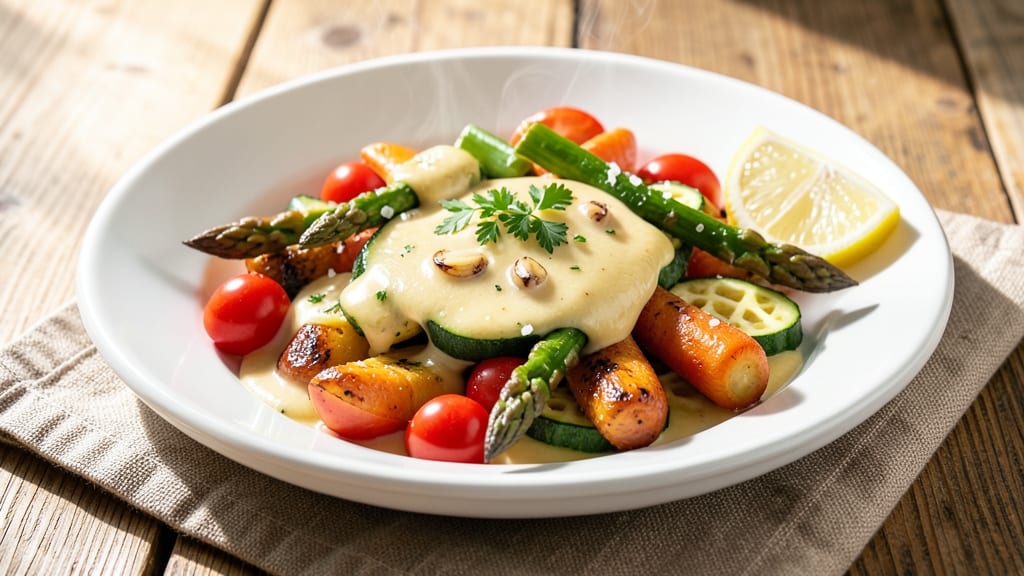
This butter sauce recipe for vegetables transforms simple roasted greens into a restaurant-worthy masterpiece with just five ingredients and 10 minutes of active time. The secret lies in balancing rich butter with bright lemon and fresh herbs, creating a velvety drizzle that clings perfectly to asparagus, broccoli, or Brussels sprouts.
I developed this sauce after years of testing—it’s the one that finally convinced even my pickiest eaters to finish their vegetables.
The foundation is a simple emulsion of melted butter and lemon juice, stabilized with a touch of cornstarch for that signature glossy finish. Fresh parsley and garlic add layers of aroma without overpowering the natural sweetness of roasted vegetables.
Unlike heavy hollandaise, this sauce stays light yet luxurious, making it ideal for both weeknight dinners and special occasions.
What makes this sauce truly special is its versatility—it elevates steamed, sautéed, or roasted vegetables equally well. The acidity from the lemon cuts through the richness of the butter, while the herbs add a fresh, vibrant note that brightens every bite.
Once you try this, store-bought sauces will never compare again.
For best results, keep the sauce warm over simmering water until serving, as this maintains its silky texture. It also reheats beautifully, making it perfect for meal prep. Let’s get started—your vegetables are about to become the star of the plate.
Ingredients for butter sauce recipe for vegetables
Five ingredients transform ordinary vegetables into restaurant-quality masterpieces with minimal effort.
| Ingredient | Amount | Notes |
|---|---|---|
| Unsalted Butter 🧈 | ½ cup | Cold, cubed for easier melting |
| Fresh Lemon Juice 🍋 | 2 tbsp | Freshly squeezed, strained |
| Cornstarch 🌾 | 1 tsp | For velvety texture, not flour |
| Fresh Parsley 🌿 | ¼ cup | Finely chopped, flat-leaf preferred |
| Garlic Cloves 🧄 | 2 cloves | Minced, not powdered |
| Kosher Salt 🧂 | ¼ tsp | Diamond Crystal preferred |
| Black Pepper 🌶️ | ⅛ tsp | Freshly cracked, not ground |
| Heavy Cream 🥛 | ¼ cup | Optional, for extra richness |
The butter is non-negotiable here—unsalted, high-quality like Plugrá or Land O’Lakes makes all the difference. Grab a stick from the dairy case (not the tub margarine aisle) and leave it at room temperature until the cubes soften slightly. For the lemon, Meyer lemons at Whole Foods or Trader Joe’s add a subtle floral note, but regular lemons work too. Fresh parsley? The flat-leaf variety has more intense flavor than curly—look for bright green stems in the produce section. If you can’t find fresh parsley, dried works at one-third the amount, but it won’t have that same vibrant pop.
No cornstarch? Arrowroot powder is a 1:1 substitute, but cornstarch gives that signature glossy finish. Short on garlic? Garlic powder at half the amount works in a pinch, though fresh minced is ideal. The heavy cream is optional but adds a luxurious touch—Hillfarm or Organic Valley brands stay rich when heated. For a dairy-free version, swap the butter for vegan butter and the cream for coconut cream. If your sauce breaks during emulsification, just whisk in another tablespoon of warm butter and keep stirring—it’ll come together.
This sauce reheats beautifully—simmer over low heat with a splash of water or broth if it thickens too much. Store in an airtight container in the fridge for up to 5 days, or freeze for 3 months in ice cube trays for single-serving portions. To keep it warm for serving, place the sauce jar in a pot of barely simmering water (bain-marie) until ready to use. The sauce pairs perfectly with roasted asparagus, Brussels sprouts, or even grilled zucchini—just drizzle generously and enjoy the velvety transformation.
Why You'll Love This Recipe
- Five-Ingredient Magic: I swear by this sauce because it’s that simple—just melt butter, toss in garlic and lemon, thicken with cornstarch, and boom. No measuring cups, no fancy techniques, just you, a pan, and 10 minutes of your life.
- Garlicky Lemon Hug: That bright citrus cut through the richness of the butter, while the garlic and parsley add layers I can’t get enough of. It’s the kind of flavor that makes you pause mid-bite—like a hug for your taste buds.
- Works Every Time: Drizzle it over roasted Brussels sprouts, steam-fried green beans, or even grilled asparagus. Honestly, I’ve even used it as a quick pasta sauce when I’m lazy. The cornstarch keeps it smooth, so it clings perfectly to whatever you’re serving.
Step-by-step instructions for rich velvety butter sauce
This velvety butter sauce transforms simple vegetables into something extraordinary—creamy, bright, and packed with flavor.
Melt the Butter and Infuse the Aromatics
In a medium saucepan, melt the 0.5 cup unsalted butter over medium-low heat. I like to use cold, cubed butter so it melts gradually rather than splattering. Once fully melted and foaming, add the 2 cloves minced garlic and cook for 30 seconds until fragrant—just until you catch that irresistible garlic aroma without letting it brown.
Here's the thing—garlic burns in seconds, so keep an eye on it. If it starts to darken, remove the pan from heat for 10 seconds to let it cool slightly. The goal is to infuse the butter with flavor without bitterness. Stir occasionally to distribute the garlic evenly throughout the butter.
Create the Thickening Slurry
In a small bowl, whisk together the 2 tablespoons fresh lemon juice and 1 teaspoon cornstarch until smooth. The cornstarch is your secret weapon—it creates that luscious, velvety texture without making the sauce heavy. I always strain the lemon juice first to avoid any pulp that could make the sauce grainy.
Slowly pour this mixture into the saucepan with the butter and garlic. Stir constantly over medium heat for 1-2 minutes until the sauce begins to thicken. You'll see it transform from a thin liquid into a glossy, slightly translucent sauce. This is where the magic happens—patience is key, so don't rush this step.
Finish with Cream and Seasonings
Reduce the heat to low and stir in the 0.25 cup heavy cream (if using) and the 0.25 teaspoon kosher salt. The cream adds a luxurious richness, but it's optional if you prefer a lighter sauce. Let the mixture simmer gently for 1 minute to blend all the flavors together. Taste and adjust the seasoning—you might need a pinch more salt or a crack of black pepper to taste.
Real talk: this is the moment that matters. The sauce should coat the back of a spoon smoothly, not be too thick or too thin. If it's still too thin, whisk in 1 teaspoon water at a time until you reach the perfect consistency. Remove from heat immediately to prevent curdling.
Incorporate the Fresh Herbs
Stir in the 0.25 cup finely chopped fresh parsley and 0.125 teaspoon freshly cracked black pepper. The parsley adds a bright, fresh finish that cuts through the richness of the butter and cream. I like to press the parsley through a fine-mesh strainer to ensure it's finely chopped—this prevents any large pieces that could make the sauce uneven.
Let the sauce rest for 1-2 minutes off the heat. This brief resting period allows the flavors to meld completely. The sauce should now be silky, glossy, and ready to elevate any vegetable dish. Serve immediately over roasted asparagus, green beans, or Brussels sprouts for a restaurant-worthy finish.
Pro Tips For Making Butter Sauce Recipe For Vegetables
- Melt Butter Slowly: I used to dump cold butter straight into the pan and wonder why my sauce turned grainy. Instead, cut the butter into small cubes and let them melt gradually over medium-low heat—this keeps the sauce smooth and prevents burning.
- Toast Garlic First: Skip the raw garlic taste by mincing the cloves and cooking them in the butter for 30 seconds until they’re just golden—not brown. This adds depth without bitterness, and you’ll taste the difference immediately.
- Whisk Cornstarch Wet: Dry cornstarch clumps like a nightmare. Mix it with a splash of cold water or lemon juice first, then stir it into the hot butter. Smooth sauce every time—no lumps, no stress.
- Finish with Cold Butter: The sauce looks rich, but it’s not until you stir in a pat of cold butter at the end. It coats the veggies perfectly and adds a velvety finish—trust me, it’s worth the extra 10 seconds.
Creative variations of these flavors
Herb Variations
Swap parsley for tarragon or chives to create a French-inspired twist—both add delicate anise notes that pair beautifully with roasted carrots or parsnips. For a Mediterranean flair, mix ½ cup chopped dill with 1 tbsp chopped mint—this combo works wonders with roasted eggplant or zucchini.
I once made a rosemary-garlic version by adding 1 tsp finely chopped rosemary with the garlic; it was perfect over roasted potatoes. 🌿
Spicy Kick Options
Add ½ tsp smoked paprika or ¼ tsp cayenne for warmth, especially when serving over hearty vegetables like Brussels sprouts or broccoli stems.
For a Thai-inspired touch, stir in ½ tsp fish sauce and 1 tsp lime zest along with the lemon juice—this transforms the sauce into a creamy, umami-rich drizzle perfect for stir-fried bok choy. Just remember: start with less spice and adjust to taste.
Citrus Brighteners
Replace lemon with orange juice and zest for a sweeter, more complex sauce—ideal for roasted butternut squash or sweet potatoes. A yuzu or lime variation adds a tangy brightness that cuts through rich vegetables like roasted cauliflower.
I love adding 1 tsp honey to the lemon juice for a subtle sweetness that balances the butter beautifully. For a tropical twist, try ½ cup pineapple juice instead of lemon—it adds a fruity depth that pairs surprisingly well with grilled asparagus. 🍊
Dairy-Free Adaptations
Use ½ cup melted coconut cream (chilled overnight) instead of butter, and ¼ cup unsweetened almond milk in place of heavy cream. For extra richness, add 1 tbsp nutritional yeast to mimic the umami depth of dairy.
This version works perfectly over roasted Brussels sprouts or sautéed kale—just keep the sauce warm over simmering water to maintain its silky texture. I’ve tested this with vegan butter (like Miyoko’s) and was surprised by how well it emulsified.
Seasonal Twists
In fall, add 1 tsp maple syrup and ½ tsp cinnamon to the lemon juice for a cozy, slightly sweet sauce that’s perfect over roasted Brussels sprouts or sweet potatoes.
For spring, infuse the melted butter with 1 tbsp grated ginger and finish with 1 tsp fresh cilantro—this Asian-inspired version elevates steamed snap peas or bok choy.
In winter, a white miso touch (½ tsp dissolved in the lemon juice) adds depth to roasted turnips or parsnips. 🍂
Nutrition facts
Frequently asked questions
Can I make this butter sauce without cornstarch?
Yes, but the texture will be thinner. For a richer alternative, whisk 1 tablespoon flour with the lemon juice instead—it’ll create a glossier finish. If you prefer no thickener at all, just reduce the butter to 0.375 cup and add 2 tablespoons warm water at the end for a lighter drizzle. The sauce will still taste delicious, just less velvety.
What vegetables pair best with this sauce?
This sauce shines over roasted asparagus, Brussels sprouts, green beans, and broccoli, but it also elevates grilled zucchini, eggplant, and even steamed carrots. For heartier veggies like cauliflower or sweet potatoes, consider adding a pinch of smoked paprika to the sauce for extra depth. The bright lemon cuts through rich flavors beautifully.
Why did my sauce separate?
Sauces separate when they’re overheated or acid (like lemon juice) isn’t balanced. To fix it, whisk in 1 tablespoon warm butter or 1 teaspoon cornstarch slurry while stirring constantly over low heat. For prevention, keep heat at medium-low and add ingredients gradually. If it happens again, try adding 1 teaspoon water to thin it slightly before reheating.
Can I make this sauce ahead of time?
Store the sauce in an airtight container in the fridge for up to 5 days. Reheat gently over low heat, stirring in 1 tablespoon water if it thickens too much. For longer storage, freeze in ice cube trays—thaw overnight in the fridge before using. The flavors actually meld better after resting! Just avoid reheating too vigorously to prevent separation.
What’s the difference between this sauce and hollandaise?
This sauce is lighter and quicker—no egg yolks required! Hollandaise uses raw egg yolks whisked with melted butter over a double boiler, creating a richer, more delicate sauce best for eggs or fish. This version relies on cornstarch for thickening and lemon for brightness, making it foolproof for vegetables. It reheats better too, without risk of curdling.