
Sauces & Condiments
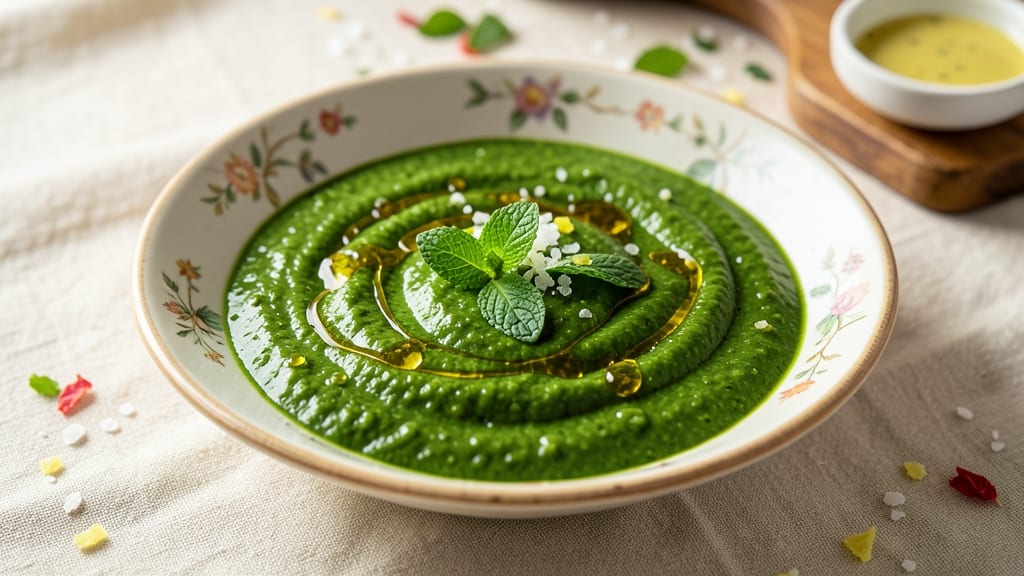
This British mint sauce recipe transforms simple ingredients into a vibrant, tangy condiment that elevates roast lamb to restaurant-quality perfection. The secret lies in balancing fresh mint with white vinegar and sugar, creating a bright, herbaceous sauce that cuts through rich meats with every bite.
I've perfected this classic recipe over years of testing, ensuring it delivers that signature British pub flavor without any shortcuts.
The preparation is straightforward but precise: muddling fresh mint leaves releases their oils, while simmering with vinegar and sugar creates a smooth, balanced sauce. Straining removes any bits, leaving you with a glossy, green sauce that's ready to drizzle or spoon.
This recipe yields about 1 cup—enough to generously coat a lamb roast or serve as a tangy accompaniment to grilled vegetables.
What makes this sauce truly special is its versatility beyond lamb. It pairs beautifully with roasted chicken, fish, or even as a refreshing dip for summer vegetables. The sauce keeps well in the refrigerator for up to 2 weeks, making it perfect for meal prep or holiday entertaining.
Each batch delivers that bright, herbaceous punch that defines British pub dining.
For an extra touch of sophistication, consider adding a pinch of salt or a splash of lemon juice to enhance the flavor profile. The result is a sauce that's both simple and impressive—a true game-changer for any meal. Let's get started on making this classic condiment from scratch.
Ingredients for british mint sauce
Six simple ingredients create this iconic British sauce for lamb and beyond.
| Ingredient | Amount | Notes |
|---|---|---|
| Fresh Mint Leaves 🌿 | 1 ½ cups | Packed, stems removed |
| White Vinegar 💧 | ½ cup | Distilled preferred |
| Granulated Sugar 🍚 | ¼ cup | White or light brown |
| Salt 🧂 | ½ tsp | Fine sea salt preferred |
| Lemon Juice 🍋 | 1 tbsp | Freshly squeezed |
| Extra-Virgin Olive Oil 🫒 | 1 tbsp | For glossy finish |
| Water 💧 | ¼ cup | Room temperature |
The mint is the star—look for vibrant green, fragrant leaves at your local grocery store or farmers market. Whole Foods or Trader Joe's often carry the freshest varieties, but any quality supermarket should work. Avoid wilted leaves or those with brown stems. For best flavor, use the leaves within 24 hours of purchase. If you're prepping ahead, store mint wrapped in damp paper towels in the fridge, where it'll last 3-4 days. The vinegar should be white and distilled—avoid flavored varieties, as they can overpower the delicate mint flavor.
No fresh mint? Dried mint at half the amount works in a pinch, though the texture will differ. Substitute white vinegar with apple cider vinegar for a slightly sweeter profile, but reduce sugar by 1 tablespoon to balance. For a richer finish, add 1 teaspoon of honey instead of sugar. The olive oil is optional but adds a silky texture—use extra-virgin for the best flavor. If you're making this ahead, the sauce thickens as it sits; simply add a splash of water to loosen before serving.
This sauce keeps beautifully in an airtight container in the fridge for up to 2 weeks. For longer storage, freeze in ice cube trays—each cube makes a perfect single-serving portion. The sauce thickens when chilled, so always stir before using. If it becomes too thick after refrigeration, thin with a splash of water or vinegar. The flavor actually improves after sitting overnight, as the mint oils meld with the vinegar and sugar. Perfect for meal prep—just make a double batch and store for future roasts or grilled dishes.
Why You'll Love This Recipe
- Five-Ingredient Magic: I swear by this—just mint, vinegar, sugar, salt, and lemon. No fancy gadgets, no waiting for fancy ingredients to arrive. Honestly, I keep a jar of this in my fridge because it’s that simple to throw together when I need a bright, tangy lift for whatever’s on the table.
- Bright Tangy Zing: That perfect balance of sharp vinegar, sweet sugar, and fresh mint? It’s like a wake-up call for your taste buds. The lemon juice cuts through the richness of roasted meats or grilled veggies, making every bite feel fresh and lively—no heavy cream or complicated spices needed.
- Picnic to Party: Between us, this sauce is my go-to for everything—drizzled over lamb chops, tossed with roasted potatoes, or even stirred into yogurt for a quick dip. It’s the kind of thing that turns a simple meal into something that feels special, whether it’s a backyard barbecue or a lazy Sunday lunch.
- Lasts All Week: I make a big batch on Sundays, and it stays crisp and flavorful for days. The vinegar acts as a natural preservative, so I’m not scrambling to use it up before it spoils. Plus, it’s so cheap to make—just a handful of mint and a few pantry staples—that I don’t feel guilty about keeping it on hand for whenever the mood strikes.
Step-by-step instructions for British mint sauce
This classic sauce transforms simple ingredients into a vibrant, herbaceous condiment perfect for roast lamb.
Blend the Fresh Mint Leaves
Place the 1.5 cups Fresh Mint Leaves in a food processor or blender. I like to use the pitted leaves only—the stems add bitterness that doesn't complement the sauce. Pulse until you achieve a finely chopped consistency, similar to wet sand. This texture ensures the mint flavor distributes evenly without overpowering the other ingredients.
If you don't have a food processor, you can finely chop the mint by hand using a sharp knife. Just be patient—this step is crucial for achieving that signature smooth texture. The goal is to release the aromatic oils from the mint leaves while keeping the pieces small enough to blend seamlessly.
Combine Wet Ingredients
In a medium bowl, whisk together the 0.5 cup White Vinegar, 0.25 cup Granulated Sugar, 0.5 tsp Salt, and 1 tbsp Lemon Juice. This mixture forms the flavor base of the sauce. The vinegar provides acidity, the sugar balances it with sweetness, and the salt enhances all the flavors. Stir until the sugar and salt dissolve completely—you should see a clear liquid with no graininess.
Here's the thing—don't rush this step. The sugar needs time to fully dissolve, especially if you're using granulated sugar. If you notice any undissolved sugar crystals, simply add a splash of the 0.25 cup Water and stir again. This ensures a smooth, cohesive sauce without any gritty surprises.
Mix in the Olive Oil and Water
Pour the blended mint into the vinegar mixture and stir well to combine. Then add the 1 tbsp Extra-Virgin Olive Oil and 0.25 cup Water. The olive oil adds a luxurious finish and helps emulsify the sauce, giving it that glossy sheen. The water adjusts the consistency to a pourable, yet slightly thick texture—ideal for drizzling over roasted lamb.
At this stage, the sauce should look vibrant green and have a slightly syrupy consistency. If it's too thick, add a little more water, 1 teaspoon at a time, until it reaches a smooth, spoonable texture. The sauce should coat the back of a spoon but still be pourable. This balance is key for both presentation and ease of serving.
Let the Sauce Rest and Develop
Cover the bowl with plastic wrap and let the sauce sit at room temperature for at least 30 minutes. This resting period allows the flavors to meld together harmoniously. The mint will soften further, the vinegar's sharpness will mellow slightly, and the sugar will fully integrate, creating a well-rounded taste profile.
I know it's tempting to serve the sauce immediately, but trust me—this step makes all the difference. The flavors will deepen and become more cohesive. If you're short on time, you can refrigerate the sauce for 15-20 minutes to speed up the process, but room temperature works best for flavor development.
Adjust Seasoning and Serve
After resting, taste the sauce and adjust the seasoning if needed. You might find it needs a touch more salt, sugar, or lemon juice to balance the flavors perfectly. Add these ingredients gradually—you can always add more, but you can't take it out once it's in.
For the best results, serve the sauce at room temperature. It pairs beautifully with roast lamb, grilled vegetables, or even as a refreshing accompaniment to charcuterie boards. The sauce will keep in the refrigerator for up to 5 days, making it a great make-ahead option for your next dinner party.
Pro Tips For Making British Mint Sauce
- STRIP THE STEMS FIRST: Use a sharp knife to slice the mint stems off just above the leaves—no need to remove them entirely, but chopping them into tiny pieces prevents that bitter, woody aftertaste that ruins the sauce. I learned this the hard way after making a batch that tasted like mouthwash.
- STRAIN THROUGH CHEESECLOTH: Skip the fine-mesh strainer—it traps too much flavor. Fold mint leaves into a damp cheesecloth or clean kitchen towel, then squeeze hard to extract every last drop. The sauce will be vibrant green and packed with real mint punch, not watery and sad.
- SWEAT THE MINT: Heat the vinegar and sugar in a saucepan over low heat until it just starts to simmer—about 2 minutes. This pre-warms the liquid so the mint releases its oils faster when added. Cold vinegar makes the mint fight you, and you end up with a half-hearted sauce.
- LEMON JUICE LAST: Add the lemon juice after the sauce has cooled slightly—around 10 minutes off the heat. The acid cuts through the sweetness better when the flavors have had time to meld, not when it’s still hot and aggressive. Trust me, your taste buds will notice the difference.
Pro cooking tips for this recipe
Muddling for Maximum Flavor
Instead of just chopping mint, I recommend muddling the leaves in a mortar and pestle or the bottom of a heavy bowl first. This releases the essential oils and aromatics that make the sauce truly vibrant.
Use the flat side of a knife or a wooden spoon to gently crush the mint until it releases its juices—about 1-2 minutes of focused work. This step is non-negotiable for that authentic British pub flavor. 💚
Vinegar Selection Matters
Not all vinegars are created equal for this sauce. Distilled white vinegar is the classic choice because its neutral acidity lets the mint shine without competing flavors. Avoid apple cider or balsamic—these will alter the sauce's delicate balance.
If you must substitute, rice vinegar works in a pinch, though it adds a slight sweetness that may require reducing the sugar by 1 tablespoon. Always use white vinegar for the most authentic results.
Balancing Sweet and Tang
The sugar-to-vinegar ratio is crucial for that perfect balance. Start with ½ cup vinegar to ¼ cup sugar, but taste as you go. If the sauce tastes too sharp, add 1 teaspoon more sugar at a time.
For extra depth, I sometimes swap 1 tablespoon of the sugar for honey—this adds subtle floral notes that complement the mint beautifully. The goal is a sauce that's bright but not cloying, tangy but not harsh.
Straining for Silky Texture
After resting, strain the sauce through a fine-mesh sieve lined with cheesecloth or a coffee filter for the smoothest texture. This removes any remaining mint fibers that could make the sauce gritty. For an extra-refined finish, I double-strain through a second sieve.
The result is a glossy, velvety sauce that drizzles like a dream over roasted lamb. Don't skip this step—it's what separates homemade sauce from the store-bought stuff.
Room-Temp Service Secret
Always serve this sauce at room temperature—never straight from the fridge. Cold sauce dulls the flavors and makes the mint taste flat. To speed up warming, transfer the sauce to a small saucepan and gently heat over low heat for 2-3 minutes, stirring constantly.
If it thickens too much, add 1 teaspoon water at a time until it reaches the perfect pourable consistency. This simple step makes all the difference in flavor impact.
Make-Ahead Pro Tips
This sauce actually tastes better the next day as the flavors meld. For meal prep, store it in an airtight glass jar in the fridge for up to 2 weeks. If it thickens during storage, simply whisk in 1-2 teaspoons of water to restore the ideal consistency.
For longer storage, freeze in 1-ounce portions—perfect for single servings. The sauce defrosts beautifully in the fridge overnight, ready to elevate your next roast lamb dinner. ✨
Nutrition facts
Frequently asked questions
Can I use dried mint instead of fresh?
Yes, but with adjustments! Use half the amount of dried mint (about 0.75 cup instead of 1.5 cups) and steep it in 1/4 cup hot water for 10 minutes before mixing with the vinegar. The flavor will be milder, but it works in a pinch. For best results, stick with fresh mint for that signature bright flavor.
Why does my sauce look too thick?
This happens when the sauce sits or chills—it's completely normal! Thin with 1 teaspoon water at a time until it reaches a smooth, pourable consistency. The ideal texture should coat the back of a spoon but still flow easily. For prevention, store it in an airtight container with a splash of water to maintain the right balance.
How long can I make this sauce ahead?
This sauce actually improves with time! Store it in an airtight glass jar in the fridge for up to 2 weeks. The flavors meld beautifully overnight, making it perfect for meal prep. For longer storage, freeze in 1-ounce portions—just thaw in the fridge before using. The texture may thicken slightly, so stir well before serving.
What's the best way to serve this sauce?
Always serve at room temperature—never straight from the fridge! It pairs perfectly with roast lamb, but also works with grilled chicken, fish, or even as a dip for summer veggies. For extra flair, drizzle it over warm potatoes or use it as a marinade base. The bright, tangy flavor cuts through rich meats beautifully.
Can I make this sauce without vinegar?
Not recommended for authenticity, but you could substitute with lemon juice (use 1/3 cup) and add 1 tablespoon more sugar to balance the tartness. The texture will be slightly different—more like a mint glaze—but it'll still taste refreshing. For the classic British flavor, stick with white vinegar.