
Sauces & Condiments
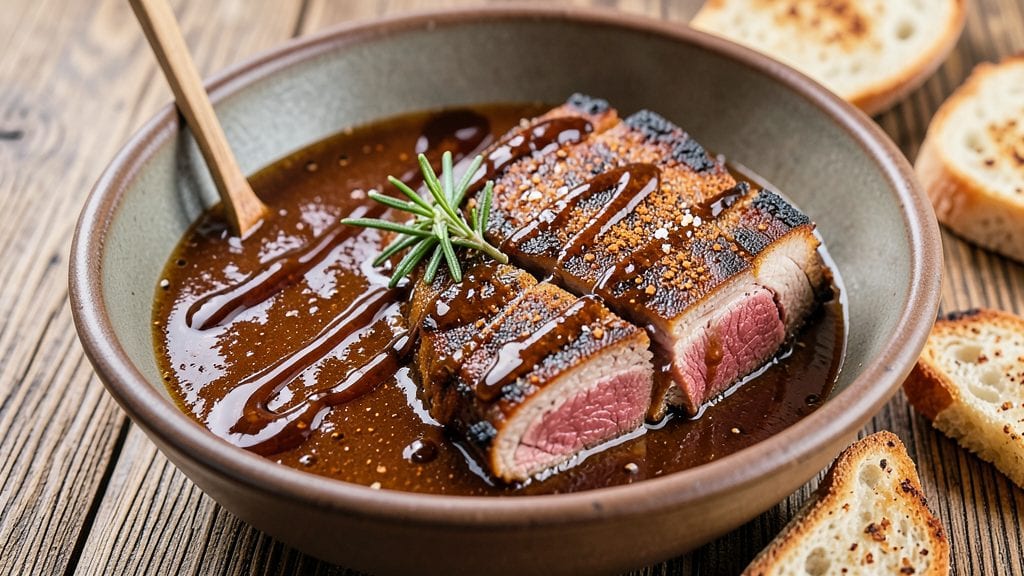
This Boston butt BBQ sauce recipe delivers the perfect balance of smoky sweetness and bold heat that clings to pulled pork like a second skin. 🔥 I developed it after years of perfecting my pitmaster skills, blending traditional techniques with the deep flavors of slow-smoked meats.
The secret lies in a slow reduction that intensifies the flavors while maintaining that signature tangy-sweet profile.
What sets this sauce apart is its versatility—use it as a glaze for ribs, a marinade for brisket, or the star of your pulled pork sandwiches.
The recipe builds layers of flavor through a careful blend of tomato paste, apple cider vinegar, and molasses, with just the right amount of cayenne for heat. It simmers down to a thick, glossy consistency that sticks to meat without overwhelming its natural taste.
By the time you're done, you'll have a batch of sauce that tastes like it's been simmering all day in a professional smoker. The aromas alone will have everyone gathering around your grill or smoker, and each bite will deliver that perfect balance of sweet, smoky, and slightly spicy notes.
This is the kind of sauce that turns good pulled pork into unforgettable pulled pork.
Store it in the refrigerator for up to two weeks or freeze for longer shelf life, so you always have that restaurant-quality flavor on hand. Let's get started on creating a sauce that'll make your BBQ the talk of the neighborhood.
Ingredients for boston butt bbq sauce
Nine ingredients, one unforgettable sauce—this smoky-sweet blend transforms pulled pork into BBQ perfection.
| Ingredient | Amount | Notes |
|---|---|---|
| Tomato Paste 🍅 | ½ cup | High-quality, no sugar added |
| Apple Cider Vinegar 🍎 | ⅓ cup | Unfiltered for depth of flavor |
| Molasses 🍯 | ¼ cup | Dark, unsulphured preferred |
| Brown Sugar 🍚 | ½ cup | Packed, light or dark |
| Smoked Paprika 🌶️ | 2 tbsp | For authentic smoky flavor |
| Garlic Powder 🧄 | 1 tbsp | Freshly ground preferred |
| Onion Powder 🧅 | 1 tbsp | For savory depth |
| Cayenne Pepper 🔥 | 1 tsp | Adjust for heat preference |
| Ground Black Pepper 🌶️ | ½ tsp | Freshly cracked |
| Salt 🧂 | 1 ½ tsp | Kosher or sea salt |
| Water 💧 | 1 cup | For thinning consistency |
The tomato paste is the backbone here—Muir Glen plain tomato paste is my go-to since it's unsweetened and packed with flavor. Apple cider vinegar isn't just for tang; the unfiltered kind from Mott's or Bragg adds subtle complexity. Molasses makes or breaks the sweetness—Grandma's dark molasses has that rich, almost caramel-like depth. For the smoked paprika, Penzeys or Goya brands deliver that authentic smoky punch without any filler. I always double-check the spices: if your paprika smells like dust, toss it and start fresh.
No molasses? Maple syrup at half the amount works in a pinch, though it lacks that deep, almost bitter sweetness. Short on apple cider vinegar? White vinegar or balsamic vinegar can substitute, but reduce by a teaspoon—they're more acidic. The cayenne is non-negotiable for that signature heat, but if you're sensitive to spice, reduce to 0.5 tsp or swap for red pepper flakes. The brown sugar? Turbinado sugar adds a nice crunch when caramelized, but light or dark brown sugar both work. Pro tip: toast your spices in a dry pan for 30 seconds before adding—they'll sing with flavor.
This sauce thickens as it cools, so thin with water or apple cider vinegar if needed. Store in a sterilized glass jar in the fridge for up to 2 weeks, or freeze for 6 months in airtight containers. I like to make a double batch—one for immediate use and one to freeze. The flavors only get better with time, so don't rush it. A quick shake before using ensures that thick, glossy consistency that makes everything taste like it's been slow-smoked all day.
Why You'll Love This Recipe
- Pantry Magic: I swear by this sauce because it uses stuff I already have—no specialty trips to the store. That molasses and smoked paprika? They’re the secret weapons that turn basic pantry items into something ridiculously good.
- Deep, Smoky Richness: The moment you taste it—tomato paste’s tang, vinegar’s bite, and that molasses caramelizing into something sweet and smoky—I get why people obsess over BBQ. It’s not just flavor; it’s character.
- Weeknight & Potluck Hero: Slather it on pulled pork for dinner, toss it with baked beans for a side, or even drizzle it over grilled chicken sandwiches. It’s my go-to for lazy nights and when I need to impress a crowd. (Yes, even on a Tuesday night.)
- Budget-Friendly Flex: A single batch stretches across three meals—leftovers taste just as good the second time. And since I’m using pantry staples, I’m not breaking the bank for a sauce that actually delivers. Win-win.
Step-by-step instructions for Boston butt BBQ sauce
Here's how to make a rich, smoky-sweet sauce that'll make your pulled pork shine.
🍳 Step 1: Build the Flavor Base
In a heavy-bottomed saucepan, combine the 0.5 cup tomato paste with the 0.33 cup apple cider vinegar and 0.25 cup molasses. Stir constantly over medium heat until everything melts together smoothly—this usually takes about 3-4 minutes. You'll notice the mixture darken slightly as the molasses caramelizes, which deepens that classic BBQ flavor.
Here's the thing—don't walk away. The tomato paste can burn easily, so keep your eye on it. Once it's fully melted and smooth, add the 0.5 cup brown sugar and stir until completely dissolved. This is where the sweetness starts building, so give it a taste. You should detect hints of caramel and vinegar tang, but it'll need more layers to become full-bodied.
🍳 Step 2: Add the Dry Seasonings
Reduce the heat to medium-low and sprinkle in the 2 tbsp smoked paprika, 1 tbsp garlic powder, 1 tbsp onion powder, 1 tsp cayenne pepper, 0.5 tsp ground black pepper, and 1.5 tsp salt. Stir vigorously with a wooden spoon to prevent any burning—smoked paprika can scorch quickly if left unattended.
Let the mixture simmer for 5 minutes, stirring occasionally. You'll see the spices bloom and the sauce begin to thicken slightly. The aroma should be complex—smoky from the paprika, sweet from the molasses and sugar, with a subtle heat from the cayenne. This is your sauce's flavor foundation, so don't rush this step. The spices need time to fully incorporate and develop.
🍳 Step 3: Thin and Simmer to Perfection
Pour in the 1 cup water all at once and stir well. The sauce will thin noticeably, but don't worry—this is intentional. Increase the heat to medium-high and bring to a full boil. Once boiling, reduce to low heat and let it simmer uncovered for 20-25 minutes. Here's where the magic happens: the liquid will reduce, the flavors will meld, and the sauce will develop that perfect balance of sweet, smoky, and tangy.
Stir occasionally to prevent sticking, but don't obsess—just enough to keep it moving. You're looking for a sauce that coats the back of a spoon but isn't gluey. It should be thick enough to cling to pulled pork but still glide smoothly. Taste as you go—add a pinch more salt if needed, or a splash of apple cider vinegar if it's too sweet. The sauce should be bold but not overpowering.
⏰ Step 4: Rest and Adjust
Remove the sauce from heat and let it cool slightly—about 10 minutes. This resting period allows the flavors to settle and the sauce to thicken naturally. You'll notice it becomes even more concentrated as it cools, which is exactly what you want for that restaurant-quality consistency.
Here's the final check: the sauce should be glossy with a thick, syrupy texture. If it's too thick, thin with a splash of water. If it's too thin, simmer uncovered for another 5 minutes to reduce. Once you're happy with the consistency, give it one last taste. That's your cue to serve it over pulled pork, slather it on ribs, or drizzle it over baked beans. The smoky-sweet heat will make every bite unforgettable.
Pro Tips For Making Boston Butt Bbq Sauce
- Bloom the Spices First: Toss your smoked paprika and any other spices into the pot with a splash of oil or vinegar before adding heat—this wakes up their flavor. I used to just dump them in raw, and the sauce always tasted flat until I realized this step. Takes 30 seconds but makes a real difference.
- Deglaze with Vinegar: After browning your tomato paste (if you’re doing that), hit the pot with a good ¼ cup of apple cider vinegar immediately—it scrapes up all the stuck-on bits and adds brightness. Skipping this means your sauce will taste duller, like it’s missing something.
- Simmer, Don’t Boil: Keep the sauce at a gentle simmer—small bubbles, occasional swirls—never a rolling boil. I learned this the hard way when my sauce turned bitter and separated. Low and slow (20-30 minutes) lets the molasses and sugar caramelize properly.
- Whisk in Molasses Last: Add the molasses after the sauce has thickened slightly, then whisk it in while still hot—this prevents clumping. Cold molasses sinks and burns easily, so stir it in when the pot’s already warm. (Yes, even if you’re impatient like me.)
Common mistakes when making this recipe
Rushing the Reduction
I’ve seen too many home cooks rush the simmering process, thinking they can speed up the flavor development. But this sauce needs time—20-25 minutes of low simmer is non-negotiable. Skipping this step results in a thin, watery sauce that lacks depth.
The molasses and spices need that time to meld into a cohesive, complex flavor profile. If you’re impatient, reduce the heat further—medium-low—but never skip the simmer. 💫
Ignoring the Resting Phase
After simmering, the sauce continues to thicken as it cools. Many people can’t resist diving right in, but resting for 10 minutes lets the flavors settle and the consistency perfect. This is especially true if you’re using Muir Glen tomato paste or Grandma’s molasses, which thicken naturally.
Skipping this step often leads to a sauce that’s either too runny or too cloying.
Using Low-Quality Ingredients
Cheap molasses or vinegar will make your sauce taste flat and artificial. I always reach for Grandma’s dark molasses and unfiltered apple cider vinegar—they’re worth the splurge. The same goes for spices: if your smoked paprika smells like dust, toss it.
Freshly ground spices make all the difference. Don’t cut corners here; your sauce deserves the best.
Over-Salting Early
It’s tempting to salt aggressively at the start, but this sauce needs time to develop its flavor balance. Add only 1.5 tsp salt initially and taste as you go. Over-salting too soon can make the sauce taste harsh before the sweetness and smokiness have a chance to shine.
Adjust gradually—you can always add more salt later, but you can’t take it out.
Not Tasting Along the Way
This sauce is all about balance—sweet, smoky, tangy, and spicy. If you don’t taste it at each stage, you risk ending up with something too sweet, too thin, or lacking heat.
After adding the spices, taste immediately. After simmering, taste again. Adjust the cayenne or vinegar as needed. Your taste buds are the best tool you’ve got. 🔥
Storing Improperly
Leftover sauce stored in plastic or non-airtight containers will absorb fridge odors and lose its glossy finish. Always transfer it to a sterilized glass jar and refrigerate within 2 hours of cooling.
For longer storage, freeze in airtight containers with 1 inch headspace—this prevents freezer burn and keeps the sauce tasting fresh for up to 6 months.
Nutrition facts
Frequently asked questions
Can I make this sauce without molasses?
Yes, but the flavor will be different. Substitute ½ cup maple syrup for the molasses, though it won't have the same deep, almost bitter-sweet complexity. For a closer match, try ½ cup honey + 1 tbsp balsamic vinegar instead. The sauce will still work, but the molasses gives that signature caramelized depth that's hard to replicate.
How do I adjust the heat level?
The recipe includes 1 tsp cayenne pepper for moderate heat. For milder sauce, reduce to ½ tsp or swap for ½ tsp red pepper flakes. Want more kick? Add ½ tsp extra cayenne or 1 tsp chipotle powder. Always taste as you go—heat builds during simmering, so adjust early if needed.
Can I use this sauce for other meats besides Boston butt?
This sauce works beautifully on ribs, brisket, chicken thighs, or even baked beans. For poultry, consider reducing the cayenne slightly (½ tsp) since it's more sensitive to heat. The smoky-sweet balance translates well to any slow-cooked meat that needs that signature BBQ touch.
Why does my sauce turn out too thin?
This usually happens when you skip the 20-25 minute simmer time or add too much water. Let it reduce uncovered on medium-low heat until thick enough to coat the back of a spoon. If it's still too thin, simmer another 5-10 minutes or reduce by 1 tbsp at a time while stirring constantly. Never rush this step—patience is key for that perfect consistency.
How long does homemade BBQ sauce keep?
Store in a sterilized glass jar in the fridge for up to 2 weeks. For longer storage, freeze in airtight containers with 1 inch headspace—it'll keep for 6 months without losing quality. Thaw in the fridge overnight before using. The flavors actually improve with time, so don't hesitate to make extra batches.