
Sauces & Condiments
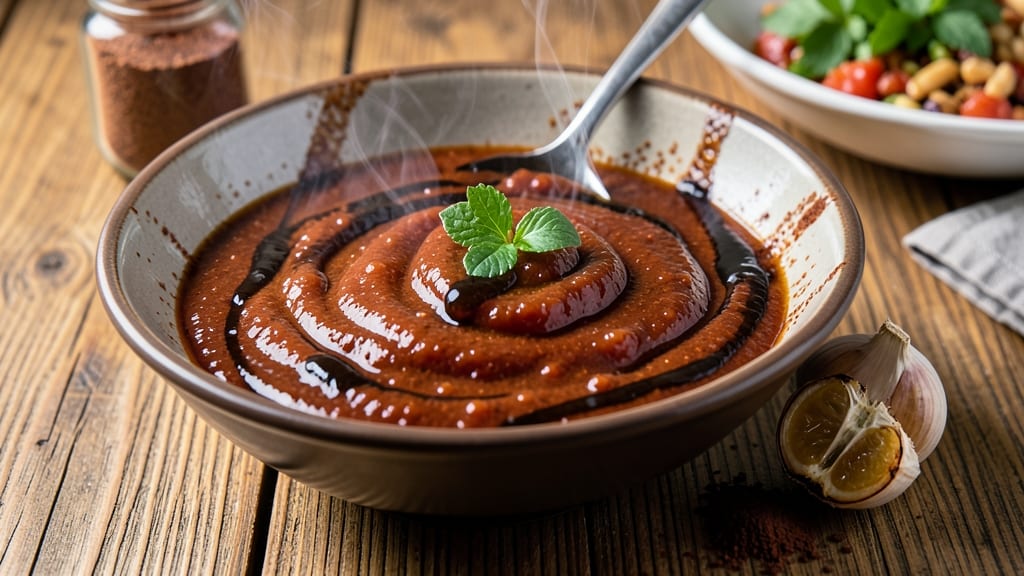
This smoky tomato BBQ sauce delivers deep, tangy flavor without Worcestershire—just apple cider vinegar, molasses, and a touch of liquid smoke for that signature pit-style taste. The secret lies in balancing sweetness with acidity while letting the sauce reduce to a glossy, clingy consistency that clings to everything it touches.
I developed this recipe after realizing store-bought sauces lacked the complexity of homemade, and it’s become my go-to for grilling, slow-cooking, or even drizzling over baked beans.
The foundation is simple: crushed tomatoes, apple cider vinegar, and molasses for that classic BBQ sweetness. Liquid smoke adds depth without overpowering, while smoked paprika and garlic powder build layers of warmth.
The sauce simmers until thick and syrupy, concentrating flavors into every spoonful. This isn’t just a substitute—it’s a richer, more nuanced sauce that stands on its own.
What you’ll end up with is a glossy, smoky-sweet sauce that caramelizes beautifully when brushed on ribs or drizzled over pulled pork. The apple cider vinegar adds a subtle tang that cuts through the richness, while the molasses ensures a perfect balance of sweet and savory.
It keeps well in the fridge for up to 2 weeks or freezes for 3 months, making it ideal for batch cooking.
Use it as a glaze for grilled meats, a marinade, or even a dip for fries. The versatility is what makes this sauce a game-changer—no Worcestershire needed. Here’s how to make it.
Ingredients for bbq sauce recipe no worcestershire
Nine simple ingredients transform into a rich, smoky-sweet sauce that rivals store-bought favorites.
| Ingredient | Amount | Notes |
|---|---|---|
| Crushed Tomatoes (28 oz can) 🍅 | 1 can | San Marzano preferred for sweetness |
| Apple Cider Vinegar 🍏 | ½ cup | Bragg preferred for depth |
| Molasses 🍯 | ¼ cup | Unsulfured for best flavor |
| Liquid Smoke 🔥 | 1 tbsp | Adams preferred, not imitation |
| Smoked Paprika 🌶️ | 1 tbsp | High-quality for smokiness |
| Garlic Powder 🧄 | 1 tsp | Freshly ground preferred |
| Onion Powder 🧅 | 1 tsp | Diamond Crystal preferred |
| Brown Sugar 🍚 | ¼ cup | Light or dark, packed |
| Salt 🧂 | 1 tsp | Kosher or sea salt |
| Black Pepper 🌶️ | ½ tsp | Freshly cracked preferred |
The crushed tomatoes are the backbone—San Marzano makes all the difference with its natural sweetness and fewer seeds. Grab a can from Trader Joe's or Whole Foods if you can't find it locally. Apple cider vinegar adds that tangy kick, and Bragg is my go-to because it's aged and has depth. Molasses needs to be unsulfured; check the label at Costco or local health stores. Liquid smoke is non-negotiable for that authentic BBQ flavor—Adams is the brand I trust, but avoid imitation versions. Smoked paprika should be vibrant in color, not dull, and Penzeys or bulk bins at natural food stores are great sources.
No liquid smoke? Smoked salt at double the amount works in a pinch, though it won't be as deep. Substitute molasses with maple syrup at half the quantity, but you'll lose some of that classic BBQ richness. Brown sugar can be swapped for white, but it won't caramelize as beautifully. The garlic and onion powders are easy to find—just make sure they're fresh. If your spices smell stale, toss them. For the vinegar, white vinegar in a bind, but apple cider gives that signature tang. The sauce thickens as it reduces, so don't rush it—patience is key here.
This sauce keeps beautifully in the fridge for up to 2 weeks in an airtight container. For longer storage, freeze it in ice cube trays or small jars—perfect for single-use portions. It reheats wonderfully, so a quick microwave or stovetop session brings it back to glossy perfection. I always make a double batch—one for immediate use and one to stash in the freezer. The flavors actually deepen over time, so leftovers are a bonus.
Why You'll Love This Recipe
- Pantry Magic: I swear by this sauce because it uses stuff I already have—no fancy shopping trips. Open a can of tomatoes, grab vinegar and molasses from the shelf, and boom—smoky depth in 20 minutes. No chopping, no waiting for ingredients to "ripen" in the fridge.
- Deep Smoke Without Effort: The liquid smoke and smoked paprika give it that campfire vibe without lighting a grill. Honestly, it’s the secret weapon in my slow-cooker ribs or baked beans—just a splash of this, and suddenly everything tastes like it’s been smoking all day.
- Weeknight to BBQ Feast: This sauce turns a simple grilled chicken thigh into a Sunday-worthy meal or dresses up store-bought meatballs for a potluck. I’ll be real: my kids ask for it on Tuesdays, and I don’t even have to pretend it’s gourmet.
- Make-Once, Use-Twice: A big batch lasts me forever—drizzled on sandwiches, tossed with roasted veggies, or even mixed into deviled eggs. And since it’s cheap to make, I don’t stress about leftovers. (Yes, even on a Tuesday night.)
Step-by-step instructions for smoky tomato BBQ sauce
This sauce builds flavor layer by layer—start with the tomatoes and work through each ingredient carefully.
Simmer the Tomato Base
Pour the entire 1 can crushed tomatoes into a medium saucepan and stir in the 0.5 cup apple cider vinegar. Bring to a gentle boil over medium-high heat, then immediately reduce to medium-low heat. Let it simmer uncovered for 15-20 minutes, stirring occasionally—this allows the acidity to break down the tomatoes and develop their natural sweetness.
Here's the thing—don't rush this step. You want the tomatoes to reduce slightly and release their juices, creating a thicker base. The sauce should reduce to about half its original volume, and you'll notice the color deepening to a rich, ruby red. If it starts to stick, add 1-2 tablespoons of water to keep it moving, but avoid over-diluting.
Add Sweetness and Depth
Stir in the 0.25 cup molasses and 0.25 cup brown sugar, whisking until fully dissolved. The molasses will darken the sauce immediately, adding that classic BBQ richness. Let the mixture simmer for another 5 minutes, stirring frequently to prevent burning along the bottom of the pan.
This is where the sauce transforms from tangy to complex. The molasses and sugar caramelize slightly, creating a deeper, almost caramel-like flavor. You'll smell the sweetness intensifying—this is your cue that the base is ready for the smoky elements. If the sauce looks too thick at this stage, add 1 tablespoon of water to loosen it slightly.
Build the Smoky Profile
Reduce the heat to low and add the 1 tbsp smoked paprika, 1 tbsp liquid smoke, 1 tsp garlic powder, 1 tsp onion powder, 1 tsp salt, and 0.5 tsp black pepper. Stir vigorously to distribute the spices evenly—this ensures every spoonful gets that balanced smoky-sweet flavor.
Let the sauce simmer for another 10-15 minutes, stirring occasionally. The liquid smoke will infuse deeply, while the smoked paprika adds a dry, aromatic heat. You'll notice the sauce thickening further as the starches in the tomatoes gelatinize. Taste it now—it should be tangy-sweet with a developing smokiness, but not yet fully balanced.
Refine and Reduce to Perfection
Increase the heat to medium-low and let the sauce reduce for an additional 15-20 minutes, stirring every 3-4 minutes. This final reduction concentrates the flavors and creates that signature BBQ sauce consistency—thick enough to cling but still smooth enough to drizzle.
Here's the critical checkpoint: the sauce should coat the back of a spoon and hold its shape when drizzled. If it's still too thin, continue simmering uncovered. If it thickens too much, whisk in 1 tablespoon of water at a time until you reach the ideal consistency. The final sauce should be glossy, with a deep red hue and a perfect balance of sweet, smoky, and tangy flavors.
Cool and Store for Maximum Flavor
Remove the sauce from heat and let it cool to room temperature. This resting period allows the flavors to meld completely—don't skip it! Transfer the sauce to a clean jar or airtight container and refrigerate for at least 24 hours before using. The flavors will deepen and harmonize during this time, resulting in a sauce that's far more complex than if you used it immediately.
For best results, use this sauce within 1 week of making it. The molasses and vinegar keep it stable, but the freshness of the tomatoes and spices shines brightest when used soon after. If you find yourself with leftovers, freeze it in ice cube trays for easy portion control—just thaw and stir before using.
Pro Tips For Making Bbq Sauce Recipe No Worcestershire
- Simmer Low and Slow: I used to rush this sauce, thinking more heat meant faster flavor—but I learned the hard way that crushed tomatoes need time to break down. Keep it at a gentle boil for at least 20 minutes, stirring occasionally, so the molasses and smoked paprika meld instead of burning.
- Strain the Tomatoes: That 28 oz can of crushed tomatoes has seeds and skins that turn your sauce grainy no matter how much you blend later. Strain them through a fine-mesh sieve first—yes, it’s extra work, but the result is silky smooth, especially when you’re slathering it on ribs or chicken.
- Balance the Molasses: Too much molasses and your sauce tastes like syrup; too little and it’s flat. Start with 2 tablespoons, taste it after simmering, then add another ½ tablespoon at a time. The vinegar cuts the sweetness, but you need both to work together—trust your palate, not the recipe.
- Toast the Smoked Paprika: Skip the pre-ground stuff and toast your smoked paprika in a dry pan for 30 seconds until it smells deep and nutty. It adds complexity that jarred versions can’t match—just don’t let it burn, or you’ll taste ash instead of smoke. (I know, I know, it’s one more pan to wash.)
Common mistakes when making your bbq sauce recipe no worcestershire
Over-Simmering the Sauce
One of the biggest mistakes is letting the sauce reduce too aggressively, which can burn the sugars and create a bitter, caramelized flavor instead of the balanced sweetness you want. I’ve seen this happen when people crank the heat too high or walk away from the stove.
Keep the heat at medium-low during the final reduction and stir every 3-4 minutes to prevent scorching. If the sauce starts to darken too much or smell burnt, remove it from heat immediately and add 1 tablespoon of water to cool it down. 🔥
Skipping the Resting Time
Rushing to use the sauce right after cooking is a common error that leads to uneven flavor development. The sauce needs at least 24 hours in the fridge to let the spices meld and the acidity mellow out.
I’ve made this mistake myself—using it fresh tastes great, but it lacks the depth and complexity it gains after resting. Trust the process, and your sauce will reward you with a richer, more nuanced flavor profile.
Ignoring the Liquid Smoke
Some people cut corners by skipping the liquid smoke or using too little, thinking smoked paprika alone will do the trick. But liquid smoke adds that unmistakable smoky depth that’s hard to replicate.
If you’re avoiding it, try using smoked salt (double the amount) or a pinch of hickory smoke chips (steeped in the sauce for 10 minutes), but don’t expect the same intensity. The sauce will taste more like a sweet tomato glaze than a true BBQ sauce. 🌶️
Using Low-Quality Ingredients
Cheap molasses, vinegar, or tomatoes can ruin even the best technique. For example, sulfured molasses will add a metallic taste, and white vinegar lacks the depth of apple cider vinegar. I always recommend San Marzano tomatoes and Bragg apple cider vinegar—they’re worth the splurge.
If you’re on a budget, look for organic canned tomatoes and unsulfured molasses at stores like Trader Joe’s or Costco. Skimping here means sacrificing flavor.
Not Tasting as You Go
Many people add all the spices at once and never adjust the seasoning. The sauce should balance sweet, smoky, and tangy flavors, and the only way to know is to taste it at each stage. After adding the molasses, taste it—is it sweet enough?
After the smoked paprika, does it need more salt? Adjust gradually, and don’t be afraid to add a pinch of black pepper or garlic powder later if needed. This is how you ensure every batch turns out perfect. ✨
Overthickening the Sauce
Some recipes call for reducing the sauce until it’s almost jam-like, but that can make it too sticky and hard to drizzle. The ideal consistency should be glossy and coat the back of a spoon but still flow smoothly.
If it thickens too much, whisk in 1 tablespoon of water at a time until it reaches the right texture. I’ve seen people add cornstarch or flour, but that’s unnecessary—this sauce thickens naturally from the tomatoes and reduction. The goal is a clingy yet pourable sauce, not a paste.
Nutrition facts
Frequently asked questions
Can I substitute apple cider vinegar with white vinegar?
The apple cider vinegar adds depth and a subtle fruity note that white vinegar can't replicate. If you must substitute, use white vinegar—but expect a sharper, more acidic flavor. Start with 0.4 cup instead of 0.5 cup to avoid overpowering the sauce. For best results, use rice vinegar as a middle ground between the two.
How do I adjust the sweetness level?
This recipe balances sweetness naturally, but you can tweak it easily. For a sweeter sauce, add 1 extra tablespoon of molasses per batch. For less sweetness, reduce the molasses by 1 tablespoon and add 1 tablespoon extra apple cider vinegar to maintain balance. Always taste as you go—flavor develops as the sauce simmers.
Can I make this sauce without liquid smoke?
Yes, but the smoky depth will be noticeably different. Replace the 1 tbsp liquid smoke with 2 tbsp smoked salt or steep 1 smoked hickory chip in the sauce for 10 minutes (remove before serving). You'll lose some intensity, but the sauce will still have a subtle smokiness from the paprika and vinegar.
Why does my sauce look too thin after simmering?
Sauce thickness depends on reduction time and heat control. If yours is too thin, continue simmering uncovered on medium-low heat, stirring every 3-4 minutes. Avoid high heat—it burns sugars and creates bitterness. For stubborn thinness, whisk in 1 tsp cornstarch mixed with 1 tbsp water (optional) or let it reduce longer. The goal is a glossy, spoon-coating consistency.
How can I use this sauce beyond grilling?
This versatile sauce works beautifully as a marinade (mix with 1 tbsp olive oil), drizzled over baked beans, or as a dip for fries and onion rings. Try it in tacos, sandwiches, or even as a glaze for roasted vegetables. For extra richness, simmer it with 1 tbsp butter before using. The tangy-sweet balance makes it perfect for both sweet and savory dishes!