
Sauces & Condiments
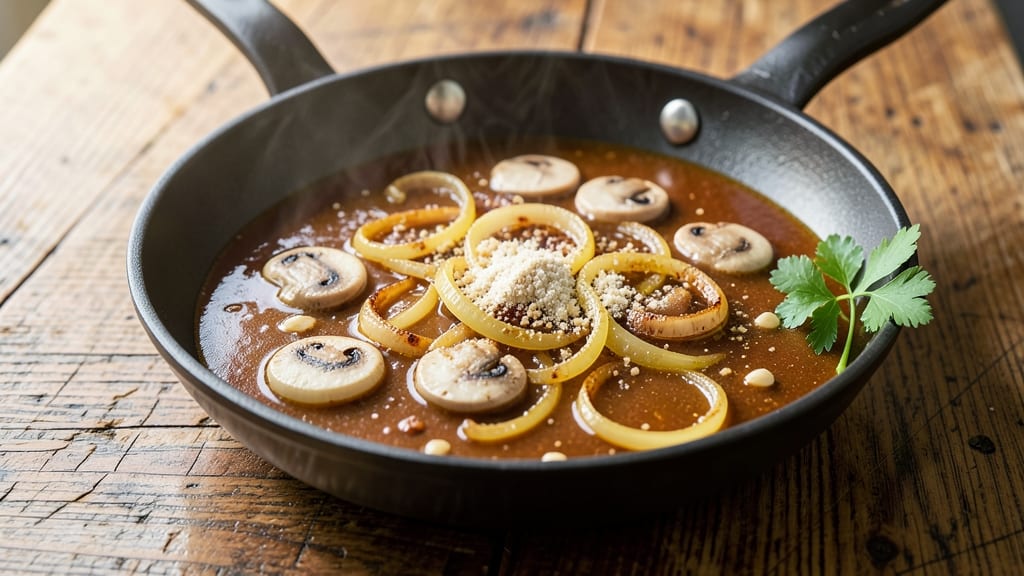
This basic stroganoff sauce recipe delivers the creamy, velvety texture that makes it a pantry staple for home cooks. The harmony of sautéed mushrooms, caramelized onions, and a rich sour cream base creates a sauce that elevates simple weeknight meals into restaurant-quality dishes.
I developed this version after years of testing—it’s the one that finally balances creaminess with depth without separating or turning grainy.
The foundation of great stroganoff lies in proper technique: cooking the mushrooms until deeply browned and the onions until sweetly caramelized creates layers of flavor that no shortcut can replicate.
A slow simmer with beef broth builds the sauce’s body, while a touch of cornstarch ensures the perfect creamy consistency without overpowering the natural tastes. This method delivers professional results in under 30 minutes, with ingredients you likely already have on hand.
What you’ll end up with is a velvety sauce that coats proteins and noodles beautifully, offering that signature tangy-sweet balance that defines stroganoff. The mushrooms add earthy depth, while the sour cream provides that signature richness.
This sauce works equally well over beef, chicken, or even roasted potatoes, making it the ultimate weeknight solution.
Store leftovers in the refrigerator for up to 5 days or freeze for longer storage—simply reheat gently on the stove with a splash of broth to restore that creamy texture.
For variations, swap the beef broth for vegetable broth for a vegetarian version or use coconut cream for a dairy-free alternative. Let’s make this sauce!
Ingredients for basic stroganoff sauce
Nine essential ingredients transform into velvety stroganoff sauce with restaurant-quality depth.
| Ingredient | Amount | Notes |
|---|---|---|
| Extra-Virgin Olive Oil 🫒 | 2 tbsp | High-quality, fruity variety preferred |
| Yellow Onions 🧅 | 1 whole | Medium-sized, thinly sliced |
| White Button Mushrooms 🍄 | 8 oz | Sliced into even strips |
| Garlic Cloves 🧄 | 3 cloves | Minced, fresh preferred |
| Beef Broth 💧 | 1 cup | Low-sodium preferred |
| All-Purpose Flour 🌾 | 1 tbsp | For thickening consistency |
| Sour Cream 🥛 | ½ cup | Full-fat for optimal creaminess |
| Dry Sherry 🍷 | 2 tbsp | Substitute with white wine if unavailable |
| Salt 🧂 | ½ tsp | Diamond Crystal preferred |
| Freshly Ground Black Pepper 🌶️ | ¼ tsp | Cracked peppercorns preferred |
The mushrooms and onions form the flavor base—cremini mushrooms add more earthiness if available, but white buttons work perfectly. For onions, Yellow Sweet onions caramelize more beautifully, but regular yellow onions are fine. Whole Foods or Trader Joe's carry excellent quality mushrooms year-round. Fresh garlic is non-negotiable here—pre-minced garlic lacks the aromatic punch. If you're short on time, garlic powder at half the amount works in a pinch, though it won't be as vibrant. The beef broth should be low-sodium to avoid over-salting the sauce later.
No sherry? Dry white wine or apple cider vinegar adds the necessary acidity. For a vegetarian version, substitute beef broth with mushroom or vegetable broth. The sour cream provides that signature richness—full-fat works best, but reduced-fat can be used if preferred. If you find your sauce too thick, simply whisk in 1-2 tbsp warm water. For extra depth, a pinch of smoked paprika or 1 tsp Worcestershire sauce enhances the umami profile without altering the core flavor. The cornstarch in the flour creates that signature velvety texture—don't skip this step if you want authentic stroganoff.
This sauce stores beautifully in the refrigerator for up to 5 days, maintaining its creamy texture. For longer storage, freeze in airtight containers for up to 3 months. When reheating, add 1-2 tbsp broth to restore creaminess. The sauce thickens as it cools, so it's best to reheat gently over low heat. Portion into individual containers for easy weeknight meals—it pairs perfectly with roasted chicken, beef strips, or even mashed potatoes.
Why You'll Love This Recipe
- One-Pan Magic: I swear by this for nights when I’m too tired to wash dishes. Sauté onions and mushrooms in olive oil until golden—no fancy techniques, just patience—and the broth thickens into a velvety base while you’re still chopping garlic.
- Umami Bomb: That earthy mushroom-onion combo? It’s the secret weapon. The garlic hits just right, and the beef broth adds depth without overpowering—simple ingredients, but the flavor? Dangerously addictive.
- Leftovers That Shine: Make a double batch and freeze half. When you’re craving stroganoff later, just reheat with a splash of broth—no soggy noodles, just rich, savory perfection every time.
- Budget-Friendly Luxury: Fresh mushrooms and onions might sound fancy, but they stretch so far. A single pan of this sauce feeds four for under $10, and the olive oil adds richness without breaking the bank. (Yes, even on a Tuesday night.)
Step-by-step instructions for creamy mushroom and onion stroganoff
Master this classic sauce technique—rich, velvety, and built layer by layer.
Sauté the Base Ingredients Until Golden
Heat the 2 tablespoons extra-virgin olive oil in a large skillet over medium heat. Add the 1 whole yellow onion, sliced into even strips, and cook for 5-6 minutes until softened and translucent. Here's the thing—don't rush this step. You want the onions to caramelize slightly at the edges, which builds deep flavor.
Add the 8 ounces white button mushrooms, sliced into uniform strips, and continue cooking for another 6-8 minutes until they release their moisture and begin to brown. Stir occasionally to promote even browning. The mushrooms should look tender with crisp edges—this texture contrast is essential for the final dish. Push the mushrooms to one side of the pan and add the 3 cloves minced garlic, cooking for just 30 seconds until fragrant. Don't let the garlic burn; it should perfume the pan without color change.
Deglaze and Build the Sauce Foundation
Reduce heat to medium-low and sprinkle the 1 tablespoon all-purpose flour evenly over the mushrooms and onions. Stir vigorously for 1-2 minutes until the flour absorbs all the released moisture and forms a light, golden roux. This step prevents lumps and creates the thickening base for your sauce.
Pour in the 2 tablespoons dry sherry and scrape up any browned bits from the bottom of the pan with a wooden spoon. Let the sherry simmer for 2-3 minutes until reduced by half and slightly thickened. This deglazing step captures all the concentrated flavors you've built so far—don't skip it. Then add the 1 cup beef broth and bring to a gentle simmer. The sauce should now be smooth and slightly thickened, coating the back of a spoon.
Season and Finish with Creamy Texture
Add the 0.5 teaspoon salt and 0.25 teaspoon freshly ground black pepper to the simmering sauce. Taste and adjust seasoning—this is where you ensure proper balance before adding the final ingredient. The sauce should be rich but not overly salty, with a subtle peppery warmth that complements the mushrooms.
Remove the skillet from heat and gently stir in the 0.5 cup sour cream. The residual heat will warm the cream without curdling it, creating that signature velvety texture. Return the pan to low heat and let the sauce simmer gently for 2-3 minutes just to meld all the flavors together. The final sauce should be thick enough to coat the back of a spoon but still have a luxurious, creamy consistency. If it's too thick, add 1-2 tablespoons of hot beef broth to reach your desired texture.
Rest and Serve for Optimal Creaminess
Transfer the stroganoff sauce to a serving bowl and let it rest for 5 minutes before serving. This resting period allows the flavors to fully integrate and the sauce to reach its peak creaminess. The sauce should now have a perfect balance of rich mushroom flavor, subtle sherry depth, and velvety sour cream texture.
Serve immediately over egg noodles, rice, or crusty bread to soak up every last bit of that luscious sauce. The contrast between the creamy stroganoff and the absorbency of the base creates a restaurant-quality dish that's surprisingly simple to make at home. Real talk—this sauce tastes even better the next day as the flavors continue to meld, so consider making it ahead if you're planning to serve it later.
Pro Tips For Making Basic Stroganoff Sauce
- Sear the Onions: Don’t rush this step—get those onions down to a deep golden brown before adding mushrooms. I learned the hard way that skipping this makes the whole dish taste flat. Use medium-low heat and stir often; it takes 8-10 minutes, but it’s the foundation of flavor.
- Sweat the Mushrooms Low: After the onions, add mushrooms and cook them on the same low heat until all the moisture evaporates. High heat turns them rubbery, and nobody wants that. Spread them out in the pan so they brown evenly—this takes 5-7 minutes, but it’s worth it.
- Deglaze Aggressively: When you add beef broth, don’t just splash it in—scrape up every last bit of browned bits from the bottom of the pan. Those bits pack serious flavor, and skipping this step means missing out. Use a wooden spoon to really work it into the sauce.
- Salt the Broth Early: Season the beef broth before adding it to the pan, not after. The mushrooms and onions soak up salt like sponges, and if you wait, the sauce will taste bland. A pinch of salt in the broth at the start makes a real difference—trust me, your taste buds will notice.
Pro cooking tips for great basic stroganoff sauce
Perfect Heat Control
Stroganoff sauce demands precise temperature management to avoid curdling or graininess. Start by cooking onions and mushrooms over medium heat—never high heat, or they'll burn before caramelizing properly.
When adding the 1 cup beef broth, reduce to medium-low and maintain a gentle simmer (small bubbles, not a rolling boil). The flour should cook out completely before adding liquid, or you'll end up with a floury texture.
I use a saucepan with sloped sides (like All-Clad Stainless) to prevent spills while stirring vigorously. 🌡️
Deglaze Like a Pro
The deglazing step with 2 tbsp dry sherry (or white wine) is where flavor magic happens. After sprinkling the 1 tbsp flour, let it toast for 1-2 minutes until golden—this prevents lumps and adds depth.
Scrape every browned bit from the pan with a wooden spoon (metal spatulas can scratch nonstick surfaces). If using sherry, reduce it by half before adding broth—this concentrates the alcohol flavor without making the sauce taste boozy. 🍷
Sour Cream Integration
Adding sour cream off-heat is critical to prevent curdling. Warm the cream slightly by stirring it into the sauce while the pan is still on low heat, then remove it immediately. Return to heat only for 2-3 minutes to meld flavors—never boil.
For extra insurance, whisk the sour cream with 1 tbsp warm broth before adding it to the sauce. If the sauce looks too thick after resting, thin with 1 tbsp warm broth at a time until silky smooth. 🥛
Flour vs. Cornstarch
All-purpose flour creates a gentler thickening with subtle graininess, while cornstarch makes the sauce glossier but can taste slightly artificial. For this recipe, flour is ideal because it blends seamlessly with the creamy texture.
If you prefer cornstarch, mix 1 tsp with 2 tbsp cold water first, then whisk into the simmering sauce. Add it after the broth to avoid clumping. For a gluten-free version, use 1 tbsp arrowroot powder instead. 🌾
Flavor Layering Tricks
Boost umami by adding 1 tsp Worcestershire sauce with the sherry or a pinch of smoked paprika to the flour. For depth, sauté 2 tbsp finely chopped shallots with the onions. If your mushrooms aren't earthy enough, swap 2 oz for cremini mushrooms—they add a meatier flavor.
A splash of 1 tsp lemon juice at the end brightens the sauce without overpowering it. Taste as you go: stroganoff should balance savory, tangy, and slightly sweet notes. 💡
Equipment Upgrades
A heavy-bottomed saucepan (like Le Creuset) prevents scorching, while a silicon spatula ensures smooth stirring without scratching. For even heat distribution, use a gas burner on medium-low—electric stoves can create hot spots.
If your sauce separates, whisk in 1 tbsp cold butter to re-emulsify it. For large batches, double the recipe but use a larger pan (12-inch diameter) to maintain proper heat control. 🔥
Nutrition facts
Frequently asked questions
Can I make stroganoff sauce without sherry?
Replace the 2 tablespoons dry sherry with 2 tablespoons white wine or 1 tablespoon apple cider vinegar for acidity. For a completely alcohol-free version, use 1 tablespoon lemon juice instead. The key is maintaining that tangy brightness that balances the richness.
Why did my stroganoff sauce turn grainy?
Graininess usually happens when the flour isn't fully cooked before adding liquid or when the sauce boils too vigorously. Always cook the flour into a light roux for 1-2 minutes until golden, then simmer gently (small bubbles) when adding broth. If it happens, whisk in 1 tablespoon cold butter to re-emulsify.
How can I make this sauce vegetarian?
Swap the beef broth for vegetable or mushroom broth and use vegetable broth for thinning. For extra umami, add 1 teaspoon soy sauce or 1/2 teaspoon nutritional yeast when seasoning. The flavor profile remains rich and satisfying without meat.
Can I make stroganoff sauce ahead of time?
Yes! Store it in an airtight container in the fridge for up to 5 days. For longer storage, freeze for up to 3 months. When reheating, add 1-2 tablespoons broth to restore creaminess—never microwave directly from frozen. The flavors actually improve overnight!
What's the best way to serve this sauce?
This creamy stroganoff pairs perfectly with egg noodles, roasted potatoes, or crusty bread to soak up every drop. For a complete meal, serve over grilled chicken or beef strips. The sauce also works beautifully as a dip for fresh baguette slices or as a topping for baked potatoes.