
Sauces & Condiments
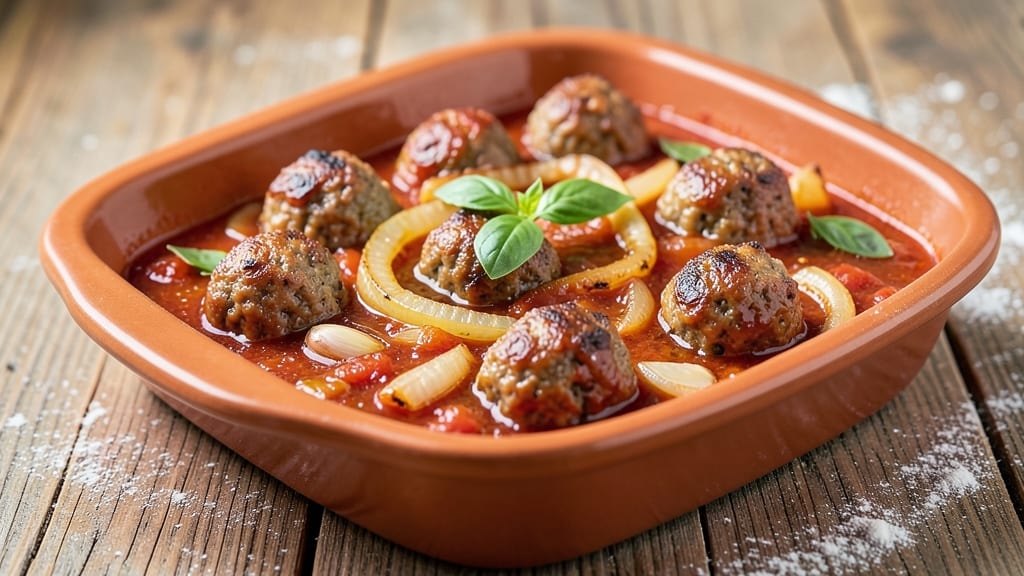
This basic meatball sauce recipe delivers the rich, layered tomato flavor you crave without relying on canned shortcuts. The secret lies in simmering crushed tomatoes with aromatics and herbs until the flavors meld into a velvety, aromatic sauce that clings perfectly to meatballs.
I developed this version after years of testing—it’s the foundation for everything from classic spaghetti to loaded meatball subs.
What sets this sauce apart is the balance of acidity and sweetness, achieved through a combination of crushed tomatoes, tomato paste, and a touch of sugar. A splash of red wine adds depth, while fresh basil and oregano bring bright, herby notes that elevate the sauce beyond canned versions.
The slow simmer (about 30 minutes) allows the flavors to develop fully, creating a sauce that’s smooth, rich, and packed with umami.
This sauce is incredibly versatile—use it as a dipping sauce for meatballs, toss it with pasta, or layer it in a sub sandwich. The texture is just thick enough to coat meatballs beautifully without being gluey, and the flavor profile works equally well with traditional Italian recipes or modern twists.
It also freezes beautifully, so you can make a big batch and save it for later.
The best part? This sauce comes together in one pot with simple pantry staples, making it perfect for weeknight dinners. No fancy techniques required—just patience and a little time to let the flavors shine. Ready to transform your meatballs into a restaurant-worthy meal?
Ingredients for basic meatball sauce
Nine simple ingredients transform into velvety meatball sauce with restaurant-quality depth.
| Ingredient | Amount | Notes |
|---|---|---|
| Crushed Tomatoes 🍅 | 2 cups | San Marzano preferred for sweetness |
| Tomato Paste 🍅 | 1 tbsp | Squeeze tube for easy use |
| Red Wine 🍷 | ½ cup | Bold dry variety like Cabernet |
| Yellow Onion 🧅 | 1 whole | Finely chopped, about 1 cup |
| Garlic Cloves 🧄 | 4 cloves | Minced for aromatic base |
| Fresh Basil Leaves 🌿 | ¼ cup | Packed, stems removed |
| Dried Oregano 🍃 | 1 tsp | Or 1 tbsp fresh if available |
| Granulated Sugar 🍚 | 1 tsp | Balances acidity |
| Extra-Virgin Olive Oil 🫒 | 2 tbsp | For sautéing aromatics |
| Salt 🧂 | 1 tsp | Diamond Crystal preferred |
| Black Pepper 🌶️ | ½ tsp | Freshly ground preferred |
The tomatoes make or break this sauce. San Marzano is ideal for its natural sweetness and low acidity, but any quality crushed tomatoes work. I grab mine from Trader Joe's or Whole Foods—avoid the watery, mushy brands. The red wine adds complexity, so use something bold like Cabernet or Merlot (none of that cheap boxed stuff). For the onion, yellow onions give the best balance of sweetness and bite—red onions add too much sharpness here. Fresh basil is non-negotiable for that bright, herby finish, but dried oregano bridges the flavor gap if you're short on time.
No red wine? Beef broth with a splash of balsamic works in a pinch. Fresh basil? Dried oregano at one-third the amount keeps the flavor profile intact. The tomato paste can be swapped for extra tomato sauce if needed, though it'll be slightly thinner. For extra richness, stir in 1 tbsp of heavy cream at the end. The sugar balances acidity, but if your tomatoes are particularly tart, you can reduce to 0.5 tsp. Always taste before serving—adjust salt and pepper to your preference.
This sauce tastes even better the next day as flavors meld. Keeps 5-6 days in the fridge, or 3 months frozen in airtight containers. Portion into ice cube trays for easy single-use servings—perfect for meatball dipping or pasta toppers. The texture thickens as it cools, so thin with a splash of water or broth if needed. Leftovers freeze beautifully—just reheat gently on the stove with a splash of water to restore smoothness.
Why You'll Love This Recipe
- One-Pot Magic: I swear by this—just one pot, no extra bowls, no mess. The onions caramelize while you crush tomatoes, and by the time the wine simmers down, your kitchen’s cleaner than when you started.
- Wine-Infused Depth: That splash of red wine? It’s not just for show—it softens the acidity and adds this rich, almost smoky undertone that makes the sauce taste like it simmered for hours (even if it didn’t).
- Meatballs or No: Honestly, it’s just as good without them. Use it as a marinara for pasta, a topping for grilled chicken, or even a dip for crusty bread. My kids ask for it on Tuesdays like it’s a ritual.
- Budget-Friendly Pantry Hero: Tomato paste, crushed tomatoes, and a bottle of wine? That’s it. No fancy ingredients, just pure, reliable flavor that stretches across three meals—freezer-friendly, too. (Yes, even on a Tuesday night.)
Step-by-step instructions for rich homemade meatball sauce
This sauce builds flavor layer by layer—no shortcuts, just deep, balanced tomato richness.
Sauté Aromatics Until Golden and Fragrant
Heat the 2 tablespoons extra-virgin olive oil in a large, deep skillet over medium heat. Add the 1 whole yellow onion, chopped into small dice, and cook for 5-6 minutes until soft and translucent. You'll know it's ready when the onion releases its sweet aroma and the edges begin to lightly brown.
Push the onions to one side of the pan and add the 4 cloves garlic, minced. Cook for 30-45 seconds until the garlic turns golden—don't let it burn, or it'll turn bitter. Here's the thing: garlic releases its full flavor when it's just golden, not black. Stir occasionally to prevent scorching, and keep the heat at medium throughout this process.
Build the Sauce Base with Wine and Tomatoes
Pour in the ½ cup red wine and scrape up any browned bits from the bottom of the pan with a wooden spoon. These bits are packed with flavor—don't miss them. Let the wine simmer for 3-4 minutes until it reduces by about half and the alcohol smell dissipates. You'll see the liquid transform from ruby to a deeper amber color.
Next, stir in the 1 tablespoon tomato paste and cook for 1 minute to toast it slightly. This step deepens the tomato flavor and gives the sauce a velvety texture. Then add the 2 cups crushed tomatoes and 1 teaspoon granulated sugar. The sugar balances the acidity of the tomatoes, creating a more complex flavor profile. Stir well to combine everything.
Season and Simmer for Deep Flavor Development
Add the 1 teaspoon salt, ½ teaspoon black pepper, and 1 teaspoon dried oregano. Bring the mixture to a gentle simmer over medium-low heat. Here's where patience pays off: let the sauce cook uncovered for 20-25 minutes, stirring occasionally. You're looking for a thick, glossy consistency—not too thin, but not so thick it clings like syrup.
During this time, the sauce will reduce and develop layers of flavor. If it starts to stick, add 2-3 tablespoons water to keep it moving. The sauce is ready when it coats the back of a spoon smoothly and the flavors meld together harmoniously. You'll notice the aroma becomes rich and inviting—this is your cue that the sauce is developing properly.
Finish with Fresh Basil and Adjust Consistency
Remove the pan from heat and stir in the ¼ cup fresh basil leaves, packed and stems removed. The basil adds a bright, fresh finish that cuts through the richness of the tomatoes and wine. Let the sauce sit for 5 minutes to allow the basil to infuse.
Taste and adjust seasoning if needed. If the sauce is too thick, thin it with 1-2 tablespoons water or pasta water to reach your desired consistency. If it's too thin, simmer it uncovered for another 5 minutes to reduce further. The sauce should be vibrant, balanced, and ready to pair perfectly with meatballs or pasta.
Pro Tips For Making Basic Meatball Sauce
- Sweat the Onion First: I used to toss chopped onion straight into the pot, and it’d just sit there like a wet sock. Instead, cook it in olive oil over medium heat until it’s deep golden and almost caramelized—about 8-10 minutes. This builds flavor that crushed tomatoes alone can’t match, and it prevents that raw-onion taste sneaking into your sauce.
- Deglaze Before Adding Wine: After browning your meatballs, don’t just pour the wine in—scrape up those crispy bits stuck to the pan first. A wooden spoon works, but I grab a splash of broth or water to help loosen them. Those browned bits are pure flavor, and skipping this step means you’re leaving money on the table (literally).
- Simmer the Tomato Paste: When you stir in the tomato paste, don’t just dump it and keep stirring. Let it cook for 3-4 minutes on its own, uncovered, until it darkens and smells like a Sunday dinner. This step deepens the sauce’s richness and prevents that chalky aftertaste that ruins so many otherwise good sauces.
- Salt the Wine: Sounds weird, but it works: Add a pinch of salt to the red wine before you pour it into the sauce. The alcohol burns off faster, but the salt lingers, balancing the acidity of the tomatoes and keeping the sauce from tasting flat. I learned this the hard way—my first few batches had a weird, one-note sharpness that this tiny tweak fixed.
Essential equipment for this recipe
Sauce Pot Essentials
Your large, deep skillet or 4-quart saucepan is the workhorse here—I use a Calphalon stainless steel pan because it distributes heat evenly and prevents scorching. Avoid nonstick unless it’s high-quality like All-Clad, as cheap nonstick can degrade with acidity.
A wooden spoon is a must for stirring and scraping up those flavorful browned bits. 🔥
Precision Tools
A good chef’s knife and cutting board are essential for finely chopping your onion and mincing garlic—precision here makes all the difference. I swear by a Wüsthof Ikon knife for this task.
For measuring, a liquid measuring cup ensures accurate wine and tomato measurements, while a small spoon helps with the tomato paste and sugar. A fine-mesh strainer comes in handy if you want to remove basil stems for a cleaner sauce.
Heat Control
Invest in a digital instant-read thermometer like the Thermoworks Thermapen to monitor your sauce’s temperature—ideal simmer range is 180-190°F. A medium-low heat setting is crucial for even simmering without burning.
For extra control, I use an induction burner with adjustable heat zones, but a gas stove works just as well with practice.
Storage Containers
For leftovers, glass airtight containers are a game-changer—I use Pyrex for fridge storage and quart-sized freezer bags for freezing. Label containers with dates to track freshness.
A small ladle helps portion sauce for easy reheating, and a fine-mesh sieve strains out any unwanted bits if you prefer a smoother texture. 💡
Optional Upgrades
Want to take it to the next level? A blender or immersion blender lets you adjust texture mid-cook for a smoother or chunkier finish. A garlic press speeds up mincing, and a small whisk helps emulsify the sauce if it separates.
For wine lovers, a carafe decants bold reds for better flavor infusion. These extras aren’t mandatory but elevate the sauce to restaurant-quality.
Nutrition facts
Frequently asked questions
Can I make this meatball sauce without red wine?
If you don't have red wine, substitute with ½ cup beef broth or a mix of ¼ cup broth + ¼ cup balsamic vinegar for depth. For extra richness, add 1 teaspoon soy sauce or a pinch of smoked paprika. The key is balancing acidity—adjust sugar to taste if your tomatoes are tart.
How do I adjust the thickness of the sauce?
If your sauce is too thick, thin it with 1-2 tablespoons water or pasta water while warm. For a thicker base, simmer uncovered for 5-10 extra minutes to reduce. Pro tip: Stir in 1 teaspoon cornstarch mixed with 2 tbsp water for instant thickening. Always taste as you go!
What's the best way to store leftover meatball sauce?
Store in glass airtight containers in the fridge for 5-6 days or freeze for 3 months. For freezing, portion into ice cube trays first—perfect for single-use servings! Reheat gently on low heat with a splash of water to restore smoothness. Label containers with dates to track freshness.
Can I use this sauce for other dishes besides meatballs?
This versatile sauce works perfectly with pasta, pizza, lasagna, or as a dipping sauce for fried chicken. For pizza, thin with a splash of water; for pasta, toss with 1 tbsp olive oil to coat better. The rich tomato base also pairs well with grilled fish or roasted vegetables. Get creative!
Why does my homemade sauce taste different from canned?
Fresh ingredients and slow simmering create complex flavors canned sauces can't match! The red wine, fresh basil, and proper reduction develop depth canned versions lack. If yours tastes flat, check seasoning—add more salt, sugar, or a pinch of black pepper. Patience is key—let it simmer longer for richer flavor.