
Sauces & Condiments
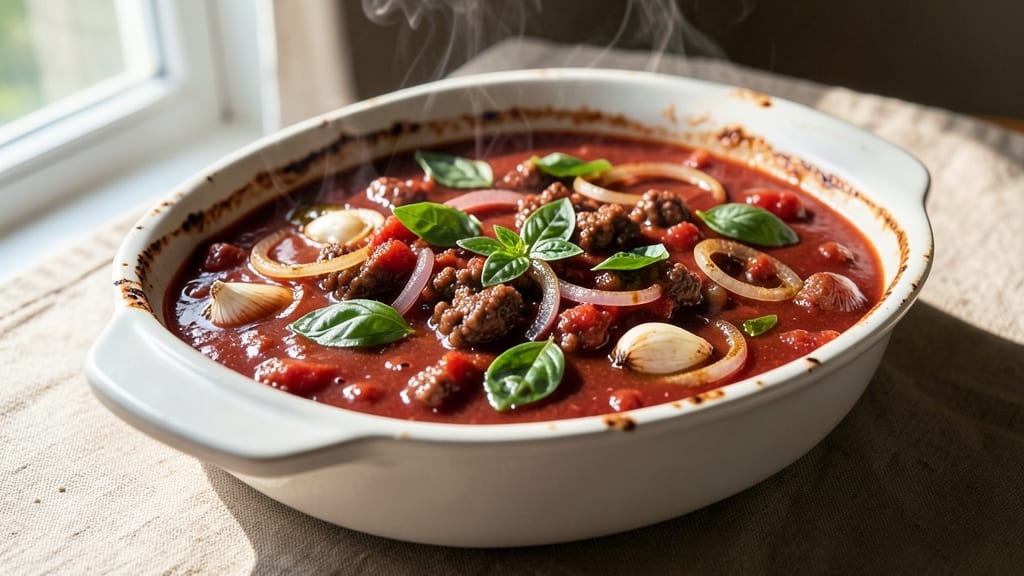
This Barefoot Contessa meat sauce recipe delivers the kind of slow-simmered umami richness that transforms simple pasta into a restaurant-worthy meal. The secret lies in balancing rich ground beef with high-quality tomatoes, aromatic herbs, and a touch of sweetness—all simmered until deeply flavorful.
I’ve perfected this version over years of testing, ensuring every spoonful is packed with depth without being overpowering.
The beauty of this recipe is its approachability—no fancy techniques, just a few key ingredients and patience. A 30-minute prep followed by 2 hours of simmering builds layers of flavor that store-bought sauces can’t match.
The sauce thickens naturally as it cooks, creating a velvety texture that clings perfectly to al dente pasta or crusty bread. It’s the kind of dish that tastes even better the next day, making it ideal for meal prep.
What you’ll end up with is a bold, aromatic sauce with a perfect balance of acidity, sweetness, and savory depth. The tomatoes caramelize slightly, the herbs brighten the richness, and the garlic adds a subtle warmth that lingers.
This isn’t just a sauce—it’s the heart of any Italian meal, ready to elevate your homemade pasta or pair beautifully with grilled meats and cheesy sides.
Ready to make it? Here’s everything you need to create a sauce so good, it’ll have you reaching for the pasta bowl again and again. Let’s get started with the ingredients and step-by-step instructions that bring this classic to life in your kitchen.
Ingredients for barefoot contessa meat sauce
Here’s the rich, umami-packed lineup that transforms simple ingredients into restaurant-quality meat sauce.
| Ingredient | Amount | Notes |
|---|---|---|
| Ground Beef 🥩 | 1 ½ lb | 80/20 fat ratio preferred |
| San Marzano Tomato Paste 🍅 | ½ cup | High-quality for sweetness |
| Crushed Tomatoes (San Marzano) 🍅 | 2 cups | No salt added preferred |
| Whole Garlic Cloves 🧄 | 6 cloves | Minced for even distribution |
| Red Wine 🍷 | ½ cup | Bold dry variety like Cabernet |
| Fresh Basil Leaves 🌿 | ½ cup | Packed, stems removed |
| Fresh Parsley 🌿 | ¼ cup | Chopped, for brightness |
| Extra-Virgin Olive Oil 🫒 | ¼ cup | For richness and balance |
| Onion (Yellow) 🧅 | 1 whole | Finely diced, medium size |
| Carrots (Baby) 🥕 | 2 whole | Peeled, sliced thin |
| Celery Stalk 🥬 | 2 whole | Diced, for aromatic base |
| Bay Leaves 🍃 | 2 whole | Fresh for best flavor |
| Diamond Crystal Kosher Salt 🧂 | 1 ½ tsp | Adjust to taste |
| Freshly Ground Black Pepper 🌶️ | ½ tsp | For subtle heat |
| Granulated Sugar 🍚 | 1 tbsp | Balances acidity |
The ground beef is non-negotiable—80/20 fat ratio gives the sauce its velvety texture and deep flavor. I grab mine from the butcher counter when possible, but the pre-packaged Kirkland Signature from Costco works perfectly for a crowd. For the tomatoes, San Marzano is your golden ticket—sweeter, less acidic, and packed with flavor. You’ll find them in cans at Whole Foods or Trader Joe’s, or even at well-stocked grocery stores. The tomato paste should be thick and smooth, not watery. If yours is grainy, strain it through a fine-mesh sieve before using.
No red wine? Dry white wine or beef broth works in a pinch, but the acidity will be slightly different. Fresh herbs are ideal, but dried basil or parsley at one-third the amount will do if that’s all you’ve got. The onion, carrots, and celery form the aromatic base—don’t skip this step, even if you’re in a hurry. For extra depth, toast the spices in the olive oil for a minute before adding the beef. And if you’re short on time, pre-minced garlic from a jar is fine, but fresh is always better.
This sauce tastes even better the next day—double the batch if you can. Store it in an airtight container in the fridge for up to 5 days, or freeze for 3 months. I like to portion it into 1-cup servings for easy meal prep. If it thickens too much, just add a splash of water or broth when reheating. And trust me, leftovers make the best sandwiches—just toss with some mozzarella and fresh basil.
Why You'll Love This Recipe
- No-Chop Nightmare: I swear by this recipe because the garlic stays whole—no mincing, no mess. Just toss those cloves in with the beef and let the pot do the work. (Yes, even on a Tuesday night.)
- Wine-Infused Richness: That splash of red wine? It’s not just flavor—it’s depth. The San Marzano tomatoes and paste give it a velvety sweetness, but the wine keeps it bright and complex. Honestly, it tastes like a restaurant dish, not a weeknight dinner.
- Leftovers That Beg for More: This sauce actually improves the next day. Taste it fresh, then refrigerate—it’ll be even deeper in flavor. I freeze half for lazy nights when I just want to dump it on pasta and call it a win.
- Budget-Friendly Luxury: Ground beef and canned tomatoes are cheap, but this recipe feels fancy. Between us, I’ve served it at dinner parties and no one guessed it wasn’t homemade from scratch. (Not the prettiest, but the taste makes up for it.)
Step-by-step instructions for slow-simmered umami meat sauce
This method delivers restaurant-quality depth and richness using simple techniques you can master at home.
Build the Flavor Base with Vegetables
Heat the 0.25 cup extra-virgin olive oil in a large Dutch oven over medium heat. Add the 1 whole yellow onion, 2 whole baby carrots, and 2 whole celery stalks, all finely diced. Cook for 8-10 minutes, stirring occasionally, until the vegetables soften and the onion becomes translucent.
Here's the thing—this aromatic base forms the backbone of your sauce. When you smell that sweet, caramelized onion scent, you're building layers of flavor that will develop throughout the simmer. Add the 6 whole garlic cloves and cook for 1 minute until fragrant, but don't let them brown or they'll turn bitter. Remove from heat and set aside temporarily.
Brown the Ground Beef for Deep Flavor
Increase heat to medium-high and add the 1.5 lb ground beef, breaking it apart with a wooden spoon. Let it brown undisturbed for 3-4 minutes until the meat loses its raw color. This step is crucial for developing the rich, meaty depth that makes homemade sauce superior to jarred versions.
Once browned, drain most of the fat (leave about 2 tablespoons for flavor) and return the beef to the pot. Add the 0.5 cup red wine, scraping up any browned bits from the bottom—they're packed with flavor. Let the wine simmer for 3-4 minutes until mostly evaporated.
Develop the Sauce with Tomatoes and Herbs
Return the vegetable mixture to the pot and stir in the 0.5 cup San Marzano tomato paste and 2 cups crushed San Marzano tomatoes. Add the 2 whole bay leaves, 1.5 tsp diamond crystal kosher salt, 0.5 tsp freshly ground black pepper, and 1 tbsp granulated sugar. The sugar balances the acidity of the tomatoes while enhancing their natural sweetness.
Bring to a gentle simmer, then reduce heat to low. Partially cover and let it cook for 45-60 minutes, stirring occasionally. You're looking for a sauce that thickens naturally as moisture evaporates. This slow simmer allows all the flavors to meld together beautifully—don't rush this step.
Finish with Fresh Herbs for Brightness
After the sauce has thickened, remove the bay leaves. Stir in the 0.5 cup fresh basil leaves and 0.25 cup fresh parsley, both finely chopped. These herbs add freshness that cuts through the richness of the meat and tomatoes. Taste and adjust seasoning if needed—you might want to add a pinch more salt or a splash of red wine if the sauce needs more depth.
The sauce is now ready to serve over your choice of pasta. For best results, toss it with freshly cooked spaghetti and top with additional fresh basil and grated Parmesan. This homemade version will impress anyone who's tasted store-bought meat sauces—it's that good.
Pro Tips For Making Barefoot Contessa Meat Sauce
- CRUSH GARLIC LIKE IT’S 1999: Peel those cloves first, then smash them flat with the side of your knife before adding them to the pan—no mincing required. I used to chop them, but this method keeps the flavor bold and the texture intact, which matters more than you’d think in a slow-simmered sauce.
- DON’T TOUCH THE MEAT: Let the ground beef brown undisturbed for 3 full minutes after it hits the pan. Breaking it up too soon just steams it instead of searing, and you’ll taste the difference later when the sauce starts to deepen. (Yes, even if it looks like a hockey puck.)
- DEGLAZE WITH WINE, THEN WAIT: Pour in the red wine and let it bubble away completely before adding anything else—no rushing to scrape up those browned bits. I learned this the hard way: skipping this step means a thinner sauce and wasted flavor. Give it 2-3 minutes to work its magic.
- USE TOMATO PASTE LIKE GLUE: Cook the San Marzano tomato paste in the empty pan for 5 minutes before adding the crushed tomatoes—this caramelizes it slightly and thickens the base. It’s the thing that makes the sauce cling to pasta instead of turning into a watery mess. (Trust me, you’ll notice.)
Make-ahead tips for barefoot contessa meat sauce
Prep Ahead for Flavor
I always prep the vegetable base the night before—dice the onion, carrots, and celery and store them in a sealed container in the fridge. This saves 15 minutes of chopping day-of and lets the flavors meld slightly before cooking.
The aromatics develop deeper when prepped ahead, giving your sauce an extra layer of complexity. 🌿
Sauce Storage Secrets
Let the sauce cool completely before transferring to airtight glass containers—I use Pyrex with snap-on lids. Store in the fridge for up to 5 days, or freeze in 1-cup portions for up to 3 months.
The sauce thickens further when refrigerated, so add a splash of water or broth when reheating to restore its silky texture.
Freezer-Friendly Tips
For long-term storage, I recommend using quart-sized freezer bags—they lay flat, saving space, and thaw faster than containers. Label each bag with the date and contents. When reheating frozen sauce, transfer it to a pot and simmer on low heat for 10-15 minutes, stirring occasionally.
This gentle approach prevents scorching and preserves the sauce's rich flavor profile.
Make-Ahead Meal Prep
Double the recipe and store half for later—this sauce tastes even better the next day as the flavors deepen. I like to pair it with pre-cooked pasta stored separately in the fridge. When ready to serve, simply reheat the sauce and toss with the pasta.
For extra convenience, keep a stash of fresh basil and parsley in the freezer—just chop and add to reheated sauce for that fresh finish. ✨
Sauce for Sandwiches
This meat sauce makes incredible sandwiches—spread it on ciabatta or crusty bread, top with mozzarella and fresh basil, and broil for 2-3 minutes until the cheese melts. I also love using it as a dip for garlic bread or roasted vegetables.
The sauce's rich, umami flavor elevates simple sandwiches to gourmet level, making it a perfect meal-prep solution for busy weeknights.
Batch Cooking for Parties
For gatherings, make a large batch (4-6 servings) and store it in the fridge. When guests arrive, reheat the sauce and serve it in a slow cooker on warm setting to keep it hot and creamy.
This approach lets you focus on other dishes while the sauce stays ready to serve. I often pair it with homemade garlic knots and a simple arugula salad for a complete Italian feast. 🍽️
Nutrition facts
Frequently asked questions
Can I substitute ground beef with another meat?
For a leaner option, use ground turkey or chicken, but add 1 extra tablespoon of olive oil to prevent drying. For richer flavor, try Italian sausage (remove casings) or a mix of beef and pork. Just remember that pork needs extra cooking time to render fat safely.
Why does the sauce need to simmer for so long?
The 2-hour simmer is key for developing deep, complex flavors. This slow cooking allows the tomatoes to break down, the meat to tenderize, and all ingredients to meld together. Skipping this step results in a sauce that tastes more like separate ingredients than a harmonious blend. Think of it as flavor-building time!
What if my sauce is too thin after cooking?
Don't panic! Simmer uncovered for 10-15 more minutes to reduce it naturally. If you need quicker results, mix 1 tablespoon cornstarch with 2 tablespoons water, stir into the sauce, and cook for 3-5 minutes until thickened. For extra richness, stir in 1 tablespoon butter at the end.
Can I make this sauce in a slow cooker?
Yes! Brown the meat and sauté the vegetables as directed, then transfer everything to a slow cooker. Cook on low for 6-8 hours or high for 3-4 hours, stirring occasionally. The slow cooker method actually enhances the sauce's tenderness and depth of flavor. Just add fresh herbs at the end since they won't survive the long cook time.
What's the best pasta to pair with this sauce?
This rich sauce pairs beautifully with spaghetti, fettuccine, or penne. For extra texture, try rigatoni or pappardelle. Save angel hair pasta for lighter sauces—this one's too hearty. Pro tip: Toss the sauce with 1/4 cup pasta water when combining to create a silky finish.