
Sauces & Condiments
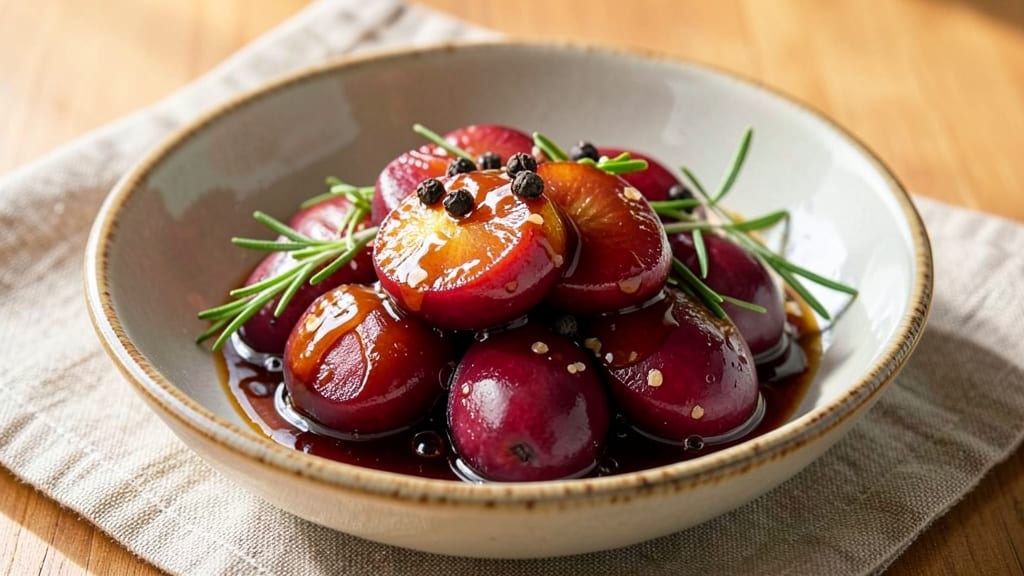
This balsamic plum sauce transforms ordinary grilled meats and roasted vegetables into showstopping centerpieces with its velvety sweet-tart balance. 🌟 The secret lies in simmering plums with balsamic vinegar until they break down into a glossy, concentrated sauce—rich enough to stand alone but versatile enough to elevate everything from steak to cheese boards.
I developed this recipe after years of experimenting with fruit reductions, and the combination of balsamic's tang with plums' natural sweetness creates a flavor profile that's both sophisticated and approachable.
The process is simpler than it sounds: just combine plums, balsamic vinegar, sugar, and a pinch of spices, then reduce on the stove until thick and syrupy. No special equipment required—just patience to let the flavors meld.
The result is a sauce that's equally at home drizzled over grilled chicken, spooned alongside roasted pork, or used as a glaze for vegetables. It keeps beautifully in the fridge for up to two weeks, making it perfect for meal prep or gifting.
What makes this sauce truly special is its ability to enhance rather than overpower. The balsamic vinegar adds depth and complexity, while the plums provide natural sweetness that caramelizes as it reduces. The final texture is luscious and glossy, clinging to every bite like a gourmet secret weapon.
Whether you're serving up a weeknight dinner or hosting a holiday feast, this sauce will elevate your dishes with minimal effort.
Use it as a finishing touch for grilled meats, a drizzle over roasted vegetables, or even as a glaze for desserts like cheesecake or pound cake. The possibilities are endless, and the process is foolproof—once you try it, you'll never go back to store-bought again. Let's make this sauce!
Ingredients for balsamic plum sauce
Nine simple ingredients create a sauce that turns grilled meats and roasted veggies into showstoppers.
| Ingredient | Amount | Notes |
|---|---|---|
| Fresh Plums 🍑 | 1 ½ lb | Pitted, ripe but firm variety |
| Balsamic Vinegar 🍷 | ½ cup | Aged 25 years or more preferred |
| Granulated Sugar 🍚 | ½ cup | Light brown sugar for depth |
| Red Wine Vinegar 🍷 | 1 tbsp | For extra tanginess |
| Fresh Rosemary 🌿 | ¼ cup | Finely chopped, stems removed |
| Ground Black Pepper 🌶️ | ½ tsp | Freshly cracked for warmth |
| Extra-Virgin Olive Oil 🫒 | 1 tbsp | For glossy finish |
| Orange Zest 🍊 | 1 tsp | Brightens the sauce |
| Salt 🧂 | ¼ tsp | Diamond Crystal preferred |
Plums are the heart of this sauce—Italian prunes or fresh plums work best, but avoid overly soft varieties. Trader Joe's has great organic plums year-round, or grab Italian prunes from the bulk section at Whole Foods. The balsamic vinegar should be aged at least 25 years for that deep, caramelized flavor—Barolo Cru or Bartoli are my go-tos. If you can't find aged balsamic, a blend of regular balsamic and a splash of reduced balsamic glaze works in a pinch. The rosemary adds an earthy depth that pairs perfectly with the sweetness, so don't skip it—just chop it fine so it blends smoothly into the sauce.
No aged balsamic? Double the regular balsamic and add 1 tsp of maple syrup to mimic the depth. Running short on fresh rosemary? Dried rosemary at one-third the amount gives you a similar flavor, though it won't be as aromatic. The orange zest can be swapped for lemon zest if you're out, but orange has that perfect citrus brightness. For a quicker version, use plum jam instead of fresh plums—just reduce it with the vinegar and sugar. And if you're feeling bold, add a pinch of cinnamon for warmth, but keep it subtle so the plums stay the star.
This sauce keeps beautifully—2 weeks in the fridge in a sealed jar, or 6 months in the freezer if you make a big batch. The texture thickens as it cools, so stir in a splash of water if it gets too stiff. I always make extra because it disappears fast—drizzled over grilled chicken, spooned over roasted carrots, or even as a glaze for pork chops. The flavors actually improve over time, so it's perfect for gifting. Just let it come to room temperature before serving, and trust me, it's worth the wait.
Why You'll Love This Recipe
- No Pitting Needed: I swear by this trick—just halve those plums and let the stones sit out while you simmer. No fussing with tiny pits or sticky fingers. The rosemary sprigs even double as stirrers when you’re done.
- Sweet-Tart Magic: That first spoonful of warm, jammy plums tangled with balsamic’s deep tang? It’s like a grown-up dessert sauce, but I drizzle it over grilled chicken or pork chops instead. The red wine vinegar cuts through the sugar just enough to keep it bright.
- BBQ’s Secret Weapon: I keep a jar of this in the fridge for when I’m tired of bottled sauces. It’s the star of summer BBQs—toss it on burgers, slather it on ribs, or even mix it into marinades. (Yes, even on a Tuesday night.)
- Makes More Than You Think: A single batch stretches across three meals: one for tonight’s chicken, another for tomorrow’s charcuterie board, and the rest gets frozen for winter. Honestly, the sugar helps it keep beautifully, so you’re not stuck with sad, watery leftovers.
Step-by-step instructions for balsamic plum sauce
Here's how to make this velvety plum sauce that balances sweetness and tang perfectly.
🍳 Step 1: Simmer Plums Until Soft
In a medium saucepan, combine the 1.5 lb fresh plums (pitted and cut into quarters), 0.5 cup granulated sugar, and 1 tbsp red wine vinegar. Bring to a boil over medium-high heat, then reduce to medium-low heat and simmer uncovered for 15-20 minutes until the plums break down and release their juices.
Here's the thing—you want the plums to soften completely but not turn to mush. You'll know it's ready when the sauce thickens slightly and the plums can be mashed easily with a fork. Stir occasionally to prevent sticking, and if the mixture looks too dry, add 2-3 tablespoons of water to help the process along.
🍳 Step 2: Build the Balsamic Base
Once the plums are tender, add the 0.5 cup balsamic vinegar and 1 tsp orange zest to the saucepan. Increase the heat to medium-high and bring to a boil again. Let it simmer vigorously for 8-10 minutes until the sauce reduces by about one-third and becomes syrupy.
This is where the magic happens—the balsamic vinegar deepens in flavor and caramelizes slightly, creating that rich, glossy finish. Watch it carefully; you want it to thicken but not burn. If it starts to darken too quickly, reduce the heat to medium-low and let it simmer gently.
👨🍳 Step 3: Season and Finish
Stir in the 0.25 cup finely chopped fresh rosemary, 0.5 tsp ground black pepper, and 0.25 tsp salt. Add the 1 tbsp extra-virgin olive oil and simmer for another 5 minutes to let the flavors meld together. Taste and adjust the seasoning—you might need a touch more sugar or vinegar to balance the sweet-tart profile.
Here's a pro tip: If the sauce is too thick for your liking, thin it out with 1-2 teaspoons of water or a splash of the reserved plum juices. The texture should coat the back of a spoon but still be pourable. Let the sauce cool slightly before tasting again, as it will thicken as it cools.
⏰ Step 4: Rest and Gloss
Transfer the sauce to a bowl and let it rest at room temperature for 30 minutes. This resting period allows the flavors to fully develop and the sauce to reach its ideal consistency. If you're impatient, you can refrigerate it for 15 minutes to speed up the process.
Before serving, give the sauce a final taste and adjust the seasoning one last time. If it's too thick, whisk in a little water or reserved plum juice to achieve that perfect glossy finish. The sauce should be vibrant, with a deep red hue and a shine that makes it irresistible. Serve it warm over grilled meats, drizzled over roasted vegetables, or spooned alongside cheese boards.
Pro Tips For Making Balsamic Plum Sauce
- PEEL PLUMS FIRST: I learned this the hard way—peeling plums before pitting saves time and keeps your sauce cleaner. The skins add bitterness and turn to mush when simmered, so skip the hassle and peel them like you would an apple.
- SIMMER LOW AND LONG: This sauce needs patience—don’t rush it. After the initial boil, drop the heat to a gentle simmer (think tiny bubbles, not rolling) and let it reduce for at least 20 minutes. Rushing it leaves the sugar gritty and the flavors underdeveloped.
- STRAIN THE ROSMARY: Tossing whole rosemary sprigs in the sauce is fine, but if you want a smoother texture, strain them out before blending. The needles can make the sauce slightly fibrous, and you only need the aroma—no one’s judging if you skip this, but it’s a nice upgrade.
- BALANCE THE VINEGARS: Start with equal parts balsamic and red wine vinegar, then taste as you go. Balsamic adds depth, but too much can overpower the fruit. If it’s too sharp, add a splash of water or a pinch more sugar—just don’t drown it in sweetness.
Essential equipment for this dish
Saucepan Essentials
You don’t need anything fancy—just a medium saucepan with a lid (I use my All-Clad Stainless Steel one) and a wooden spoon for stirring. The saucepan should have 2-3 quart capacity to give the plums room to break down without overflowing.
A lid helps concentrate the flavors by trapping steam, so don’t skip it! For even heating, choose a pan with a flat, heavy bottom—this prevents hot spots and burning. 🔥
Heat Control Tools
A kitchen thermometer (like the Thermoworks Thermapen) isn’t mandatory, but it’s a game-changer for nailing the medium-low heat stage. The ideal simmer temperature is around 180-190°F—this ensures the plums soften without scorching.
If you don’t have one, watch for gentle bubbles forming just below the surface (not a rolling boil). A heat diffuser (like the Ozeri Touch Control) can also help if your stove runs hot.
Storage Containers
For short-term storage (2 weeks in the fridge), use glass mason jars with airtight lids (I love the Ball Mason Jars). They’re sturdy, microwave-safe, and let you see the gorgeous glossy sauce inside.
For longer storage (6 months in the freezer), opt for freezer-safe glass jars or silicone molds—they prevent freezer burn and make thawing easier. Just leave ½ inch headspace to account for expansion. ❄️
Optional Upgrades
A fine-mesh strainer (like the OXO Good Grips) helps remove seeds and rosemary stems for a silky texture if you prefer it smooth. For a glossy finish, a silicon spatula (I use OXO’s) spreads the sauce evenly when reheating.
If you’re feeling fancy, a stand mixer with a whisk attachment can reduce the sauce faster, but it’s not necessary—your stovetop will do just fine with patience. 💫
Budget-Friendly Swaps
No fancy tools? No problem! A stainless steel pot from your kitchen works perfectly—just avoid nonstick if you’re simmering at high heat. For straining, a clean tea towel works in a pinch (line a colander with it).
Skip the thermometer and use the finger test: dip your finger in the sauce—if it feels warm but not hot, you’re at the right temperature. The key is low and slow, not perfection. 💡
Nutrition facts
Frequently asked questions
Can I use dried plums instead of fresh?
Yes! For 1.5 lb fresh plums, use 1 cup dried plums (Italian prunes) instead. Soak them in warm water for 15 minutes first to soften, then drain before adding to the sauce. You may need to reduce the sugar slightly (¼ cup instead of ½ cup) since dried plums are sweeter. The texture will be slightly thicker, so thin with water if needed.
How do I fix a sauce that's too thick or too thin?
For thick sauce, whisk in 1-2 teaspoons of water or reserved plum juice until it reaches a glossy, pourable consistency. If it's too thin, simmer uncovered for 5-10 more minutes to reduce further. Never add more sugar or vinegar to thicken—it'll just make the imbalance worse. The ideal texture coats the back of a spoon but still drizzles easily.
What are the best ways to use this sauce?
This sauce shines as a drizzle over grilled meats (especially pork chops or chicken), a glaze for roasted vegetables, or a dipping sauce for cheese boards. Try it with aged cheddar and walnuts for a sweet-savory combo. For desserts, use it as a glaze for pound cake or drizzle over vanilla ice cream. The balsamic depth makes it surprisingly versatile beyond savory dishes!
Can I make this sauce without sugar?
Yes, but the flavor will be less balanced. If you want to skip sugar, use 1 extra tbsp of red wine vinegar and 1 tsp of maple syrup instead. The plums' natural sweetness will still shine, but the sauce will have a more pronounced tang. For a diabetic-friendly version, reduce the sugar to ¼ cup and add ½ tsp of vanilla extract to enhance sweetness without carbs.
Why does my sauce smell burnt but doesn't look burnt?
This happens when the balsamic vinegar caramelizes too quickly at high heat. Lower the heat to medium-low and let it simmer gently—you want small bubbles, not a rolling boil. If it's already overcooked, strain out any dark bits and whisk in 1 tsp of fresh orange juice to brighten the flavor. The sauce will still taste great, just with a deeper, more complex profile.