
Sauces & Condiments
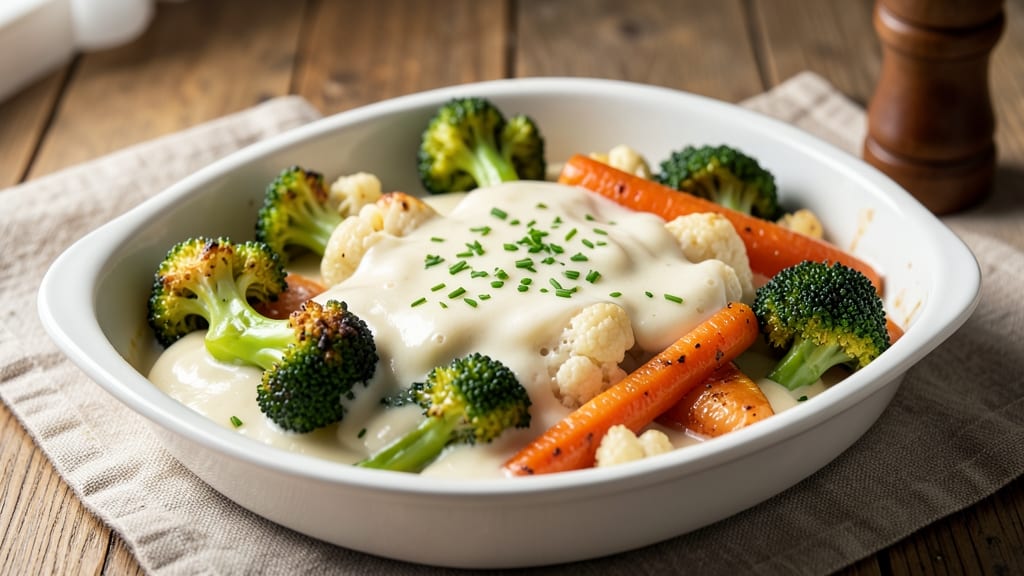
This baked veg in white sauce recipe transforms simple vegetables into a creamy, comforting one-pan dish that’s perfect for weeknights or meal prep.
The secret lies in a velvety béchamel base that clings to tender carrots, broccoli, and cauliflower, creating a harmonious blend of textures—al dente crunch meets silky sauce in every bite.
I developed this after years of testing, ensuring the sauce doesn’t turn soggy while the vegetables stay vibrant and flavorful.
The beauty of this recipe is its foolproof nature—no fancy techniques required. A simple roux forms the foundation of the sauce, enriched with milk, butter, and a touch of nutmeg for warmth. The vegetables roast directly in the sauce, absorbing its richness while developing a golden, caramelized edge.
This method cuts prep time by half compared to traditional stovetop preparations, making it ideal for busy schedules.
By the time it emerges from the oven, you’ll have a dish that’s restaurant-quality but effortless to achieve: bright green broccoli florets, crisp-tender cauliflower, and sweet carrots all bathed in a luscious white sauce.
The aroma alone will have everyone gathered at the table, and the first bite delivers that perfect balance of creamy, savory, and slightly sweet. It’s the kind of meal that feels indulgent yet remains light enough for a healthy dinner.
Serve it as a standalone dish or pair with crusty bread to soak up every last drop of sauce. The leftovers reheat beautifully, making it a go-to for lunches or quick dinners. Here’s how to create this creamy, comforting masterpiece in just one pan.
Ingredients for baked veg in white sauce
These fresh vegetables and simple pantry staples create a velvety white sauce masterpiece.
| Ingredient | Amount | Notes |
|---|---|---|
| Broccoli Florets 🥦 | 1 ½ lb | Fresh, cut into bite-sized pieces |
| Cauliflower Florets 🥬 | 1 ½ lb | Fresh, cut into bite-sized pieces |
| Carrots 🥕 | 1 ½ lb | Whole, peeled and cut into sticks |
| Unsalted Butter 🧈 | ½ cup | Cold, cubed for roux |
| All-Purpose Flour 🌾 | ½ cup | Diamond Crystal preferred |
| Whole Milk 🥛 | 2 cups | Full-fat for creaminess |
| Ground Nutmeg 🌿 | ¼ tsp | Freshly grated for warmth |
| Salt 🧂 | 1 tsp | Kosher or sea salt |
| Black Pepper 🌶️ | ¼ tsp | Freshly ground preferred |
| Garlic Cloves 🧄 | 3 cloves | Minced for depth of flavor |
| Shallot 🧅 | 1 whole | Minced for subtle sweetness |
| Vegetable Stock 💧 | ½ cup | Low-sodium preferred |
| Fresh Thyme Leaves 🌿 | 1 tbsp | Chopped for herbal note |
The vegetables are the stars here—bright green broccoli, crisp cauliflower, and sweet carrots are non-negotiable for texture contrast. Look for organic options at Whole Foods or local farmers markets for peak freshness, but standard grocery store varieties work fine. For the sauce, Diamond Crystal kosher salt dissolves better than table salt, and full-fat milk ensures a truly creamy result. The butter matters too—use European-style if you can find it, as it has a higher fat content for a richer roux. Fresh thyme and nutmeg elevate the dish, so don't skip them even if they're small amounts.
No fresh thyme? Dried thyme at one-third the amount works in a pinch, though the flavor won't be as bright. Running short on shallots? One small yellow onion minced finely does the job. The vegetable stock can be swapped for low-sodium chicken stock if vegetarian restrictions aren't strict, but keep it to half the amount to avoid overpowering. For the butter, vegan butter works if needed, though it may alter the sauce's richness slightly. The carrots can be left whole or cut into sticks—whole carrots stay slightly crunchier while sticks absorb more sauce flavor. If you're watching calories, reduce the butter to 3 tbsp and add an extra splash of milk to compensate.
This dish reheats beautifully—just add a splash of milk to loosen the sauce if it thickens. Store leftovers in an airtight container for up to 4 days in the fridge or 3 months in the freezer. For make-ahead prep, roast the vegetables first and store them separately, then assemble with the sauce when ready to bake. The sauce can be made ahead too—just reheat it gently before adding the vegetables. The aroma alone will have everyone anticipating dinner, and the first bite delivers that perfect balance of creamy, savory, and slightly sweet that makes this dish so special.
Why You'll Love This Recipe
- One-Pan Magic: I swear by this for nights when I don’t want to wash five dishes—just toss the florets and carrots on a sheet pan, drizzle with butter, and let the oven do the work. The sauce thickens right there, coating everything perfectly without extra bowls or strainers.
- Creamy Without Heavy: That velvety white sauce? It’s just butter, flour, and a splash of milk—no cream, no fuss. The flour-to-butter ratio gives it that silky texture without making it greasy, and the veggies soak up just enough to stay tender but not soggy.
- Lunchbox Hero: Between us, this is my go-to for meal prep. I bake a big batch on Sundays, portion it into containers, and reheat slices in the microwave—kids (and my picky husband) actually finish it. The carrots stay crisp, and the sauce reheats like a dream.
- Budget Stretch: Honestly, this recipe makes me feel like I’m serving gourmet without breaking the bank. Broccoli and cauliflower are cheap staples, and a stick of butter goes a long way. It’s the kind of dish that feels indulgent but costs less than takeout.
Step-by-step instructions for baked vegetables in white sauce
Here's the method for creating a velvety white sauce that perfectly coats crisp-tender vegetables.
🍳 Step 1: Prepare the Vegetable Mixture
Preheat your oven to 400°F. In a large bowl, combine the 1.5 lb broccoli florets, 1.5 lb cauliflower florets, and 1.5 lb carrots. Toss them gently with 1 teaspoon salt, ¼ teaspoon black pepper, and 1 tablespoon chopped fresh thyme leaves until they're evenly coated. Spread the vegetables in a single layer on a large baking sheet lined with parchment paper.
Bake for 15 minutes until the vegetables begin to soften slightly at the edges but still retain their vibrant color. You want them to be tender-crisp, not mushy. This initial baking step ensures they'll finish cooking perfectly in the sauce later. Give them a quick stir halfway through to promote even cooking.
🍳 Step 2: Create the White Sauce Base
While the vegetables roast, melt the ½ cup unsalted butter in a large oven-safe skillet over medium heat. Add the minced shallot and minced garlic cloves, cooking for 2-3 minutes until they become fragrant and just begin to soften. Be careful not to let them brown.
Reduce the heat to medium-low and whisk in the ½ cup all-purpose flour all at once. Cook for 1-2 minutes, whisking constantly, until the mixture forms a smooth, pale roux. This step is crucial for developing the sauce's flavor and thickening power. The roux should smell nutty and toasty but not darken.
🍳 Step 3: Build the Creamy Sauce
Gradually pour in the 2 cups whole milk while whisking vigorously to prevent lumps from forming. Bring the mixture to a gentle simmer, continuing to whisk for 3-5 minutes until it thickens noticeably. You'll see it coat the back of a spoon and leave a visible trail when you run your finger through it.
Stir in the ½ cup vegetable stock, ¼ teaspoon ground nutmeg, and an additional ½ teaspoon salt to balance flavors. The nutmeg adds a subtle warmth that complements the creamy sauce beautifully. Let the sauce simmer gently for another 2 minutes to allow all the flavors to meld together.
🥘 Step 4: Combine and Bake to Perfection
Carefully transfer the roasted vegetables to the skillet with the white sauce, gently stirring to coat them evenly. The vegetables should be completely submerged in the sauce, but if not, add a splash of milk or stock to help them along. Return the skillet to the oven and bake for 15-20 minutes.
You'll know it's done when the vegetables are fork-tender with just a slight resistance (al dente) and the sauce has thickened into a luxurious, creamy consistency. The edges of the vegetables should be tender, but the centers should still offer a pleasant crunch. If the sauce appears too thick, you can thin it slightly with a bit more milk or stock before serving.
🍽️ Step 5: Rest and Serve
Remove the skillet from the oven and let it rest for 5 minutes off the heat. This resting period allows the sauce to thicken slightly more and the flavors to settle. Taste and adjust the seasoning if needed, adding more salt, pepper, or nutmeg to your preference.
Serve the baked vegetables immediately while they're hot and the sauce is at its peak creaminess. The combination of tender-crisp vegetables and rich, velvety white sauce creates a comforting dish that's perfect for any occasion. The nutmeg adds a subtle warmth that enhances the natural sweetness of the carrots and complements the earthy flavors of the broccoli and cauliflower.
Pro Tips For Making Baked Veg In White Sauce
- STEAM FIRST, BAKE SECOND: Cut your broccoli and cauliflower into even-sized florets, then spread them on a baking tray and microwave for 2-3 minutes with a splash of water. This jumpstarts the cooking process—no soggy centers when they hit the oven, and the sauce clings better to partially cooked veg.
- DON’T SKIP THE BUTTER MELT: Use cold unsalted butter straight from the fridge when making the white sauce. Let it melt slowly over low heat while whisking in the flour—this prevents lumps and gives you a smoother, richer sauce. (Yes, even if you’re impatient like me.)
- WATCH THE CARROTS: Slice carrots into even ¼-inch rounds and toss them with a pinch of salt before baking. Thicker pieces stay crunchy; thin slices turn mushy. If you’re short on time, parboil them for 2 minutes first—they’ll soften faster and absorb the sauce better.
- SAUCE TOO THICK? FIX IT: If your white sauce ends up gluey, don’t panic. Thin it with a splash of milk or even a little vegetable broth while stirring over low heat. Too thin? Simmer longer to thicken—just don’t walk away, or you’ll end up with flour-tasting glue. (I learned this the hard way.)
Pro cooking tips for this dish
Roux Perfection
The key to a velvety white sauce starts with a pale, nutty roux—never let it darken to golden or brown. I use a heavy-bottomed stainless steel skillet (like All-Clad) because it distributes heat evenly and prevents scorching.
Whisk constantly for those 1-2 minutes until the flour fully incorporates and the mixture smells toasty. If you see any lumps, strain the sauce through a fine-mesh sieve before adding milk. 🌡️
Milk Temperature Matters
Warm your milk slightly before adding it to the roux—just heat 2 cups whole milk in a saucepan until it reaches 160°F (about 3-4 minutes on medium heat). This prevents the sauce from curdling when combined.
I like to whisk the warm milk into the roux in a slow, steady stream while maintaining heat on medium-low. Adding cold milk can cause the sauce to seize up.
Vegetable Pre-Baking Secret
That initial 15-minute bake at 400°F is non-negotiable—it jumpstarts the vegetables' tenderness without turning them mushy. I use a wire rack on a baking sheet to allow air circulation, which helps them crisp slightly.
If your vegetables are very fresh, you might need 12-15 minutes instead of the full time. The goal is to soften the edges just enough so they absorb the sauce beautifully without falling apart.
Sauce Thickness Control
If your sauce thickens too much during baking, don't panic—just remove the skillet from the oven and whisk in 1-2 tablespoons of milk or stock until it reaches your desired consistency. For extra insurance, I keep a small bowl of warm milk nearby while baking.
Over-thickened sauce is easy to fix; under-thickened sauce is harder to salvage. The perfect texture should coat the back of a spoon but still be pourable.
Nutmeg Timing
Add the ¼ teaspoon ground nutmeg during the final 2 minutes of simmering—this ensures its warm, earthy flavor infuses fully without overpowering. Freshly grated nutmeg tastes brighter, but pre-ground works fine. I like to taste the sauce before baking and adjust with a pinch of salt or pepper if needed.
The nutmeg should enhance, not dominate—the carrots' natural sweetness and thyme's herbal notes should still shine through.
One-Pan Efficiency
Use an oven-safe skillet with at least 3-quart capacity** (like a Le Creuset Dutch oven) to maximize space and minimize cleanup. If your skillet isn't oven-safe, transfer the sauce and vegetables to a baking dish after combining.
I find that a deep skillet helps prevent sauce spillage during baking. For extra insurance, place the skillet on a rimmed baking sheet before putting it in the oven—just in case any sauce overflows. 💡
Nutrition facts
Frequently asked questions
Can I use frozen vegetables instead of fresh?
Yes, but with a few adjustments! Use 2 cups frozen broccoli florets, 2 cups frozen cauliflower florets, and 2 cups frozen carrot pieces instead of fresh. First, spread them on a baking sheet and bake at 400°F for 8-10 minutes to remove excess moisture before adding to the sauce. Frozen veggies work well but may need 5-10 extra minutes of baking time to reach the same tenderness.
How do I prevent the sauce from getting lumpy?
Whisk constantly when adding milk to the roux and keep heat at medium-low to prevent lumps. For extra smoothness, strain the sauce through a fine-mesh sieve after simmering. If lumps appear, blend the sauce briefly with an immersion blender—just 10-15 seconds usually fixes it without altering texture.
Can I make this dish dairy-free?
Replace butter with ½ cup vegan butter or olive oil, use 2 cups unsweetened almond milk, and swap regular flour for ½ cup cornstarch (mixed with ¼ cup water) to thicken. The sauce will still be creamy but with a slightly different texture. Add 1 tsp nutritional yeast for a cheesy flavor if desired.
Why did my sauce turn out too thick?
This usually happens if the milk didn't simmer long enough or the sauce reduced too much in the oven. Thin it by whisking in 1-2 tablespoons of warm milk or stock while off heat. For future batches, remove the skillet from the oven 2-3 minutes early and let it rest—sauces thicken further as they cool.
What are good side dishes to serve with this?
This creamy vegetable dish pairs perfectly with crusty sourdough bread for dipping, a simple mixed green salad with lemon vinaigrette, or garlic roasted potatoes for extra heartiness. For a complete meal, add a protein like grilled chicken breast or pan-seared tofu to balance the richness.