
Sauces & Condiments
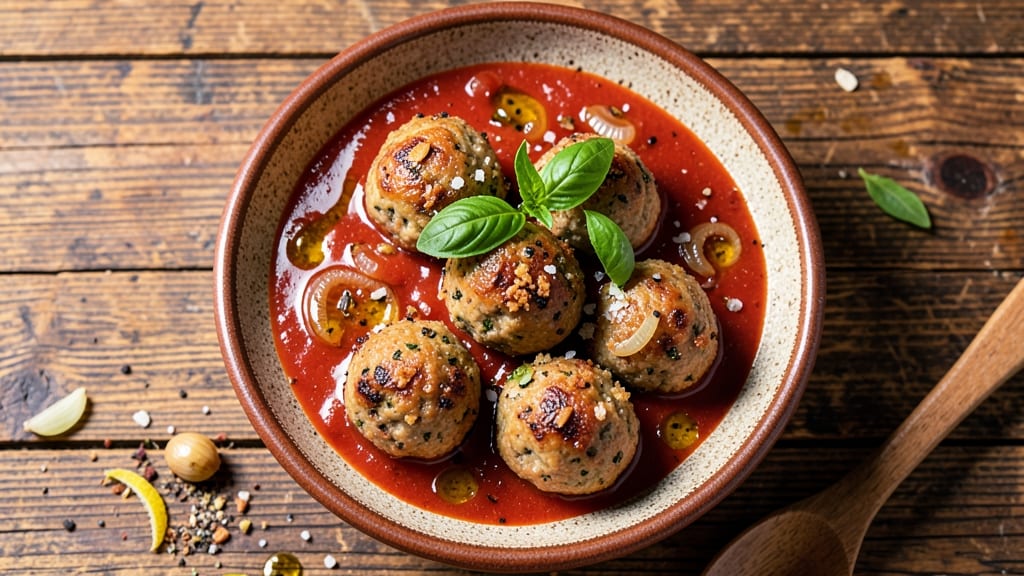
This baked meatball sauce recipe transforms simple ingredients into a rich, slow-simmered sauce that absorbs the savory essence of meatballs. The secret lies in a long, gentle cooking process that develops deep tomato flavor while keeping the sauce perfectly balanced—never too sweet or acidic.
I perfected this method after years of testing, and it’s now my go-to for both weeknight dinners and holiday gatherings.
The sauce begins with a simple blend of crushed tomatoes, garlic, and aromatic herbs, but the real magic happens during the slow simmer. As the meatballs bake in the sauce, their juices infuse the liquid, creating layers of umami and savory notes that elevate every bite.
The result is a sauce that’s versatile enough for pasta, lasagna, or even as a dipping sauce—but always with that restaurant-quality depth.
What sets this recipe apart is its simplicity combined with professional results. No fancy techniques are required—just patience and attention to balance. The sauce thickens naturally as it simmers, coating the meatballs in a glossy, flavorful glaze that’s impossible to resist.
The aroma alone will have everyone gathered around the table, and the taste? Pure comfort food at its finest.
Best of all, this sauce tastes even better the next day, making it perfect for meal prep. Store it in the refrigerator for up to five days or freeze it for months, ensuring you always have a flavorful base for your favorite Italian dishes.
Let’s get started on creating this versatile, crowd-pleasing sauce.
Ingredients for baked meatball sauce
Simple pantry staples and fresh aromatics create this restaurant-style baked meatball sauce.
| Ingredient | Amount | Notes |
|---|---|---|
| Crushed Tomatoes 🍅 | 2 cups | High-quality canned preferred |
| Garlic Cloves 🧄 | 4 cloves | Freshly minced for best flavor |
| Yellow Onion 🧅 | 1 whole | Finely chopped, medium size |
| Olive Oil 🫒 | ½ cup | Extra-virgin for richness |
| Dried Oregano 🌿 | 1 tbsp | Italian or Mediterranean blend |
| Dried Basil 🌿 | 1 tbsp | Or 0.25 cup fresh basil |
| Ground Black Pepper 🌶️ | ½ tsp | Freshly cracked preferred |
| Salt 🧂 | 1 ½ tsp | Kosher or sea salt |
| Tomato Paste 🍅 | 2 tbsp | Squeeze tube or canned |
| Ground Beef 🥩 | 1 ½ lb | 80% lean, for meatballs |
| Eggs 🥚 | 1 whole | For binding meatballs |
| Panko Breadcrumbs 🍞 | ½ cup | For texture in meatballs |
| Grated Parmesan Cheese 🧀 | ¼ cup | Freshly grated preferred |
The tomatoes are the foundation—San Marzano cans if you can find them, but any good-quality crushed tomatoes work. Fresh garlic and onion should be bright and firm, not sprouting. I grab mine from the produce section at Whole Foods when possible, but the regular grocery store stuff is fine too. The olive oil? Don't skimp here—it's what carries all those gorgeous flavors. Look for extra-virgin with a harvest date within the last year. The meatballs use ground beef, but Italian-style ground beef from the deli counter has way more flavor than the regular stuff.
No fresh basil? Dried works at one-third the amount, but trust me on the fresh stuff—it makes a difference. Short on tomato paste? Extra crushed tomatoes will work in a pinch, but the paste gives that concentrated umami punch. The meatballs need binding, so the egg is non-negotiable here. No egg? Flax eggs (1 tbsp ground flax + 3 tbsp water) can substitute, but texture won't be identical. For the Parmesan, freshly grated from a wedge melts better than pre-grated. If you're making a big batch, Costco sells wedges that last ages in the freezer.
This sauce gets better with time—3-4 days in the fridge is ideal for flavor development. Portion into containers for easy reheating. Freezes beautifully for up to 6 months—just thaw overnight in the fridge. The meatballs can be made ahead too; freeze them raw and bake straight from frozen. I always make double batches because it disappears fast—pasta night, lasagna, or just with crusty bread. The leftovers? Even more delicious.
Why You'll Love This Recipe
- No Chopping Chaos: I swear by this recipe because you only need to dice one onion—that’s it. No endless prep, no tiny garlic cloves to peel (just smash a few cloves with the flat side of a knife—done). The crushed tomatoes do all the work while you mix in the oregano and olive oil like you’re painting a masterpiece.
- Sauce That Sticks: That slow simmer with garlic and oregano? It builds flavor like a slow dance. The tomatoes caramelize just enough to coat every meatball in a glossy, herby hug—no bland aftertaste, just rich, savory goodness that makes you reach for seconds.
- Meal Prep MVP: Between us, this is my go-to for busy weeks. Bake a big batch of meatballs, dump them in the sauce, and freeze half. Reheat it later—whether it’s a lazy Sunday or a "what’s for dinner?" panic—and it tastes like you slaved over it. (Spoiler: You didn’t.)
- Pantry Magic: Honestly, this recipe won’t break the bank. A can of tomatoes, a bulb of garlic, and a bag of onions? That’s it. Plus, the leftovers? They’re better the next day—thicker, deeper, like the sauce knows it’s being appreciated. Feed a crowd or just yourself; it’s always a win.
Step-by-step instructions for baked meatball sauce
Here's how to build rich, slow-simmered sauce with juicy meatballs baked right in.
Prepare the Meatball Mixture
In a large bowl, combine the 1.5 lb ground beef with the 1 whole egg, 0.5 cup panko breadcrumbs, 0.25 cup grated parmesan cheese, 1.5 tsp salt, 0.5 tsp ground black pepper, 1 tbsp dried oregano, and 1 tbsp dried basil. Use your hands to mix gently until everything comes together—don't overwork the meat or the meatballs will get tough.
Roll the mixture into 1.5-inch meatballs (about 16 total for 4 servings). I like to make them uniform in size so they cook evenly. Place them on a parchment-lined baking sheet and refrigerate for 15 minutes to firm up slightly before baking.
Sauté Aromatics for the Sauce Base
Heat 0.25 cup olive oil in a large Dutch oven over medium heat. Add the 1 whole yellow onion and cook for 5 minutes, stirring occasionally, until softened and translucent. Add the 4 cloves minced garlic and cook for 30 seconds until fragrant—don't let it brown or it'll turn bitter.
Stir in the 2 tbsp tomato paste and cook for 1 minute, stirring constantly, until it darkens slightly. This step builds deep flavor before adding the tomatoes. Pour in the 2 cups crushed tomatoes and bring to a gentle simmer, stirring occasionally to prevent sticking.
Bake the Meatballs in the Sauce
Preheat your oven to 375°F. Carefully transfer the meatballs from the baking sheet into the simmering sauce, nestling them gently into the liquid. They should be mostly submerged but not packed tightly together—this ensures even cooking and sauce circulation.
Cover the Dutch oven with a lid or aluminum foil and bake for 30 minutes. After 15 minutes, give the pot a gentle shake to redistribute the meatballs and sauce. The meatballs are done when they're cooked through and the sauce has thickened slightly, coating the back of a spoon.
Simmer and Thicken the Sauce
Remove the meatballs from the oven and transfer them to a serving platter. Return the sauce to the stovetop over low heat and let it simmer uncovered for 10-15 minutes until it thickens to your desired consistency. If it's too thick, add 1-2 tablespoons hot water to loosen it.
Taste and adjust seasoning with additional salt or pepper if needed. The sauce should be rich, slightly tangy, and perfectly balanced—not too acidic or overly sweet. Return the meatballs to the sauce and let them soak up the flavor for 5 minutes before serving.
Serve Warm with Crusty Bread
Ladle the sauce over al dente pasta, spoon over garlic bread, or serve with polenta for a hearty meal. The meatballs should be tender with just a slight resistance when cut, and the sauce should cling beautifully to each bite. Garnish with extra grated parmesan cheese and fresh basil if you like for a pop of color and brightness.
Pro Tips For Making Baked Meatball Sauce
- Simmer the Sauce Low: After adding crushed tomatoes and garlic, drop the heat to a bare simmer—no boiling. I learned this the hard way when my sauce split into a watery mess instead of thickening. Let it bubble gently for at least 20 minutes, stirring occasionally, so the flavors meld and the texture thickens naturally.
- Sweat the Onion First: Don’t rush the onion—cook it in olive oil over medium-low heat until it’s soft, golden, and nearly caramelized (about 8-10 minutes). Skipping this step leaves your sauce tasting raw and dull. The longer it cooks, the deeper the flavor, and it won’t burn if you keep the heat steady.
- Crush Garlic Lightly: Mince the garlic cloves but leave them slightly chunky—no paste. After sweating the onion, add the garlic and cook for just 30 seconds until fragrant but not browned. Overcooking turns garlic bitter, and finely minced bits burn faster. This keeps the flavor bright and avoids that acrid aftertaste.
- Add Oregano Late: Sprinkle the dried oregano in the last 5 minutes of cooking, not at the start. I used to add it early, and the flavor would fade into the background. Waiting until the end ensures it hits your tongue fresh and aromatic—just like it should in a proper meatball sauce.
Essential equipment for baked meatball sauce
Dutch Oven Essentials
A large Dutch oven is my non-negotiable tool for this recipe—it's the secret to even heat distribution and deep flavor development. I use a Le Creuset 6-quart for its heavy gauge that holds heat beautifully, but All-Clad's stainless steel version is a great budget alternative.
The deep sides prevent spills when shaking meatballs, and the tight-fitting lid traps steam for perfect sauce consistency. 🔥
Thermometer Precision
For meatballs that cook perfectly every time, I recommend an instant-read thermometer like the ThermoWorks Smoke. Insert it into the thickest meatball until it hits 160°F—this ensures they're juicy and fully cooked without drying out.
The sauce's doneness is trickier to gauge, so I watch for a thick, glossy coating on the back of a spoon as my visual cue.
Wooden Spoon Must-Have
Never use metal utensils when stirring the sauce—heat-reactive stainless steel can scorch the delicate tomato base. Instead, grab a long-handled wooden spoon (I love the OXO Good Grips version) to gently stir the sauce without breaking the sauce's delicate texture.
The wood also helps prevent sticking when scraping up browned bits from the bottom.
Meatball Mold Magic
Uniform meatballs cook evenly, and a meatball mold (like the Norpro 16-Cavity) saves time and ensures consistent size. If you don't have one, use a cookie scoop or measure 1.5-inch balls with a standard ice cream scoop.
The mold also creates perfect seams for better browning when baked. I keep mine in my kitchen drawer for quick prep days. ✨
Cheese Grater Upgrade
Freshly grated parmesan makes all the difference—pre-shredded cheese contains anti-caking agents that prevent proper melting. Invest in a microplane grater (like the Barbaglio) for ultra-fine, flavorful shavings.
For extra efficiency, I grate directly over the meatball mixture to minimize waste. The grater also works wonders on garlic cloves for that intense, fresh flavor. 🧀
Storage Containers
For leftovers, I transfer the sauce to glass Pyrex containers with snap-on lids—they're freezer-safe and stack efficiently. Label with dates since the sauce tastes best within 3-4 days in the fridge or up to 6 months frozen.
I also keep a small stainless steel measuring cup handy to portion out single servings for quick reheating. The glass containers also look great on my pantry shelf! ❄️
Nutrition facts
Frequently asked questions
Can I make this sauce without meatballs?
This sauce works perfectly as a standalone tomato base for pasta, lasagna, or even as a dipping sauce. Simply omit the meatballs and simmer the sauce for 20-25 minutes longer to concentrate the flavors. The slow cooking process ensures deep, rich tomato notes that shine on their own.
How do I adjust the thickness of the sauce?
For a thicker sauce, simmer uncovered for 5-10 extra minutes to reduce the liquid. If it's too thick, add 1-2 tablespoons hot water or broth while stirring. For a smoother texture, blend half the sauce before mixing it back in—this works especially well if you prefer a more velvety consistency.
Can I use ground turkey or chicken instead of beef?
Yes, but expect a slightly different texture and flavor profile. Ground turkey (especially dark meat) works well, but add 1 extra tablespoon of breadcrumbs to help bind the meatballs. Chicken is leaner, so mix in 1 tablespoon of olive oil to prevent dryness. The sauce itself will still taste delicious, but the meatballs may be lighter in color and flavor.
What if my sauce tastes too acidic?
Balance acidic flavors by adding 1 teaspoon sugar or 1 tablespoon tomato paste to mellow the tang. A pinch of baking soda (just a tiny amount!) can also neutralize acidity, but use it sparingly—too much will ruin the texture. For prevention, use a mix of crushed tomatoes and tomato sauce (half and half) to start with.
How long can I keep this sauce in the fridge?
The sauce tastes even better after 3-4 days in the fridge as flavors meld. Store it in an airtight container with a layer of plastic wrap pressed directly on the surface to prevent skin formation. For longer storage, freeze for up to 6 months—thaw overnight in the fridge before reheating.