
Sauces & Condiments
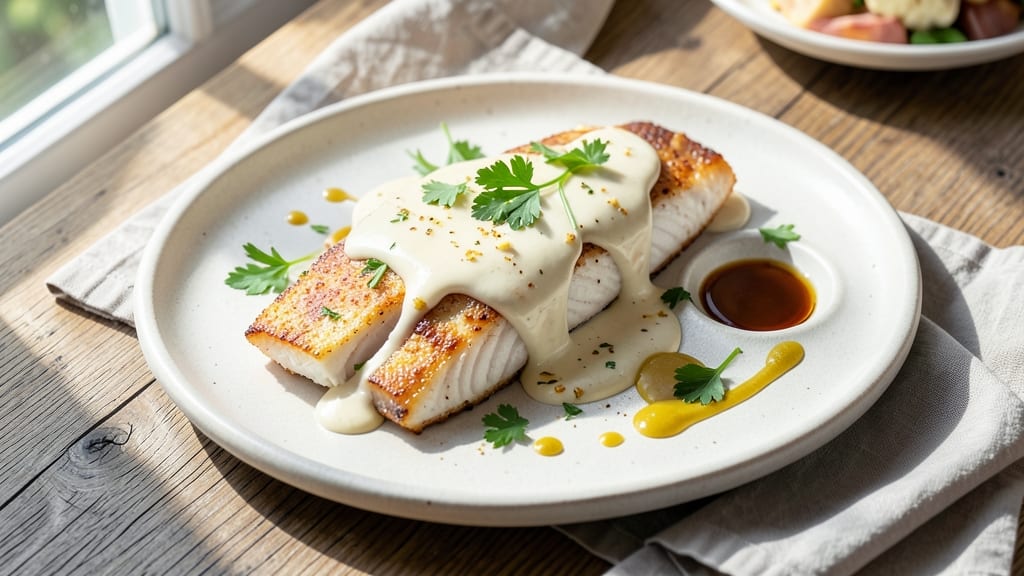
This baked fish in white sauce recipe delivers the perfect balance of crispy golden edges and velvety sauce that clings to every flake. The secret lies in a simple yet luxurious white sauce—rich with butter, cream, and fresh herbs—that transforms ordinary fish into a restaurant-worthy centerpiece.
I developed this method after years of experimenting with different baking techniques, and it never fails to impress.
The white sauce here isn’t just a topping—it’s the star. Made with a blend of heavy cream, Dijon mustard, and white wine, it adds depth while keeping the dish light.
The fish bakes at 375°F until the edges are perfectly crispy, while the sauce thickens just enough to coat the fillets without overwhelming them. This method works beautifully with firm white fish like cod or halibut, but it’s equally effective with mild-flavored options like tilapia.
What you’ll end up with is a dish that’s elegant yet approachable: tender, flaky fish with a crispy exterior, all smothered in a silky white sauce that feels indulgent but stays balanced.
The sauce’s subtle tang from the mustard and wine brightens the richness, while the herbs add freshness that cuts through the creaminess. It’s the kind of meal that feels special without requiring hours in the kitchen.
Serve this with roasted asparagus, garlic mashed potatoes, or a simple green salad to round out the plate. The sauce pairs beautifully with crusty bread for soaking up every last drop. Let’s get started—this dish is easier than it looks, and the results are undeniably impressive.
Ingredients for baked fish in white sauce
Elegant yet approachable ingredients for restaurant-quality baked fish with velvety white sauce harmony.
| Ingredient | Amount | Notes |
|---|---|---|
| White Fish Fillets 🐟 | 1 ½ lb | Cod, halibut, or tilapia preferred |
| Unsalted Butter 🧈 | ½ cup | European-style preferred for flavor |
| Heavy Cream 🥛 | 1 cup | Full-fat for optimal richness |
| Dry White Wine 🍷 | ½ cup | Sauvignon Blanc or Pinot Grigio |
| Dijon Mustard 🌿 | 1 tbsp | Mild or hot variety preferred |
| Fresh Parsley 🌿 | ¼ cup | Finely chopped, stems removed |
| Fresh Chives 🌱 | 2 tbsp | Finely chopped, for garnish |
| Garlic Cloves 🧄 | 3 cloves | Minced, for sauce depth |
| Shallots 🧅 | 2 whole | Minced, for subtle sweetness |
| All-Purpose Flour 🌾 | 2 tbsp | For sauce thickening |
| Lemon Juice 🍋 | 1 tbsp | Freshly squeezed, for brightness |
| Diamond Crystal Kosher Salt 🧂 | 1 ½ tsp | For seasoning fish and sauce |
| Freshly Ground Black Pepper 🌶️ | ½ tsp | For seasoning fish |
| Panko Breadcrumbs 🍞 | ¼ cup | For crispy fish topping |
| Extra-Virgin Olive Oil 🫒 | 1 tbsp | For fish preparation |
The fish selection is critical—firm white fish like cod or halibut holds its shape beautifully during baking, while tilapia offers a more budget-friendly option. For the best results, purchase fresh fillets from a trusted seafood counter like Whole Foods Market or your local fishmonger. Look for fillets with vibrant color and minimal fishy odor—this ensures peak freshness. The butter and heavy cream should be cold and full-fat for optimal sauce texture, so grab them last at the grocery store to prevent melting. European-style butter from brands like Plugrá adds nuanced flavor worth the investment.
No white wine? Substitute with fish stock or additional lemon juice for brightness, though the wine's acidity balances the richness perfectly. Fresh herbs are non-negotiable here—dried parsley at half the amount works in a pinch, but nothing beats the freshness. The shallots can be swapped for one small yellow onion, though shallots add subtle sweetness without overpowering. For a gluten-free version, replace the flour with cornstarch—just reduce the amount to 1.5 tbsp since it thickens more aggressively. The panko breadcrumbs ensure that crispy texture you crave; Japanese panko from Trader Joe's is my go-to for maximum crunch.
Store the fish fillets in the coldest part of your fridge, covered with a damp paper towel, and use within 2 days for optimal freshness. The white sauce components can be prepped 1 day ahead—just reheat gently before combining. For longer storage, freeze the sauce mixture in an airtight container for up to 3 months; thaw overnight in the fridge before using. The breadcrumbs and flour can be stored in airtight containers at room temperature for 6 months, while fresh herbs should be wrapped in damp paper towels and refrigerated for 5-7 days. This dish reheats beautifully—gentle warming on the stovetop preserves the crispy texture while melting the sauce perfectly.
Why You'll Love This Recipe
- I’ll be real: most fish leftovers turn into sad, dry rubber. Not this. The white sauce keeps it moist, and honestly? It’s even better the next day—reheat it gently, and it’s like you’re eating fresh again. Plus, it’s cheap to make; a few fillets and a bottle of wine go a long way.
- One-Pan Magic: I swear by this—just toss the fish and sauce on a sheet, pop it in, and forget about it. No chopping, no fussing, just hands-off baking while you stir the sauce once or twice. That’s my kind of cooking.
- Wine-Infused Luxury: Here’s what sold me—the splash of dry white wine in the sauce cuts through the richness of the butter and cream, giving it this bright, sophisticated lift. The Dijon mustard adds a little tang, so you’re not just eating fish; you’re eating restaurant-quality fish.
- Weeknight to Dinner Party: Between us, this recipe works for both. Need a quick weeknight meal? Done. Hosting friends? Same dish, just plate it nicely with some greens. The sauce reheats beautifully, so it’s my go-to for when I don’t want to slave over dinner.
Step-by-step instructions for baked fish in white sauce
Master this technique for perfectly crisp fish with a velvety white sauce that clings beautifully.
Prepare the Fish for Crispy Perfection
Preheat your oven to 400°F with the rack positioned in the middle position. Pat the 1.5 lb white fish fillets completely dry with paper towels—this is critical for achieving that coveted crispy crust. Place each fillet on a wire rack set over a baking sheet to allow air circulation on all sides.
In a small bowl, combine the 0.25 cup panko breadcrumbs, 1.5 tsp kosher salt, and 0.5 tsp black pepper. Lightly brush each fillet with the 1 tbsp extra-virgin olive oil, then press the breadcrumb mixture evenly over the top of each fillet. The oil helps the breadcrumbs adhere while creating a barrier for even browning.
Create the White Wine Sauce Base
While the oven preheats, melt the 0.5 cup unsalted butter in a medium saucepan over medium heat. Add the 2 minced shallots and 3 minced garlic cloves, cooking for 2-3 minutes until the shallots become translucent and the garlic releases its aroma—this builds the flavor foundation.
Pour in the 0.5 cup dry white wine and bring to a gentle simmer, allowing the alcohol to cook off completely. This step should take about 3-4 minutes—you'll know it's ready when the wine reduces by about half and the aroma shifts from sharp to mellow. This reduction concentrates the flavors and removes any harsh alcohol notes.
Thicken and Finish the Sauce
Lower the heat to low and gradually whisk in the 2 tbsp all-purpose flour to create a roux. Cook for 1-2 minutes until the mixture thickens slightly but doesn't color. Slowly pour in the 1 cup heavy cream while whisking continuously to prevent lumps from forming.
Stir in the 1 tbsp Dijon mustard and 1 tbsp lemon juice for brightness. The sauce should now be smooth and velvety with a glossy sheen. Keep it warm over low heat while you bake the fish—this prevents the sauce from curdling when combined with the hot fish later. Taste and adjust seasoning with additional salt or pepper if needed.
Bake the Fish to Golden Crispness
Bake the prepared fish fillets for 12-15 minutes until the edges are golden brown and the fish flakes easily when tested with a fork. The breadcrumb topping should be crisp and slightly puffed. Remove from the oven and carefully transfer the fillets to a warm serving platter.
Immediately spoon the warm white sauce over each fillet, allowing it to cascade down the sides. Garnish with the 0.25 cup chopped parsley and 2 tbsp chopped chives for freshness and visual appeal. Serve immediately with steamed vegetables or crusty bread to soak up any remaining sauce.
Pro Tips For Making Baked Fish In White Sauce
- Dry the Fish Like Your Dinner Depends on It: Fish absorbs moisture like a sponge, and damp skin means a sad, steamed result instead of a golden crust. Pat those fillets thoroughly with paper towels—don’t skip the edges—and let them sit uncovered for 5 minutes before baking. I learned this the hard way when my cod turned out more sad than saucy.
- Salt the Butter First: Unsalted butter needs seasoning, and if you wait until the end, your sauce will taste flat. Mix a pinch of salt (about ¼ teaspoon per 2 tablespoons butter) into the melted butter while you’re heating it—this way, every spoonful of sauce carries flavor. My grandmother swore by this, and she was right: the sauce tastes richer from the start.
- Reduce the Wine to Glossy, Not Gone: Simmering the white wine until it’s nearly evaporated is crucial, but don’t walk away—burnt wine tastes like regret. Reduce it over medium heat until it’s syrupy but still has a few tablespoons left, or your sauce will turn into a sticky, bitter mess. About 3-4 minutes should do it, and you’ll know it’s ready when it coats the back of a spoon like honey.
- Rest the Fish Under Foil: Baking fish to perfection is tricky—cut into it too soon, and it’ll fall apart. Once the internal temp hits 145°F (about 10-12 minutes in a 375°F oven), transfer the pan to a wire rack and tent loosely with foil for 5 minutes. This keeps it warm while the juices redistribute, so every bite stays tender. I skip this when I’m lazy, but the dish is noticeably better when I don’t.
Flavor customization for baked fish in white sauce
Herb Variations
Swap out parsley and chives for fresh dill and tarragon to create a Scandinavian-inspired white sauce—these herbs add a bright, anise-like note that pairs beautifully with cod or haddock. For a Mediterranean twist, use fresh basil and oregano with a splash of lemon zest in the sauce.
I love adding thyme sprigs during the wine reduction for a subtle earthiness that deepens the flavor profile. 🌿
Creamy Alternatives
For a lighter option, replace the heavy cream with Greek yogurt (use ¾ cup) and add 1 tbsp cornstarch to thicken. This version stays creamy but cuts calories by about 40%.
Another favorite is a crème fraîche base—mix ½ cup crème fraîche with ½ cup whole milk for a tangy, velvety sauce that holds up perfectly to the fish. Both alternatives work best with milder fish like tilapia or sole. 🥛
Spicy Kick
Add ½ tsp smoked paprika to the breadcrumb topping for a subtle smokiness, or stir 1 tsp hot honey into the finished sauce for a sweet-spicy contrast. For heat lovers, mix 1 tbsp sriracha into the warm sauce before serving—it cuts through the richness beautifully.
I also like adding 1-2 thin slices of jalapeño to the saucepan during the wine reduction for a slow-building heat. 🌶️
Citrus Infusions
Brighten the sauce with orange zest (from 1 small orange) during the wine reduction for a zesty twist. A splash of fresh grapefruit juice (about 1 tbsp) replaces lemon juice, adding a tropical brightness that pairs wonderfully with snapper or mahi-mahi.
For a classic French touch, whisk in 1 tsp Grand Marnier with the lemon juice at the end—it adds a luxurious depth without overpowering. 🍊
Cheesy Upgrades
Stir ¼ cup grated Gruyère or Parmesan into the warm sauce for a nutty, umami-rich finish. For a creamy, cheesy sauce, replace ¼ cup of the heavy cream with whipped goat cheese—it adds tang and a luxurious texture.
I recommend folding in the cheese just before serving to prevent curdling. This works especially well with salmon or trout. 🧀
Smoky Depth
Infuse the butter with smoked salt (like Morton Kosher Smoked Salt) for a subtle smokiness, or add ½ tsp liquid smoke to the wine reduction for a campfire-like depth. For a bold twist, brush the fish with ½ cup BBQ sauce before adding the breadcrumbs, then bake as directed.
The sauce will meld beautifully with the smoky, sweet undertones. 🔥
Nutrition facts
Frequently asked questions
What's the best type of fish for this recipe?
Firm white fish work best—cod, halibut, or mahi-mahi hold their shape beautifully. For budget-friendly options, try tilapia or snapper. Avoid delicate fish like sole or flounder, as they can break apart during baking.
Can I make this ahead of time?
Prepare the sauce components 1 day ahead and store them separately in the fridge. Assemble and bake the fish just before serving to maintain crispiness. If reheating, warm the sauce gently and spoon it over the fish immediately after baking.
Why did my sauce get lumpy?
Lumpy sauce usually means the flour didn't dissolve properly. Whisk vigorously when adding flour to butter, and pour the cream in slowly while stirring constantly. For extra insurance, blend the sauce briefly after combining all ingredients.
What if I don't have white wine?
Use fish stock or additional lemon juice for brightness. For a non-alcoholic option, substitute with apple cider or extra chicken broth. The key is maintaining acidity to balance the richness of the cream.
How do I prevent the breadcrumbs from burning?
Bake at 375°F instead of higher heat, and place the fish on a wire rack over a baking sheet for even air circulation. Avoid overcrowding the pan, and check the fish at 10 minutes to ensure even browning.