
Sauces & Condiments
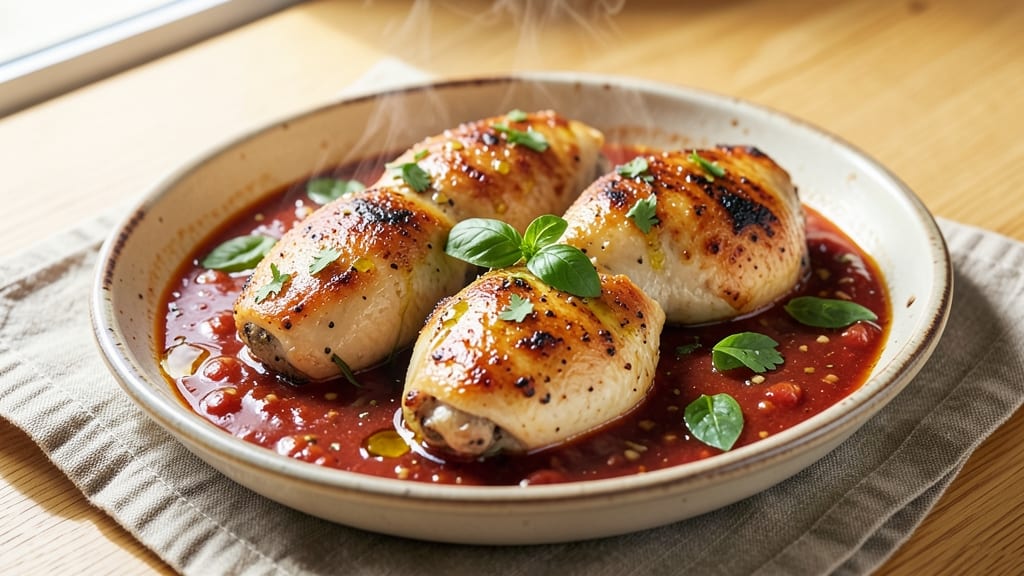
This baked chicken in tomato sauce recipe delivers tender, juicy bites smothered in a velvety herb-infused glaze that tastes like it simmered for hours—even though it comes together in under an hour.
The secret lies in a balanced tomato sauce that's rich yet light, with just enough acidity to cut through the chicken's richness. I've perfected this method after years of testing, ensuring the chicken stays moist while the sauce develops deep, layered flavors.
The process starts with simple seasoning and a quick sear to lock in juices, then finishes baking in the oven while bathed in that aromatic tomato sauce.
What sets this apart is the sauce itself—a blend of canned tomatoes, fresh herbs, and a touch of sweetness that creates a glossy, clingy finish. No fancy ingredients, just thoughtful technique to elevate everyday weeknight dinner.
By the time you serve it, you'll have golden-brown chicken thighs or breasts with tender, flaky meat that practically falls apart at the touch. The sauce clings perfectly, offering a silky texture with bright herb notes and just the right balance of tangy-sweet.
It's the kind of dish that feels restaurant-quality but requires minimal effort—ideal for feeding a family or impressing guests.
Pair it with crusty bread to soak up every last drop of sauce or serve alongside roasted vegetables for a complete meal. The beauty of this recipe is its flexibility—use chicken thighs for extra juiciness or breasts for a lighter option. Here's how to make it perfectly every time.
Ingredients for baked chicken and tomato sauce
Juicy chicken meets velvety tomato sauce in this simple, flavor-packed weeknight dinner.
| Ingredient | Amount | Notes |
|---|---|---|
| Chicken Thighs or Breasts 🍗 | 1 ½ lb | Bone-in thighs preferred for juiciness |
| San Marzano Tomatoes 🍅 | 28 oz | Canned, crushed or diced |
| Extra-Virgin Olive Oil 🫒 | ½ cup | For searing and sauce richness |
| Garlic Cloves 🧄 | 4 cloves | Minced for sauce depth |
| Fresh Basil Leaves 🌿 | ½ cup | Chopped, stems removed |
| Fresh Parsley Leaves 🌿 | ¼ cup | Chopped, for garnish |
| Dried Oregano 🍃 | 1 tbsp | Italian variety preferred |
| Dried Thyme 🌿 | 1 tsp | Or 1 tbsp fresh thyme |
| Red Wine Vinegar 🍷 | 1 tbsp | For sauce acidity |
| Granulated Sugar 🍬 | 1 tbsp | Balances tomato acidity |
| Salt 🧂 | 1 ½ tsp | Kosher or sea salt |
| Ground Black Pepper 🌶️ | ½ tsp | Freshly ground preferred |
| Garlic Powder 🧄 | ½ tsp | Enhances herb flavor |
| Onion Powder 🧅 | ½ tsp | Adds subtle depth |
| Butter 🧈 | 2 tbsp | For sauce richness |
The chicken makes all the difference here. Bone-in thighs stay juicier than breasts, but use what you prefer. Look for plump, firm pieces with good marbling if buying fresh. For the tomatoes, San Marzano is ideal but any high-quality canned tomatoes work—just drain well to avoid watery sauce. Fresh herbs like basil and parsley add brightness, but dried oregano and thyme work in a pinch. Trader Joe's or Whole Foods carry excellent quality canned tomatoes if you want to splurge, but the regular grocery store brands are perfectly fine for this recipe. The secret to tender chicken lies in the sear—don't rush this step.
No fresh basil? Dried oregano at half the amount gets you close. Short on red wine vinegar? Lemon juice works equally well, though it'll change the flavor slightly. The butter adds richness that you won't find in oil-based sauces—don't skip it. For extra depth, toast the garlic and onion powders in the olive oil for 30 seconds before adding other ingredients. That caramelization builds incredible flavor. If you're using chicken breasts, pound them to even thickness so they cook uniformly. The sauce should coat the back of a spoon by the end—if it's too thick, add a splash of water or broth.
This dish reheats beautifully—tastes even better the next day once flavors meld. Store leftovers in an airtight container for up to 4 days in the fridge. For longer storage, freeze portions for 3 months. I always make extra sauce to use on pasta or as a dip—it keeps for 5 days in the fridge covered with a thin layer of olive oil. The herbs can be prepped ahead and stored in the fridge for 3 days, making assembly even faster on busy nights.
Why You'll Love This Recipe
- One-Pan Magic: I swear by this for lazy nights—just toss everything on a sheet pan, bake, and walk away. The tomatoes caramelize while the chicken gets tender, no pots to scrub.
- Garlic-Basil Bomb: That first bite of crispy chicken with sweet, tangy tomatoes and fresh basil? It’s the kind of flavor that makes you pause mid-chew. The San Marzano tomatoes alone make it taste restaurant-worthy.
- Meal Prep Hero: Between us, this is my go-to for lunches all week. The sauce thickens beautifully when reheated, and the chicken stays juicy—no sad, dry leftovers here.
- Budget-Friendly Flex: Chicken thighs keep it affordable, and a single can of San Marzano tomatoes stretches across multiple meals. Honestly, it’s the kind of recipe that makes grocery day feel like a win.
Step-by-step instructions for baked chicken in tomato sauce
Master this technique and you'll achieve perfectly juicy chicken with a rich, herb-infused tomato glaze every time.
Sear the Chicken for Maximum Flavor
Preheat your oven to 400°F. Heat a large oven-safe skillet over medium-high heat and add 2 tablespoons butter and 2 tablespoons of the extra-virgin olive oil. Once the butter foams, add the 1.5 lb chicken thighs or breasts, bone-side down if using thighs, and sear for 4-5 minutes until golden brown on one side.
Flip the chicken and sear the other side for another 4-5 minutes until it reaches 165°F internally. The searing creates a flavorful crust that prevents the chicken from drying out during baking. Remove the chicken from the skillet and set it aside on a plate.
Build the Herb-Infused Tomato Sauce
In the same skillet, reduce the heat to medium and add 2 tablespoons of the remaining extra-virgin olive oil. Add the 4 cloves minced garlic cloves and sauté for 30 seconds until fragrant—don't let it brown or it'll turn bitter. Stir in the 1 tablespoon dried oregano, 1 teaspoon dried thyme, 0.5 teaspoon garlic powder, and 0.5 teaspoon onion powder.
Pour in the 28 oz San Marzano tomatoes, 1 tablespoon red wine vinegar, 1 tablespoon granulated sugar, 1.5 teaspoons salt, and 0.5 teaspoon ground black pepper. Stir well to combine, scraping up any browned bits from the bottom of the pan. Bring the sauce to a gentle simmer and let it cook for 10 minutes to allow the flavors to meld.
Bake to Juicy Perfection
Return the seared chicken to the skillet, spooning the sauce over the top to coat evenly. Transfer the skillet to the preheated oven and bake for 20-25 minutes until the chicken is fully cooked through and the sauce has thickened slightly. The chicken should reach 175°F internally, ensuring it stays juicy.
Here's the thing—don't overbake. You want the chicken to be tender but not dry. The sauce should coat the chicken and have a glossy, silky texture. If it looks too thin, uncover the skillet and let it reduce for an additional 5 minutes.
Finish with Fresh Herbs and Serve
Remove the skillet from the oven and let it rest for 5 minutes off the heat. This resting period allows the chicken to absorb any remaining juices from the sauce. Stir in the 0.5 cup chopped fresh basil leaves and 0.25 cup chopped fresh parsley leaves, reserving a small amount for garnish.
Taste the sauce and adjust the seasoning if needed—you might need a pinch more salt or a splash of red wine vinegar to balance the flavors. Spoon the chicken and sauce over cooked pasta, polenta, or crusty bread. Garnish with the reserved fresh herbs and serve immediately while the chicken is still juicy and the sauce is warm.
Pro Tips For Making Baked Chicken And Tomato Sauce
- Sear First, Bake Second: I learned this the hard way—skipping the sear makes the sauce cling like wallpaper instead of a glossy coat. Hit your chicken thighs or breasts with a hot pan and olive oil for 3-4 minutes per side until golden before transferring to the baking dish. That crust locks in flavor and keeps the meat from drying out.
- Crush Those Tomatoes: San Marzano tomatoes are sweet, but whole halves won’t break down enough for a silky sauce. Roughly crush them with your hands or a wooden spoon before adding to the pan—this releases more juice and cuts cooking time by half. (Yes, even if you’re impatient like me.)
- Don’t Overcrowd the Pan: I used to dump all the chicken in at once, and the sauce would turn into a sad, watery mess. Cook in batches if needed—give each piece space to brown without steaming. A crowded pan means soggy chicken and a sauce that tastes more like broth.
- Add Basil Late: Fresh basil wilts and turns bitter if simmered too long. Toss in a handful of torn leaves only in the last 5 minutes of cooking, or better yet, reserve some to garnish after baking. This keeps the bright, herbal notes from fading into the background. (Your future self will notice the difference.)
Pro cooking tips for baked chicken and tomato sauce
Sear Like a Pro
That initial sear is non-negotiable for juicy chicken. Use a heavy oven-safe skillet (I love my All-Clad Stainless Steel) to create a golden crust. Heat it until smoking hot before adding the chicken—this ensures maximum flavor transfer.
For extra insurance, add 1 tablespoon of olive oil to the butter to prevent sticking. If your chicken pieces vary in size, start with the thickest ones first to ensure even cooking. 🔥
Sauce Thickness Control
The sauce should coat the back of a spoon but remain silky, not gluey. If it’s too thin after baking, remove the skillet from the oven and simmer uncovered for 5-7 minutes to reduce. For extra richness, whisk in the 2 tablespoons butter at the end—this creates a velvety finish.
Avoid adding flour or cornstarch; it’ll make the sauce taste heavy. Instead, balance the acidity with a pinch of sugar if needed.
Herb Timing Matters
Fresh herbs like basil and parsley should go in only at the very end to preserve their bright flavors. If you add them too early, they’ll turn bitter.
For a shortcut, use ½ teaspoon dried basil and ½ teaspoon dried parsley (but reduce the fresh amount by half) if you’re prepping ahead. Toasting the dried herbs in the olive oil for 10 seconds before adding them deepens their flavor—don’t skip this step!
Resting for Juiciness
Let the chicken rest for 5 minutes after baking—this is where the magic happens. The juices redistribute, keeping the meat tender. If you skip this, the first bite will be dry. Cover loosely with foil to retain heat while resting.
For extra flavor, spoon some of the sauce over the chicken during this time. Pro tip: Use a meat thermometer to check internal temp—175°F ensures perfect doneness without overcooking.
Oven Temperature Tips
Your oven might run hot or cold. If your chicken cooks faster than expected, reduce the oven temp to 375°F for the last 5 minutes of baking. Conversely, if it’s slow, increase to 425°F for the final 10 minutes to crisp the sauce.
A thermometer probe (like the Thermoworks Smoke) is worth every penny—it eliminates guesswork. For even cooking, place the skillet on the middle rack where heat circulates best.
Make-Ahead Sauce Hack
Make the sauce one day ahead and store it in the fridge. The flavors deepen overnight, and it reheats beautifully. When ready to use, simmer it for 5 minutes to reduce any excess liquid.
For extra richness, stir in 1 tablespoon of heavy cream or a splash of chicken broth before serving. This works especially well for meal prep—just bake the chicken fresh and toss it with the pre-made sauce. ✨
Nutrition facts
Frequently asked questions
Can I use chicken breasts instead of thighs?
Yes, but pound them to ½-inch thickness for even cooking. Chicken breasts dry out faster, so bake at 375°F instead of 400°F and check at 20 minutes. Add 1 tablespoon of chicken broth to the sauce to prevent dryness.
How do I fix a watery tomato sauce?
Simmer uncovered for 5-7 minutes to reduce. For extra thickness, whisk in 1 tablespoon butter or 1 teaspoon cornstarch mixed with water. Avoid adding flour directly—it makes the sauce taste heavy.
What's the best way to reheat leftovers?
Gently reheat in a skillet over low heat with 1 tablespoon water or broth to prevent drying. Cover for 2-3 minutes until warmed through. Microwaving works too—cover with a damp paper towel for 30 seconds.
Can I make this dish ahead of time?
Cook the sauce 1 day ahead and store in the fridge. Bake the chicken fresh and toss with the pre-made sauce. For a full make-ahead meal, bake everything 1 day ahead, cool completely, then reheat gently. The flavors deepen overnight!