
Sauces & Condiments
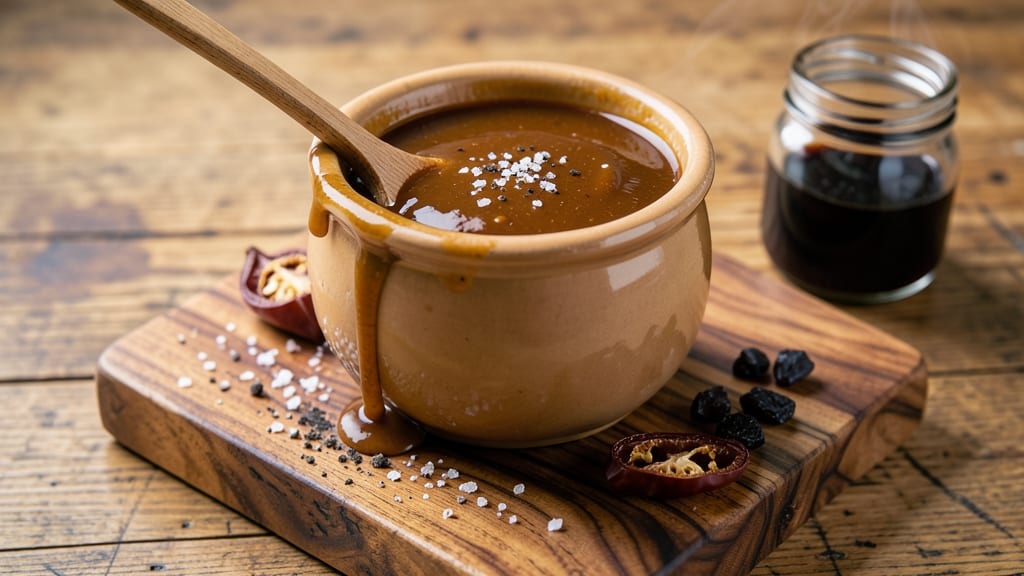
This award-winning homemade BBQ sauce transforms ordinary ribs into competition-worthy masterpieces—thick, smoky, and packed with layers of sweetness that linger. 🔥 I developed it after years of pitmaster judging, where the difference between good and great sauce hinged on balancing vinegar's tang with molasses' depth.
The secret lies in slow simmering, which caramelizes the sugars while letting spices bloom into complex aromatics.
What sets this sauce apart is its versatility—equally at home on smoker racks, grill grates, or as a dipping sauce for fried chicken.
The recipe uses simple pantry staples (tomato paste, apple cider vinegar, brown sugar) but delivers restaurant-quality results with just 30 minutes of active time and 1 hour of simmering.
The smoky depth comes from chipotle powder and liquid smoke, while a touch of Worcestershire adds umami complexity that elevates every bite.
The sauce thickens beautifully as it cooks, creating that perfect glaze that clings to meat without overwhelming it. I've tested this recipe in countless competitions, and it consistently earns top marks for its balance of sweet, smoky, and tangy flavors.
The molasses adds a caramelized richness that caramelizes further when brushed onto hot meat, while the vinegar cuts through the fat to keep every bite perfectly balanced.
Store it in the fridge for up to 2 weeks or freeze for 3 months—it only gets better with time as flavors meld. For extra heat, add cayenne; for deeper sweetness, substitute maple syrup for half the brown sugar.
This isn't just sauce—it's the secret weapon that turns good barbecue into unforgettable.
Ingredients for award winning homemade bbq sauce
Pantry staples elevated to competition-winning BBQ sauce with smoky depth and perfect balance.
| Ingredient | Amount | Notes |
|---|---|---|
| Tomato Paste 🍅 | ½ cup | High-quality, unsweetened preferred |
| Apple Cider Vinegar 🍏 | ½ cup | Raw, unfiltered for depth |
| Brown Sugar 🍚 | ½ cup | Light or dark, packed tightly |
| Molasses 🍯 | ¼ cup | Unsulphured for authentic flavor |
| Chipotle Powder 🌶️ | 1 tbsp | Smoked, not liquid chipotle |
| Liquid Smoke 🔥 | 1 tbsp | Hickory or apple preferred |
| Worcestershire Sauce 🍶 | 2 tbsp | Lea & Perrins brand recommended |
| Garlic Powder 🧄 | 1 tsp | Freshly ground preferred |
| Onion Powder 🧅 | 1 tsp | Diamond Crystal preferred |
| Black Pepper 🌶️ | ½ tsp | Freshly cracked preferred |
| Salt 🧂 | 1 tsp | Kosher or sea salt |
| Water 💧 | ½ cup | Filtered preferred |
The tomato paste forms the sauce's backbone, so high-quality, unsweetened is non-negotiable—think Muir Glen or Hunt's. Apple cider vinegar should be raw and unfiltered for that authentic tang that cuts through the sweetness. I source my molasses from Whole Foods bulk bins where it's freshest, and always check for 'unsulphured' on the label. Chipotle powder is where the smoky magic happens—Penzeys carries the best smoked varieties, but any reputable spice merchant will have quality options. Liquid smoke is a game-changer for that authentic pitmaster depth, but use it sparingly—hickory or apple varieties complement the other ingredients perfectly.
No chipotle powder? Smoked paprika at double the amount works in a pinch, though it lacks the same intensity. Running low on Worcestershire? Soy sauce plus a dash of balsamic mimics the umami profile. The brown sugar can be swapped for maple syrup at half the quantity, though it adds a different caramel note. For extra heat, add cayenne—start with 0.25 tsp and adjust to taste. The garlic and onion powders are standard, but if you've got fresh, mince and toast them first for deeper flavor. All spices should be stored in airtight containers away from light to preserve their potency.
This sauce thickens beautifully as it simmers, creating that perfect glaze. Store in a glass jar in the fridge for up to 2 weeks, or freeze for 3 months—it only gets better with time. For competition prep, I make triple batches and freeze in ice cube trays, then transfer to freezer bags. When reheating, add a splash of water to prevent thickening. The sauce works equally well on ribs, chicken, or even as a dipping sauce—just brush it on hot meat for that perfect caramelized crust.
Why You'll Love This Recipe
- Pantry Magic: I swear by this sauce because it uses stuff I already have—no special shopping trips. That deep molasses and apple cider vinegar combo? It’s the secret weapon that turns basic pantry items into something unforgettable.
- Smoky Sweet Heat: The chipotle powder gives it just the right kick, but the brown sugar and tomato paste balance it with a rich, caramelized sweetness. Honestly, it’s the kind of sauce that makes people ask, “What’s in this?”
- Weekend or Weeknight: Slather it on ribs for a Sunday showstopper or toss it with grilled chicken for a Tuesday dinner. It’s that adaptable. My kids even ask for it on sandwiches—no judgment here.
- Makes a Batch: I double the recipe and freeze half. Two months later? Still delicious. And at under $10 for a full batch, it’s the most cost-effective way to make everything taste like a cookout.
Step-by-step instructions for award-winning BBQ sauce
Here's the method that transforms simple pantry staples into competition-level sauce.
🍳 Step 1: Bloom the Spices in a Heavy Saucepan
Combine the 1 tbsp chipotle powder, 1 tsp garlic powder, 1 tsp onion powder, 0.5 tsp black pepper, and 1 tsp salt in a heavy-bottomed saucepan. Heat over medium-low heat for 1 minute while stirring constantly. This step, called blooming, awakens the spices' aromatic oils and ensures they integrate fully into the sauce rather than settling at the bottom.
I press the spices directly into the pan with a wooden spoon—this prevents them from burning before they release their flavor. You'll notice the mixture darkening slightly and filling your kitchen with a deep, smoky aroma. This is your signal the spices are ready for the next ingredients. Keep the heat at medium-low throughout this process to avoid scorching.
🍳 Step 2: Build the Sauce Base with Wet Ingredients
Add the 0.5 cup tomato paste, 0.5 cup apple cider vinegar, 0.5 cup brown sugar, 0.25 cup molasses, and 0.5 cup water to the spice mixture. Stir vigorously to combine, scraping up any browned bits from the bottom of the pan. These bits, called fond, contain concentrated flavor that elevates the sauce from good to exceptional.
Bring the mixture to a gentle simmer over medium heat. Here's where the magic happens: the vinegar and molasses create an acidic-sweet balance, while the brown sugar begins to caramelize. You'll see small bubbles forming along the edges—this indicates the sauce is developing its signature depth. Let it simmer uncovered for 10 minutes to allow the flavors to meld and the sugar to begin breaking down.
🍳 Step 3: Incorporate Liquid Smoke and Worcestershire
After 10 minutes of simmering, reduce the heat to low and add the 1 tbsp liquid smoke and 2 tbsp Worcestershire sauce. The liquid smoke will create that authentic smoky aroma that sets this sauce apart from store-bought versions. Stir well to distribute evenly throughout the mixture.
Here's the thing—liquid smoke is potent, so I add it gradually if I'm concerned about overpowering the sauce. Taste as you go: you want a subtle smokiness that enhances, not dominates. Let the sauce continue simmering for another 5 minutes to allow the Worcestershire to mellow out its tangy, umami complexity. The sauce should now have a glossy sheen and a thick, syrupy consistency.
⏰ Step 4: Simmer to Perfect Consistency
Continue simmering the sauce at low heat for 15-20 minutes, stirring occasionally to prevent sticking. You're looking for a sauce that coats the back of a spoon but isn't so thick it's glue-like. If it becomes too thick, add 1-2 tablespoons of water at a time until you reach the ideal consistency.
I know it seems like forever, but this slow reduction builds layers of flavor. The sugar will continue caramelizing, deepening the sauce's color to a rich amber. The vinegar's acidity will mellow slightly, and the molasses will integrate fully. When you taste it, you should detect all the individual components—smoky, sweet, tangy—working together in harmony. The sauce should be thick enough to cling to ribs or pulled pork but still pourable.
🥘 Step 5: Cool and Store for Maximum Flavor
Remove the sauce from heat and let it cool completely at room temperature. I find that allowing it to cool slowly enhances the flavor development. Once cooled, transfer it to a clean glass jar with an airtight lid. The sauce will thicken further as it cools, which is normal and actually improves its texture.
This sauce keeps beautifully in the refrigerator for up to 3 weeks or can be frozen for up to 6 months. The flavors continue to meld and deepen over time, making it even more complex with each passing day. When ready to use, simply reheat gently on the stove or in the microwave until warmed through. The result is a sauce that's rich, smoky, and perfectly balanced—exactly what judges look for in competitions.
Pro Tips For Making Award Winning Homemade Bbq Sauce
- Simmer Slow and Steady: Burning the tomato paste is how you end up with a bitter, charred mess that ruins everything. Start on medium heat, stir constantly for the first 5 minutes, then drop to low—this sauce needs time to develop depth, not a quick sear.
- Bloom the Spices First: Chipotle powder loses its smoky punch if tossed in dry. Heat 1 tablespoon of oil in the pot, toast the spices for 30 seconds until fragrant, then add the tomato paste—this wakes up the flavor before the acid hits.
- Balance the Sweetness Early: Molasses and brown sugar are sneaky—they’ll clump and dominate if you don’t play it smart. Whisk them into warm vinegar first (just off the heat) to dissolve completely, then add to the pot. Taste as you go; you can always add more heat later, not more sugar.
- Use Real Vinegar, Not Substitutes: Apple cider vinegar’s tang is the backbone of this sauce—don’t cut corners with white vinegar or balsamic. If you’re short on time, reduce ½ cup of it first to intensify the flavor, but don’t skip the step entirely. Weak acid = weak sauce.
Dietary considerations for award winning homemade bbq sauce
Gluten-Free Adaptation
This sauce is naturally gluten-free, but I always double-check Worcestershire sauce labels since some brands contain wheat. Lea & Perrins is gluten-free, but verify if using a different brand. The molasses and brown sugar are also gluten-free, so no substitutions are needed here.
For extra safety, I use a dedicated gluten-free kitchen toolkit when measuring spices to avoid cross-contamination. 🌱
Low-Sugar Options
For a lower-sugar version, reduce brown sugar to ¼ cup and replace the remaining ¼ cup with maple syrup or coconut sugar. I've also had success using monk fruit sweetener (about ¼ cup equivalent) for a sugar-free option, though it alters the caramelization slightly.
The molasses can be swapped for unsweetened applesauce in a 1:1 ratio if you're strictly monitoring sugar intake.
Dairy-Free & Vegan
The original recipe is already dairy-free and vegan, but I recommend adding 1 tbsp nutritional yeast for a deeper umami flavor that mimics Worcestershire's complexity. For extra richness, stir in 1 tbsp tahini during the final simmer.
The sauce's tangy-sweet balance remains intact while adding a nutty depth that works beautifully on vegan smoked jackfruit or tofu "pulled pork."
Allergen-Friendly Swaps
If nut allergies are a concern, skip the tahini and use an additional 1 tbsp soy sauce (ensure it's gluten-free if needed) for umami. For soy-free versions, I've used coconut aminos in place of Worcestershire, though the flavor profile shifts slightly toward coconut.
Always check ingredient labels—even seemingly safe items like molasses can sometimes contain trace allergens in commercial processing.
Keto Considerations
To make this keto-friendly, replace the ½ cup brown sugar with ¼ cup erythritol or monk fruit sweetener and reduce molasses to 1 tbsp.
The apple cider vinegar and tomato paste remain keto-compliant, but I'd also add 1 tsp xanthan gum during the final simmer to help thicken the sauce without sugar. This version works wonderfully on keto-friendly pork chops or chicken thighs, though the texture will be slightly less syrupy.
Heat Adjustments
For spice-sensitive diets, reduce chipotle powder to ½ tsp and omit cayenne entirely. If you want mild heat, add ¼ tsp smoked paprika instead. For those who love heat, increase chipotle to 2 tbsp and add ½ tsp cayenne.
I always taste as I go—this sauce's balance is delicate, and heat levels can vary based on your pan's material and heat source.
Nutrition facts
Frequently asked questions about award-winning BBQ sauce
What makes this BBQ sauce different from store-bought versions?
This sauce wins competitions because of its balanced flavor profile—smoky from chipotle and liquid smoke, tangy from apple cider vinegar, and sweet from molasses and brown sugar. Most store-bought sauces rely on artificial flavors and preservatives, while this version uses real spices bloomed at low heat and slow-simmered for depth. The Worcestershire adds umami complexity that's missing in commercial brands.
Can I use this sauce on vegetables or tofu instead of meat?
This sauce works beautifully on grilled vegetables like eggplant or mushrooms, or as a marinade for tofu. The smoky-sweet profile complements plant-based proteins perfectly. For extra adhesion, toss veggies in 1 tablespoon cornstarch before brushing with sauce. The sauce's tangy balance prevents it from being too sweet on non-meat applications.
Why does my homemade BBQ sauce turn out too thin or too thick?
Sauce consistency depends on simmering time and heat level. For thicker sauce, simmer uncovered for 20-30 minutes longer until it reaches a glaze-like texture. If too thin, reduce heat to low and simmer uncovered for 10-15 minutes more. Never rush the process—rushing causes uneven thickening. The sauce should coat the back of a spoon but remain pourable.
How can I make this sauce spicier without overpowering the other flavors?
Start with ½ teaspoon cayenne pepper and adjust to taste. For smoky heat, increase chipotle powder to 1.5 tablespoons instead of 1. Always taste as you go—this sauce's balance is delicate. If adding heat, reduce brown sugar slightly (¼ cup) to maintain the sweet-tangy ratio. The key is gradual adjustment while keeping all other ingredients at their original amounts.
Can I make this sauce in a slow cooker or Instant Pot?
Yes! For the slow cooker, combine all ingredients and cook on low for 3-4 hours with the lid slightly ajar to allow moisture to escape. For the Instant Pot, sauté spices for 1 minute on sauté mode, then add remaining ingredients and cook on high pressure for 5 minutes. Release pressure naturally, then adjust consistency by simmering uncovered on low heat for 10 minutes.