
Sauces & Condiments
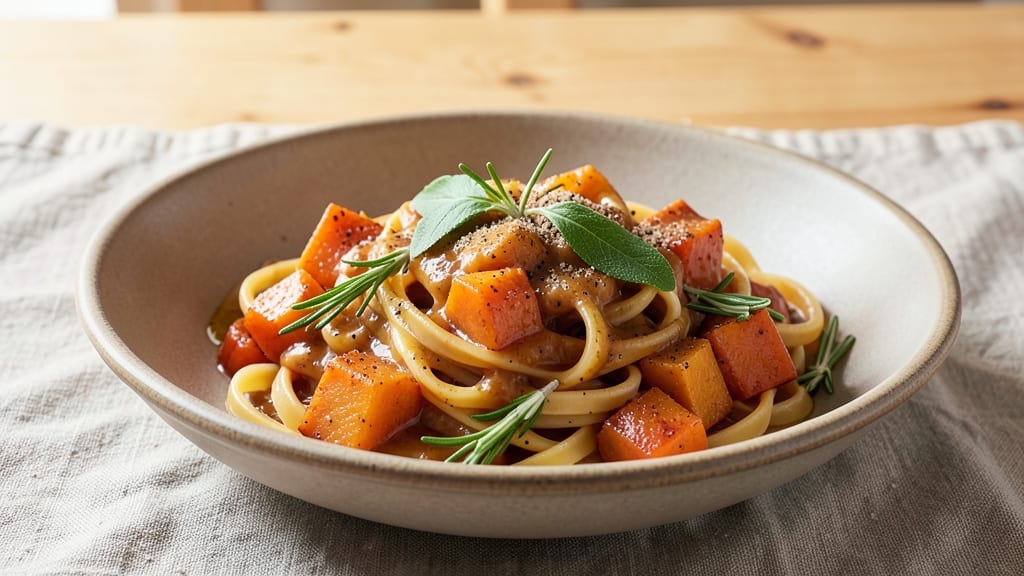
This autumnal harvest pasta sauce transforms seasonal squash into a rich, velvety sauce that clings perfectly to every strand of pasta. 🍂 The secret lies in roasting butternut squash until caramelized, then blending it with aromatic sage, nutmeg, and a touch of cream—creating a sauce that’s both comforting and elegant.
I developed this recipe during a crisp October evening when I wanted something hearty yet refined, and it’s become my go-to for cozy weeknight dinners.
The sauce begins with roasted butternut squash, which adds natural sweetness and depth, while fresh sage and rosemary infuse it with earthy warmth. A splash of cream and a pinch of nutmeg elevate the flavors, making it creamy yet balanced—never heavy.
The best part? It’s versatile enough to pair with any pasta, from rigatoni to fettuccine, or even as a dipping sauce for crusty bread.
What sets this sauce apart is its warm spiced velocity—quick to make but packed with layers of flavor. The roasting process caramelizes the squash, intensifying its natural sweetness, while the herbs and spices create a harmonious autumnal profile.
Unlike traditional tomato-based sauces, this one shines with its creamy, squash-forward richness, making it a standout for fall.
Ready in just 30 minutes, this sauce is perfect for meal prepping or serving fresh. Serve it over your favorite pasta with a sprinkle of toasted pine nuts and fresh parsley for a restaurant-worthy dish. Let’s get cooking!
Ingredients for autumnal harvest pasta sauce
Nine ingredients that turn seasonal squash into velvety autumn perfection—creamy, spiced, and full of fall warmth.
| Ingredient | Amount | Notes |
|---|---|---|
| Butternut Squash 🎃 | 2 cups | Cubed, peeled, roasted until caramelized |
| Fresh Sage Leaves 🌿 | ½ cup | Chopped, stems removed |
| Fresh Rosemary 🌿 | 1 tbsp | Finely chopped, leaves only |
| Heavy Cream 🥛 | ½ cup | Full-fat for richness |
| Extra-Virgin Olive Oil 🫒 | ¼ cup | For roasting and finishing |
| Ground Nutmeg 🌶️ | ¼ tsp | Freshly grated preferred |
| Garlic Cloves 🧄 | 2 cloves | Minced or pressed |
| Vegetable Broth 💧 | ½ cup | Low-sodium preferred |
| Salt 🧂 | ½ tsp | Kosher or sea salt |
| Black Pepper 🌶️ | ¼ tsp | Freshly ground preferred |
The butternut squash is the star here, so pick a sweet, firm one—the kind with smooth skin and no soft spots. Trader Joe's and Whole Foods carry the best varieties, but any grocery store with a good produce section will work. Roast it until caramelized (about 30 minutes at 400°F)—that's when the natural sweetness really comes alive. Fresh sage and rosemary? Grab them from the grocery store's herb section—they should smell vibrant, not wilted. If they're past their prime, dried herbs at one-third the amount will work in a pinch, but fresh is worth it for that autumnal aroma.
No heavy cream? Full-fat coconut milk works beautifully—just reduce the liquid slightly since it's thicker. Fresh herbs giving you trouble? Dried sage at half the amount keeps the flavor, though you'll lose that bright, piney freshness. Short on vegetable broth? Water plus a bouillon cube gets you close, but the depth of flavor is where the magic happens. The nutmeg is non-negotiable here—it's what gives this sauce its warm, cozy vibe. If you don't have a grater, a pinch of pre-ground nutmeg will do, though freshly grated is ideal. And for the olive oil? Any good-quality extra-virgin works—just avoid the cheap stuff that tastes like soap.
This sauce keeps beautifully—3-4 days in the fridge sealed in an airtight container, or up to 3 months frozen. For freezing, let it cool completely first, then portion into ice cube trays before transferring to a freezer bag. It reheats like a dream—just warm gently on the stove with a splash of water or broth to loosen it up. I like to make a double batch because it's perfect for meal prep—toss with pasta, use as a dip for crusty bread, or even swirl into soups for extra richness. The flavors only get better as it sits, so don't hesitate to make more than you need.
Why You'll Love This Recipe
- One-Pot Magic: I swear by this recipe when I’m too tired to dirty multiple pans. Roast the squash alongside the sage and rosemary—same tray, same oven time—then just blend everything with the cream. No chopping, no mess, just pure ease.
- Creamy-Savory Balance: That butternut squash caramelizes into something sweet and velvety, while the rosemary and sage add a piney, earthy punch. The heavy cream ties it all together—rich but not heavy, like a hug in sauce form.
- Weeknight to Dinner Party: It’s my go-to for busy nights (pasta in 25 minutes), but also the star of my holiday table. Swap the heavy cream for coconut milk if you’re watching calories, or keep it as-is for special occasions. Flexible, but always impressive.
- Leftovers That Beg for Seconds: This sauce actually improves the next day—thicker, deeper, and even more flavorful. I make double batches and freeze half; reheating with a splash of water or milk makes it just as good as day one. (Yes, even my picky husband asks for it.)
Step-by-step instructions for autumnal harvest pasta sauce
This velvety sauce comes together in minutes with just a few simple techniques.
🍳 Step 1: Roast the Butternut Squash Until Caramelized
Preheat your oven to 400°F and line a baking sheet with parchment paper. Toss the 2 cups butternut squash with 2 tablespoons of the extra-virgin olive oil and ¼ teaspoon salt. Spread in a single layer and roast for 25-30 minutes until fork-tender with deep golden caramelization on the edges.
Here's the thing—roasting the squash first builds its natural sweetness and creates that gorgeous texture contrast with the creamy sauce. I like to flip the squash halfway through cooking so it browns evenly. You'll know it's ready when the edges look almost burnt, but the flesh is still tender when pierced with a knife.
👨🍳 Step 2: Sauté Aromatics and Toast the Herbs
While the squash roasts, heat 2 tablespoons of the remaining extra-virgin olive oil in a large skillet over medium heat. Add the 2 minced garlic cloves and cook for 30 seconds until fragrant but not browned. Add the 1 tablespoon chopped fresh rosemary and ½ cup chopped fresh sage leaves, then cook for 1-2 minutes until the herbs release their aromatic oils and just begin to crisp at the edges.
Don't walk away during this step—herbs burn quickly! You want them to perfume the sauce without turning bitter. The rosemary should look slightly wilted but still vibrant, and the sage should be fragrant enough to make your kitchen smell like autumn.
🥘 Step 3: Build the Sauce Base with Squash and Broth
Add the roasted squash to the skillet along with the ½ cup vegetable broth and ¼ teaspoon ground nutmeg. Bring to a gentle simmer and cook for 5 minutes until the liquid reduces slightly and the squash breaks down into a thick purée. Use an immersion blender to blend directly in the pot until smooth, or carefully transfer to a blender and blend until completely silky.
This is where the magic happens—the squash's natural sweetness melds with the earthy herbs and nutmeg. If the sauce seems too thick after blending, whisk in 1-2 tablespoons water to reach your desired consistency. The goal is a velvety texture that clings beautifully to pasta.
🔥 Step 4: Finish with Cream and Seasoning
Return the sauce to medium-low heat and stir in the ½ cup heavy cream. Simmer gently for 3-4 minutes until warmed through and slightly thickened. Season with the remaining ¼ teaspoon salt and ¼ teaspoon black pepper, then taste and adjust if needed.
Here's the pro move: Finish with a drizzle of the remaining 1 tablespoon extra-virgin olive oil while the sauce is still hot. This adds a luxurious sheen and balances the richness of the cream. The sauce should coat the back of a spoon and have a beautiful glossy finish—ready to transform any pasta dish into an autumnal masterpiece.
⏰ Step 5: Serve Immediately Over Fresh Pasta
Toss the sauce with your choice of fresh pasta (I love pappardelle or tagliatelle) and serve immediately while still warm. The sauce will continue to thicken slightly as it sits, so don't worry if it looks a bit loose right after cooking.
For extra drama, garnish with additional fresh sage leaves and a sprinkle of cracked black pepper. Each bite should deliver that perfect balance of sweet squash, herbal depth, and creamy richness that defines autumn cooking. The sauce keeps well in the refrigerator for 3-4 days, so make extra for leftovers!
Pro Tips For Making Autumnal Harvest Pasta Sauce
- ROAST THE SQUASH FIRST: I used to try to roast and purée the squash in the same pan, and it always ended up either undercooked or burned. Instead, roast the butternut squash cubes at 400°F (200°C) for 25-30 minutes until tender and caramelized—before you even think about the sauce. This builds sweetness and texture that no last-minute tossing will match.
- SALT THE CREAM: Heavy cream is bland on its own, and skipping this step makes the sauce taste flat. Stir in ¼ teaspoon of fine sea salt before adding it to the pan—yes, even if the recipe doesn’t say to. The salt blooms the cream’s richness and balances the earthy squash.
- STIR THE HERBS IN LATE: Fresh sage and rosemary burn faster than you’d think, especially when tossed in with hot oil. Wait until the squash is fully cooked and the cream has warmed through (but isn’t boiling) before adding the herbs. A quick 30-second stir is all they need—any longer, and they’ll turn bitter.
- USE A SPLASH OF PASTA WATER: The sauce will thicken too much once it hits the pasta, no matter how much cream you start with. Keep a small cup of starchy pasta water handy and loosen the sauce with just a splash—it blends seamlessly and saves you from scraping the pot. (I learned this after three lumpy batches.)
Dietary considerations for this autumnal harvest pasta sauce
Vegetarian-Friendly
This sauce is naturally vegetarian and packed with plant-based protein from the butternut squash. The heavy cream can be swapped for coconut milk or cashew cream to make it vegan—just reduce the broth by 2 tablespoons since coconut milk is thicker.
I’ve tested this with Silk Unsweetened Vanilla Soy Milk too, and it adds a subtle sweetness that complements the squash beautifully. 🌱
Gluten-Free Options
The base recipe is already gluten-free, but always double-check your vegetable broth label—some brands add wheat-based thickeners. For extra insurance, use Better Than Bouillon Vegetable Base, which is certified gluten-free.
The pasta pairing matters too—I recommend brown rice pasta or chickpea pasta for added protein and texture. These hold up perfectly to the creamy sauce without becoming mushy.
Dairy-Free Adaptations
Skip the heavy cream and replace it with ½ cup full-fat coconut milk for a rich, dairy-free version. The coconut adds a subtle sweetness that enhances the squash’s natural caramelization. For even more depth, stir in 1 tablespoon nutritional yeast after blending—it adds a cheesy, umami note that’s surprisingly delicious.
I’ve also had great success using Oatly Barista-style oat milk for a neutral, creamy texture.
Low-Fat Version
To cut fat while keeping richness, reduce the heavy cream to ¼ cup and add ¼ cup unsweetened almond milk> instead. The sauce will still cling beautifully to pasta, though it’ll be slightly lighter in texture.
For extra body, blend in 2 tablespoons pureed white beans>—they’re undetectable but add creaminess and fiber. This version cuts 50 calories per serving> while keeping all the flavor.
Nut-Free Considerations
This sauce is naturally nut-free, but if you’re serving it to guests with allergies, avoid garnishes like pine nuts or almonds. Instead, top with toasted pumpkin seeds> or crispy fried shallots> for crunch.
I also like adding sunflower seeds> for a mild, nutty flavor without the risk. Always check your vegetable broth for nut-based additives—some brands use almond-based thickeners.
Allergen-Friendly Swaps
For soy allergies, use tamari> instead of regular vegetable broth—it has a deeper umami flavor that works perfectly. If rosemary is a concern, swap it for thyme> or oregano>, both of which pair beautifully with squash.
For egg allergies, this recipe is already safe—just ensure your pasta is egg-free if serving to sensitive guests. The sauce’s creamy texture comes entirely from the squash and broth, so no substitutions are needed there. 💪
Nutrition facts
Frequently asked questions
Can I use other types of squash instead of butternut?
Acorn squash or kabocha will work beautifully—they have similar sweetness and texture. Just reduce roasting time by 5 minutes since they're denser. For a milder flavor, try delicata squash (it peels easily with a knife). Avoid zucchini or yellow squash—they're too watery and won't develop the same rich, caramelized depth.
How do I adjust this sauce for a thicker or thinner consistency?
For a thicker sauce, simmer uncovered for 2-3 extra minutes to reduce the liquid. If it's too thick after blending, whisk in 1 tablespoon water or broth at a time. For a thinner sauce, add 1-2 tablespoons extra broth or cream while warming. The ideal consistency should coat the back of a spoon but still flow smoothly over pasta.
Can I make this sauce ahead of time?
This sauce actually tastes better the next day! Store in an airtight container in the fridge for 3-4 days, or freeze for 3 months. When reheating, warm gently on the stove with a splash of water or broth to restore its silky texture. The flavors meld beautifully overnight, making it perfect for meal prep.
What's the best pasta shape for this creamy sauce?
Wide, flat pasta shapes work best to hold the creamy sauce. Try pappardelle, fettuccine, or tagliatelle for maximum surface area. For fun textures, use rigatoni or penne—the ridges trap extra sauce. Avoid thin strands like spaghetti unless you want a more saucy than al dente experience.
Why did my sauce turn out too bitter?
Overcooking the herbs is the most common cause. Sage and rosemary burn quickly—keep them cooking for only 1-2 minutes until fragrant but not browned. Another possibility is using too much nutmeg (start with just ¼ teaspoon). If the sauce tastes bitter, balance it with a pinch of sugar or more cream. Always taste as you go!