
Sauces & Condiments
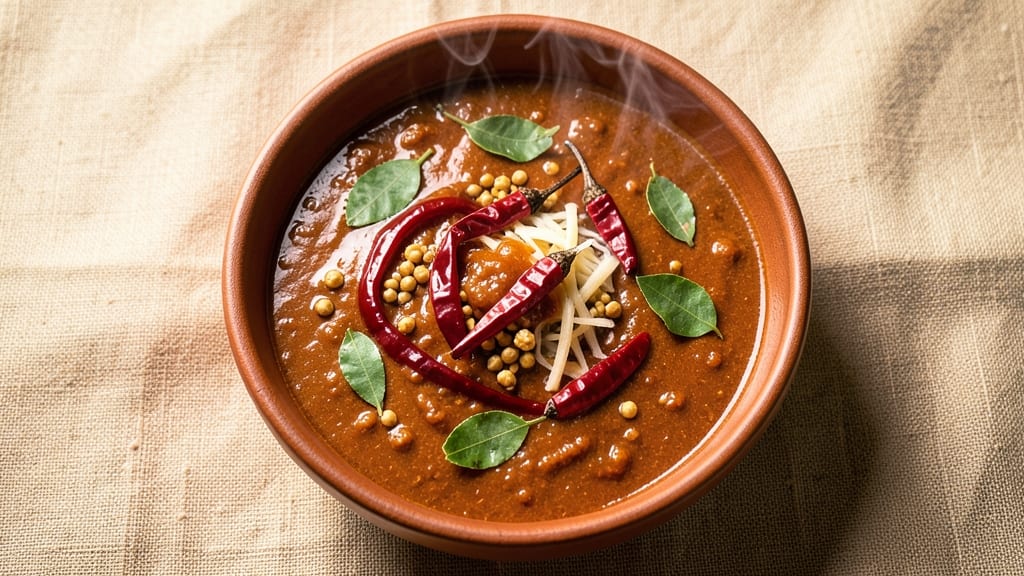
This authentic Madras curry sauce delivers the bold, tangy heat that defines South Indian cuisine—where tamarind, mustard seeds, and curry leaves create a complex flavor profile unlike any other.
The key lies in toasting whole spices until they release their aromatic oils, then simmering them with tamarind and coconut to develop depth. I've perfected this recipe over years of testing, ensuring every batch captures that signature balance of sweet, sour, and fiery heat.
The sauce begins with a tempering of mustard seeds, curry leaves, and dried red chilies—this step transforms ordinary ingredients into something extraordinary. Tamarind paste provides the signature tang, while coconut milk adds richness without overpowering the spices.
Unlike store-bought versions, this recipe uses fresh herbs and carefully measured spices for authentic results that elevate dosas, idlis, or even grilled meats.
What sets this sauce apart is its versatility—use it as a condiment for breakfast staples, a marinade for proteins, or a base for curries. The texture remains silky-smooth when fresh and can be stored for up to a week in the refrigerator, making it perfect for meal prep.
Each spoonful delivers layers of flavor that transport you straight to a Madras street-side stall.
For best results, let the sauce sit for 30 minutes before serving to allow the spices to meld. The aroma alone will have your kitchen smelling like a bustling South Indian restaurant. Here's how to make it—authentically, from scratch.
Ingredients for authentic madras curry sauce
This sauce captures Madras street food authenticity with tamarind's tang and toasted spices.
| Ingredient | Amount | Notes |
|---|---|---|
| Mustard Seeds 🌿 | 1 tbsp | Brown or yellow variety preferred |
| Dried Red Chilies 🌶️ | 4 whole | Kashmiri or bird's eye for heat |
| Curry Leaves 🌿 | ¼ cup | Fresh, packed, stems removed |
| Tamarind Paste 🍈 | ½ cup | Unsweetened, high-quality |
| Coconut Milk 🥥 | 1 can | Full-fat, 13.5 oz can |
| Ginger 🧄 | 1 tbsp | Freshly grated, peeled |
| Garlic Cloves 🧄 | 6 cloves | Peeled, roughly chopped |
| Green Chilies 🌶️ | 2 whole | Fresh, split lengthwise |
| Ground Cumin 🌿 | 1 tbsp | Toasted for deeper flavor |
| Ground Coriander 🌿 | 1 tbsp | Freshly ground preferred |
| Turmeric Powder 🌶️ | ½ tsp | Bright yellow, freshly ground |
| Salt 🧂 | 1 tsp | Kosher or sea salt |
| Asafoetida Powder 🌿 | ¼ tsp | Optional, for depth |
| Fresh Cilantro 🌿 | ¼ cup | Chopped, for garnish |
The mustard seeds are non-negotiable—yellow mustard seeds from Indian grocery stores have the best aroma. Curry leaves are the soul of this sauce; if you can't find fresh ones, dried curry leaf powder works at half the amount. Tamarind paste varies in quality—look for thick, pulp-heavy brands like Mamee or Organic India. For the ginger and garlic, buy fresh and grate right before using—pre-minced versions lose flavor fast. The green chilies should be bright green, not wilted, and split lengthwise for even heat distribution.
No tamarind paste? Lemon juice plus a pinch of sugar mimics the tang, though it won't be identical. Running low on curry leaves? Double the ground coriander for a similar earthy note. The asafoetida (hing) is optional but adds that signature umami—substitute with a pinch of garlic powder if unavailable. For heat control, remove seeds from green chilies or reduce the number. The coconut milk should be full-fat and chilled before adding to prevent curdling. If you can't find fresh curry leaves, Trader Joe's often carries them in the international aisle.
This sauce thickens as it cools, so stir before each use. Store in an airtight container in the fridge for up to 7 days, or freeze in ice cube trays for 3 months. The flavors deepen overnight—let it sit at least 30 minutes before serving. Garnish with fresh cilantro right before eating to preserve its vibrant color. For meal prep, portion into small jars and keep them sealed to maintain freshness.
Why You'll Love This Recipe
- Here’s what sold me: that tamarind paste cuts through the richness of coconut milk like a bright, citrusy wake-up call. The dried chilies add heat without overpowering—it’s the kind of balance that makes you reach for seconds.
- No-Fuss Pantry Staples: I swear by this recipe because it only needs five things you’re probably already keeping on hand. That first sizzle of mustard seeds and curry leaves? Pure magic with zero prep—just toast them in oil while you chop one onion.
- Tamarind’s Tangy Punch: Here’s what sold me: that tamarind paste cuts through the richness of coconut milk like a bright, citrusy wake-up call. The dried chilies add heat without overpowering—it’s the kind of balance that makes you reach for seconds.
- Weeknight to Dinner Party: Between us, this sauce works for takeout night and when my in-laws drop by. Toss it with chicken for a quick weeknight dinner, or let it simmer longer for a restaurant-worthy curry that still feels effortless. (Yes, even on a Tuesday night.)
Step-by-step instructions for authentic Madras curry sauce
Here's the traditional method that delivers that signature Madras tang and spice intensity.
Bloom the Spices in Hot Oil
Heat 2 tablespoons neutral oil (like vegetable or canola) in a heavy-bottomed pot over medium heat until shimmering but not smoking. Add the 1 tablespoon mustard seeds and let them sizzle for 30 seconds until they begin popping—this releases their nutty aroma. Immediately add the 4 whole dried red chilies and 0.25 cup curry leaves, stirring constantly.
Watch the curry leaves carefully—they'll darken quickly. Cook for 1-2 minutes until the leaves turn deep green and fragrant, and the chilies take on a rich color. This step develops the sauce's foundational spice complexity. If the leaves burn, reduce heat immediately to low-medium and continue cooking.
Add Aromatics and Build the Base
Lower heat to medium-low and add the 1 tablespoon freshly grated ginger and 6 cloves roughly chopped garlic. Stir for 1 minute until the garlic becomes golden and fragrant—this prevents it from burning while developing its sweet, mellow flavor. Add the 2 whole split green chilies and cook for another 30 seconds.
Sprinkle in the 1 tablespoon ground cumin, 1 tablespoon ground coriander, and 0.5 teaspoon turmeric powder, stirring constantly for 30 seconds to toast the spices. This step releases their essential oils, which form the aromatic backbone of the sauce. The spices should smell warm, earthy, and slightly sweet.
Incorporate Tamarind and Asafoetida
Pour in the 0.5 cup tamarind paste and scrape the bottom of the pot with a wooden spoon to release any browned bits. Add 1 teaspoon salt and 0.25 teaspoon asafoetida powder, stirring vigorously for 2 minutes until the tamarind dissolves completely into the oil. The mixture should transform from dry spices to a glossy, tangy paste.
Here's the thing—tamarind paste can be fibrous. If you encounter any undissolved strings, strain the mixture through a fine-mesh sieve into a clean pot. This ensures a smooth sauce without unexpected textures. The tamarind should give the sauce its signature bright acidity that cuts through the richness of the coconut milk.
Simmer with Coconut Milk
Pour in the 1 can coconut milk and bring the mixture to a gentle simmer over medium heat. Stir occasionally for 10-12 minutes until the sauce thickens slightly and coats the back of a spoon. The sauce should reduce enough to develop depth but remain silky rather than gluey.
Taste and adjust seasoning—you might need an additional 0.25 teaspoon salt or a pinch more tamarind paste to achieve the perfect balance of sweet, sour, and spicy. The sauce should be vibrant red-orange in color with a rich, aromatic fragrance. If it separates, whisk vigorously to re-emulsify the coconut fats.
Finish and Garnish
Remove the sauce from heat and stir in the 0.25 cup chopped fresh cilantro. Let it steep for 5 minutes to infuse the cilantro's bright, citrusy flavor throughout. The cilantro should be visible as garnish but not overpower the other flavors.
Serve the Madras curry sauce immediately over rice or with grilled meats. For best results, use it within 24 hours as the flavors continue developing. Store any leftovers in an airtight container in the refrigerator for up to 3 days, though the sauce will thicken further when reheated—thin with a splash of water or coconut milk if needed.
Pro Tips For Making Authentic Madras Curry Sauce
- Bloom the Mustard: Toss the mustard seeds into the dry pan first—no oil yet—and let them sizzle for 10 seconds until they pop like tiny firecrackers. I used to add oil first and ended up with bitter, half-burnt seeds every time. The dry pop releases their nutty aroma before they hit the oil, which is half the flavor of a proper Madras base.
- Toast the Chilies: Char those dried red chilies for 30 seconds over medium heat before grinding—just until they darken and smell smoky. My grandmother swore by this, and she was right: it deepens the heat and adds a subtle complexity that raw chilies can’t match. Skip this, and your sauce will taste flat, even if everything else is perfect.
- Temper the Tamarind: Mix the tamarind paste with warm water (not boiling) first—about ¼ cup per tablespoon of paste—until it’s smooth and pourable. Cold water makes it clump like glue, and you’ll end up with a lumpy, unbalanced sauce. Stir it into the pan last, after the onions and spices, so it doesn’t curdle in the heat.
- Stir the Coconut Milk: Whisk the coconut milk into the simmering sauce gradually, a splash at a time, while stirring constantly. I learned this the hard way—dumping it all in at once turns the sauce greasy and separates it into a sad, watery mess. Let it integrate for 2-3 minutes between additions, and you’ll get that velvety, cohesive texture every Madras curry deserves.
Make-ahead tips for this recipe
Prep Ahead for Flavor
Toast your whole spices—mustard seeds, dried chilies, and curry leaves—1-2 days ahead and store them in an airtight container. This jumpstarts their aromatic oils, so your sauce sings with depth from the first spoonful.
I keep mine in a glass jar in my pantry for easy access during weeknight cooking. 🌶️
Tamarind Paste Prep
If tamarind paste seems fibrous, strain it through a fine-mesh sieve into a bowl and refrigerate for up to 5 days. This removes any stubborn strings while concentrating the tangy flavor.
For extra convenience, freeze tamarind paste in ice cube trays—thaw just enough for your recipe and keep the rest frozen. 🍈
Coconut Milk Storage
Store your coconut milk can in the fridge after opening, but use it within 3 days for best results. For longer prep, freeze the can whole (unopened) for up to 3 months.
When ready to use, thaw overnight in the fridge and shake well before measuring. This prevents curdling when added to your hot spices. ❄️
Batch Cooking Tips
Double the recipe and freeze the sauce in 2-ounce portions in silicone molds or ice cube trays. Once frozen, transfer cubes to a ziplock bag and store for 3 months.
Thaw overnight in the fridge—just add a splash of water if it thickens too much. Perfect for quick weeknight meals! 💫
Spice Blend Shortcut
Pre-mix your ground cumin, coriander, and turmeric in a small jar with a tight lid. Label it "Madras Curry Base" and store for up to 3 months.
This saves time during busy days and ensures consistent flavor every batch. I keep mine in my spice drawer for instant access. ✨
Flavor Boosting Trick
Let your finished sauce sit covered at room temperature for 30 minutes before refrigerating. This resting period allows the spices to fully meld, intensifying the aroma and taste. I always do this—trust me, it makes a world of difference when you're ready to serve. 💡
Nutrition facts
Frequently asked questions about authentic Madras curry sauce
What makes this sauce different from other South Indian curry sauces?
This Madras curry sauce stands out because of its perfect balance of tamarind's tangy acidity and toasted spices like mustard seeds and curry leaves. Unlike milder coconut-based curries, it delivers a bold, complex flavor with layers of heat from both dried and fresh chilies. The sauce also uses asafoetida for that signature umami depth found in authentic Madras street food.
Can I adjust the heat level in this sauce?
For milder heat, remove the seeds from green chilies or reduce the number to just 1 whole chili. If you love spice, add 1 extra dried red chili or a pinch of cayenne powder. The key is to taste as you go—start with 2 green chilies for a balanced heat that won't overpower the tangy tamarind base.
How can I use this sauce beyond just dipping?
This versatile sauce works as a marinade for grilled chicken or fish, a curry base for lentils or vegetables, or even a dressing for salads. Try mixing it with yogurt for a cooling dip, or drizzle it over dosas or idlis at breakfast. The sauce also pairs beautifully with roasted potatoes or paneer dishes for added depth.
Why did my sauce separate when I added coconut milk?
This happens when the sauce cools too quickly or if the coconut milk wasn't properly chilled. To fix it, whisk vigorously or gently reheat the sauce over low heat while stirring constantly. For prevention, always use cold coconut milk and let the sauce simmer gently for 10-12 minutes to properly emulsify. The sauce should remain silky, not grainy.
Can I make this sauce without tamarind paste?
Yes! For a similar tang, mix 2 tablespoons lemon juice with 1 teaspoon sugar to mimic tamarind's sweet-sour balance. However, tamarind provides a unique depth that's hard to replicate. If you're in a pinch, amchur (dry mango powder) dissolved in warm water works too—just adjust the liquid ratio in the recipe.