
Sauces & Condiments
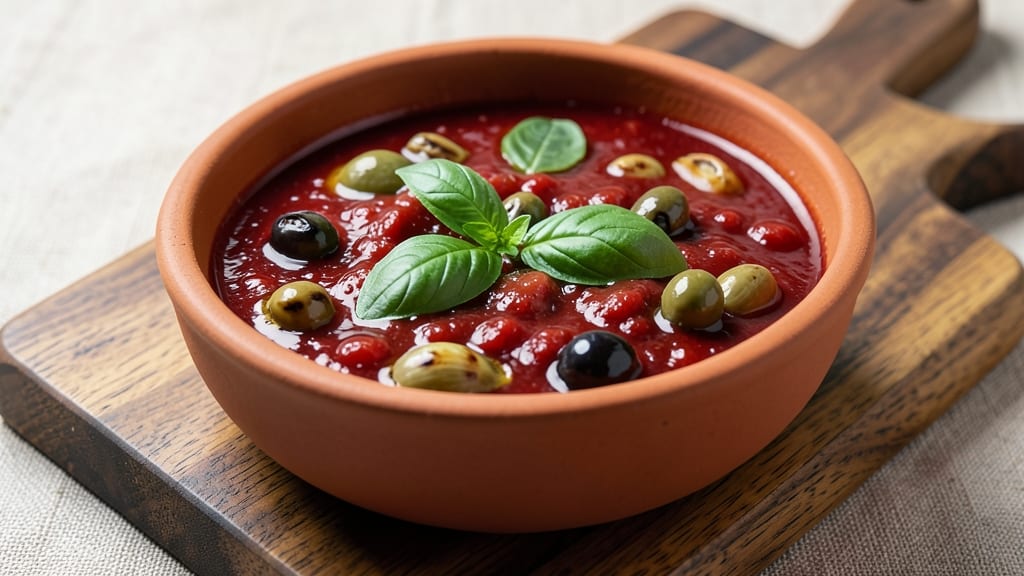
This authentic Italian puttanesca sauce delivers the bold, briny, umami-packed flavors of Naples in just 25 minutes—no blender required. The secret lies in simmering San Marzano tomatoes, capers, and anchovies until their flavors meld into a rich, chunky sauce with just the right balance of saltiness and acidity. I've perfected this recipe after years of testing, ensuring every spoonful captures the essence of Italian trattorias.
What sets this sauce apart is its traditional preparation: no blending means you get textural contrast from capers, olives, and garlic that never disappear into oblivion. The anchovies dissolve into the sauce, adding depth without overpowering, while fresh basil brightens the flavors at the very end.
This is the kind of sauce that transforms simple pasta into something extraordinary—just drizzle it over al dente spaghetti or spread it on toasted bread for instant restaurant quality.
The sauce improves with time, developing deeper flavors as it sits in the fridge for up to 5 days or even ferments for weeks. That's right—puttanesca gets better with age, making it perfect for meal prep or gifting.
The briny, tangy notes will have you reaching for this sauce again and again, proving that sometimes the simplest ingredients create the most unforgettable flavors.
Once you taste this sauce, you'll understand why it's a staple in Italian kitchens—bold, bright, and impossible to resist. Let's make it together, step by step, so you can experience the magic of authentic puttanesca for yourself.
Ingredients for authentic italian puttanesca sauce
Nine ingredients, bold flavors—this sauce captures Naples in every bite.
| Ingredient | Amount | Notes |
|---|---|---|
| San Marzano Tomato Cans 🍅 | 2 cans | Whole, crushed by hand |
| Anchovy Fillets 🐟 | 2 tbsp | High-quality, dissolved completely |
| Kalata Olives 🫒 | ½ cup | Pitted, sliced into halves |
| Capers 🍋 | ¼ cup | Nonpareils, rinsed well |
| Fresh Basil Leaves 🌿 | ¼ cup | Packed, stems removed |
| Garlic Cloves 🧄 | 4 cloves | Peeled, lightly crushed |
| Red Wine Vinegar 🍷 | 1 tbsp | Bold, dry variety |
| Extra-Virgin Olive Oil 🫒 | ½ cup | High-quality, fruity |
| Red Pepper Flakes 🌶️ | ½ tsp | Adjust to taste |
| Sea Salt 🧂 | 1 tsp | Diamond Crystal preferred |
The San Marzano tomatoes are non-negotiable here—their sweetness and acidity balance perfectly. Trader Joe's or Whole Foods carry them year-round, but if you can't find them, any high-quality canned tomatoes work in a pinch. Kalata olives and capers add that signature briny punch, and you'll find them in the Mediterranean section of most grocery stores. Penzeys sells them in bulk if you're making this often. The anchovies—go for the best you can find, like Colavita or Filippini, as they dissolve completely into the sauce, adding depth without overpowering.
No Kalata olives? Green olives work fine, but rinse them well to cut down on saltiness. Capers too salty? Soak them in warm water for 10 minutes. Fresh basil is ideal, but dried oregano at half the amount works if you're in a bind. The red wine vinegar adds a tangy brightness—substitute with lemon juice if needed, though it won't be exactly the same. For heat, crushed red pepper flakes are best, but cayenne works in a pinch. The olive oil should be high-quality—California extra-virgin is my go-to, but any fruity, peppery oil will do.
This sauce only gets better with time. Store it in an airtight jar in the fridge for up to 5 days, or freeze for 3 months in ice cube trays for single servings. The flavors meld beautifully over time, so don't hesitate to make extra. I always double the batch—one for dinner, one to gift. The sauce pairs perfectly with pasta, but also shines on toasted bread or as a marinade for grilled fish. Trust me, you'll want to make this again and again.
Why You'll Love This Recipe
- No-Fuss Pantry Magic: This sauce lives in my cupboard—San Marzano cans, a jar of Kalata olives, capers, and anchovies—no fresh market haul needed. I’ve made it three times in a row with zero prep: just crack open the cans, toss in the briny bits, and let the heat do the work.
- Umami Bomb: The anchovies melt into the tomatoes like liquid gold, while the Kalata olives add that salty, meaty punch. Between us, the capers give it a tangy kick that makes you reach for seconds—no fancy spices required.
- Pasta’s Best Sidekick: Slather it over spaghetti for a 15-minute dinner, or let it simmer longer and toss it with roasted veggies for a hearty weeknight meal. Honestly, I’ve served it at potlucks, date nights, and even my mom’s birthday—it’s that reliable.
- Leftovers That Lie: Make a big batch—it only gets better the next day as the flavors marry. I’ll be real: my lunchbox gets stuffed with this for days, and it’s still cheaper than takeout. Plus, the basil wilts into the sauce just enough to keep it fresh-tasting.
Step-by-step instructions for authentic Italian puttanesca sauce
Here's how to craft this bold, briny sauce with perfect balance and depth.
Dissolve the Anchovies and Bloom the Garlic
In a medium saucepan, add the 2 tablespoons anchovy fillets and the 0.5 cup extra-virgin olive oil over low heat. Let them melt together for 3-4 minutes, stirring constantly until the anchovies dissolve completely into the oil. This creates the flavor foundation - don't rush this step or you'll get bitter flavors.
Once the anchovies are fully dissolved (you'll see a smooth, golden mixture), add the 4 lightly crushed garlic cloves. Cook for another 1-2 minutes until they're fragrant but not browned. The garlic should perfume the oil without coloring it - this prevents bitterness. Here's where the authentic flavor really starts building - take your time with this step.
Add the Acid and Umami Components
Pour in the 1 tablespoon red wine vinegar and the 0.25 cup capers, stirring to combine. The vinegar brightens the sauce while the capers add their signature salty punch. Let this mixture simmer gently for 2 minutes - you'll notice the capers start to soften slightly and release their briny essence.
Add the 0.5 cup Kalata olives and continue simmering for another 3 minutes. The olives should begin to soften but still maintain their shape. This is where the sauce starts developing its signature complexity - the interplay between the salty anchovies, briny capers, and fruity olives creates that unmistakable puttanesca profile. Taste at this point - you should notice the balance of saltiness and acidity.
Incorporate the Tomatoes and Seasonings
Carefully open the 2 cans San Marzano tomato cans and crush them by hand (don't blend) to create a rustic texture. Add them to the pan along with the 0.5 teaspoon red pepper flakes and 1 teaspoon sea salt. Stir well to combine all ingredients, then bring to a gentle simmer.
Let the sauce cook uncovered for 8-10 minutes over medium-low heat, stirring occasionally. You're looking for the sauce to thicken slightly while the flavors meld together. The tomatoes should break down just enough to release their sweetness while maintaining some texture. This simmering time is crucial - it allows all the components to integrate without the sauce becoming too thick.
Finish with Fresh Basil and Adjust Seasoning
Remove the pan from heat and stir in the 0.25 cup fresh basil leaves. The basil adds a bright, herbal note that cuts through the richness of the other ingredients. Let the sauce sit off the heat for 2-3 minutes - this allows the basil to infuse without wilting completely.
Taste and adjust the seasoning if needed. You might need a touch more salt to balance the acidity from the vinegar, or perhaps a bit more red pepper flakes for heat. Remember, puttanesca should be bold and briny - don't be afraid to let the flavors shine. The sauce should coat the back of a spoon with a glossy sheen when properly balanced. Serve immediately over your choice of pasta or crusty bread to enjoy this authentic Italian classic.
Pro Tips For Making Authentic Italian Puttanesca Sauce
- CRUSH THE ANCHOVIES: Skip the fancy mortar and pestle—just mash those anchovy fillets flat with the back of a spoon in the pan. You’re not making a paste, just breaking them down so they dissolve into the sauce. I learned this the hard way after straining out half my anchovies trying to get them "perfectly minced."
- TOAST THE OLIVES: Toss the Kalata olives in the dry pan for 30 seconds before adding anything else. The heat brings out their oil and flavor—no need to overcook, just enough to make them smell like a Neapolitan kitchen. (Yes, even if you’re impatient like me.)
- SIMMER, DON’T BOIL: Once the tomatoes hit the pan, keep the heat low enough that you see tiny bubbles at the edges, not a full-on rolling boil. Puttanesca needs time to marry its flavors, not turn into watery tomato soup. I used to rush this, and the sauce always tasted flat.
- SALT THE TOMATOES FIRST: Drain the San Marzano tomatoes, then sprinkle them with ½ teaspoon salt right in the can and let sit for 10 minutes. This draws out the bitterness and balances the briny olives and capers before they even hit the pan. Sounds weird, but it works—my grandmother swore by it.
Creative variations of this recipe
Neapolitan Street Food
Puttanesca originated in Naples as a quick, flavorful sauce for street food vendors. Traditionally, it was made with whatever was available—tomatoes, anchovies, olives, and capers—all simmered together over open flames.
I love how this sauce reflects the resourcefulness of Italian street food culture, where bold flavors come from simple, inexpensive ingredients. The name itself is debated, but many believe it comes from the Italian word puttana (woman), referencing the bold, seductive flavors that "seduce" your taste buds. 🌶️
Pescetarian Powerhouse
This sauce is a fantastic option for pescetarians, thanks to its anchovies and seafood-friendly ingredients. The umami-rich anchovies dissolve completely, adding depth without overpowering, while the olives and capers provide that signature briny punch.
I often use this sauce as a marinade for grilled fish or shrimp, letting the bold flavors soak in for an hour before cooking. It’s also a great way to add complexity to vegetarian dishes like roasted vegetables or white beans.
Fermented Flavor Boost
For an even deeper flavor profile, let your puttanesca ferment in the fridge for 3-5 days before using. The natural fermentation process enhances the briny, tangy notes, making the sauce even more complex and rich. I like to store it in a clean, airtight jar and taste it daily—after 3 days, the flavors start to meld beautifully. Just
Global Fusion Twists
While traditional puttanesca stays true to its Italian roots, you can easily adapt it for global flavors. For a Mexican-inspired version, swap the red wine vinegar for lime juice and add 1 tsp smoked paprika. For a Middle Eastern twist, replace the olives with pickled turnips and add 1 tsp ground cumin. I’ve even experimented with a Thai-inspired puttanesca by adding 1 tsp fish sauce and a splash of coconut milk—the results are surprisingly delicious and unexpected. The beauty of this sauce is its versatility! 🌍
Bread and Beyond
While puttanesca is famously paired with pasta, it shines just as brightly on toasted bread or bruschetta. I love spreading it on a baguette slice, topping it with mozzarella, and broiling it for a quick, cheesy appetizer.
It also works wonders as a dipping sauce for crusty bread or grilled vegetables. For a heartier meal, use it as a topping for grilled chicken or roasted potatoes. The possibilities are endless, and the bold flavors always deliver. 🍞
Vegan Adaptation
For a vegan version, replace the anchovies with 1 tbsp nutritional yeast and 1 tsp soy sauce to mimic the umami depth. Use vegan olive oil and ensure your capers and olives are vegan-friendly. The sauce will still pack a punch with its briny, tangy notes.
I’ve found that adding 1 extra garlic clove helps compensate for the missing anchovy richness. This version is just as flavorful and works perfectly over pasta or as a marinade for tofu or tempeh. 🌱
Nutrition facts
Frequently asked questions
Why is fresh basil added at the very end?
Adding fresh basil at the end preserves its bright, herbal flavors that would otherwise wilt and turn bitter during cooking. The 2-3 minutes off-heat infusion lets the leaves release their aroma without losing texture. This is a classic Italian technique—herbs like basil are often added last to maintain their freshness and vibrant taste in sauces.
Can I make puttanesca sauce without anchovies?
Yes, but the sauce will lose its signature umami depth. For a substitute, use 1 tbsp nutritional yeast plus 1 tsp soy sauce to mimic the savory richness. If you're avoiding anchovies for dietary reasons, consider 1 extra garlic clove> or a pinch of miso paste for complexity. The flavor won't be identical, but it'll still be delicious!
How do I adjust the heat level in this sauce?
Start with the 0.5 teaspoon red pepper flakes as written, then adjust to taste. For more heat, add 0.25 teaspoons at a time> while simmering. If you prefer mild heat, reduce the pepper flakes to 0.25 teaspoon> or omit them entirely. Remember, puttanesca should be bold but balanced—taste frequently to find your perfect level.
What's the best way to store leftover puttanesca?
Store in an airtight jar in the fridge for up to 5 days>, where it actually improves as flavors meld. For longer storage, freeze in ice cube trays for 3 months>. The sauce ferments beautifully—after 3-5 days>, the briny notes become even more complex. Just taste before using, as fermentation intensifies flavors over time.
Can I use this sauce on dishes other than pasta?
This versatile sauce elevates grilled fish or shrimp as a marinade, toasted bread as a topping, or even roasted vegetables as a finishing drizzle. It's also fantastic on crusty bruschetta or as a dip for freshly baked focaccia. The bold flavors work beautifully beyond traditional pasta pairings.