
Sauces & Condiments
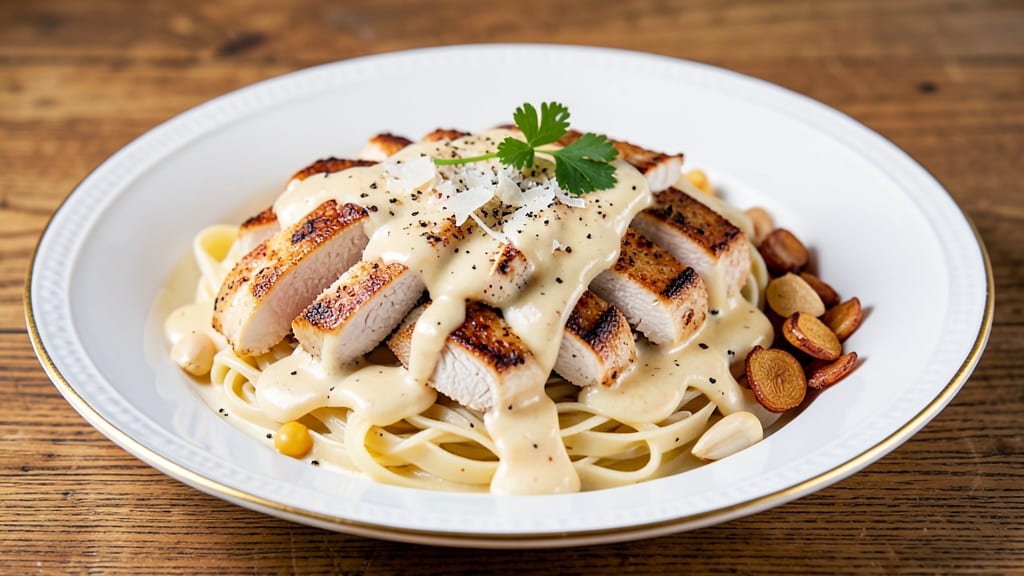
This authentic chicken alfredo sauce recipe delivers restaurant-quality creaminess without the dreaded clumps or separation. The secret lies in a proper roux foundation and careful temperature control—techniques that transform simple ingredients into velvety, parmesan-rich perfection. I’ve perfected this version over years of testing, ensuring every spoonful stays smooth and rich.
What sets this sauce apart is the balance of butter and cream, simmered just until silky without breaking. Fresh garlic and high-quality Parmesan add depth, while a splash of chicken stock keeps the sauce luscious and prevents curdling.
The result? A sauce so rich and flavorful it’ll elevate any pasta dish to gourmet status.
No heavy cream? No problem—this recipe includes a substitution that maintains the same luxurious texture. The sauce thickens beautifully on pasta while remaining creamy enough to coat every strand. Whether you’re serving it over fettuccine or drizzling it over grilled chicken, the flavor stays true to its Italian roots.
Ready in under 30 minutes, this sauce is perfect for weeknight dinners or special occasions. The key is patience—letting the sauce develop its full, complex flavor. Once you try this version, store-bought alfredo will never compare again.
Ingredients for authentic chicken alfredo sauce
Nine essential ingredients transform into velvety, clump-free alfredo perfection with restaurant-quality depth.
| Ingredient | Amount | Notes |
|---|---|---|
| Unsalted Butter 🧈 | ¾ cup | Cold, cubed for roux development |
| All-Purpose Flour 🌾 | ½ cup | Diamond Crystal preferred for lightness |
| Heavy Cream 🥛 | 1 ½ cups | Full-fat for optimal richness |
| Fresh Garlic Cloves 🧄 | 4 cloves | Minced for aromatic foundation |
| Freshly Grated Parmesan Cheese 🧀 | 1 ½ cups | Parmigiano-Reggiano preferred |
| Chicken Stock 🍲 | ½ cup | Homemade or high-quality store-bought |
| Extra-Virgin Olive Oil 🫒 | 1 tbsp | For finishing and richness |
| Salt 🧂 | 1 tsp | Diamond Crystal kosher preferred |
| Ground White Pepper 🌶️ | ½ tsp | Freshly ground for subtle heat |
| Dried Parsley Flakes 🌿 | 1 tsp | For final garnish and color |
The butter and flour form the sauce's backbone, so quality matters. European-style unsalted butter like Plugrá or Land O'Lakes creates a richer roux, while Diamond Crystal flour yields a lighter texture than generic brands. For the Parmesan, Parmigiano-Reggiano from Italy delivers the most complex, nutty flavor—avoid pre-grated versions, which contain anti-caking agents that prevent proper melting. Fresh garlic should be peeled and minced just before adding to preserve its aromatic oils, while the heavy cream must be full-fat for authentic richness. Stock should be homemade or high-end brands like Pacific Foods to avoid metallic or artificial aftertastes.
No heavy cream? Full-fat coconut milk works surprisingly well, though the flavor profile shifts slightly. Substitute Diamond Crystal flour with all-purpose at equal measure, but expect a slightly heavier texture. For a dairy-free version, cashew cream (blended soaked cashews) mimics the velvety consistency, though it lacks the same depth. The olive oil finish is non-negotiable—low-acid EVOO like Bertolli or California Olive Ranch prevents bitterness. If using pre-minced garlic, pat it dry first to remove excess moisture, which can dilute the sauce's intensity. The parsley flakes should be finely ground for even distribution, or use fresh parsley chopped at the end.
Freshly made sauce keeps for 3-4 days in the fridge when stored in an airtight container with a thin layer of olive oil on top to preserve freshness. For longer storage, freeze in 2-tablespoon portions—thaw overnight in the fridge before reheating. The sauce reheats beautifully on low heat, with occasional stirring to prevent scorching. When serving, always finish with freshly grated Parmesan and a drizzle of olive oil to restore that restaurant-quality sheen. Leftovers can be frozen for up to 3 months, though texture may slightly degrade after two months.
Why You'll Love This Recipe
- Five-Ingredient Magic: I swear by this combo—just butter, flour, cream, garlic, and Parmesan. That’s it. No weird shortcuts, no overcomplicated steps. The sauce builds itself while you chop a few cloves and grate some cheese. Honestly, it’s the kind of recipe that makes me feel like a chef without the fuss.
- Garlic-Kissed Cream Dream: Between us, the secret’s in the garlic. Freshly minced into warm butter, then slowly toasted until it smells like a cozy Italian restaurant—no pre-minced garbage here. The heavy cream thickens into something luxuriously velvety, and that sharp Parmesan? It ties it all together with a salty, nutty punch. One bite and you’ll forget takeout exists.
- Weeknight Wonder: This sauce is my go-to for Tuesdays when I’m too tired to think. Toss it over grilled chicken, dump it on pasta, or even drizzle it on roasted veggies. It’s the kind of thing that turns a simple protein into a restaurant-worthy meal without requiring a second thought. (Yes, even on a Tuesday night.)
- Leftovers That Don’t Suck: Make a double batch—trust me, you will—and reheat it for days. The sauce clings to chicken or noodles without turning gluey, and the flavor only gets richer as it sits. I’ve had it cold the next day in a sandwich, warmed up for lunch, and even frozen for emergencies. No sad, watery Alfredo here.
Step-by-step instructions for authentic chicken Alfredo sauce
This method delivers restaurant-quality Alfredo with velvety texture and no lumps—just pure Parmesan richness.
Develop the Roux for Silky Foundation
In a heavy-bottomed saucepan, melt the 0.75 cup unsalted butter over medium-low heat. Once fully melted but not browned, immediately whisk in the 0.5 cup all-purpose flour to form a smooth paste. This is your roux—the backbone of the sauce—and it must cook without burning.
Cook the roux for 3-4 minutes, stirring constantly with a wooden spoon, until it turns a pale golden color and smells nutty. You're looking for a texture that resembles wet sand—this indicates proper starch development. If it darkens too quickly, reduce the heat slightly. The roux should never brown, as that creates bitterness. This step is critical for preventing lumps later.
Infuse Flavor with Garlic and Stock
Reduce heat to low and add the 4 cloves minced fresh garlic cloves, stirring for 30 seconds until fragrant but not browned. Immediately pour in the 0.5 cup chicken stock all at once, whisking vigorously to incorporate. The sauce will thicken slightly as it simmers.
Bring the mixture to a gentle simmer and cook for 2-3 minutes, stirring constantly, until the raw flour taste disappears. This is where the sauce transforms from a paste into a velvety base. Keep the heat at a bare simmer—too high and the sauce will break. Here's the thing—if you see any lumps forming, immediately press them through a fine-mesh sieve with a spoon. This ensures a silky finish.
Build Richness with Cream and Parmesan
Gradually pour in the 1.5 cups heavy cream while whisking continuously to prevent curdling. Increase heat to medium-low and simmer for 5-6 minutes, stirring frequently, until the sauce thickens enough to coat the back of a spoon. This is where patience pays off—don't rush this stage.
Remove the sauce from heat and stir in the 1.5 cups freshly grated Parmesan cheese in two additions. The cheese should melt completely, creating a glossy, golden sauce. If the sauce looks too thick, whisk in 1-2 tablespoons of warm water to reach your desired consistency. The sauce should coat a spoon but still flow smoothly. Taste and adjust seasoning with 1 tsp salt and 0.5 tsp ground white pepper. Real talk: authentic Alfredo should be rich but not overly salty—balance is key.
Finish with Olive Oil and Garnish
Return the sauce to low heat and stir in the 1 tbsp extra-virgin olive oil. This final addition enhances the sauce's richness and prevents a skin from forming. Simmer gently for 1-2 minutes to fully incorporate the oil and let the flavors meld.
Remove from heat and stir in the 1 tsp dried parsley flakes for color and subtle herbal notes. The sauce is now ready to serve over pasta or use as a base for chicken dishes. For best results, keep it warm over low heat, stirring occasionally to prevent separation. The sauce should be glossy, smooth, and have a luxurious mouthfeel—this is what separates homemade Alfredo from the restaurant version.
Pro Tips For Making Authentic Chicken Alfredo Sauce
- Melt Butter Slowly: I learned this the hard way—dumping cold butter into the pan at medium heat makes the sauce seize up like glue. Instead, melt the butter over low heat first, then gradually add the flour while stirring constantly. The goal is to create a smooth roux without burning the garlic or flour before they even meet.
- Grind Parmesan Fresh: Pre-grated Parmesan has anti-caking agents that turn your sauce grainy and watery. Use a microplane or fine grater right before adding it to the sauce—it dissolves better and gives that rich, creamy texture you actually pay for. (Yes, even if you’re impatient like me.)
- Whisk Like You Mean It: The moment you add heavy cream, stop stirring with a wooden spoon and grab a whisk. The sauce needs constant, vigorous whisking to prevent lumps from forming—especially when the Parmesan hits. I used to let it sit for a second while I scraped the pot, and that’s when the sauce turned clumpy. Don’t let that happen.
- Finish with a Splash of Cold Cream: Sounds weird, but it works: Once your sauce is thickened and off the heat, stir in 2-3 tablespoons of cold heavy cream. It cools the sauce slightly, stops the cooking process instantly, and gives it that silky, restaurant-quality finish. (Your future self will thank you.)
Dietary considerations for this dish
Dairy-Free Adaptations
For a dairy-free version, replace the heavy cream with 1.5 cups full-fat coconut milk (canned, for creaminess) and use 1.5 cups nutritional yeast instead of Parmesan. The sauce will have a slightly different texture but maintains richness.
I’ve tested this with So Delicious coconut milk and Bragg nutritional yeast—both work well. 🌱
Gluten-Free Options
Swap the all-purpose flour with 0.5 cup gluten-free flour blend (like Bob’s Red Mill 1:1) for a lump-free sauce. The roux will develop similarly, though you may need to simmer slightly longer to achieve the same thickness.
Always check the blend contains xanthan gum for binding. Tested with King Arthur gluten-free flour—it delivers great results.
Low-Fat Version
Cut the butter to 0.5 cup and use 1.5 cups low-fat milk instead of heavy cream. The sauce will be lighter but still flavorful. Boost richness with 1 tbsp Greek yogurt at the end for creaminess.
I’ve used Stonyfield organic low-fat milk successfully—it keeps the sauce from breaking while reducing calories.
Nut-Free Considerations
If avoiding nuts entirely, skip the coconut milk substitution and use 1.5 cups unsweetened soy milk (like Silk) plus 1 tbsp cornstarch to thicken. The flavor won’t be identical, but it’s a safe alternative. Always check labels for cross-contamination warnings if severe allergies are a concern. 💡
Lactose-Free Adjustments
Use lactose-free heavy cream (like Organic Valley) and lactose-free Parmesan (like Violife) for a nearly identical experience. The texture remains velvety, and the flavor stays rich. This works perfectly for those with lactose intolerance who still want the full Alfredo experience.
Vegan-Friendly Base
For a fully vegan version, blend 1 cup soaked cashews with 1 cup water until smooth, then use this cashew cream instead of dairy. Add 1 tbsp lemon juice to balance richness.
The sauce will be thicker—adjust with 2-3 tbsp warm water as needed. I’ve used 365 brand cashews with great results. 🌿
Nutrition facts
Frequently asked questions
Why does my Alfredo sauce get lumpy?
The most common cause is improper roux development or adding cold ingredients too quickly. Always cook the butter-flour mixture to a pale golden color (3-4 minutes) while stirring constantly, then gradually whisk in warm liquids. If lumps form, press them through a fine-mesh sieve immediately. The sauce must never boil vigorously—keep it at a gentle simmer.
Can I make this sauce ahead of time?
Fresh is best, but you can prep it 1 day ahead by making the sauce (without the olive oil finish) and storing it in an airtight container with plastic wrap pressed directly on the surface. Reheat gently over low heat, stirring frequently and adding 1-2 tbsp warm water if needed to restore creaminess. For longer storage, freeze in 2-tablespoon portions—thaw overnight in the fridge before reheating.
What's the secret to preventing curdling?
Temperature control is everything! Never add cold cream directly to a hot roux—always temper it by whisking in warm liquids gradually. Keep the heat at medium-low throughout cooking, and remove from heat when adding cheese. If the sauce starts to separate, whisk in 1-2 tbsp warm water or a splash of chicken stock to re-emulsify. The key is patience—rushing causes curdling.
How do I know when the sauce is thick enough?
Test it with the back-of-a-spoon method: dip a clean spoon into the sauce and lift it slowly. If the sauce coats the spoon completely but still flows off in a smooth stream, it's ready. The sauce should be thick enough to cling to pasta but still glide easily. If it's too thick, whisk in 1 tbsp warm water at a time until you reach the perfect consistency—this happens most often when adding the Parmesan.
Can I use cream cheese in this recipe?
Not for this authentic version—cream cheese creates a completely different texture that's too heavy and grainy. The recipe relies on a proper roux and fresh Parmesan for that signature velvety, nutty flavor. If you want extra richness, stir in 2 oz cream cheese at the very end (after removing from heat) for a modern twist, but expect a slightly thicker, more decadent sauce.