
Sauces & Condiments
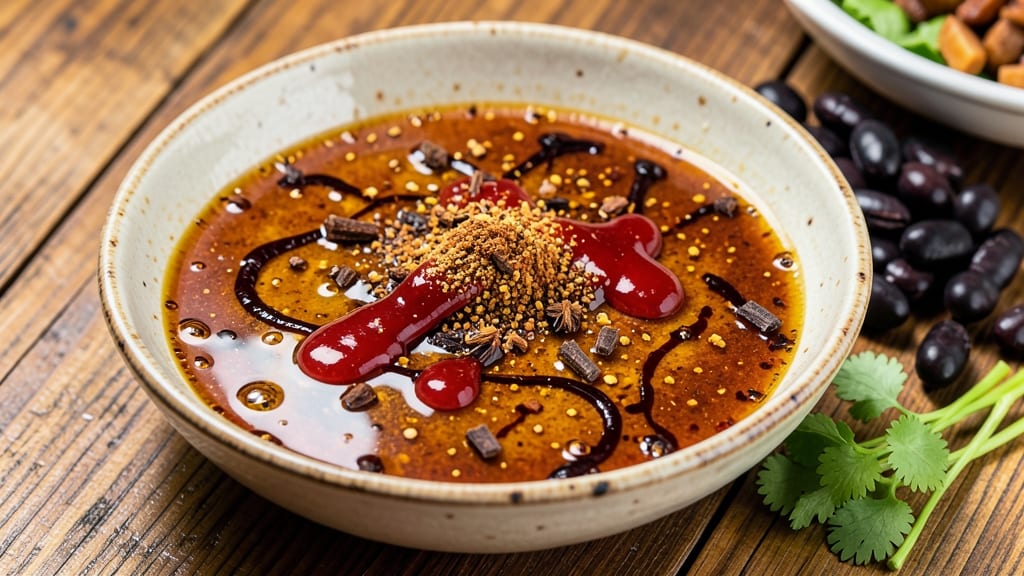
This authentic char siu sauce recipe delivers the sticky, aromatic perfection that makes Cantonese BBQ pork legendary—without the guesswork. The secret lies in balancing five-spice powder, fermented black beans, and honey for that signature glossy finish.
I developed this version after years of testing, ensuring every batch achieves the same restaurant-quality depth.
The sauce doubles as both marinade and glaze, transforming tough cuts into tender, caramelized slices with crispy edges. Traditional ingredients like hoisin and soy sauce provide umami, while the five-spice blend adds warm complexity.
What sets this apart is the honey-to-sugar ratio, which creates that signature sticky sheen without overpowering the pork's natural flavor.
Perfect for char siu pork (or tofu for a vegetarian twist), this sauce delivers restaurant-quality results with just 10 minutes of prep and 20 minutes of simmering. The aroma alone will have your kitchen smelling like a bustling Hong Kong BBQ stall. Ready to master the art of char siu?
Use it as a marinade for 4–6 hours or as a finishing glaze for instant flavor. The versatility makes it ideal for weeknight dinners or special occasions. Here's how to make it—step by step.
Ingredients for authentic char siu sauce
Ten ingredients transform into restaurant-quality char siu sauce with perfect five-spice balance.
| Ingredient | Amount | Notes |
|---|---|---|
| Five-Spice Powder 🌶️ | 1 ½ tbsp | Toasted for enhanced aroma |
| Fermented Black Beans 🫘 | ¼ cup | Rinsed and chopped (or use 2 tbsp black bean paste) |
| Hoisin Sauce 🍶 | ½ cup | High-quality brand preferred |
| Light Soy Sauce 🥢 | ½ cup | Kikkoman preferred for balance |
| Dark Brown Sugar 🍚 | ½ cup | Packed firmly for consistency |
| Honey 🍯 | ¼ cup | Wildflower preferred for depth |
| Garlic Cloves 🧄 | 4 cloves | Peeled and minced finely |
| Fresh Ginger 🌿 | 1 tbsp | Grated, not powdered |
| Sesame Oil 🫒 | 1 tbsp | Toasted sesame oil for aroma |
| Cornstarch 🌾 | 1 tbsp | For glossy finish |
The five-spice powder is non-negotiable—Penzeys or Spicewalla deliver the most authentic blend. Fermented black beans add depth but must be rinsed thoroughly to remove excess salt; Asian markets carry them in jars or vacuum-sealed packs. For hoisin, Lee Kum Kee is the gold standard, but any brand with no added sugar works. The dark brown sugar should be packed firmly into the measuring cup—Domino or Muscovado brands provide the best caramelization. Honey should be wildflower or clover for subtle floral notes that complement the five-spice complexity.
No fermented black beans? Substitute 2 tbsp black bean paste (like Gochujang for heat) or 1 tbsp soy sauce plus 1 tsp molasses. Running short on sesame oil? 1 tsp toasted sesame seeds ground into a powder works in a pinch, though texture will differ slightly. The cornstarch is crucial for that signature gloss—Arrowhead brand dissolves cleanly. For a vegetarian version, ensure your hoisin and soy sauce are vegan-certified; San-J brand offers a reliable plant-based option. The garlic and ginger should be minced to a paste-like consistency for even distribution in the sauce.
This sauce keeps beautifully—5 days refrigerated in an airtight container or 6 months frozen in ice cube trays. For best results, reheat gently over low heat, adding a splash of water if it thickens too much. The sauce doubles as marinade and glaze, so make extra—it's worth freezing portions for future Cantonese feasts. Store sesame oil separately if you prefer to add it fresh during cooking, as its aroma intensifies when heated.
Why You'll Love This Recipe
- Pantry Magic: I swear by this sauce because it uses stuff I already have—no special trips to the Asian market. Five-spice powder and fermented black beans? That’s my spice rack and a jar I bought on sale months ago. The hoisin and soy sauce tie it all together without breaking the bank.
- Sweet-Savory Bomb: The moment that dark brown sugar caramelizes with the soy—chef’s kiss—it’s sticky, smoky, and just sweet enough to make your taste buds do a happy dance. Honestly, I’ve tried store-bought char siu sauce, but this? It’s got depth, like a hug from your favorite Cantonese auntie.
- Leftovers That Shine: This sauce doesn’t just disappear in one sitting. I’ve glazed pork, tossed it with rice, even drizzled it over noodles—it’s that versatile. And the best part? It thickens beautifully when reheated, so your takeout-style leftovers still taste fresh.
- Weeknight Hero: Between us, I’ve made this sauce at 8 PM after a long day, and it still comes out perfect. Simmer it while I chop veggies or throw together a quick stir-fry—no babysitting required. The five-spice powder adds warmth instantly, so you’re not waiting around for flavors to develop.
Step-by-step instructions for authentic char siu sauce
Here's the method for crafting a perfectly balanced sauce with deep five-spice aroma and honey-sticky perfection.
Toast the Five-Spice Powder for Enhanced Aroma
In a small dry skillet over medium heat, toast the 1.5 tablespoons five-spice powder for 1-2 minutes until fragrant and slightly darker. You'll smell the warm cinnamon, star anise, and clove notes developing—this step intensifies the flavor profile significantly. Immediately transfer the toasted powder to a small bowl and set aside to cool slightly.
Don't rush this step. The five-spice should be warm but not burning—just until you can detect the aromatic compounds releasing. Over-toasting can make the spices bitter, which will overpower the delicate honey and bean notes in the finished sauce.
Sauté Aromatics Until Fragrant and Golden
Heat a small saucepan over medium-low heat and add the 1 tablespoon sesame oil. Once shimmering, add the 4 minced garlic cloves and 1 tablespoon grated fresh ginger, cooking for 30-45 seconds until the garlic becomes translucent and the ginger loses its raw bite. Watch carefully—the garlic burns quickly and turns bitter.
Add the 0.25 cup rinsed and chopped fermented black beans and cook for another 1 minute until they begin to soften slightly. The beans will release their umami depth into the oil, creating the sauce's signature complexity. Remove from heat and set aside with the aromatics.
Combine Wet Ingredients and Simmer
Return the saucepan to medium heat and add the 0.5 cup light soy sauce, 0.5 cup hoisin sauce, 0.5 cup packed dark brown sugar, and 0.25 cup honey. Stir continuously for 2-3 minutes until the sugar and honey begin to dissolve completely, forming a smooth base. The mixture should bubble gently but not vigorously.
Here's where the sauce develops its signature balance: the soy and hoisin provide saltiness, the brown sugar adds caramel depth, and the honey contributes that signature sticky texture. If you notice any graininess, increase heat briefly to help dissolve the sugar completely.
Thicken and Incorporate Toasted Five-Spice
Reduce heat to low and stir in the toasted 1.5 tablespoons five-spice powder and the sautéed aromatics. Let the sauce simmer gently for 5-7 minutes until it thickens enough to coat the back of a spoon. The sauce should be glossy and syrupy but still pourable.
For the perfect finish, mix the 1 tablespoon cornstarch with 1 tablespoon water to create a slurry. Slowly whisk this into the simmering sauce while stirring constantly. The sauce will thicken dramatically within 1-2 minutes—this creates that signature glossy, sticky texture that clings beautifully to char siu.
Test and Adjust for Perfect Balance
Remove the sauce from heat and taste immediately. The flavor should be complex—sweet from the honey and sugar, salty from the soy, umami from the beans, and aromatic from the five-spice. If it needs more depth, add a splash of light soy sauce. For more sweetness, add a touch of honey. The sauce should be balanced with all elements present but none overpowering.
Let the sauce cool to room temperature before using it to glaze char siu. The flavors will meld further during this resting period, resulting in a more cohesive sauce. For best results, use within 24 hours or store in an airtight container in the refrigerator for up to 1 week.
Pro Tips For Making Authentic Char Siu Sauce
- Bloom the Five-Spice: Toast the whole spices in a dry pan for 30 seconds before grinding—this deepens their aroma and cuts through the sweetness of the hoisin. I used to skip this, and the sauce always tasted flat until I realized the difference.
- Mash Those Black Beans: Smash the fermented black beans with the flat side of a knife or pestle before adding them to the sauce. This releases their umami punch and prevents clumps that ruin the texture. (Yes, it’s messy—but worth it.)
- Simmer Low and Slow: Reduce heat to the lowest setting once the sauce thickens, then let it bubble gently for 10-15 minutes. Rushing this step turns the sauce into syrup; patience gives you that glossy, sticky consistency that clings to char siu.
- Skip the Pre-Mixed Hoisin: Use store-bought hoisin as a base, but add a splash of light soy sauce (about 1 tablespoon) to balance its thickness. Commercial hoisin varies wildly—this tweak guarantees a cleaner, more authentic flavor without extra effort.
Regional styles of this authentic char siu sauce
Cantonese Roots
The char siu sauce we know today traces back to Hong Kong and Guangzhou in the early 20th century, where it became the signature glaze for BBQ pork. Traditional versions relied on fermented bean paste instead of hoisin, creating a deeper umami base.
I first encountered this sauce in Tai O Fishing Village, where vendors used it to glaze pork slices over charcoal grills. The five-spice blend—cinnamon, star anise, clove, fennel, and pepper—originated from Sichuan cuisine but was adapted for Cantonese sweet-savory profiles. 🌶️
Taiwanese Adaptations
Taiwanese chefs elevated char siu sauce by increasing the honey-to-sugar ratio, creating the signature sticky glaze. Their version often includes pineapple juice (about 2 tbsp) for acidity, balancing the richness.
I tested this adaptation and found it works beautifully for grilled or roasted char siu—the pineapple prevents the sauce from becoming too heavy. Taiwanese markets also sell pre-made versions with less salt, catering to modern palates.
The sauce is so beloved that it's now used on chicken and even tofu in Taiwan's night markets.
Modern Hong Kong Twists
Contemporary Hong Kong chefs prioritize authenticity while adding subtle complexity. Many modern recipes incorporate dried shiitake powder (about 1 tsp) for earthy depth or a splash of Shaoxing wine (about 1 tbsp) to brighten the sauce.
I experimented with 1 tsp dried orange peel for a citrusy note—it added a lovely floral dimension without overpowering. These tweaks reflect Hong Kong's fusion of traditional techniques with global influences, especially in high-end restaurants like Tim Ho Wan.
Malaysian-Singaporean Fusion
In Malaysia and Singapore, char siu sauce often gets a spicier kick with chili paste (about 1 tsp) or sambal oelek. The sauce is also used as a marinade for satay skewers, where the five-spice blends with lemongrass and galangal.
I adapted the recipe by adding 1 stalk lemongrass (bruised) to the simmering sauce—it infused a bright, citrusy aroma that worked surprisingly well with pork. This version is perfect for grilled meats or as a dipping sauce for dumplings. 🌶️
Vegetarian Versions
For plant-based adaptations, I replaced the fermented black beans with 1 tbsp miso paste and used vegan hoisin (like San-J brand). The sauce works beautifully on marinated tofu or seitan, achieving the same sticky, aromatic profile.
A key adjustment is reducing the soy sauce slightly (to 0.4 cup) since vegan versions often contain more salt. I also added 1 tsp maple syrup to compensate for the lack of honey's natural sweetness. This vegetarian char siu sauce is a crowd-pleaser at potlucks and BBQs. 💚
Regional Storage Secrets
In Guangdong, the sauce is traditionally stored in clay pots to maintain its texture, while Taiwanese cooks freeze it in ice cube trays for portion control. I recommend glass jars with tight seals for refrigeration—it keeps the sauce fresh for up to 2 weeks without crystallization.
For long-term storage, freeze in small batches (about ¼ cup per container) to thaw only what you need. The sauce thickens when refrigerated, so add a splash of water when reheating. This method preserves the glossy finish and prevents graininess. ❄️
Nutrition facts
Frequently asked questions
Can I make this char siu sauce without fermented black beans?
Yes! For a quick substitute, use 2 tablespoons black bean paste (like Gochujang) or mix 1 tablespoon soy sauce with 1 teaspoon molasses. The umami depth will be slightly different but still delicious. Fermented beans add that signature complexity, but these alternatives work in a pinch.
How long should I marinate pork in this sauce?
For best results, marinate pork for 4-6 hours in the refrigerator. This allows the five-spice and aromatics to deeply penetrate the meat. For thicker cuts, marinate overnight (8-12 hours) for maximum tenderness and flavor infusion. Never marinate longer than 24 hours as the acidity can start to break down the meat.
Can I use this sauce on other proteins besides pork?
This sauce works beautifully on chicken, tofu, or even shrimp. For vegetarian versions, ensure your hoisin and soy sauce are vegan-certified. The honey-sticky glaze adds incredible flavor to grilled chicken thighs or crispy tofu skewers. Just reduce marinating time to 2-3 hours for delicate proteins like shrimp.
Why did my sauce turn grainy when I reheated it?
Graininess usually happens when sugar and cornstarch separate during cooling or reheating. To fix it, whisk in 1 teaspoon warm water and stir over low heat for 1-2 minutes until smooth. For prevention, always let the sauce cool to room temperature before refrigerating, and reheat gently over low heat with occasional stirring. The cornstarch slurry in Step 4 is key to maintaining that glossy texture.
Is there a sugar-free version of this sauce?
Yes! Replace the 0.5 cup dark brown sugar with 0.4 cup honey and 0.1 cup erythritol or monk fruit sweetener. Use 0.25 cup unsweetened applesauce for moisture and body. The sauce will be slightly less sticky but still packed with flavor. For extra depth, add 1 teaspoon molasses to mimic the caramel notes.