
Sauces & Condiments
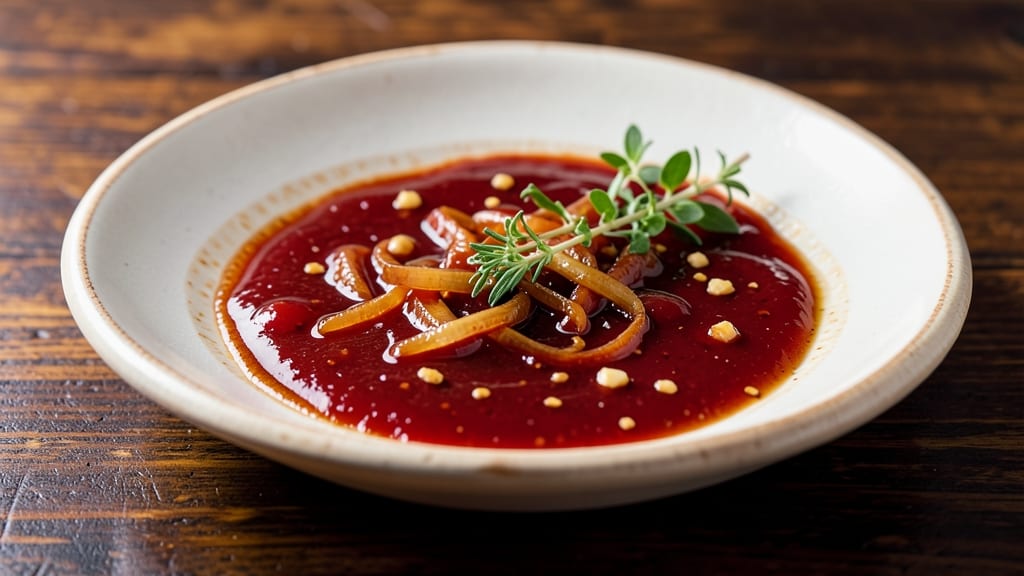
This au jus sauce recipe without drippings delivers restaurant-quality depth using pantry staples and simple techniques. The secret lies in balancing rich beef broth with wine, vinegar, and aromatics to create a sauce that's bold yet balanced—perfect for pan-roasted meats.
I developed this after realizing how often I needed a quick, flavorful sauce without relying on meat drippings that could vary in quality.
The beauty of this recipe is its versatility. You'll start with a base of beef broth, wine, and vinegar—classic au jus ingredients—but skip the traditional drippings entirely. Instead, we build flavor through slow simmering with garlic, shallots, and herbs, creating a sauce that's rich, slightly tangy, and packed with umami.
The result is a sauce that's just as impressive as one made from drippings, but with more control over flavor and consistency.
What makes this sauce truly special is how it transforms simple proteins. Whether you're serving it with pan-seared steak, roasted chicken, or even as a sandwich condiment, this au jus adds depth that takes dishes from ordinary to extraordinary.
The sauce thickens beautifully when reduced, making it ideal for drizzling or basting—no lumps or separation, just pure, velvety flavor.
Best of all, this recipe stores well in the refrigerator for up to a week, so you can make a batch ahead and have it ready whenever you need a quick flavor boost.
The ingredients are simple, the method is straightforward, and the results are consistently delicious—proof that you don't need meat drippings to create a sauce worth savoring.
Ingredients for au jus sauce recipe without drippings
Pantry staples and fresh aromatics transform into velvety au jus without meat drippings.
| Ingredient | Amount | Notes |
|---|---|---|
| Dry Red Wine 🍷 | 1 cup | Bold, dry variety like Cabernet Sauvignon |
| Beef Broth 🥫 | 2 cups | Low-sodium preferred for flavor control |
| Red Wine Vinegar 🍶 | 1 tbsp | Adds tangy brightness |
| Shallots 🧅 | 2 whole | Finely minced for sweet depth |
| Garlic Cloves 🧄 | 4 cloves | Minced for aromatic punch |
| Fresh Thyme 🌿 | 1 tbsp | Leaves only, finely chopped |
| Fresh Parsley 🌿 | 1 tbsp | Chopped for fresh finish |
| Olive Oil 🫒 | 2 tbsp | Extra-virgin for richness |
| Tomato Paste 🍅 | 1 tbsp | For subtle umami depth |
| Granulated Sugar 🍚 | 1 tsp | Balances acidity |
| Salt 🧂 | 1 tsp | Kosher or sea salt |
| Black Pepper 🌶️ | ½ tsp | Freshly ground for heat |
| Unsalted Butter 🧈 | 2 tbsp | Cold, cubed for finishing |
The wine is non-negotiable here—Cabernet Sauvignon or Merlot bring the most depth, but any bold, dry red works. Trader Joe's and Total Wine have great affordable options, but even the cheapest grocery store bottle will do. For the broth, low-sodium is key—you'll add salt later. I always buy Kirkland Signature beef broth from Costco for the best balance of flavor and control. The shallots and garlic should be freshly minced—pre-minced jars lack the aromatic punch this sauce needs to shine.
No red wine? Dry white wine or even extra beef broth with a splash of balsamic vinegar works in a pinch. Fresh herbs? Dried thyme at one-third the amount gets you close, but you'll miss that bright freshness. The tomato paste can be skipped if you're avoiding extra umami, but I find it adds that restaurant-quality depth without overpowering. For the sugar, honey or maple syrup work too—just use the same amount. The butter at the end is crucial for that silky finish—don't skip it, even if you're watching calories.
This sauce keeps beautifully in the fridge for 5-7 days, though it tastes best within the first 3 days. For longer storage, freeze in ice cube trays—perfect for single-use portions. Reheat gently over low heat, stirring occasionally. The sauce thickens as it cools, so a splash of warm water or broth brings it back to perfect consistency. Make a double batch—it disappears fast when you're serving steak or roasted chicken.
Why You'll Love This Recipe
- No Pan Needed: I swear by this—just a pot, a knife, and 15 minutes. Sauté shallots and garlic until golden, deglaze with wine, add broth and vinegar, and let it bubble. No drippings, no fuss, no cleanup that’ll make you question your life choices.
- Wine Vinegar Magic: That splash of red wine vinegar? It’s the secret weapon. Brightens the richness of the wine and beef broth without overpowering—just enough tang to cut through the depth. Honestly, it’s the difference between "meh" and "I’ll make this every week."
- Leftovers That Lie: Make a double batch and store it in the fridge. It only gets better after a day or two, mellowing into something even richer. Freezes like a dream too—perfect for when you’re too lazy to cook but still want restaurant-quality flavor. (Yes, even on a Tuesday night.)
- Budget-Friendly Upscale: You’re basically turning cheap ingredients into something that tastes like it belongs in a steakhouse. The red wine and vinegar add sophistication for pennies, while the shallots and garlic give it that restaurant-worthy depth. My wallet and taste buds both approve.
Step-by-step instructions for rich pan-roasted au jus
This method builds deep umami flavor from scratch—no drippings needed. Every step matters for that velvety, wine-bright sauce.
Build the Flavor Base with Shallots and Garlic
Heat the 2 tablespoons olive oil in a medium saucepan over medium-low heat. Add the 2 whole shallots, finely minced, and cook for 8-10 minutes until they turn a deep golden color and are completely tender. You want them to caramelize slightly—that sweetness forms the foundation of the sauce.
Add the 4 cloves garlic cloves, minced, and cook for another 1-2 minutes until fragrant but not browned. Garlic burns quickly, so keep an eye on it. Here's the thing—if you see the garlic start to darken, immediately remove the pan from heat and let it cool for 30 seconds before continuing. That bitter edge ruins the delicate balance we're building.
Develop Umami with Tomato Paste and Wine
Stir in the 1 tablespoon tomato paste and cook for 1 minute to toast its flavors. This step deepens the sauce's complexity with subtle umami notes. Pour in the 1 cup dry red wine and scrape up any browned bits from the bottom of the pan—this is where all the flavor hides.
Let the wine simmer for 3-4 minutes until it reduces by about half. You're looking for a syrupy consistency here, not completely dry. If the mixture starts to stick, add 1-2 tablespoons of beef broth to keep it moving. The alcohol needs to cook off completely—this ensures your sauce won't taste sharp or raw.
Balance Flavors with Vinegar and Broth
Add the 1 tablespoon red wine vinegar, 1 teaspoon granulated sugar, 1 teaspoon salt, and ½ teaspoon black pepper. The vinegar brightens the wine's richness while the sugar balances its acidity. Stir well to combine, then pour in the 2 cups beef broth. Bring everything to a gentle simmer over medium heat and let it cook uncovered for 10-12 minutes until slightly reduced.
Here's where the magic happens: Taste and adjust seasoning. You might need a pinch more salt or a splash more vinegar to achieve that perfect balance of sweet, tangy, and savory. The sauce should coat the back of a spoon with a velvety texture—if it's too thin, simmer uncovered for another 5 minutes to thicken it slightly.
Finish with Herbs and Butter
Remove the pan from heat and stir in the 1 tablespoon fresh thyme and 1 tablespoon fresh parsley. Let the herbs steep in the warm sauce for 2 minutes—this infuses their bright flavors without overpowering the dish. Add the 2 tablespoons unsalted butter, cut into small cubes, and whisk until completely melted and emulsified.
The butter should create a glossy sheen on the sauce, indicating proper emulsification. If the sauce looks too thick, whisk in 1-2 tablespoons of hot broth to loosen it to a perfect pouring consistency. Strain through a fine-mesh sieve if you prefer a completely smooth texture, or leave it slightly rustic for texture.
Rest and Serve Warm
Let the sauce rest for 5 minutes before serving. This allows the flavors to meld completely and the sauce to reach its ideal temperature. The finished au jus should be glossy with a deep red hue, balancing rich umami with bright acidity and a touch of sweetness.
Serve immediately over roasted meats or use as a dipping sauce for crusty bread. For best results, keep the sauce warm in a low-temperature oven (around 170°F) if serving family-style. This method delivers restaurant-quality depth without relying on pan drippings—every element works together to create a sauce that stands on its own.
Pro Tips For Making Au Jus Sauce Recipe Without Drippings
- Sweat Shallots Low: The wine should smell like wine, not like a sad, boiled onion. Use a low flame and let those shallots caramelize for 5–7 minutes—just until they’re soft and translucent, not browned. If you rush this, your sauce will taste like you microwaved the whole thing.
- Deglaze Hot Pan: That red wine isn’t just for flavor—it’s for cleaning. As soon as you remove the shallots, pour in the wine and scrape the bottom aggressively with a wooden spoon. The goal is to dissolve every last bit of caramelized goodness, not just dump liquid into a dirty pan.
- Reduce Vinegar Last: Add the red wine vinegar when the sauce is nearly done. Too early, and it’ll turn your rich, winey base into a tangy mess. Stir it in just before you finish reducing, or you’ll end up with a sauce that tastes like it got pickled.
- Strain for Smoothness: No one wants to bite into a chunk of garlic or shallot while sipping their au jus. After simmering, strain the sauce through a fine-mesh sieve or cheesecloth. It’s a little extra work, but your sauce will look restaurant-worthy—and taste like it belongs there.
Common mistakes when making perfect results
Skipping the Wine Reduction
One of the biggest mistakes is rushing the wine reduction. The alcohol needs to cook off completely—if you skip this step, your sauce will taste sharp and raw. I’ve made this error when I’m in a hurry, and trust me, it’s noticeable.
Simmer the wine until it reduces by about half, which takes 3-4 minutes over medium heat. If you see the mixture starting to stick, add 1-2 tablespoons of beef broth to keep it moving. This step is non-negotiable for that velvety, balanced flavor. 🔥
Overcooking the Shallots
Another common mistake is burning the shallots. They need to caramelize for 8-10 minutes over medium-low heat, but if you crank the heat too high, they’ll turn bitter.
I’ve learned this the hard way—once, I walked away for just a minute, and when I came back, the shallots were dark and acrid. Keep a close eye on them, and if they start to darken too quickly, reduce the heat immediately.
The goal is a deep golden color, not charred bits.
Ignoring the Butter Finish
Many people skip the butter at the end, thinking it’s optional, but it’s what gives the sauce that silky, glossy finish. The butter emulsifies with the liquid, creating a velvety texture that’s essential for au jus.
I’ve tried making this sauce without it, and while it’s still flavorful, it lacks that restaurant-quality richness. Add the 2 tablespoons of cold, cubed butter at the very end and whisk until completely melted. If the sauce looks too thick, whisk in 1-2 tablespoons of hot broth to loosen it.
Not Tasting and Adjusting
Another frequent error is not tasting the sauce as you go. The balance of sweet, tangy, and savory flavors needs to be just right. After adding the vinegar, sugar, and salt, always taste and adjust.
You might need a pinch more salt or a splash more vinegar to achieve that perfect harmony. I can’t tell you how many times I’ve made this sauce and thought, “It’s done,” only to realize it needed just a little more brightness or depth.
Trust your palate—it’s the best tool you have.
Using High Heat for Simmering
Simmering the sauce over high heat is a recipe for disaster. High heat can cause the sauce to boil vigorously, leading to splattering and uneven reduction. Instead, maintain a gentle simmer over medium heat. This allows the flavors to meld slowly and the sauce to thicken evenly.
I’ve seen sauces turn grainy or separate when cooked too aggressively, and it’s always disappointing. Patience here pays off—let the sauce work its magic at a steady simmer. ✨
Straining Out the Herbs
While some recipes suggest straining the herbs for a smooth sauce, I’ve found that leaving them in adds a lovely rustic texture and extra flavor. The herbs infuse the sauce with their bright, fresh notes, but they don’t overpower the dish.
If you prefer a completely smooth texture, strain through a fine-mesh sieve, but don’t skip the herbs entirely—they’re what make this sauce feel special. Let them steep for 2 minutes before adding the butter, and you’ll get that perfect balance of flavor and texture.
Nutrition facts
Frequently asked questions
Can I make this au jus sauce vegetarian?
Swap the beef broth for vegetable broth and use white wine or apple cider vinegar instead of red wine. Add 1 teaspoon soy sauce or mushroom powder for umami depth. The same method works perfectly—just adjust seasoning to taste since vegetarian broths often have different salt levels.
How do I store and reheat leftovers?
Store in an airtight container in the fridge for up to 7 days. For reheating, warm over low heat on the stove, stirring occasionally until just heated through. Avoid microwaving—it can make the sauce grainy. If it thickens too much, whisk in 1-2 tablespoons of warm water or broth to restore consistency.
What's the best way to use this sauce?
This versatile sauce works perfectly drizzled over pan-seared steak, roasted chicken, or pork chops. It also makes an excellent dipping sauce for fries, sandwiches, or crusty bread. For extra richness, reduce it slightly before serving to create a glossy glaze. The sauce keeps well in the fridge, so make a batch ahead for quick meals!
Can I make this sauce ahead of time?
Yes! This sauce actually tastes better when made 1-2 days ahead—the flavors meld more completely. Store in the fridge and reheat gently before serving. For longer storage, freeze in ice cube trays for single-use portions. Thaw overnight in the fridge before reheating. The sauce thickens as it cools, so adjust consistency with a splash of warm water when reheating.
What if I don't have red wine vinegar?
No problem! Use white wine vinegar, balsamic vinegar, or even apple cider vinegar in the same amount. Each will give slightly different flavor notes—white wine vinegar adds brightness, while balsamic contributes a deeper sweetness. Adjust the sugar slightly if using balsamic to maintain balance. The key is acidity, so any vinegar works in a pinch.