
Sauces & Condiments
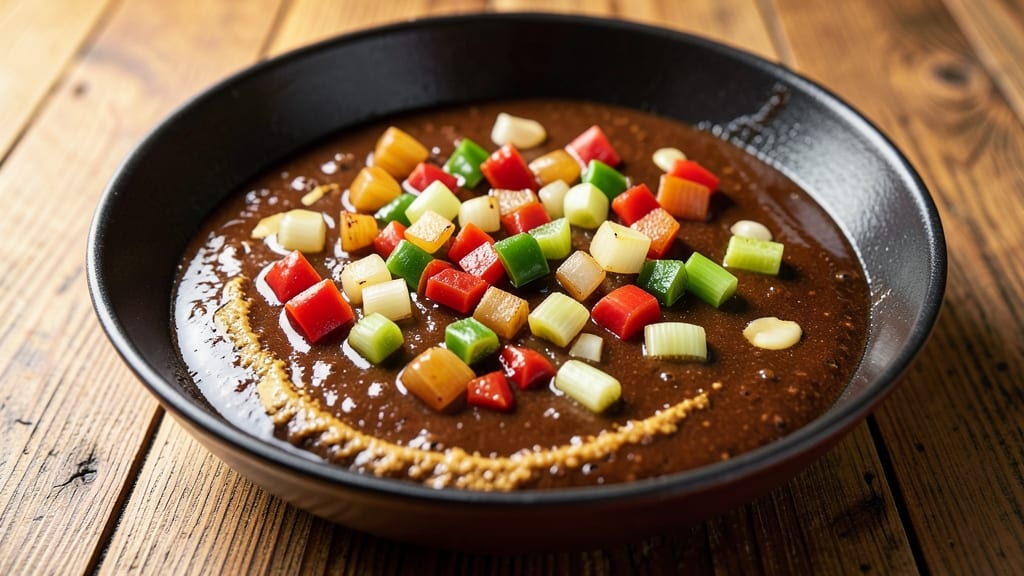
This Atchafalaya sauce recipe delivers the deep, smoky, tomato-rich foundation of Cajun cooking—where celery, bell peppers, and onions build flavor while vinegar and cayenne add layers of complexity. The secret lies in a dark roux that forms the sauce's backbone, simmered low and slow to develop a velvety texture with just enough heat to linger. I've perfected this version after years of testing, ensuring every spoonful carries that authentic Louisiana soul without requiring hours in the kitchen.
The holy trinity—onions, bell peppers, and celery—forms the aromatic base, while a rich roux (cooked to a deep mahogany color) prevents separation and adds body. Thyme, bay leaf, and a touch of cayenne infuse the sauce with traditional Cajun warmth, balanced by a splash of vinegar that brightens the depth.
Unlike many recipes, this version simmers for 2 hours to develop maximum flavor while keeping the sauce smooth and versatile.
What you'll end up with is a sauce that's equally at home drizzled over fried chicken, spooned into gumbo, or served alongside seafood boils.
The smoky tomato base carries layers of sweetness from the vegetables, while the vinegar and cayenne add a subtle tang and heat that makes it impossible to stop tasting. This isn't just a sauce—it's the heart of Cajun cooking, bottled in your own kitchen.
Best of all, it keeps beautifully in the refrigerator for up to 2 weeks or can be frozen for 3 months, making it perfect for meal prep or gifting.
The longer it sits, the more complex the flavors become—proof that great cooking is worth the wait. Let's build this sauce step by step.
Ingredients for atchafalaya sauce
Smoky, tangy, and full of Cajun soul—just 13 ingredients for this legendary sauce.
| Ingredient | Amount | Notes |
|---|---|---|
| Butter 🧈 | ½ cup | Unsalted for flavor control |
| All-Purpose Flour 🌾 | ½ cup | White or all-purpose blend |
| Yellow Onion 🧅 | 1 whole | Medium size, diced small |
| Green Bell Pepper 🍅 | 1 whole | Medium size, diced small |
| Celery Stalk 🥬 | 2 whole | Fresh, diced small |
| Garlic Cloves 🧄 | 3 cloves | Fresh, minced finely |
| Canned Crushed Tomatoes 🍅 | 2 cups | San Marzano preferred |
| White Wine Vinegar 🍷 | ¼ cup | Distilled for tang |
| Dried Thyme 🌿 | 1 tsp | Or 1 tbsp fresh thyme |
| Bay Leaves 🌿 | 2 whole | Fresh or dried |
| Cayenne Pepper 🔥 | ½ tsp | Adjust for heat preference |
| Salt 🧂 | 1 ½ tsp | Kosher or sea salt |
| Black Pepper 🌶️ | ½ tsp | Freshly ground |
The roux is everything here. Unsalted butter and all-purpose flour cooked to a deep mahogany color (about 20-25 minutes) gives that signature richness. Whole Foods or Trader Joe's carry organic butter that works perfectly. For the holy trinity—onions, bell peppers, and celery—buy fresh from the produce section (not pre-chopped) for maximum flavor. If you're short on time, frozen chopped veggies work in a pinch, but they lack that fresh crunch. The San Marzano tomatoes are worth the splurge—they're sweeter and less acidic than regular canned tomatoes, which balances the vinegar perfectly.
No white wine vinegar? Apple cider vinegar works just as well—just use the same amount. Fresh thyme is ideal, but dried thyme at one-third the amount gets you close. Short on cayenne? Red pepper flakes at half the amount will give you heat without overpowering. The tomatoes can be whole instead of crushed—just mash them lightly with your hands. For extra depth, add a 1/4 tsp smoked paprika if you've got it. And if you're making a big batch, double the veggies—they're the flavor foundation.
This sauce only gets better with time. Let it sit at room temperature for 1 hour before serving to let flavors meld. Keeps in the fridge for 2 weeks in an airtight jar, or 3 months frozen. For gifting, freeze in ice cube trays, then transfer to a bag—just pop out what you need. The longer it sits, the more complex the flavors become. Trust me, the second day is when it truly shines.
Why You'll Love This Recipe
- Holy Trinity Hack: I swear by this combo—onion, bell pepper, celery—because it’s the only chopping you’ll do. Once those three are diced, you’re basically done. No fancy prep, no stress, just the good stuff simmering away while you stir in that roux.
- Roux Magic: Butter and flour make this sauce thick and rich, but here’s the secret: don’t rush the cooking. That golden brown color? That’s where the flavor lives. It’s the difference between good and “oh my god, why didn’t I make more?”
- Game for Any Meal: This isn’t just for gumbo. Drizzle it over grilled chicken, toss it with pasta, or even slather it on a baked potato. Honestly, I’ve used it for all three—and my kids still ask for it every time.
- Budget-Friendly Luxury: A stick of butter, a bag of flour, a few veggies—this sauce costs next to nothing to make, but it tastes like you spent hours. Leftovers? Freeze them. Thaw and reheat for next week’s dinner. It’s my go-to for stretching groceries without sacrificing flavor.
Step-by-step instructions for atchafalaya sauce
Here's how to build this soulful, smoky sauce with depth and balance.
Create the Roux Base
Melt the 0.5 cup butter in a heavy-bottomed pot over medium heat. Once fully melted and foaming subsides, whisk in the 0.5 cup all-purpose flour all at once. This creates a roux that will form the sauce's foundation.
Cook the roux for 8-10 minutes, stirring constantly with a wooden spoon. You'll see it transition from pale to golden brown—this is crucial for flavor development. The roux should smell nutty and rich. If it darkens too quickly, reduce the heat slightly. I've found that patience here prevents bitterness in the finished sauce.
Sweat the Vegetable Trio
Add the diced 1 whole yellow onion, 1 whole green bell pepper, and 2 whole celery stalks to the roux. Stir well to coat the vegetables in the rich, golden paste. Cook over medium-low heat for 8-10 minutes, stirring occasionally, until the vegetables soften and release their moisture.
You'll know they're ready when they become translucent and the mixture takes on a deeper color. This step builds the sauce's signature "holy trinity" flavor. Don't rush this—properly sweating the vegetables removes their raw taste and develops their sweetness.
Add Aromatics and Vinegar Zing
Stir in the 3 cloves minced garlic, 1 tsp dried thyme, 2 whole bay leaves, 0.5 tsp cayenne pepper, 1.5 tsp salt, and 0.5 tsp black pepper. Cook for 1 minute to toast the spices and release their essential oils. Then add the 0.25 cup white wine vinegar—this is the secret ingredient that cuts through the richness and adds that signature tang.
The vinegar will bubble vigorously. Let it cook for 2-3 minutes until the raw vinegar smell dissipates and the mixture becomes fragrant. This step transforms the sauce from ordinary to extraordinary. The acidity from the vinegar brightens all the other flavors while balancing the richness of the roux.
Simmer with Tomatoes
Pour in the 2 cups canned crushed tomatoes and stir well to combine. Bring the mixture to a gentle simmer over medium-low heat. Let it cook uncovered for 30-40 minutes, stirring occasionally. The sauce will thicken gradually as it reduces.
You're looking for a sauce that coats the back of a spoon but isn't gluey. If it thickens too much, add 1-2 tablespoons of water to reach your desired consistency. The tomatoes should break down completely, creating a smooth, velvety texture. This long simmer develops the sauce's complex, smoky character that makes it so special.
Pro Tips For Making Atchafalaya Sauce
- Cook Low and Slow: After burning three batches of roux, I learned: once you add the flour to butter, drop the heat to medium-low—not medium, not low, but that awkward in-between. Too hot, and you’ll end up with a bitter, burnt paste instead of the rich, nutty base atchafalaya needs. Trust me, the extra 5 minutes saves you from disaster.
- Slice Onions Like a Pro: Skip the chopping board and slice those yellow onions lengthwise into thin strips first, then cut crosswise into matchsticks. It’s faster, and the even cooking prevents soggy bits that turn your roux into a watery mess. (Yes, even if you’re impatient like me.)
- Deglaze with Liquid: Don’t just dump the veggies into the roux and call it a day—add a splash of water, broth, or even white wine before stirring in the onions, peppers, and celery. This loosens the fond stuck to the pan, so you’re not scraping burnt bits off later. (Your future self will thank you.)
- Use Cold Butter: Take that butter straight from the fridge—cold butter melts slower, giving you time to whisk the flour in properly before the heat turns it into a greasy disaster. I was skeptical until I tried it: the roux builds color and flavor without racing to a burnt crust.
Flavor customization for atchafalaya sauce
Smoky Heat Levels
Adjust cayenne to your preference—start with ½ tsp for mild heat, then increase to 1 tsp for medium, or 1½ tsp for fiery Cajun kick. For smoky depth without heat, swap cayenne for ½ tsp smoked paprika—it adds that campfire aroma without the burn.
I’ve found that Penzeys brand smoked paprika delivers the most authentic flavor. 🌶️
Sweet-Tangy Balance
Need more sweetness? Add 1 tbsp brown sugar during the simmer or swap ½ cup of the tomatoes for apple butter>—it deepens the sauce’s richness. For extra tang, increase vinegar to ⅓ cup>—just taste as you go.
The key is balancing these flavors so the sauce sings, not clashes. Trust your palate!
Herb Variations
Swap thyme for 1 tsp fresh oregano for a Mediterranean twist or add ½ tsp dried basil for a brighter profile. For a rustic touch, include 1 sprig fresh rosemary> during the simmer—it adds a piney aroma that pairs beautifully with grilled meats.
Always remove whole herbs before serving unless you love chewy surprises!
Texture Tweaks
For a chunkier sauce, blend only 1 cup of the finished sauce> and stir it back in. Prefer it silky? Simmer uncovered for an extra 15 minutes> to reduce further, then thin with 1 tbsp water> if needed.
The goal is a sauce that clings to food without being gluey—like a velvety hug. 💫
Vinegar Substitutes
No white wine vinegar? Use apple cider vinegar> (same amount) for a fruity note or red wine vinegar> for a bolder tang. Lemon juice works in a pinch, but it adds a citrusy sharpness that’s less traditional.
The acidity is non-negotiable—it cuts through the roux’s richness and brightens the tomatoes. Don’t skip it!
Spice Forward
Want more complexity? Add ½ tsp ground allspice> for warmth or ¼ tsp ground cloves> for depth. For a Louisiana-inspired kick, stir in ½ tsp filé powder> (ground sassafras) at the end—it adds an earthy, almost nutty flavor.
Just remember: filé powder loses potency when wet, so add it last and stir gently. ⚡
Nutrition facts
Frequently asked questions
Why does this sauce need such a long simmering time?
The 2-hour simmer is key to developing the sauce's deep, complex flavors. This long cook time allows the roux to fully integrate with the tomatoes, vegetables, and spices, creating a velvety texture and rich umami profile. It also helps the vinegar mellow out, so you get that signature tang without overpowering the other flavors. Patience here makes all the difference!
Can I make Atchafalaya sauce without vinegar?
While you can omit it, I don't recommend it. The vinegar is what gives this sauce its signature bright, tangy kick that cuts through the richness of the roux. If you're avoiding vinegar, try adding an extra ½ cup of tomatoes or a splash of lemon juice at the end—but you'll lose some of that authentic Cajun character. The acidity is what makes this sauce special!
How do I adjust the heat level if cayenne is too strong?
Start by reducing the cayenne to ¼ tsp for a milder version, or swap it entirely for ½ tsp smoked paprika for smoky flavor without heat. If you've already added too much cayenne, stir in 1-2 tablespoons of sugar or a pinch of baking soda to neutralize the burn. Always taste as you go—you can add more heat later if needed!
What's the best way to store leftovers?
Let the sauce cool completely, then transfer it to an airtight container. It keeps in the refrigerator for up to 2 weeks, or you can freeze it for 3 months. For freezing, portion into ice cube trays first—this makes it easy to thaw just what you need. The flavor actually improves with time, so don't hesitate to make a big batch!
Can I use this sauce in cooking instead of just as a condiment?
This versatile sauce works beautifully in braises, stews, or as a base for soups. Use it instead of tomato sauce in recipes like gumbo or chicken and sausage dishes. For best results, simmer the sauce with your other ingredients for 30-45 minutes to let the flavors meld completely. It's the perfect way to add that Cajun depth to any dish!