
Sauces & Condiments
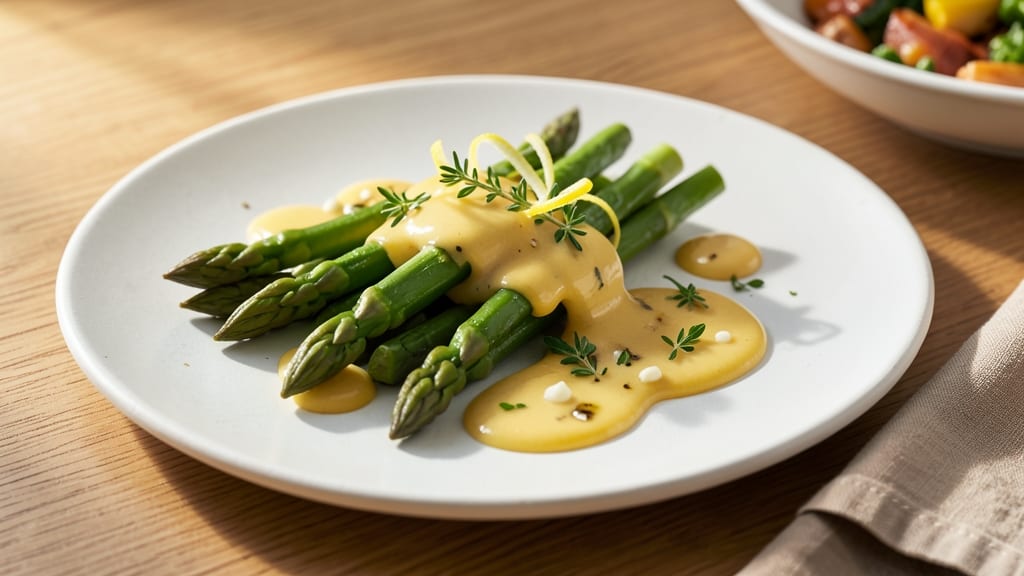
This asparagus with lemon butter sauce recipe transforms simple spring greens into an elegant side dish that pairs perfectly with grilled meats or fish. The secret lies in balancing tender-crisp asparagus with a bright, tangy butter sauce that cuts through richness while enhancing natural flavors.
I've perfected this technique over years of spring cooking—where the sauce isn't just an afterthought but the star element that elevates every bite.
What makes this recipe truly simple is the minimal prep work required: just trim the asparagus ends, blanch for perfect tenderness, then toss with a sauce made from just four ingredients. The key technique is blanching the spears first—this ensures they stay crisp-tender rather than becoming limp or overcooked.
Meanwhile, the sauce comes together in minutes with melted butter, lemon juice, and a touch of garlic, creating a vibrant contrast to the earthy greens.
By the time you plate this dish, you'll have bright green asparagus spears with golden tips, each one coated in that luminous lemon butter sauce. The sauce clings beautifully to the spears, adding a zesty brightness that makes every bite feel special.
This is the kind of side dish that transforms ordinary meals into something restaurant-worthy without requiring advanced skills or expensive ingredients.
The beauty of this recipe lies in its versatility—it works equally well as a standalone vegetable dish or alongside grilled chicken, salmon, or steak. The sauce can be made ahead and reheated gently, making it perfect for meal prep.
Let's get started on creating this bright, flavorful asparagus dish that's sure to become a springtime staple.
Ingredients for asparagus with lemon butter sauce
Bright green asparagus meets zesty lemon butter sauce in this restaurant-quality spring side dish.
| Ingredient | Amount | Notes |
|---|---|---|
| Fresh Asparagus Spears 🌱 | 1 ½ lb | Trimmed to even lengths, tough ends removed |
| Unsalted Butter 🧈 | ½ cup | Cold, cubed for sauce, European-style preferred |
| Fresh Lemon Juice 🍋 | ¼ cup | From 1 large lemon, freshly squeezed |
| Garlic Cloves 🧄 | 3 cloves | Minced, fresh for optimal flavor |
| Extra-Virgin Olive Oil 🫒 | 1 tbsp | For blanching asparagus, light flavor preferred |
| Diamond Crystal Kosher Salt 🧂 | 1 tsp | For blanching water, fine grain preferred |
| Freshly Ground Black Pepper 🌶️ | ¼ tsp | Freshly cracked for maximum aroma |
| Fresh Parsley Leaves 🌿 | ¼ cup | Chopped, for garnish, flat-leaf preferred |
| Ice Cubes ❄️ | 1 cup | For immediate shock bath after blanching |
| Heavy Cream 🥛 | ⅛ cup | Optional, for richer sauce consistency |
The asparagus quality matters most here—look for bright green spears with tight tips at your local farmers market or grocery store's produce section. Whole Foods or Trader Joe's typically carry the freshest varieties, but even standard grocery store asparagus works if you handle it gently. The key is selecting spears that are about the same diameter—this ensures even cooking. For the butter, European-style unsalted butter like Plugrá or Kerrygold creates the richest sauce, though any good-quality butter will work. The lemon should be firm with a bright yellow skin—avoid any with dull spots or soft areas, as these indicate age.
No fresh parsley? Dried parsley at half the amount works in a pinch, though it lacks the fresh brightness. Substituting olive oil for butter in the sauce creates a lighter version—just increase the lemon juice slightly to balance the flavor. For those avoiding dairy, vegan butter or coconut oil can replace the heavy cream and butter, though the sauce will have a different mouthfeel. The garlic can be pre-minced from a jar if needed, but fresh is always preferable for that authentic flavor. If you're short on time, frozen asparagus works for blanching, though fresh is ideal for the final presentation.
Blanched asparagus stays crisp-tender for up to 2 days in the fridge when stored in a sealed container with a paper towel to absorb moisture. The sauce can be made ahead and reheated gently with a splash of water or lemon juice to restore its sheen. For meal prep, portion the sauce separately and toss with asparagus just before serving to maintain that vibrant color. This dish reheats beautifully—simply warm the sauce and toss with asparagus in a skillet over medium heat for about 2 minutes. The sauce will thicken slightly upon reheating, so add a splash of water if needed.
Why You'll Love This Recipe
- Here’s what sold me: the roasted asparagus stays crispy for days, and the sauce? Just reheat it with a splash of water. I’ve thrown it into salads, scrambled eggs, or even over grilled chicken the next day. No sad, soggy leftovers here—just flavor you’ll actually want to eat.
- Five-Ingredient Magic: I swear by this recipe because it’s the kind of dish where you almost feel fancy without trying. Just asparagus, butter, lemon, garlic, and olive oil—no fancy techniques, no hidden pantry items. The sauce comes together while the asparagus roasts, so you’re basically done before the timer goes off.
- Bright & Buttery Balance: That first bite of crisp-tender asparagus with the sauce clinging to it? Chef’s kiss. The lemon cuts through the richness of the butter, and the garlic adds this warm, aromatic punch that makes it taste like you spent hours in the kitchen. (Spoiler: You didn’t.)
- Weeknight to Dinner Party: Honestly, this is my go-to for when I need something quick but still feels special. Toss it on the table for a lazy Tuesday dinner, or serve it at a gathering—no one will question why it’s missing. It’s that universally loved, effortlessly elegant.
Step-by-step instructions for asparagus with lemon butter sauce
Master this elegant yet simple technique for perfectly tender asparagus with a velvety lemon butter sauce.
Blanch the Asparagus for Perfect Tenderness
Fill a large pot with 4 quarts water and bring to a rolling boil. Add the 1.5 lb fresh asparagus spears and 1 tsp Diamond Crystal kosher salt, then cook for 2-3 minutes until the asparagus is bright green and just beginning to soften at the tips. You want to maintain some bite—overcooking will turn them mushy.
While the asparagus cooks, prepare an ice bath by filling a large bowl with 1 cup ice cubes. This shock treatment stops the cooking process instantly and preserves the vibrant color. Once the asparagus reaches the perfect doneness, use a slotted spoon to transfer it immediately to the ice bath for 1 minute. Drain well and set aside on a clean kitchen towel.
Create the Lemon Butter Sauce Base
In a medium saucepan, melt the 0.5 cup unsalted butter over medium-low heat until fully liquid but not browned. Add the 3 cloves minced garlic and cook for 30 seconds until fragrant—don't let it brown or it will turn bitter. This step builds the aromatic foundation of your sauce.
Pour in the 0.25 cup fresh lemon juice and let it simmer gently for 2 minutes until slightly reduced. The acidity will brighten the butter's flavor while creating a silky texture. Taste and adjust seasoning with 0.25 tsp freshly ground black pepper—this is where the sauce's balance comes together.
Finish with Cream and Fresh Herbs
Reduce the heat to low and stir in the 0.125 cup heavy cream (if using). Let it warm through for 1 minute—just until the cream is fully incorporated but not boiling. Remove from heat and stir in the 0.25 cup chopped fresh parsley leaves for a fresh herbal finish. The sauce should be smooth and glossy with a vibrant lemon hue.
If the sauce is too thick, thin it with 1 tablespoon hot water to reach your desired consistency. The sauce should coat the back of a spoon but remain pourable. Here's the thing—this sauce thickens as it cools, so don't over-thin it now.
Combine Asparagus and Sauce
Return the blanched asparagus to the saucepan with the lemon butter mixture. Gently toss everything together over low heat for 1-2 minutes just to warm through. The residual heat from the asparagus will help melt any remaining butter solids in the sauce, creating an even coating.
Serve immediately while the asparagus is still warm and the sauce is silky. The bright lemon notes will cut through the richness of the butter, creating a perfect balance of flavors. For an extra touch, garnish each serving with an additional sprinkle of chopped parsley and a pinch of freshly cracked black pepper.
Pro Tips For Making Asparagus With Lemon Butter Sauce
- Trim the Tough Ends: DESCRIPTION: Snip off the woody bottoms at a 45-degree angle—this makes them easier to snap cleanly with your fingers (yes, even if you’re impatient like me). The thicker the spear, the more you’ll need to trim; thin asparagus often snaps naturally near the base.
- Roast First, Sauté Second: DESCRIPTION: Toss the trimmed asparagus with olive oil, salt, and pepper, then roast at 425°F (220°C) for 8–10 minutes before finishing in the sauce. This jumpstarts the flavor and prevents soggy spears when you add the butter later.
- Sauté Garlic Low and Slow: DESCRIPTION: After removing the asparagus from the pan, reduce heat to medium-low for the garlic—burnt garlic ruins the sauce faster than you can say “lemon butter.” Add a splash of water if it starts to stick; it’ll steam and mellow out the flavor.
- Deglaze with Lemon Early: DESCRIPTION: As soon as you pull the asparagus out, pour in the lemon juice before adding the butter—this keeps the sauce bright and tangy instead of turning into a dull, buttery sludge. The acid also cuts through any residual garlic bits clinging to the pan.
Flavor customization for asparagus with lemon butter sauce
Classic Bright Version
The original recipe delivers that perfect balance of zesty lemon and rich butter. To enhance the brightness, I recommend using freshly squeezed lemon juice (about 0.25 cup) from a Meyer lemon if available—they're sweeter and add a subtle floral note.
For extra vibrancy, add 1 tsp lemon zest when combining the sauce with asparagus. This version shines when paired with grilled salmon or chicken. 💛
Herb-Infused Variations
Swap out parsley for chopped chives or tarragon (about 0.25 cup) to create a more aromatic sauce. For a Mediterranean twist, add 1 tbsp chopped fresh dill and a pinch of crushed fennel seeds to the sauce base.
I find that thyme (about 1 tsp leaves) adds depth without overpowering the lemon. These herb variations work beautifully with roasted lamb or grilled shrimp.
Spicy Kick Options
For heat lovers, stir in ½ tsp red pepper flakes or 1 tsp hot honey when finishing the sauce. I like to add a dash of Sriracha (about ½ tsp) for a tangy kick.
For smoky heat, mix ¼ tsp smoked paprika into the butter before melting. These spicy versions pair perfectly with steak or pork chops.
Lighter Alternatives
Reduce the butter by 2 tbsp and replace with 2 tbsp olive oil for a lighter sauce. Boost the lemon flavor by adding 1 tbsp white wine when simmering the sauce.
For a dairy-free option, use vegan butter and replace the cream with 2 tbsp coconut cream. These lighter versions work well as a standalone vegetable dish or with grilled fish.
Rich Creamy Version
For a decadent twist, increase the cream to ¼ cup and add 1 oz grated Parmesan cheese when finishing the sauce. I also like to stir in 1 tbsp crème fraîche for extra tang.
This richer version pairs beautifully with roasted duck or seared scallops. The sauce will be thicker and more luxurious, perfect for special occasions. ✨
Nutrition facts
Frequently asked questions
Why do I need to blanch asparagus before making this sauce?
Blanching preserves the vibrant green color and perfect crisp-tender texture—key for this dish. The ice bath shock treatment stops cooking instantly, preventing overcooking while keeping the spears bright. Without this step, the asparagus would turn mushy when tossed with the warm sauce.
Can I make this sauce ahead of time?
Yes! Prepare the sauce up to 2 days ahead and store it refrigerated. Reheat gently with a splash of water or lemon juice to restore its glossy texture. For best results, toss with asparagus just before serving to maintain that fresh, vibrant appearance.
What if my asparagus is different thicknesses?
Trim all spears to even lengths before cooking—this ensures uniform doneness. For thicker stalks, blanch 3-4 minutes*; thinner ones need only 2 minutes. The ice bath will help standardize the texture regardless of size differences.
How can I make this dish dairy-free?
Replace butter with vegan butter or coconut oil and use coconut cream instead of heavy cream. The sauce will have a slightly different texture but still deliver that bright lemon flavor. Add a pinch of salt to enhance the overall taste.
What's the best way to reheat leftovers?
Gently warm the sauce in a skillet over low heat for 2-3 minutes, then toss with asparagus just until heated through. If the sauce thickens too much, add a splash of water or lemon juice. Never microwave—it can make the sauce greasy and ruin the texture.