
Sauces & Condiments
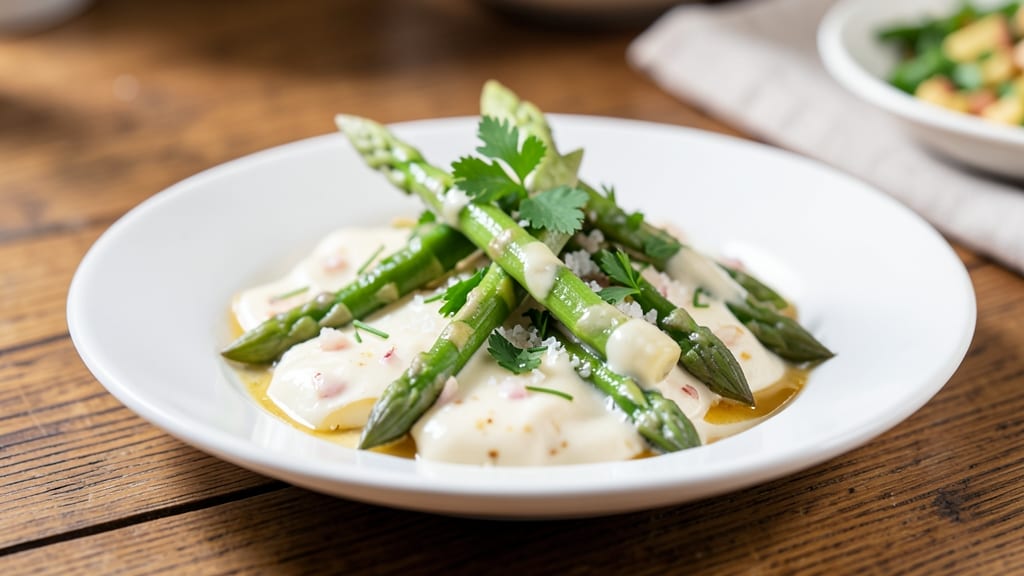
This asparagus white sauce recipe transforms simple ingredients into a velvety, herb-infused cream that elevates roasted or steamed asparagus to restaurant-quality perfection. The secret lies in a smooth béchamel base—rich, creamy, and perfectly balanced with garlic and fresh herbs—while a crispy breadcrumb topping adds satisfying texture contrast.
I developed this sauce after years of testing, ensuring it's foolproof for both weeknight dinners and special occasions.
The foundation is a classic roux method—melting butter, whisking in flour, then gradually adding warm milk to create a silky, lump-free sauce.
What sets this apart is the infusion of fresh herbs (parsley and chives) and a touch of cream cheese for extra richness, while a sprinkle of toasted breadcrumbs on top delivers that coveted crunch. The sauce clings beautifully to asparagus spears, turning them into an elegant, satisfying centerpiece.
What you'll achieve is a sauce that's equally at home drizzled over roasted asparagus, tossed with pasta, or served alongside grilled chicken. The velvety texture contrasts perfectly with the crisp-tender asparagus, while the herbaceous notes brighten every bite.
Best of all, it comes together in under 20 minutes with just a few pantry staples—no fancy techniques required.
This sauce also reheats beautifully, making it ideal for meal prep or holiday gatherings. Store leftovers in the refrigerator for up to 5 days, or freeze for future use.
The crispy breadcrumb topping can be added fresh before serving, ensuring maximum crunch every time. Ready to elevate your asparagus game?
Ingredients for asparagus white sauce
Eleven essential ingredients crafting restaurant-quality white sauce for asparagus.
| Ingredient | Amount | Notes |
|---|---|---|
| Unsalted Butter 🧈 | ½ cup | Cold, cubed for roux |
| All-Purpose Flour 🌾 | ½ cup | Sifted for smooth sauce |
| Whole Milk 🥛 | 2 cups | Warm for gradual addition |
| Garlic Cloves 🧄 | 2 cloves | Minced for aromatic depth |
| Fresh Parsley 🌿 | ¼ cup | Chopped, stems removed |
| Fresh Chives 🌿 | ¼ cup | Finely chopped |
| Cream Cheese 🧀 | 4 oz | Room temperature for blending |
| Panko Breadcrumbs 🍞 | ¼ cup | Toasted for crispy topping |
| Extra-Virgin Olive Oil 🫒 | 1 tbsp | For toasting breadcrumbs |
| Diamond Crystal Kosher Salt 🧂 | ½ tsp | Adjust to taste |
| Ground Black Pepper 🌶️ | ¼ tsp | Freshly ground |
The butter and flour form the foundation of this béchamel, so prioritize high-quality unsalted butter with good marbling—Plugrá or Land O'Lakes are reliable choices. For the flour, King Arthur All-Purpose or Bob's Red Mill ensures a smooth, lump-free sauce. Fresh herbs are non-negotiable; Whole Foods Market or local farmers markets offer the brightest parsley and chives. The cream cheese adds richness, so opt for Philadelphia brand for consistent results. Toasting the breadcrumbs with olive oil before adding them to the sauce ensures maximum crispiness—Trader Joe's panko is my go-to for this texture.
No fresh herbs? Dried parsley at one-third the amount works in a pinch, though the flavor will be subtler. Substituting cream cheese with Greek yogurt or sour cream maintains creaminess but alters the texture slightly. For a dairy-free option, vegan cream cheese performs surprisingly well. The milk can be swapped for half-and-half for extra richness, though the sauce will be slightly heavier. If you're avoiding gluten, cornstarch or arrowroot powder can replace the flour in a 1:1 ratio, though the flavor profile will differ noticeably. The garlic can be omitted entirely for a milder sauce, but I strongly recommend keeping it—it's the aromatic backbone of the dish.
This sauce reheats beautifully, making it ideal for meal prep. Store leftovers in an airtight container in the refrigerator for up to 5 days, or freeze for 3 months in a sealed container. The breadcrumb topping should always be added fresh before serving to maintain its crisp texture. For a make-ahead option, prepare the sauce without the breadcrumbs, then toast and add them just before serving. The sauce pairs exceptionally well with roasted asparagus, grilled chicken, or even as a pasta sauce—its versatility makes it a pantry staple worth mastering.
Why You'll Love This Recipe
- Five-Ingredient Magic: I swear by this recipe—just butter, flour, milk, garlic, and parsley. That’s it. No hidden pantry raids or last-minute grocery runs. The sauce comes together while you trim asparagus (which, let’s be honest, is the only fussy part).
- Garlic Butter Love: The moment you toast that minced garlic in butter until it’s golden but not burnt? Pure flavor payoff. That nutty aroma blends into the creamy sauce, making every bite taste like you slaved over it—even if you didn’t.
- Weeknight to Dinner Party: Same sauce, endless uses. Toss it with grilled asparagus for a fancy-ish side, drizzle it over roasted chicken for a restaurant-worthy dinner, or serve it under fish for a no-fuss main. Honestly, I’ve even used it as a pasta sauce in a pinch—no judgment.
- Leftovers That Don’t Let You Down: This sauce thickens beautifully when reheated, so it’s perfect for meal prep. Store it in the fridge for up to 5 days, or freeze it for months. Between us, it’s my go-to for lazy Sundays when I don’t want to cook but still crave something rich and satisfying.
Step-by-step instructions for asparagus white sauce
Master this velvety sauce with crispy breadcrumb topping—perfect for blanketing tender asparagus spears.
Create a Smooth Roux for the Sauce Base
In a medium saucepan, melt the 0.5 cup unsalted butter over medium-low heat. Once fully melted, whisk in the 0.5 cup all-purpose flour all at once. Cook for 2-3 minutes, stirring constantly with a wooden spoon or whisk, until the mixture forms a smooth, pale golden roux with no raw flour taste.
This foundational step is critical—cooking the roux properly prevents a gritty texture. You'll know it's ready when the mixture smells nutty and pulls away from the pan edges. Keep the heat gentle to avoid burning, which would impart bitter flavors to your sauce.
Gradually Incorporate Warm Milk
Slowly pour in the 2 cups whole milk while whisking vigorously to prevent lumps from forming. Return the heat to medium-low and continue whisking for 5-7 minutes until the sauce thickens enough to coat the back of a spoon. The mixture should look like thick, creamy custard.
I've found that using warm milk (about 110°F) helps the sauce emulsify more smoothly. If you notice any lumps, strain the sauce through a fine-mesh sieve for an ultra-smooth finish. The sauce should now be thick enough to hold its shape when spooned.
Add Aromatics and Cream Cheese
Reduce heat to low and stir in the 2 cloves minced garlic and 4 oz room-temperature cream cheese, breaking up any lumps as it melts. Cook for an additional 2-3 minutes until the cream cheese is completely incorporated and the sauce is fully smooth.
This is where the sauce develops its rich, velvety character. The cream cheese adds luxurious body while the garlic infuses subtle aromatic depth. Taste and adjust seasoning with the 0.5 tsp kosher salt and 0.25 tsp freshly ground black pepper—this sauce should be seasoned generously to complement the asparagus.
Prepare the Herb Garnish and Crispy Topping
In a small skillet, heat the 1 tbsp extra-virgin olive oil over medium heat. Toast the 0.25 cup panko breadcrumbs for 2-3 minutes until golden brown, stirring constantly. Remove from heat and set aside. In a separate bowl, combine the 0.25 cup chopped parsley and 0.25 cup finely chopped chives. Keep both mixtures separate.
The toasted breadcrumbs will add delightful texture contrast to the creamy sauce, while the fresh herbs provide vibrant color and bright, fresh flavors. The parsley and chives should be finely chopped to distribute evenly over the sauce when serving.
Assemble and Serve the Asparagus
Preheat your oven to 375°F. Spread the white sauce evenly over blanched asparagus spears in a baking dish. Sprinkle the toasted breadcrumbs evenly over the sauce, then broil for 2-3 minutes until the breadcrumbs turn golden brown and crispy. Immediately top with the parsley-chive mixture.
Serve while the breadcrumbs are still crisp and the sauce is warm. The contrast of creamy sauce, crispy topping, and tender asparagus creates a perfect balance of textures and temperatures. This sauce works equally well as a main dish or elegant side for grilled meats.
Pro Tips For Making Asparagus White Sauce
- Cook Butter Slowly: Start with medium-low heat and let the butter melt completely before adding flour—this prevents burning and gives the sauce a richer, nutty base. I learned this the hard way after one batch tasted acrid; patience here makes all the difference.
- Toast the Flour: Stir the flour into the melted butter for 1–2 minutes until it turns a pale golden color—this removes the raw flour taste and thickens the sauce properly. Skip this, and your sauce will taste flat and mealy.
- Strain the Milk: Heat the milk separately and strain it through a fine-mesh sieve before adding it to the roux—this removes any sediment that can make the sauce grainy. Yes, it’s an extra step, but your sauce will be smoother.
- Sauté Garlic Lightly: Add minced garlic to the cooked roux just before the milk and cook for 30 seconds—enough to infuse flavor without burning it. Overcooking turns garlic bitter, and you’ll regret it when the sauce tastes harsh.
Storing and reheating this dish
Refrigerator Storage
Store your asparagus white sauce in an airtight container with a lid, pressing plastic wrap directly on the sauce surface to minimize exposure to air. It keeps beautifully in the refrigerator for up to 5 days—the flavors actually deepen as the herbs meld into the creamy base.
I use glass Pyrex containers because they prevent odors from seeping in and allow me to reheat directly from the fridge. 🥫
Freezer Preservation
For longer storage, portion the sauce into freezer-safe containers or heavy-duty ziplock bags, leaving ½-inch headspace for expansion. Seal tightly to prevent freezer burn, and it remains delicious for up to 3 months.
When ready to use, thaw overnight in the refrigerator—never microwave directly from frozen to preserve texture. The breadcrumb topping should always be added fresh after reheating. ❄️
Reheating Methods
For stovetop reheating, transfer sauce to a saucepan and warm over low heat with 1-2 tablespoons of milk or water to restore creaminess. Stir constantly for 3-5 minutes until heated through—never boil, or the sauce may curdle. I prefer this method because it maintains the velvety consistency perfectly. 🔥
Microwave Revival
If you're short on time, microwave the sauce in 30-second intervals on 50% power, stirring between each interval. Add 1 tablespoon of milk if it appears too thick.
The microwave method works best for small portions—just be patient to avoid overheating. For best results, transfer to a saucepan afterward to finish warming gently. ⏱️
Reviving Crispy Topping
The breadcrumb topping loses crispness during storage, so always toast fresh before serving. Heat 1 tablespoon olive oil in a skillet over medium heat and toast ¼ cup panko for 2-3 minutes until golden.
Sprinkle over reheated sauce just before serving—this simple step transforms the dish from ordinary to restaurant-worthy. 🍞
Meal Prep Strategy
Prepare the sauce without the breadcrumbs and herbs to maximize freshness. Store the base sauce separately in the fridge, then assemble with freshly toasted breadcrumbs and chopped herbs when ready to serve.
This approach keeps the topping perfectly crisp while allowing you to enjoy the creamy sauce throughout the week. 💡
Nutrition facts
Frequently asked questions
Can I make this white sauce without cream cheese?
Yes! For a lighter version, substitute the 4 oz cream cheese with ½ cup Greek yogurt or ½ cup sour cream. The sauce will be slightly tangier but still creamy. If you want extra richness without dairy, add 2 tablespoons melted butter at the end. The texture will be thinner but equally delicious when paired with asparagus.
How do I prevent lumps in the sauce?
Lumps form when flour mixes with cold milk too quickly. Always whisk vigorously while adding warm milk to the roux, and keep heat at medium-low. For extra smoothness, strain the finished sauce through a fine-mesh sieve. If lumps appear, whisk in 1 tablespoon cold milk to dissolve them. The key is patience—gradual incorporation is everything!
Can I use this sauce for pasta instead of asparagus?
This sauce works beautifully tossed with fettuccine or penne. Cook your pasta al dente, drain well, and toss with the warm sauce. Add a pinch of nutmeg and extra black pepper for depth. For extra indulgence, sprinkle with grated Parmesan and toasted breadcrumbs. It makes a restaurant-quality pasta dish in minutes!
Why did my breadcrumb topping get soggy?
Soggy breadcrumbs happen when moisture seeps in during storage or reheating. Always toast fresh before serving, and if reheating, add the topping immediately after warming the sauce. For extra insurance, mix 1 tablespoon cornstarch into the breadcrumbs before toasting—it absorbs moisture better. Pro tip: Keep breadcrumbs in a sealed container in the fridge until ready to use.
What herbs can I substitute if I don't have parsley and chives?
Fresh dill or tarragon add a bright flavor, while dried thyme or basil work in a pinch (use half the amount). For a savory twist, try ½ teaspoon onion powder or ¼ teaspoon smoked paprika. If you love heat, a pinch of red pepper flakes adds a nice kick. The key is balancing the creamy sauce with contrasting flavors.