
Sauces & Condiments
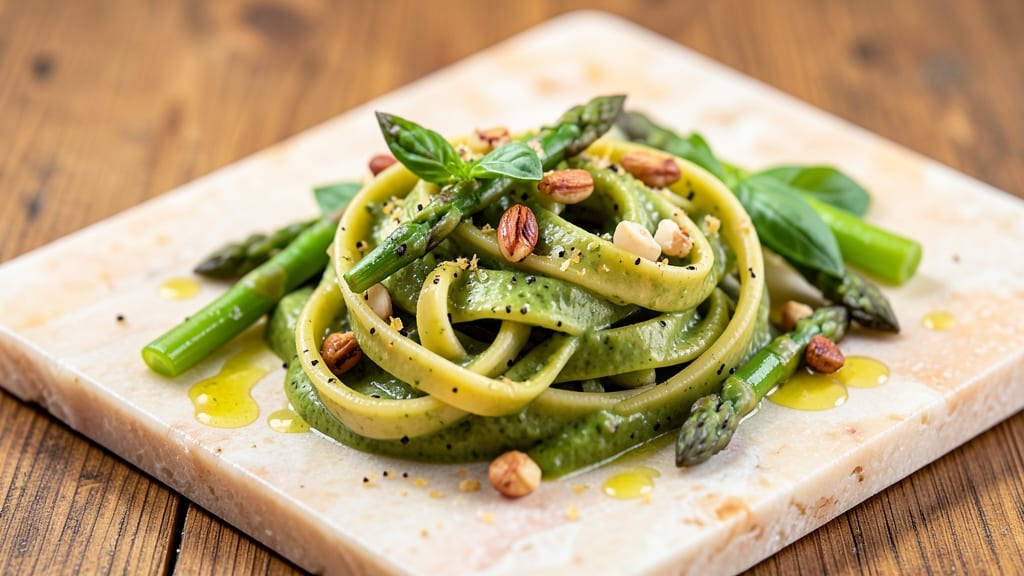
This asparagus pasta sauce recipe transforms spring's brightest green into a vibrant, earthy pesto that clings perfectly to al dente noodles. The secret lies in blending tender asparagus with fresh basil and garlic, creating a sauce that's both fresh and deeply flavorful—no heavy cream required.
I developed this recipe during peak asparagus season when I wanted to use every tender spear without waste.
The beauty of this sauce is its versatility—it works equally well with fresh, blanched asparagus or frozen, making it perfect for any season. The asparagus adds a subtle sweetness that balances the bright basil and nutty pine nuts, while the lemon zest brightens every bite.
What sets this apart is how the sauce maintains its vibrant green color while developing complex flavors that coat each strand of pasta.
What you'll end up with is a dish that looks as impressive as it tastes: tender pasta tossed in a bright green sauce with visible asparagus flecks, garnished with extra basil and a sprinkle of parmesan.
The texture is perfectly balanced—creamy from the olive oil and nuts, yet fresh from the herbs and vegetables. It's the kind of meal that elevates simple pasta night into something special.
This recipe serves four and comes together in about 20 minutes, making it ideal for weeknight dinners or when you want to impress guests with minimal effort.
The sauce keeps well in the refrigerator for up to three days, so you can make it ahead and reheat as needed. Let's get cooking!
Ingredients for asparagus pasta sauce
Bright green asparagus and fresh basil create this vibrant pesto that transforms simple pasta into something special.
| Ingredient | Amount | Notes |
|---|---|---|
| Fresh Asparagus 🥬 | 1 lb | Trimmed, tough ends removed |
| Fresh Basil Leaves 🌿 | 2 cups | Packed, stems removed |
| Garlic Cloves 🧄 | 4 cloves | Peeled, rough chopped |
| Pine Nuts 🥜 | ½ cup | Toasted for richness |
| Extra-Virgin Olive Oil 🫒 | ¾ cup | High quality, fruity |
| Lemon Zest 🍋 | 1 tbsp | From 1 large lemon |
| Parmesan Cheese 🧀 | ½ cup | Freshly grated from block |
| Salt 🧂 | ½ tsp | Diamond Crystal preferred |
| Black Pepper 🌶️ | ¼ tsp | Freshly ground preferred |
| Linguine Pasta 🍝 | 12 oz | Al dente preferred |
| Lemon Juice 🍋 | 1 tbsp | Freshly squeezed |
| Freshly Ground Nutmeg 🌿 | ¼ tsp | Pinch for depth |
The asparagus is the star here—look for bright green, firm spears with tightly closed tips. Whole Foods or local farmers markets usually have the freshest, but any grocery store's produce section works. Trim the tough ends and blanch for 2 minutes if using fresh—this softens them enough to blend smoothly. Frozen asparagus works too (no thawing needed), but fresh gives that extra spring vibrancy. I always buy extra basil—half goes in the sauce, half gets torn over the top for garnish. Trader Joe's has the best-priced fresh basil in those little containers.
No pine nuts? Walnuts or cashews work just as well—just toast them first for that nutty depth. Short on asparagus? Spinach or Swiss chard can stretch it, but you'll lose that signature asparagus sweetness. The Parmesan needs to be freshly grated—pre-grated gets clumpy and doesn't melt right. For extra brightness, add a pinch of red pepper flakes if you like a little kick. The lemon zest should be from an organic lemon if possible—conventional lemons sometimes have wax that can make the zest bitter.
This sauce keeps beautifully—3 days in the fridge covered with olive oil on top to preserve that vibrant green color. Freeze portions in ice cube trays for easy single-use servings later. The pasta cooks in about 10 minutes, so time it so it's al dente when the sauce is ready. I always make extra sauce—it's perfect on grilled chicken or as a sandwich spread. Store any leftovers in an airtight container, and reheat gently with a splash of water to keep it creamy.
Why You'll Love This Recipe
- No Chopping Chaos: I swear by this—just trim the asparagus ends, snap off the woody bits, and toss them into the pan. The garlic and pine nuts get minced in seconds, and the basil? Tear it by hand because nobody has time for a knife for that.
- Umami Magic: That crisp-tender asparagus with the garlic sizzling in olive oil? It’s like a flavor bomb. The pine nuts add this nutty crunch, and the basil ties it all together with a bright, fresh punch—no heavy cream or weird ingredients, just pure, satisfying taste.
- Weeknight to Dinner Party: Serve it over al dente pasta for a 20-minute weeknight meal, or dress it up with grilled shrimp for a fancier spread. The sauce keeps well, so I make a big batch—perfect for lunch the next day or when unexpected guests show up.
- Budget-Friendly Luxury: Fresh asparagus and basil feel fancy, but they stretch far here. A handful of garlic and pine nuts go a long way, and the olive oil is the star—no wasted ingredients, just rich, flavorful leftovers that taste even better the next day.
Step-by-step instructions for asparagus pasta sauce
This bright green pesto transforms simple linguine into a springtime masterpiece.
Blanch and Prep the Asparagus
Bring a medium pot of salted water to a boil. Trim the tough ends from the 1 lb fresh asparagus and cut the spears into 2-inch pieces. Add them to the boiling water and cook for 2 minutes—just until bright green and slightly tender. Drain immediately and plunge into ice water to stop the cooking process. This preserves their vibrant color and crisp texture.
Drain again and pat dry thoroughly with paper towels. You'll want the asparagus completely dry before blending—any moisture will make your pesto watery. Transfer the asparagus to a cutting board and roughly chop into ¼-inch pieces. I like to keep some texture so you can still taste the fresh asparagus in every bite.
Toast the Pine Nuts and Prepare the Blending Ingredients
Heat a dry skillet over medium-low heat and add the 0.5 cup pine nuts. Toast them for 3-4 minutes, stirring constantly, until they turn a golden brown color and smell nutty. Remove from heat immediately—they'll continue cooking from residual heat and can burn quickly. Let them cool for 2 minutes, then transfer to a food processor or high-powered blender.
To the processor, add the 2 cups fresh basil leaves, 4 cloves garlic cloves, 1 tbsp lemon zest, 0.5 cup parmesan cheese, 0.25 tsp freshly ground nutmeg, 0.5 tsp salt, and 0.25 tsp black pepper. Pulse just once to combine these ingredients—this prevents the basil from turning brown from over-processing. You're just chopping everything roughly at this stage.
Blend the Pesto to Perfection
With the processor running, slowly drizzle in the 0.75 cup extra-virgin olive oil through the feed tube. This gradual addition creates an emulsified sauce rather than a separated one. Process for 30-45 seconds until the mixture is smooth but still has some texture—you should be able to see small flecks of asparagus and basil. Over-blending turns pesto into a paste.
Taste and adjust seasoning. You might need a pinch more salt or a squeeze of 1 tbsp lemon juice to brighten the flavors. The pesto should be vibrant green, rich, and balanced between the earthy asparagus, sweet pine nuts, and sharp parmesan. If it's too thick, add 1-2 teaspoons of water to loosen it slightly. Transfer to a bowl and set aside.
Cook the Linguine to Al Dente
Bring a large pot of water to a rolling boil and add 12 oz linguine. Cook according to package directions until 1 minute shy of al dente—you want the pasta to finish cooking in the sauce. Reserve 1 cup of pasta water before draining, as this starchy liquid helps emulsify the pesto sauce. Drain the pasta and return it to the pot.
Add the asparagus pieces to the drained pasta along with the pesto. Toss everything together over medium heat for 1-2 minutes, adding reserved pasta water 1 tablespoon at a time until the sauce coats the pasta evenly. The heat from the pasta will help the pesto cling beautifully. Taste again and adjust seasoning if needed—this is where all the flavors come together.
Pro Tips For Making Asparagus Pasta Sauce
- CHAR ASPARAGUS FIRST: Don’t toss raw asparagus into the sauce—blanch it first. Cut the ends, drop spears into boiling salted water for 90 seconds, then shock in ice water. This keeps them bright green and tender while preventing a slimy texture when they hit the sauce later.
- SALT THE BASIL: Fresh basil wilts fast in hot oil, but a quick salt rinse before adding it to the sauce makes all the difference. Toss leaves in a bowl with 1/4 teaspoon salt and a splash of water, drain, and pat dry. They’ll hold their shape and flavor better—no more sad, limp garnishes.
- TOAST PINE NUTS LOW: I used to burn them every time until I learned to toast pine nuts on low heat in a dry pan. Stir constantly for 2-3 minutes until they’re just golden—no need to rush. Overheating turns them bitter, and that’s a waste of good nuts.
- GARLIC NEEDS TIME: Don’t rush the garlic—mince it finely and let it sit in the olive oil for 30 seconds before adding asparagus. This draws out the sweetness and prevents a harsh bite. If you’re impatient, you’ll end up with raw garlic flavor instead of mellow depth.
Troubleshooting this recipe
Pesto Too Thick?
If your pesto comes out thicker than you'd like, don't panic—this is an easy fix. Add 1-2 teaspoons of water while blending and pulse again until smooth. For extra creaminess, stir in 1 tablespoon of reserved pasta water as you toss the sauce with the linguine.
The key is to add liquid gradually to maintain the perfect balance of texture. 💫
Sauce Separating?
Pesto can separate if you over-blend or add ingredients too quickly. To fix this, simply add 1 tablespoon of extra-virgin olive oil and blend again for 10-15 seconds. The oil helps re-emulsify the sauce.
If it still looks broken, stir in 1 teaspoon of lemon juice to brighten and stabilize the mixture. Always drizzle oil slowly while blending to prevent this issue from the start.
Asparagus Too Tough?
If your asparagus ends up tough after blanching, you likely didn't cook it long enough. For fresh asparagus, increase the blanching time to 3 minutes instead of 2. If using frozen asparagus, add 1 extra minute to the cooking time.
Always check for bright green color and slight tenderness with a fork before draining. Overcooking turns asparagus mushy, so aim for just until tender-crisp.
Pasta Too Dry?
If your pasta ends up dry after tossing with the sauce, you need more pasta water. Reserve an extra ½ cup when boiling the noodles, then add it 1 tablespoon at a time while tossing.
The starchy water helps the pesto cling beautifully to each strand. For extra insurance, finish cooking the pasta directly in the sauce for 1-2 minutes on low heat.
Basil Turning Brown?
Over-processing basil causes it to turn brown and bitter. To prevent this, pulse the basil and other ingredients just once before adding oil. For a fresher look, reserve ¼ cup fresh basil leaves to tear and toss with the finished pasta.
If your pesto already looks brown, add ½ teaspoon of lemon juice to brighten the color and flavor immediately.
Nutty Flavor Missing?
If your pesto lacks nutty depth, your pine nuts weren't toasted enough. Heat them in a dry skillet over medium-low heat for 3-4 minutes, stirring constantly, until golden brown.
Let them cool completely before blending to prevent burning. For extra richness, add 1 tablespoon of toasted walnuts or cashews alongside the pine nuts in the processor.
Nutrition facts
Frequently asked questions
Can I use frozen asparagus instead of fresh?
Yes! Frozen asparagus works perfectly—just skip the blanching step and add it directly to the food processor after thawing. For best results, pulse it first to break up any large chunks before blending with the other ingredients. The texture will be slightly different but still delicious.
What if I don't have pine nuts?
No problem! Substitute with ½ cup toasted walnuts or cashews for a similar nutty texture. Toast them first over medium heat for 3-4 minutes until fragrant. The flavor will be slightly different but still rich and satisfying.
How can I make this sauce dairy-free?
Replace the parmesan with ½ cup nutritional yeast and use a dairy-free cheese alternative if desired. For extra creaminess, add 1 tablespoon of vegan butter or olive oil while blending. The sauce will still be vibrant and flavorful without dairy.
Can I make this ahead of time?
Store the pesto in an airtight container with a thin layer of olive oil on top to preserve freshness. It keeps for 3 days in the fridge or 1 month in the freezer. Reheat gently with a splash of water to maintain creaminess.
What other pasta shapes work well?
This sauce clings beautifully to fettuccine, penne, or farfalle—any shape with ridges or crevices helps it adhere. For a lighter option, try spaghetti or angel hair. Avoid smooth, slippery pastas like orzo, which won't hold the sauce as well.