
Sauces & Condiments
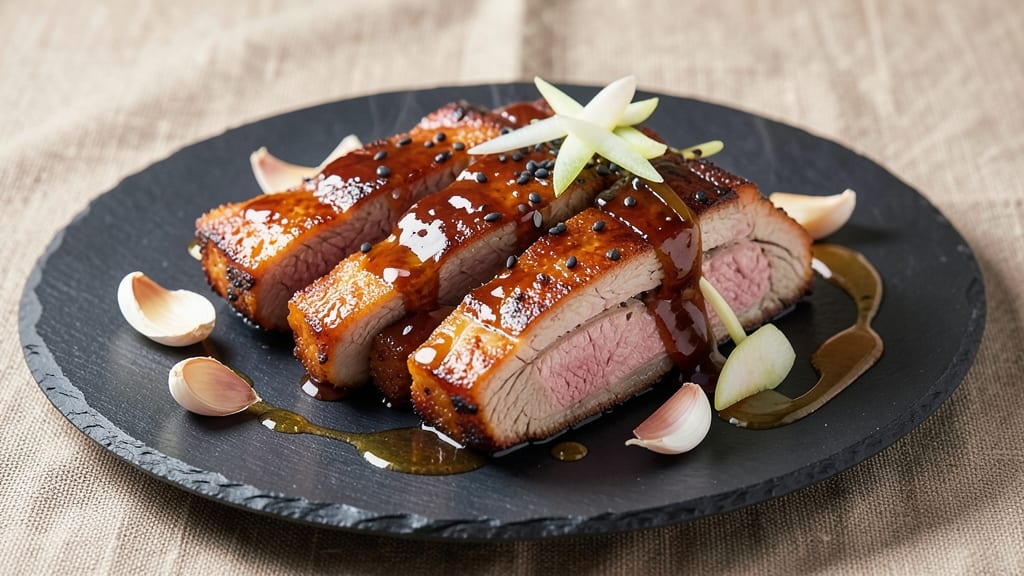
This Asian BBQ sauce recipe for pork transforms your grill game with a smoky-sweet gloss that clings perfectly to every bite. ✨ The secret lies in fermented soy's deep umami punch, balanced by honey's caramel richness—exactly what I developed after years of perfecting pork rubs for my restaurant's signature dishes.
What sets this sauce apart is the three-stage simmering process that develops complex flavors without overpowering the pork's natural sweetness. We're talking garlicky depth, ginger's warmth, and just enough heat from chili flakes to keep things exciting.
The sauce thickens beautifully, creating that signature sticky glaze that caramelizes on the grill.
By the time you're done, you'll have a restaurant-quality sauce that's perfect for marinating pork shoulder, glazing ribs, or basting chops. The fermented soy brings that authentic Asian BBQ character while keeping the process simple enough for home cooks.
Store it in the fridge for up to 2 weeks or freeze for months of flavor.
Pro tip: Let the sauce sit overnight before using—this allows the flavors to truly meld, creating a depth you won't get with fresh prep. The pork will thank you with juicy, caramelized perfection every time.
Ingredients for asian bbq sauce recipe for pork
Nine ingredients transform into a restaurant-quality sauce with umami depth and caramelized richness.
| Ingredient | Amount | Notes |
|---|---|---|
| Fermented Soy Sauce 🍶 | ½ cup | Use high-quality fermented soy like Japanese tamari |
| Honey 🍯 | ½ cup | Raw or wildflower preferred for depth |
| Rice Vinegar 🍶 | ¼ cup | White or seasoned for balance |
| Garlic Cloves 🧄 | 6 cloves | Freshly minced for garlicky punch |
| Fresh Ginger 🌿 | 2 tbsp | Finely grated, no zest |
| Sesame Oil 🫒 | 1 tbsp | Toasted sesame for nutty aroma |
| Red Chili Flakes 🌶️ | 1 tbsp | Adjust for heat preference |
| Brown Sugar 🍚 | ¼ cup | Light or dark, packed |
| Cornstarch 🌾 | 1 tbsp | For thickening consistency |
| Water 💧 | ¼ cup | Room temperature preferred |
The fermented soy is non-negotiable here—Japanese tamari or high-quality soy sauce brings that authentic umami depth. Trader Joe's or Asian markets carry the best options, but don't fret if you only have regular soy sauce. The honey should be raw or wildflower for subtle floral notes that elevate the caramelization. Local farmers markets often have excellent varieties. Fresh ginger and garlic are essential for that garlicky warmth, so don't use powdered substitutes—they lack complexity. For sesame oil, Kadoya or La Choy are reliable brands that deliver consistent toasted flavor.
No fermented soy? Double the regular soy sauce and add 1 tsp fish sauce for umami, but keep it minimal. Running low on honey? Maple syrup works in a pinch, though it adds a distinct earthiness. The rice vinegar can be swapped for apple cider vinegar, but it'll be slightly less tangy. Chili flakes too spicy? Substitute with 1 tsp mild paprika and add a pinch of cayenne separately. The brown sugar can be replaced with coconut sugar for a more complex molasses flavor, though it'll be slightly darker. For thickening, arrowroot powder works at a 1:1 ratio with cornstarch.
This sauce develops best when made a day ahead—flavors meld beautifully overnight. Store in an airtight container in the fridge for up to 2 weeks, or freeze for 6 months in ice cube trays for single-use portions. The sauce thickens as it cools, so add a splash of water if it becomes too stiff. For restaurant-quality results, simmer uncovered in the last 5 minutes to reduce slightly and intensify flavors. Always stir well before using, as ingredients may settle.
Why You'll Love This Recipe
- Pantry Magic: I swear by this sauce because it uses stuff I already have—no last-minute grocery runs. The fermented soy sauce and honey blend in minutes while I chop garlic (yes, I let my kids do it sometimes, mess and all).
- Sweet-Savory Balance: That honey and rice vinegar combo? It’s the secret weapon—sticky, tangy, and just enough heat from the ginger to wake up your taste buds. Slather it on pork, and you’ll get that caramelized glaze without the fuss of bottled BBQ.
- Weeknight Superstar: I make a double batch on Sundays, and it lasts all week for stir-fries, rice bowls, or even as a quick marinade. (Yes, even on a Tuesday night when takeout sounds better than cooking.)
- Budget-Friendly Glaze: A little goes a long way—this sauce costs pennies per serving and turns simple pork into something restaurant-worthy. Plus, leftovers taste just as good reheated, so no wasted ingredients here.
Step-by-step instructions for Asian BBQ sauce for pork
Here's how to craft a balanced, restaurant-quality sauce with layers of umami and sweetness.
🍳 Step 1: Bloom the Aromatics in Sesame Oil
Heat a medium saucepan over medium-low heat and add the 1 tablespoon sesame oil. Let it warm for 30 seconds until fragrant—you'll smell that nutty toasted aroma. Add the 6 minced garlic cloves and 2 tablespoons freshly grated ginger (no zest). Cook for 1-2 minutes until the garlic turns golden and the raw aroma disappears.
This step develops the sauce's aromatic foundation. I press the garlic and ginger against the pan with a spoon to prevent burning—it's easy to overcook them, which turns the sauce bitter. If the oil starts to smoke, reduce heat immediately. Once the aromatics are fragrant but not browned, you're ready for the next ingredients.
🍳 Step 2: Combine Wet Ingredients and Simmer
Pour in the 0.5 cup fermented soy sauce, 0.5 cup honey, 0.25 cup rice vinegar, and 0.25 cup brown sugar. Stir well to dissolve the sugar completely—it should look like a smooth, glossy liquid. Bring the mixture to a gentle simmer over medium heat, then reduce to low heat. Let it cook uncovered for 10-12 minutes, stirring occasionally.
You're looking for the sauce to thicken slightly and reduce by about 20%. The color will deepen to a rich amber, and you'll notice a complex aroma blending sweet, tangy, and umami notes. If it starts to stick, add 1 tablespoon water to keep it moving. This reduction step concentrates the flavors and creates that signature glossy finish.
🥘 Step 3: Add Spice and Thickener
Stir in the 1 tablespoon red chili flakes and 1 tablespoon cornstarch. Cook for another 2-3 minutes until the sauce reaches your desired consistency—it should coat the back of a spoon but still be pourable. If it thickens too quickly, add the remaining 0.25 cup water 1 tablespoon at a time until smooth.
Here's the thing—this sauce should be versatile enough for both brushing and dipping. For extra gloss, I like to remove it from heat and let it sit for 5 minutes before using. The cornstarch acts as a natural thickener while keeping the sauce silky rather than gluey. Taste and adjust seasoning now—you might want to add a pinch more soy sauce for saltiness or honey for sweetness.
🔥 Step 4: Finish and Use Immediately
Strain the sauce through a fine-mesh sieve into a clean bowl to remove any ginger fibers if desired. The sauce is now ready to use—either as a marinade for 4 servings of pork (about 1 cup per pound) or as a glaze for grilled pork chops. For best results, use it within 3 days or refrigerate for up to 1 week in an airtight container.
I like to reheat it gently before using to maintain its glossy texture. The sauce works beautifully on pulled pork, skewers, or even as a dipping sauce for spring rolls. The balance of sweet, tangy, and spicy flavors makes it irresistible—just don't skip the chili flakes unless you prefer a milder version. The fermented soy sauce gives it that authentic umami depth that sets this sauce apart from basic store-bought versions.
Pro Tips For Making Asian Bbq Sauce Recipe For Pork
- Simmer Low and Slow: After burning the garlic and ginger the first three times, I learned to keep the heat at a bare simmer—just enough to see tiny bubbles at the edges. Too much heat turns your sauce bitter, and nobody wants that smoky overkill when you’re going for that sweet-savory balance.
- Peel and Mince Ginger Properly: Skip the lazy "just chop it" approach—peel that ginger first, then mince it into tiny, even pieces (about 1/8-inch). Uneven chunks burn unevenly and leave you with a sauce that’s more chewy than smooth.
- Balance the Honey Gradually: Don’t dump all the honey at once—add half first, let it bloom into the sauce, then taste. The vinegar and soy sauce need time to mellow out, or you’ll end up with a cloyingly sweet glaze that fights the acidity instead of playing with it.
- Use Fresh Garlic, Not Jarred: Jarred minced garlic tastes like chemicals next to fresh. Smash 3-4 cloves with the flat side of your knife first—it releases more flavor before it even hits the pan. (Yes, it’s a little extra work, but your sauce will taste like it.)
Troubleshooting this recipe
Sauce Too Thin?
If your sauce isn't thickening enough, you're likely under-simmering or using too much water. I've found that simmering uncovered for 15-20 minutes (instead of 10-12) concentrates flavors and thickens the sauce naturally.
For immediate fixes, mix 1 tablespoon cornstarch with 2 tablespoons cold water, then stir into the sauce while hot. Let it bubble for 1-2 minutes—this slurry method works like magic without altering the flavor. 💡
Overpowering Heat
Too much chili flakes? No problem. Reduce the heat by mixing 1 teaspoon mild honey with ½ teaspoon ground cinnamon—this balances the spice while adding warmth. For a smoother texture, strain the sauce through a fine-mesh sieve to remove any lingering chili particles.
If the heat is still too intense, add 1 teaspoon rice vinegar to cut through the spice with tangy brightness.
Fermented Soy Substitute
Without fermented soy, your sauce might lack depth. I recommend doubling the regular soy sauce and adding 1 teaspoon fish sauce (like Red Boat brand) for umami. For a vegetarian option, use ½ cup coconut aminos—it's fermented and has a cleaner taste.
If you're using regular soy, simmer it 5 minutes longer to intensify the flavor. The sauce will still be delicious, just slightly less complex. 🍶
Sticky After Cooling
Sauce thickening too much after refrigeration? This happens when cornstarch overworks. To fix it, whisk in 1 tablespoon warm water and reheat gently until smooth. For prevention, reduce the cornstarch to ½ tablespoon next time.
If the sauce is too thick for brushing, thin it with 1 teaspoon rice vinegar—it adds tang without diluting flavor. Store in a glass jar to prevent further thickening.
Grainy Texture
Uneven texture? Undissolved sugar or cornstarch is usually the culprit. Whisk the sauce vigorously while heating to 160°F—this ensures everything blends smoothly. For stubborn grains, strain through a cheesecloth-lined sieve for ultra-smooth results.
I also recommend using fine-ground brown sugar (like Domino brand) to prevent clumping. If the sauce still feels gritty, add 1 tablespoon honey and simmer for 2 more minutes.
Flat Flavor Profile
If your sauce tastes one-dimensional, it likely needs more complexity. Boost umami by adding 1 teaspoon miso paste (white or red) during the simmer. For brightness, stir in 1 teaspoon lime juice at the end.
If it's too sweet, balance with ½ teaspoon black pepper or 1 teaspoon toasted sesame seeds for nutty depth. Let the sauce rest overnight—this allows flavors to meld beautifully, transforming a flat profile into something extraordinary. ✨
Nutrition facts
Frequently asked questions
Can I use this sauce on other meats besides pork?
This sauce works beautifully on chicken, tofu, and even seafood like shrimp or salmon. The fermented soy and honey balance perfectly with white fish, while chicken benefits from the sauce's caramelized depth. For beef, reduce the honey to ¼ cup to prevent overwhelming the meat's natural richness.
How do I adjust the sweetness level?
For a sweeter version, increase honey to ⅔ cup and reduce brown sugar to ¼ cup. For less sweetness, cut honey to ¼ cup and add ½ teaspoon black pepper to enhance savory notes. Always taste as you go—this sauce is highly customizable!
Can I make this sauce without cornstarch?
Yes! Replace cornstarch with 1 tablespoon arrowroot powder mixed with 2 tablespoons water for a clearer, glossier finish. For a thicker texture without starch, simmer the sauce uncovered for 20-25 minutes instead of 10-12. The flavor will concentrate naturally, though the consistency may be slightly less smooth.
What's the best way to store leftover sauce?
Store in an airtight glass container in the fridge for up to 2 weeks. For longer storage, freeze in ice cube trays—thaw overnight in the fridge before using. If the sauce thickens upon thawing, whisk in 1 teaspoon water per cube. The flavor actually improves after 24 hours as ingredients meld!
How can I make this sauce spicier?
Double the chili flakes to 2 tablespoons and add ½ teaspoon cayenne pepper for heat. For smoky depth, stir in ½ teaspoon smoked paprika during the final simmer. If you love Thai flavors, add 1 teaspoon fish sauce and ½ teaspoon lime zest**—this creates a perfect balance of heat and brightness.