
Sauces & Condiments
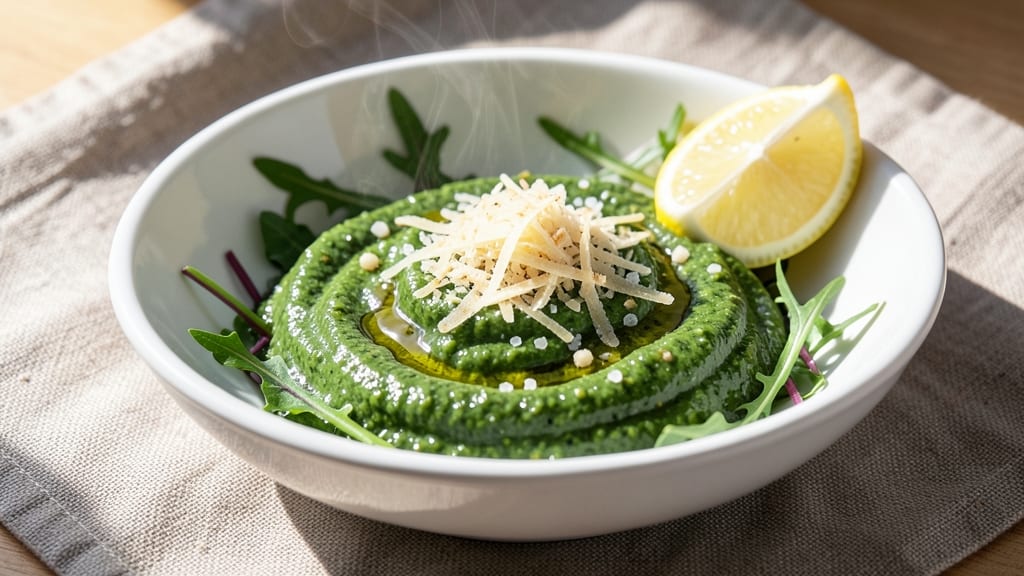
This arugula sauce recipe transforms humble greens into a vibrant, peppery-green goddess that elevates every dish it touches. The secret lies in balancing arugula's bold flavor with bright lemon, rich olive oil, and a touch of garlic—creating a sauce that's fresh yet sophisticated.
I developed this after realizing how often a simple green sauce could replace heavy dressings, and the results were game-changing.
The beauty of this sauce is its versatility—it works as a drizzle over salads, a dip for crusty bread, or even a pasta finish. The key is using fresh arugula (never wilted) and letting the sauce sit for 10 minutes before serving, allowing the flavors to meld.
It comes together in just 5 minutes, making it perfect for last-minute meals or meal prep.
What makes this sauce stand out is its peppery yet creamy texture, thanks to a blend of olive oil and optional Parmesan. The lemon adds a zesty kick that cuts through richness, while garlic deepens the flavor without overpowering.
It's the kind of sauce that makes simple ingredients feel luxurious—no fancy techniques required.
Store leftovers in an airtight container in the fridge for up to 3 days, or freeze for longer shelf life. For extra depth, stir in toasted pine nuts or a drizzle of balsamic glaze before serving.
Let's make this sauce—the perfect way to bring fresh, bright flavors to any dish.
Ingredients for arugula sauce
Eight simple ingredients crafting a sauce that transforms arugula's peppery bite into elegant sophistication.
| Ingredient | Amount | Notes |
|---|---|---|
| Fresh Arugula Leaves 🌿 | 2 cups | Packed, stems removed, vibrant green |
| Extra-Virgin Olive Oil 🫒 | ½ cup | High-quality, fruity, cold-pressed |
| Fresh Lemon Juice 🍋 | 2 tbsp | Freshly squeezed, strained |
| Garlic Cloves 🧄 | 2 cloves | Fresh, peeled, minced finely |
| Parmesan Cheese 🧀 | ¼ cup | Freshly grated, fine texture |
| Diamond Crystal Kosher Salt 🧂 | ½ tsp | Fine grain, sea salt preferred |
| Freshly Ground Black Pepper 🌶️ | ¼ tsp | Coarsely cracked peppercorns |
| Toasted Pine Nuts 🥜 | 2 tbsp | Optional, for garnish, lightly toasted |
The arugula is non-negotiable—bright, vibrant leaves from the grocery store's refrigerated section (not the wilted ones in the back) deliver the best flavor. Whole Foods or local farmers' markets often carry the freshest batches, but any reputable supermarket's produce aisle will suffice. Look for leaves that are deep green with no yellowing. For the olive oil, California extra-virgin brands like Corto or Lucini elevate the sauce with their rich, fruity notes. The Parmesan should be real Parmigiano-Reggiano, freshly grated from a block—pre-grated cheese lacks the same depth of flavor. Toast your pine nuts in a dry skillet for just 2-3 minutes until golden, then let them cool before adding to the sauce.
No fresh arugula? Baby spinach or baby kale work in a pinch, though the peppery kick will be milder. Substitute lemon juice with lime juice or white wine vinegar for a different acid profile, but reduce to 1 tbsp to maintain balance. Garlic powder can replace fresh garlic (use 1/2 tsp), though it lacks the complexity. For a dairy-free version, omit the Parmesan or use nutritional yeast for a cheesy flavor. If you're avoiding nuts, skip the pine nuts entirely—the sauce still shines. The olive oil is the sauce's backbone; don't skimp on quality—cheap oils will make the whole dish taste flat.
This sauce reaches peak flavor after 10 minutes of resting, allowing the arugula's natural oils to meld with the other ingredients. Store leftovers in an airtight container in the fridge for up to 3 days, though the texture may soften slightly. For longer storage, freeze in ice cube trays—perfect for single-serving portions. Reheat gently in a saucepan over low heat, adding a splash of water to restore creaminess. The sauce pairs beautifully with seared scallops, grilled chicken, or crusty sourdough. For extra depth, drizzle with aged balsamic glaze or a pinch of red pepper flakes before serving.
Why You'll Love This Recipe
- No-Chop Necessary: I’ll admit, I used to dread chopping herbs—until I realized you can just tear arugula by hand. Three minutes, no knife skills required, and you’re left with that perfect peppery bite that makes everything better.
- Bright, Tangy Magic: That lemon juice and garlic combo? It’s the secret weapon. The arugula’s sharpness softens just enough to let the olive oil’s richness shine, while the Parmesan adds a salty crunch that’s ridiculously addictive.
- Pasta’s New Best Friend: Slather it on linguine, toss it with grilled chicken, or drizzle it over avocado toast—this sauce works everywhere. Honestly, I’ve even used it as a quick marinade for shrimp when I’m in a rush.
- Leftovers That Last: Make a big batch and store it in the fridge for up to five days. The flavors actually deepened overnight—perfect for lazy mornings when you just need something fast. (Yes, even on a Tuesday night.)
Step-by-step instructions for arugula sauce recipe
Here's how to create a vibrant, peppery green goddess sauce with perfect balance.
Prepare the Arugula Base
Place the 2 cups of fresh arugula leaves in a food processor fitted with the metal blade. I always remove stems first—they're fibrous and don't blend smoothly. Add the 2 cloves of minced garlic cloves and pulse just until combined. You want to break down the leaves slightly without turning them into a paste.
This initial blending creates the foundation for your sauce. The arugula should look like coarse confetti with just a few larger pieces remaining. If you over-blend now, you'll end up with a bitter, grassy sauce instead of the smooth, vibrant texture we're after. Pulse in short bursts—about 10-15 seconds total—to maintain that fresh, peppery quality.
Incorporate Olive Oil and Seasonings
With the food processor running, slowly drizzle in the 0.5 cup of extra-virgin olive oil through the feed tube. This gradual addition prevents the oil from splattering while ensuring even distribution. Add the 0.5 teaspoon of Diamond Crystal kosher salt and 0.25 teaspoon of freshly ground black pepper at this stage—they'll blend seamlessly into the sauce.
I always use the food processor's pulse function here to maintain control. You're looking for a smooth, emulsified texture that coats the back of a spoon. The sauce should look like vibrant green pesto, with no visible oil separation. If it looks too thick, we'll adjust it in the next step. The key is to let the olive oil's natural emulsifying properties work their magic while preserving the arugula's fresh flavor.
Add Lemon and Parmesan for Brightness
Transfer the arugula mixture to a medium bowl. Stir in the 2 tablespoons of fresh lemon juice and the 0.25 cup of freshly grated Parmesan cheese. The lemon juice should brighten immediately—the sauce will take on a more vibrant green color and a tangy freshness that cuts through the richness of the olive oil.
At this point, taste the sauce and adjust seasoning if needed. I often find I need a touch more salt to balance the lemon's acidity. The Parmesan should have melted completely into the sauce, creating a creamy texture that complements the peppery arugula. If the sauce is too thick, add 1-2 teaspoons of water or lemon juice to reach your desired consistency. It should coat the back of a spoon but still be pourable.
Finish with Toasted Pine Nuts (Optional)
In a small dry skillet over medium heat, toast the 2 tablespoons of pine nuts for 2-3 minutes until they're golden brown and fragrant. Watch them closely—they burn quickly. Transfer immediately to a paper towel to stop the cooking process and prevent further browning.
Sprinkle the toasted pine nuts over the sauce just before serving. They add a delightful crunch that contrasts beautifully with the smooth sauce. The nuts should be evenly distributed throughout, adding visual appeal and a nutty depth to complement the peppery arugula. If you prefer a completely smooth sauce, omit this step entirely—the sauce will still be delicious without it.
Pro Tips For Making Arugula Sauce
- Pulse Not Crush: DESCRIPTION: Toss the arugula in a food processor with the garlic first—just 3-4 quick pulses until it’s finely chopped but still bright green. I learned this the hard way: over-processing turns it into a sad, bitter sludge. Stop when it looks like confetti, not paste.
- Salt the Garlic: DESCRIPTION: Sprinkle a pinch of flaky salt over the minced garlic before pulsing it into the arugula. It softens the garlic’s bite and keeps the sauce from tasting one-note. (Yes, even if you’re impatient like me—just do it.)
- Squeeze, Don’t Pour: DESCRIPTION: Roll the lemon over a bowl before cutting to catch seeds, then hand-squeeze the juice through a fine-mesh strainer. That last bit of pulp? It’s where the bitterness hides. Skip the strainer, and you’ll taste it.
- Whisk the Oil Warm: DESCRIPTION: Heat the olive oil gently (just until it shimmers) before whisking it into the arugula mixture. Cold oil makes the sauce clump like a lazy pesto—warm oil emulsifies it instantly. (Your future self will notice the difference.)
Troubleshooting this recipe
Over-blended Sauce
If your sauce turns bitter or grassy, you've likely over-blended the arugula. The key is to pulse just until the leaves are broken down into coarse confetti—about 10-15 seconds total.
For a quick fix, stir in 1 tablespoon of extra-virgin olive oil and 1 teaspoon of lemon juice to balance the flavors. If the texture is too thick, add 1 teaspoon of water to restore creaminess. 🌿
Oil Separation
Oil separation happens when the sauce sits too long or lacks proper emulsification. To fix this, whisk vigorously with a fork or use an immersion blender to recombine the ingredients.
For prevention, always add olive oil slowly while blending, and avoid using low-quality oil—stick to California extra-virgin brands like Corto. The sauce should look smooth and vibrant, not streaked with oil.
Too Thick or Too Thin
If your sauce is too thick, thin it with 1-2 teaspoons of water or lemon juice while stirring constantly. For a thicker consistency, let it sit uncovered in the fridge for 15-20 minutes—the arugula will release more liquid.
If it's too thin, blend in 1 tablespoon of toasted pine nuts or an extra tablespoon of Parmesan to absorb excess moisture. The ideal texture should coat the back of a spoon but still be pourable.
Lemon Overpowering
If the lemon flavor dominates, balance it with ½ teaspoon more salt or a pinch of sugar (just ¼ teaspoon). For extra depth, add 1 teaspoon of balsamic glaze or a splash of white wine vinegar.
The sauce should have a bright lemon note, not a sour punch. Taste as you go—adjust gradually to avoid overcorrecting.
Parmesan Not Melting
If the Parmesan stays in clumps, pulse it in the food processor for 5-10 seconds with the arugula before adding other ingredients. For a smoother texture, use freshly grated Parmigiano-Reggiano instead of pre-shredded cheese.
If clumps persist, strain the sauce through a fine-mesh sieve to remove any remaining grit. The cheese should dissolve completely into a creamy, velvety texture.
Wilted or Bitter Arugula
Wilted arugula happens when the leaves are old or stored improperly. Always use bright, deep-green leaves from the grocery store's refrigerated section. If your arugula is already wilted, revive it by soaking in ice water for 10 minutes before blending.
For extra freshness, add 1 teaspoon of apple cider vinegar to the sauce—it brightens the flavor and masks any bitterness. 💫
Nutrition facts
Frequently asked questions
Can I make this sauce without a food processor?
Use a sharp knife to finely chop the 2 cups of arugula and garlic into tiny pieces, then pulse in a mini food processor or mortar and pestle. For a completely knife-only method, blend the chopped greens with 0.5 cup olive oil in a bowl using a fork, then mash vigorously until smooth. The texture will be slightly coarser but still delicious!
How long does this sauce keep in the fridge?
Store in an airtight container for up to 3 days in the fridge. The texture may soften slightly after 24 hours, but the flavor remains vibrant. For best results, use within 2 days. Freeze for longer storage—portion into ice cube trays for single-serving use.
What's the best way to use leftover arugula sauce?
Drizzle over grilled chicken or fish, use as a dip for crusty bread or veggie sticks, or mix into pasta water before tossing with cooked noodles. It also elevates grain bowls or avocado toast. For extra flair, finish with a sprinkle of toasted pine nuts or flaky sea salt.
Can I substitute baby spinach for arugula?
Yes, but expect a milder flavor. Use 2 cups of baby spinach (packed) and add 1/4 teaspoon extra black pepper to compensate for the reduced peppery kick. For deeper flavor, stir in 1 teaspoon of lemon zest after blending. The texture will be slightly softer but still creamy.
Why does my sauce separate when stored?
Oil separation happens when the sauce sits too long or lacks proper emulsification. To fix it, whisk vigorously or blend briefly to recombine. For prevention, store in a small, shallow container (less surface area = less separation) and add 1/2 teaspoon of Dijon mustard when making it to help stabilize the emulsion.