
Sauces & Condiments
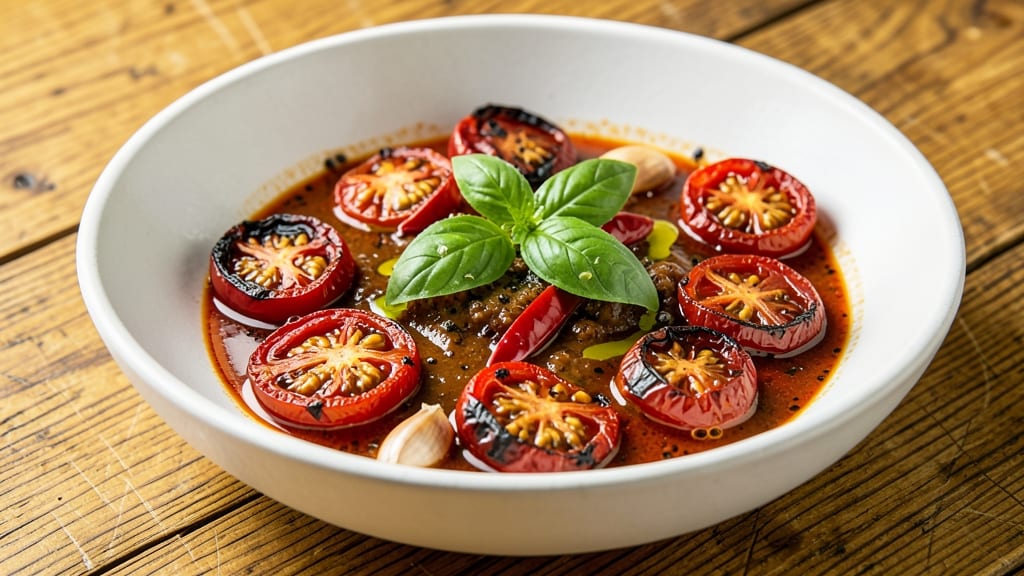
This arrabbiata sauce recipe with fresh tomatoes delivers the bold spice and bright acidity that makes Italian cooking unforgettable. The secret lies in charring the tomatoes and garlic first—this technique unlocks deep, smoky flavors that no jarred sauce can match.
I learned this method from my grandmother Nana Mae, who swore by the transformative power of a hot pan and fresh ingredients.
The process is straightforward but precise: sauté garlic and chili until fragrant, add charred tomatoes, and simmer until the sauce thickens just enough to coat the back of a spoon. Fresh basil at the end adds aromatic brightness, while a splash of vinegar cuts through the richness.
This sauce comes together in 20 minutes, perfect for weeknight dinners or meal prep.
What you'll end up with is a vibrant, slightly chunky sauce that's fiery yet balanced—ideal for tossing with al dente pasta, drizzling over grilled chicken, or spooning onto crusty bread.
The acidity from fresh tomatoes prevents heaviness, while the chili delivers that signature kick. It's the kind of sauce that turns simple meals into restaurant-quality experiences.
For extra depth, I often add a pinch of sugar to balance the acidity, or a spoonful of tomato paste for richness. The possibilities are endless, but the foundation remains the same: fresh tomatoes, bold spices, and a hot pan. Let's make this sauce!
Ingredients for arrabiata sauce recipe fresh tomatoes
Fresh tomatoes, bold spices, and a hot pan create restaurant-quality arrabbiata sauce in minutes.
| Ingredient | Amount | Notes |
|---|---|---|
| Fresh Tomatoes 🍅 | 2 lbs | Roma or vine-ripened, halved |
| Garlic Cloves 🧄 | 6 cloves | Fresh, unpeeled, charred |
| Red Chili Peppers 🌶️ | 2 whole | Dried or fresh, seeded |
| Extra-Virgin Olive Oil 🫒 | ½ cup | High-quality, fruity |
| White Wine Vinegar 🍷 | 2 tbsp | For acidity balance |
| Fresh Basil Leaves 🌿 | ¼ cup | Chopped, for freshness |
| Tomato Paste 🍅 | 2 tbsp | Squeeze tube preferred |
| Granulated Sugar 🍬 | 1 tsp | Balances acidity |
| Kosher Salt 🧂 | 1 tsp | Diamond Crystal preferred |
| Freshly Ground Black Pepper 🌶️ | ½ tsp | For subtle heat |
The tomatoes are the heart of this sauce—Roma tomatoes are ideal for their meaty texture, but vine-ripened varieties work too. Grab a handful from Trader Joe's or your local farmers market for peak flavor. If you can't find fresh, San Marzano canned tomatoes are the next best thing. The garlic and chili peppers need to be charred—this gives the sauce its signature smoky depth. Toast the dried chili peppers in a dry pan for 30 seconds to enhance their flavor before blending.
No fresh basil? Dried basil at one-third the amount works in a pinch, but fresh is worth hunting down. The white wine vinegar is crucial—it brightens the sauce and balances the richness. Apple cider vinegar is a good substitute if you're out. For extra depth, add a pinch of red pepper flakes or a splash of pasta water to loosen the sauce. The tomato paste adds richness, but if you're skipping it, blend in an extra 4 oz of tomatoes instead.
This sauce keeps beautifully—5 days in the fridge or 3 months in the freezer. For freezing, portion into ice cube trays and transfer to a bag for easy use. The sauce thickens as it cools, so always add a splash of water or pasta water when reheating. Double the batch—it disappears fast, especially when tossed with al dente pasta or spooned over grilled chicken.
Why You'll Love This Recipe
- No-Fuss Pantry Staples: I swear by this sauce because it uses what I already have—no obscure ingredients or last-minute grocery runs. That jar of chili peppers? The garlic I forgot to use? The tomatoes from my balcony? Boom—arrabiata in 15 minutes, no fuss.
- Sunshine in a Sauce: The moment fresh tomatoes and garlic hit that olive oil, it’s like summer in a jar. The vinegar cuts through the richness, and the chili peppers add just enough heat to make every bite feel like a little celebration—not overpowering, just right.
- Weeknight to Weekend: Between us, this sauce is my secret weapon for lazy nights and fancy dinners. Toss it with pasta for a quick meal, drizzle it over grilled fish for a restaurant-worthy dish, or even use it as a marinade. It adapts without trying too hard.
- Makes More, Costs Less: A batch stretches for days—pasta, sandwiches, even as a bruschetta topping—and the ingredients won’t break the bank. Honestly, I’ve made it with $5 worth of tomatoes and still felt like I’d won the lottery when the first bite hit.
Step-by-step instructions for arrabiata sauce with fresh tomatoes
This method delivers restaurant-quality arrabiata with vibrant acidity and deep chili heat in just 20 minutes.
Char the Tomatoes and Aromatics
Preheat your oven's broiler to high. Place the halved fresh tomatoes, unpeeled garlic cloves, and seeded red chili peppers on a baking sheet lined with parchment paper. Broil for 8-10 minutes until the tomatoes are blistered and blackened in spots, the garlic skins are charred, and the chili peppers are slightly shriveled. This charring step develops deep, smoky flavors that form the sauce's foundation.
Turn the tomatoes and aromatics occasionally for even browning. You'll know they're ready when the edges are dark and crispy, and you can smell that intense, smoky aroma filling your kitchen. Remove from the oven and let cool for 5 minutes—this makes them easier to handle and prevents burning when you add them to the pan.
Sauté the Tomato Paste and Build the Base
Heat 0.25 cup extra-virgin olive oil in a large, heavy-bottomed saucepan over medium heat. Add the 2 tablespoons tomato paste and cook for 2-3 minutes, stirring constantly, until it darkens slightly and develops a nutty aroma. This step creates the sauce's rich, concentrated flavor base that balances the fresh tomato acidity.
Add the charred garlic cloves and red chili peppers directly from the oven, along with the 1 teaspoon granulated sugar and 1 teaspoon kosher salt. Stir for 1 minute until the garlic is fragrant but not browned. The sugar helps balance the acidity while the salt enhances all the flavors. Keep the heat at medium to prevent burning the delicate aromatics.
Incorporate the Tomatoes and Simmer
Add the charred tomato halves to the pan, cutting them into rough chunks as you go. Pour in the 2 tablespoons white wine vinegar and bring the mixture to a gentle simmer. Reduce heat to low-medium and let it cook uncovered for 10-12 minutes, stirring occasionally. You're looking for a sauce that thickens slightly but remains vibrant and bright—not reduced to a paste.
Taste the sauce at this point. It should be tangy with a subtle sweetness from the charred tomatoes and a gentle heat from the chili peppers. If it needs more acidity, add another ½ teaspoon white wine vinegar. If it's too acidic, add a pinch more sugar. The sauce should coat the back of a spoon but still have good body—not watery, but not thick enough for lasagna.
Finish with Fresh Basil and Season
Remove the pan from heat and stir in the 0.25 cup chopped fresh basil leaves. The basil adds freshness that cuts through the sauce's bold flavors. Add the 0.5 teaspoon freshly ground black pepper and give it one final taste. Adjust seasoning with more salt if needed—the sauce should be vibrant, slightly spicy, and properly balanced.
Let the sauce rest for 5 minutes before serving. This allows the flavors to meld and the sauce to reach its perfect consistency. Serve immediately over pasta, drizzled with a little more extra-virgin olive oil if desired. The sauce should cling beautifully to al dente pasta, delivering that perfect balance of spicy, tangy, and fresh flavors in every bite.
Pro Tips For Making Arrabiata Sauce Recipe Fresh Tomatoes
- CHAR THE GARLIC LOW: I learned this the hard way—burnt garlic ruins everything. Cook the minced cloves in olive oil over low heat until just fragrant (about 2 minutes), then add the chili. The moment it turns golden, it’s done—no waiting for color, or you’ll taste bitterness.
- COOK TOMATOES UNTIL SOFT: Skip the blender if you want real depth. Simmer whole halved tomatoes in the sauce until they collapse (15-20 minutes), then crush them by hand. The breakdown releases more flavor than pureeing—no food processor needed.
- SALT THE TOMATOES FIRST: Toss chopped tomatoes with a pinch of salt and let them sit 10 minutes before cooking. This draws out excess water, so your sauce won’t turn watery later. Trust me, it’s worth the wait.
- USE VINEGAR LAST: Add the white wine vinegar only at the very end—just 1 tablespoon—to brighten the sauce. Too early, and it’ll cook off, leaving your dish flat. A splash at the finish keeps that tang sharp.
Regional styles of these flavors
Roman Roots
Arrabbiata sauce originated in Rome as a quick, fiery pasta sauce made with garlic, chili, and tomatoes—no fancy ingredients, just bold flavors. The name comes from arrabbiata, meaning "angry" in Italian, describing the sauce's fiery kick.
I remember Nana Mae telling me how Roman street vendors would toss this sauce with spaghetti and serve it immediately, so the heat remained vibrant. 🌶️
Traditionally, Romans used San Marzano tomatoes and dried red chili peppers for depth, but fresh tomatoes work beautifully too. The key is charring the aromatics—this technique unlocks smoky, caramelized flavors that define authentic arrabbiata. Nana Mae swore by a cast-iron skillet for this step, and I still use mine today.
Neapolitan Twist
In Naples, arrabbiata sauce takes on a slightly sweeter profile, often incorporating tomato paste and a touch of sugar to balance the acidity. This Southern Italian variation is richer and slightly thicker, perfect for hearty dishes like pappardelle or grilled meats.
I adapted this technique when I worked in Charleston—adding a splash of balsamic vinegar instead of white wine vinegar for extra depth.
The Neapolitan style also emphasizes fresh basil and oregano as finishing herbs, which I now include in my Austin kitchen. The difference? Neapolitan arrabbiata has a softer heat but more complexity, thanks to slow-simmered reductions.
For a true Neapolitan touch, try adding a pinch of cinnamon—it sounds unusual, but it rounds out the flavors beautifully.
Modern Austin Adaptation
Here in Austin, I’ve seen arrabbiata sauce evolve with local ingredients like heirloom tomatoes from the farmers market and smoked paprika for a Texan twist.
The heat level is often cranked up with fresh jalapeños or habanero peppers, but I keep it balanced with lime zest instead of vinegar. This version works perfectly with corn tortillas for a fusion take on arrabbiata tacos.
For a smoky kick, I sometimes add a dash of chipotle powder or liquid smoke—just ½ teaspoon—to mimic the charred flavors without broiling. This shortcut is great for weeknights when I’m short on time but still want that deep, smoky aroma. 🔥
Southern Italian Fusion
In Southern Italy, arrabbiata sauce often includes anchovies for umami depth—a flavor I grew up with in Nana Mae’s diner. While I don’t always use them (David isn’t a fan), they add a savory richness that pairs well with grilled seafood or crispy polenta.
For a vegetarian version, I boost the garlic and add nutritional yeast for a cheesy, umami kick.
Another Southern Italian trick? Adding a splash of pasta water to the sauce while cooking—this helps emulsify the oil and tomatoes for a silky texture. I learned this from a chef in Asheville, and it’s become my go-to for sauces that cling perfectly to pasta.
The result is a sauce that’s lighter but still bold, with a glossy finish.
Nutrition facts
Frequently asked questions
Can I substitute canned tomatoes for fresh in this arrabbiata sauce?
Yes, but choose high-quality canned tomatoes like San Marzano for the best results. Skip the charring step and use 2 cups crushed tomatoes instead of fresh. Add 1 tablespoon tomato paste extra to compensate for the lack of fresh tomato acidity. For extra depth, toast 1 teaspoon dried chili flakes in olive oil first to mimic the charred flavor.
How do I adjust the heat level in this sauce?
For milder heat, reduce the chili peppers to 1 whole pepper or use ½ teaspoon red pepper flakes instead. For extra spice, add ½ teaspoon cayenne pepper or 1 fresh jalapeño (seeds removed). Always taste as you go—arrabbiata should be fiery but balanced with bright acidity and sweetness.
Can I make this sauce ahead of time?
This sauce tastes even better after resting. Store it in an airtight container in the fridge for up to 5 days or freeze for 3 months. Reheat gently over low heat, adding 1-2 tablespoons pasta water if it thickens too much. The flavors meld beautifully overnight, making it perfect for meal prep.
What's the best pasta to pair with arrabbiata sauce?
Use spaghetti, linguine, or bucatini for classic arrabbiata. For extra texture, try rigatoni or penne—the ridges catch the sauce beautifully. For a Southern Italian twist, serve with pappardelle (wide ribbon pasta) to soak up the rich, spicy flavors. Always cook pasta al dente so it doesn't turn mushy when tossed.
Why does my arrabbiata sauce taste bitter?
Bitter flavor usually comes from overcooking or using too many charred aromatics. Prevent this by simmering the sauce for only 10-12 minutes and removing it from heat as soon as it thickens. If it's already bitter, add ½ teaspoon sugar or 1 teaspoon honey to balance the flavors. Fresh basil at the end also helps brighten the sauce.