
Sauces & Condiments
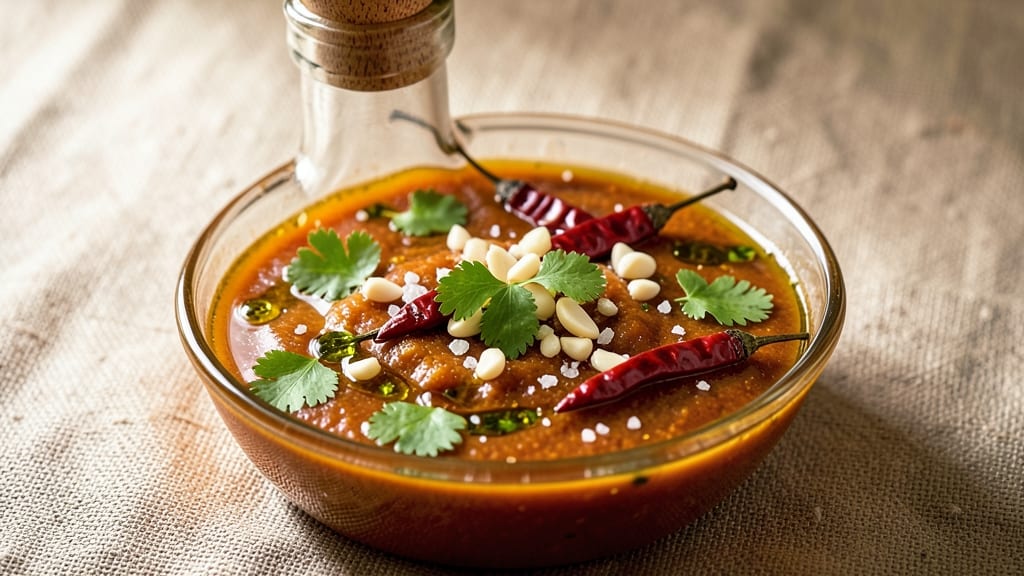
The arbol chile hot sauce delivers the perfect balance of smoky heat and bright freshness that elevates everything from tacos to grilled meats. 🔥 This recipe transforms fiery arbol peppers into a smooth, complex sauce with a touch of vinegar tang and cilantro's herbal punch.
The fermentation process deepens the flavor while preserving that signature chile heat, and the blending technique ensures a velvety texture without losing any intensity.
What sets this sauce apart is the careful balance of ingredients—arbol peppers for heat, apple cider vinegar for acidity, and fresh cilantro for brightness. The process is straightforward but requires patience: fermenting the peppers for 3-5 days allows their natural flavors to develop fully before blending and straining.
This method creates a sauce that's richer and more complex than store-bought versions, with a depth of flavor that builds with each use.
By the end, you'll have a versatile hot sauce that's perfect for drizzling over tacos, mixing into marinades, or serving as a bold condiment with chips.
The smoky heat from the arbol peppers pairs beautifully with the vinegar's tang, while the cilantro adds a fresh finish that keeps the sauce from feeling one-dimensional. The result is a condiment that's as impressive on a casual snack plate as it is on a restaurant-worthy dish.
Store your sauce in the refrigerator for up to 3 months, where the flavors continue to meld and deepen over time. This recipe makes about 2 cups, so you'll have plenty to share or save for future meals.
Let's get started on creating a hot sauce that brings real heat and depth to your cooking.
Ingredients for arbol chile hot sauce
Eight essential ingredients transform fiery arbol peppers into velvety, complex hot sauce.
| Ingredient | Amount | Notes |
|---|---|---|
| Arbol Chile Peppers 🌶️ | ½ lb | Fresh, stems removed |
| Apple Cider Vinegar 🍏 | 1 cup | Raw, unfiltered preferred |
| Fresh Cilantro Leaves 🌿 | 1 cup | Stems removed, packed |
| Garlic Cloves 🧄 | 4 cloves | Fresh, peeled |
| Extra-Virgin Olive Oil 🫒 | ¼ cup | High quality, fruity |
| Sea Salt 🧂 | 1 tsp | Fine grain preferred |
| Brown Sugar 🍚 | 1 tbsp | Light or dark |
| Distilled Water 💧 | ½ cup | For dilution |
Arbol peppers are the heart of this sauce—look for bright red, firm peppers at Latin markets or specialty stores like Whole Foods. If you can't find fresh, dried arbol peppers work too (soak in hot water for 15 minutes first). The vinegar should be raw, unfiltered apple cider—it adds depth. For cilantro, farmers market bunches stay fresher longer than grocery store containers. Store-bought olive oil is fine, but California extra-virgin adds subtle fruitiness that elevates the sauce. The garlic? Freshly peeled cloves make all the difference—pre-minced loses flavor fast.
No arbol peppers? Dried guajillo or ancho chiles (soaked) work as substitutes, though the heat level will differ. Apple cider vinegar unavailable? White vinegar or lime juice keeps the tang, but apple cider's complexity can't be replicated. Fresh cilantro wilting? Dried cilantro at half the amount gives a similar herbal note. Olive oil too expensive? Avocado oil is a budget-friendly alternative. The brown sugar balances heat—coconut sugar works too, but adjust to taste. For a smoother sauce, blend in 1 tbsp tahini with the final mixture.
Ferment the peppers in a glass jar for 3-5 days at room temperature before blending. Store finished sauce in a sterilized glass bottle in the fridge for up to 3 months—flavors deepen over time. For gifting, sterilize small bottles and label with the date. Freezes beautifully for 6 months if you prefer. The sauce thickens as it sits—stir in water if needed before serving. Always taste first—heat builds with each use.
Why You'll Love This Recipe
- Five-Ingredient Magic: I swear, this sauce comes together with stuff you already have—no fancy tools, no stress. Toss in dried arbols, vinegar, and a handful of cilantro while you wait for garlic to soften in olive oil. Honestly, the hardest part is resisting the urge to taste-test mid-blend.
- Garlic-Cilantro Kick: That bright, tangy heat from the arbols? It’s balanced—the garlic and cilantro cut through the fire with a fresh, herby finish. The olive oil smooths it out just enough to make it dangerously addictive, not just painful. (Yes, even on a Tuesday night.)
- Taco Night Every Night: Slather it on grilled chicken, drizzle it over beans, or use it as a marinade for shrimp—this stuff turns ordinary meals into something special. Between us, I’ve also dumped it into scrambled eggs and called it "breakfast of champions." Works for any occasion, really.
- Lasts for Weeks: Make a big batch and stash it in the fridge—it only gets better as the flavors meld. A little goes a long way, so you’ll save money and still have sauce for months. Plus, no sad leftovers here; it’s the kind of condiment that disappears fast.
Step-by-step instructions for arbol chile hot sauce
Transform fresh arbol chiles into a vibrant, balanced hot sauce with smoky depth and bright cilantro freshness.
🔥 Step 1: Roast the Arbol Chile Peppers for Smoky Depth
Preheat your oven to 400°F. Place the 0.5 lb arbol chile peppers (stems removed) on a baking sheet lined with parchment paper. Roast for 10-15 minutes until the skins blister and turn dark in spots, releasing their smoky aroma. This step enhances the natural sweetness and reduces the raw heat slightly.
Watch closely after 8 minutes—the peppers are done when they develop charred patches but don't burn completely. Transfer the roasted peppers to a bowl, cover with a clean kitchen towel, and let them steam for 10 minutes. The trapped steam helps the skins loosen, making them easier to peel.
👨🍳 Step 2: Peel, Seed, and Chop the Roasted Peppers
After steaming, gently rub the peppers with your fingers to remove the charred skins. Cut them open and remove seeds and membranes—this prevents excess heat and bitterness. Finely chop the peeled peppers into ¼-inch pieces (about 1 cup chopped). The smaller the pieces, the faster they'll infuse flavor into the sauce.
I like to work in batches if needed—just keep the chopped peppers covered until ready to use. The vibrant red color should darken slightly from roasting, signaling the development of smoky compounds that will carry through your sauce.
🍳 Step 3: Cook the Base with Aromatics
Heat the 0.25 cup extra-virgin olive oil in a medium saucepan over medium heat. Add the 4 cloves minced garlic cloves and sauté for 1-2 minutes until fragrant but not browned. Add the chopped arbol peppers and cook for 3-4 minutes, stirring frequently until the peppers soften slightly and release their oils.
This is where the magic happens—the garlic should smell sweet, not burnt, and the peppers should release their natural juices. If the oil starts to smoke excessively, reduce the heat slightly. The goal is to build flavor without burning the delicate garlic.
🥘 Step 4: Simmer with Vinegar and Sweetener
Pour in the 1 cup apple cider vinegar and 1 tbsp brown sugar. Bring to a gentle boil, then reduce heat to medium-low and simmer uncovered for 15-20 minutes. This slow cook time allows the vinegar to extract maximum flavor from the peppers while the sugar helps balance the heat with subtle caramelization.
Stir occasionally, but avoid mashing the peppers—you want them to remain intact for texture. The sauce should reduce slightly, becoming thicker and more concentrated. You'll notice the aroma deepen as the vinegar's acidity mellows and blends with the smoky pepper notes.
⏰ Step 5: Blend, Strain, and Finish
Remove the pan from heat and let cool for 5 minutes. Add the 1 cup packed fresh cilantro leaves and 1 tsp sea salt, then carefully transfer everything to a blender. Blend until smooth, scraping down the sides as needed. For a chunkier texture, leave some peppers unblended.
Strain the blended mixture through a fine-mesh sieve into a clean bowl, pressing gently with a spoon to extract all the liquid. Discard the solids. Add the 0.5 cup distilled water to adjust consistency—you want a pourable sauce that coats the back of a spoon. Taste and adjust seasoning with additional salt or vinegar if needed.
🍽️ Step 6: Bottle and Rest for Maximum Flavor
Transfer the hot sauce to sterilized glass bottles or jars. Let it rest at room temperature for 24 hours before using. This resting period allows flavors to meld and the heat to mellow slightly, resulting in a more balanced sauce. Store in the refrigerator for up to 2 weeks or process in a water bath for longer shelf life.
The final product should be vibrant red with green cilantro flecks, carrying a complex balance of smoky heat, bright acidity, and sweet undertones. Use it to elevate tacos, grilled meats, or even drizzle over deviled eggs for a surprising kick.
Pro Tips For Making Arbol Chile Hot Sauce
- CHAR THE PEPPERS: Toss whole arbol peppers in a dry skillet over medium-high heat until they blacken in spots—about 2-3 minutes per side. That smoky depth is what transforms this from good to unexpectedly complex, and skipping it means missing the soul of the sauce. (Yes, even if you’re impatient like me.)
- STRAIN THE GARLIC: Mince the garlic fine (almost like a paste) and strain it through a fine-mesh sieve after cooking to remove any bitter skins or burnt bits. I learned this the hard way—bitter garlic ruins the balance, and you’ll taste it in every drop. Worth the extra 30 seconds.
- VINEGAR FIRST, THEN OIL: Pour the apple cider vinegar into the sauce before adding olive oil—this prevents the oil from separating and creates a smoother emulsion. I used to add oil first, and the sauce would split like a bad friendship. (Your future self will notice.)
- STEM THE CILANTRO: Roughly chop the cilantro stems and leaves together—stems add earthy depth without overpowering. I was skeptical until I tried it: the sauce tastes richer, and you’re not wasting half the bunch. (Yes, even the stems.)
Troubleshooting your arbol chile hot sauce
Overly Spicy Sauce
If your hot sauce tastes too intense, the issue is usually unseeded peppers or insufficient vinegar. Always remove seeds and membranes from arbol peppers—they contain most of the capsaicin, which delivers the heat.
For a milder batch, add an extra ¼ cup apple cider vinegar and 1 tbsp brown sugar during simmering to balance the heat with acidity and sweetness. 🌶️
Sauce Too Thin
Thin hot sauce happens when you skip the simmering step or add too much water. Let the sauce reduce naturally for 15-20 minutes uncovered to thicken. If it's still too runny, simmer an additional 5 minutes or blend in 1 tbsp cornstarch mixed with 1 tbsp water until thickened.
For a smoother texture, strain again through a fine-mesh sieve.
Peppers Not Infusing
If your sauce lacks pepper flavor, the roasting or simmering time was insufficient. Roast peppers longer—up to 18 minutes25 minutes to extract maximum flavor. Chop peppers finer (⅛-inch pieces) and add them back to the saucepan after initial simmering for 5 extra minutes to intensify flavor.
Fermentation Gone Wrong
Fermentation can introduce off-flavors if peppers sit too long or in unsanitary conditions. Stick to 3-5 days at room temperature in a clean glass jar. If mold appears, discard immediately.
For a safer approach, skip fermentation entirely and proceed straight to simmering. The vinegar's acidity will still preserve the sauce, though fermentation adds depth to flavor.
Mold or Spoilage
Store-bought contamination is rare but possible if you don’t sterilize equipment. Always use sterilized glass bottles or jars, and store sauce in the fridge (40°F or below). If mold appears, toss the sauce immediately—mold can produce toxins even if the sauce looks fine.
For longer storage, process in a water bath for 10 minutes to kill bacteria and extend shelf life to 6 months in the freezer.
Cilantro Bitterness
Fresh cilantro can taste bitter if the stems are included or if the leaves are old. Remove stems completely and use only the bright green leaves. For a milder flavor, blend in ½ cup fresh basil or ¼ cup fresh mint along with the cilantro.
If bitterness persists, reduce the amount to ½ cup cilantro leaves and add 1 tsp honey to balance the flavor.
Nutrition facts
Frequently asked questions about arbol chile hot sauce
Can I substitute dried arbol chiles for fresh?
Yes! Soak 10-12 dried arbol chiles in hot water for 15 minutes to rehydrate before using. They'll yield about the same heat as 0.5 lb fresh peppers. Dried peppers often have more concentrated flavor, so you might reduce the batch by 20% to avoid overwhelming spice.
How do I adjust the heat level?
For milder sauce, remove all seeds and membranes before roasting. For extra heat, leave some seeds in 1-2 peppers and add ½ tsp cayenne powder during simmering. Always taste before bottling—heat builds as the sauce rests!
What's the best way to use this hot sauce?
Drizzle over tacos, grilled meats, or seafood for instant heat. Mix 1 tbsp into marinades for spicy rubs, or stir into mayonnaise for deviled eggs. The smoky depth pairs especially well with black beans, roasted corn, or avocado. Start with ½ tsp to test your tolerance!
Can I make this sauce without fermentation?
Skip the fermentation step entirely and proceed straight to simmering. The vinegar's acidity will still preserve the sauce, though fermentation adds 3-5 days of flavor development. For quick results, simmer the peppers 5 extra minutes to intensify flavors. The texture will be slightly less complex but still delicious.
How do I store homemade hot sauce?
Transfer to sterilized glass bottles and refrigerate for up to 3 months. For longer storage, process in a water bath for 10 minutes (sealing extension to 6 months). Freeze in ice cube trays for 1-month portions—thaw in the fridge before using. Always check for mold before opening!