
Sauces & Condiments
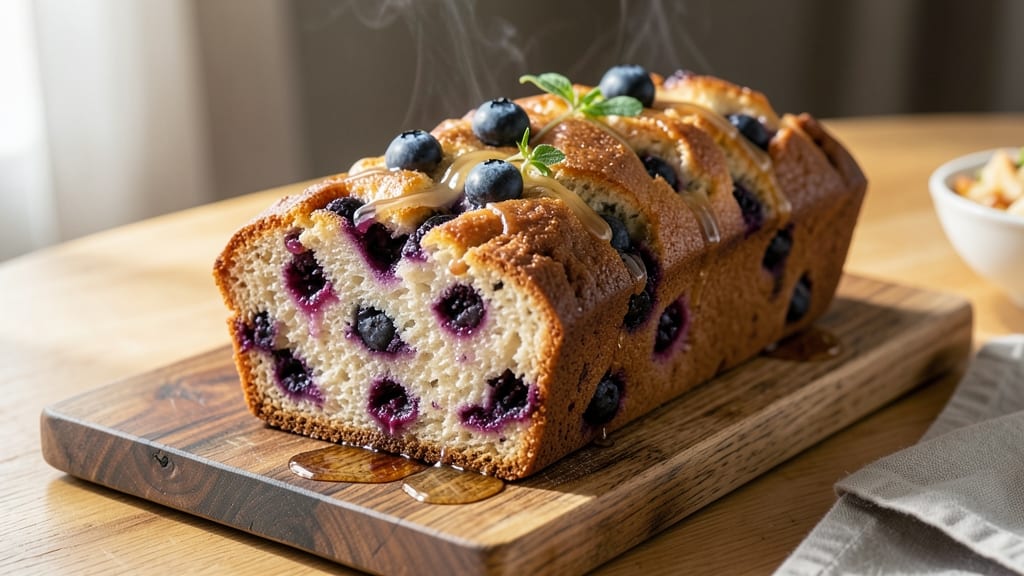
This applesauce blueberry bread recipe delivers the perfect balance of tender crumb and juicy blueberries swirled into spiced applesauce pockets—every slice is a homey masterpiece. The secret lies in using unsweetened applesauce for moisture without overpowering the bread's natural sweetness, while cinnamon and nutmeg deepen the warm, autumnal flavors.
I've baked this loaf more times than I can count, and it never fails to disappear within hours.
The beauty of this recipe is its simplicity: just 10 ingredients and 60 minutes total time, including baking. You'll start with a basic bread dough that comes together quickly, then fold in the blueberries and applesauce mixture for those signature swirls.
The dough rises while you prepare the filling, ensuring everything bakes at the same time for maximum flavor infusion.
What you'll end up with is a loaf with a golden, crackly crust and a tender, moist interior studded with plump blueberries and pockets of spiced applesauce.
The aroma alone will have everyone gathering in the kitchen, and the texture—soft, slightly dense, and perfectly chewy—makes it ideal for breakfast toast or afternoon snacks.
This bread freezes beautifully for up to three months, so you can bake a double batch and enjoy it all season long. Serve warm with butter or jam for the ultimate comfort food experience. Let's get baking!
Ingredients for applesauce blueberry bread
Ten simple ingredients for a loaf so tender and fragrant it disappears faster than you can slice it.
| Ingredient | Amount | Notes |
|---|---|---|
| All-Purpose Flour 🌾 | 4 cups | Spooned and leveled, not scooped |
| Granulated Sugar 🍚 | ¾ cup | White or light brown |
| Unsweetened Applesauce 🍎 | ¾ cup | Unsulfured for best flavor |
| Active Dry Yeast 🍞 | 2 ¼ tsp | One packet, room temperature |
| Large Eggs 🥚 | 1 whole | Room temperature for even rise |
| Unsalted Butter 🧈 | ½ cup | Cold, cubed for easier mixing |
| Fresh Blueberries 🫐 | 1 ½ cups | Washed and dried thoroughly |
| Ground Cinnamon 🌿 | 2 tsp | Freshly ground preferred |
| Ground Nutmeg 🌿 | ½ tsp | Freshly grated is ideal |
| Salt 🧂 | 1 tsp | Diamond Crystal preferred |
| Milk 🥛 | ½ cup | Any kind, room temperature |
The applesauce is non-negotiable here—unsweetened, unsulfured is the only way to go. Whole Foods or Trader Joe's carry great options, but check the label. If you can't find unsulfured, Mott's unsweetened is a solid backup. Blueberries should be plump and firm; local farmers markets have the juiciest ones in summer. The yeast? Fresh is best—if your packet's past its expiration, toast it in warm milk for 5 minutes to revive it. And that butter? Cold cubes mix better than melted—trust me on this.
No fresh blueberries? Frozen works perfectly—just don't thaw them first. Running low on cinnamon? Cassia works too, but it's stronger, so start with half the amount. The nutmeg can be pre-ground, but freshly grated from a whole nut gives that extra depth. Milk substitute? Any plant milk in equal amounts—just know the flavor might shift slightly. And if you're gluten-sensitive, substitute a 1:1 gluten-free flour blend, but expect a denser crumb. The dough should be sticky but manageable—if it's too dry, add 1 tbsp more milk.
This dough rises twice, so plan ahead. After the first rise, it'll double in size—poke it gently, and if it springs back slowly, it's ready. The second rise happens right in the loaf pan, so don't overfill it. For best texture, bake immediately after shaping, but you can prep the dough ahead: cover and refrigerate overnight, then let it sit at room temp for 30 minutes before the first rise. The finished loaf keeps 3 days at room temperature wrapped in foil, 1 week in the fridge, or 3 months frozen. Slice it thick—every bite should have that perfect balance of spiced applesauce and juicy berry.
Why You'll Love This Recipe
- No Yeast Hassle: The applesauce replaces oil and tenderizes the dough—no kneading, no waiting for yeast to proof. I mix it up in my stand mixer’s bowl, dump it in, and let the oven do the work. Honestly, I’ve made this on days when I forgot to take yeast out of the fridge.
- Sweet-Tart Magic: That first bite? Juicy blueberries burst against the soft, slightly dense crumb, while the applesauce keeps it moist without being cloying. Between us, it’s the kind of bread that disappears faster than my willpower when it’s warm.
- Breakfast to Snack: Slice it for toast with butter, pack it for lunch with peanut butter, or serve it with dinner—it’s that versatile. I’ve even used it as a base for French toast (yes, even on a Tuesday night) and it never lets me down.
- Budget-Friendly Staple: Applesauce stretches the dough, so you’re not drowning in expensive ingredients. A single batch feeds my family for days, and the leftovers? Still delicious reheated or frozen—no sad, dry bread here.
Step-by-step instructions for applesauce blueberry bread
Here's how to create a tender loaf with perfect swirls and bursts of juicy blueberries.
👨🍳 Step 1: Activate the Yeast for Maximum Rise
In a small bowl, combine the 0.75 cup unsweetened applesauce, 0.5 cup milk, and 2.25 teaspoons active dry yeast. Let it sit for 5-10 minutes until frothy. You'll see tiny bubbles forming at the surface—this confirms the yeast is alive and ready to work its magic.
I always use room-temperature ingredients for yeast activation. Cold liquids slow down the yeast, while warm liquids can kill it. The applesauce adds natural sweetness while keeping the dough tender. Stir gently to avoid creating too many air bubbles prematurely.
👨🍳 Step 2: Mix the Dough Base and Incorporate Wet Ingredients
In a large mixing bowl, whisk together the 4 cups all-purpose flour, 0.75 cup granulated sugar, 2 teaspoons ground cinnamon, 0.5 teaspoon ground nutmeg, and 1 teaspoon salt. Create a well in the center and pour in the yeast mixture, 1 whole large egg, and 0.5 cup cold cubed unsalted butter.
Use a wooden spoon to mix until the butter is incorporated, then switch to your hands. Knead the dough on a lightly floured surface for 5-7 minutes until smooth and elastic. The dough should be slightly sticky but not wet. If it's too dry, add 1 teaspoon milk at a time until it reaches the perfect consistency.
🥘 Step 3: Fold in Blueberries and Create the Signature Swirl
Return the dough to the mixing bowl and gently fold in the 1.5 cups fresh blueberries using a spatula. Divide the dough in half and shape each portion into a 12-inch log. Roll each log tightly into a jelly roll shape, then place them side by side in a greased 9x5-inch loaf pan.
Here's the trick: Use a sharp knife to cut through both dough logs at ½-inch intervals across the width. Gently press the cut sides together to create the classic swirl pattern. This technique ensures even baking and those beautiful spiral patterns you see in bakery breads.
🔥 Step 4: Proof the Dough Until Nearly Doubled
Cover the loaf pan with a clean kitchen towel and let the dough rise in a warm place for 1-1.5 hours, or until it reaches the top of the pan. The dough should feel springy when pressed gently with one finger—it should leave a slight indent but spring back slowly.
I like to proof my bread in a slightly warm oven with the light on. This creates a consistent environment without making the kitchen too hot. Avoid over-proofing—the dough should double but not collapse. If it rises too quickly, it may not develop proper gluten structure and could result in a dense loaf.
🔥 Step 5: Bake to Golden Perfection with Steam
Preheat your oven to 375°F. Place the loaf pan in the oven and immediately pour ¼ cup hot water into the bottom of the oven. This creates steam that helps develop that beautiful crust and keeps the bread moist. Bake for 35-40 minutes until the top is golden brown and a toothpick inserted comes out clean.
The steam is crucial—it mimics commercial bakery conditions. You'll know it's done when the bread pulls away slightly from the pan edges and has a deep golden color. For extra shine, brush the top with a simple egg wash (beat 1 egg yolk with 1 tablespoon milk) after the first 20 minutes of baking.
⏰ Step 6: Cool and Slice for Maximum Moisture
Remove the bread from the pan and let it cool on a wire rack for at least 30 minutes. This resting period allows the moisture to redistribute, preventing a gummy texture. I know it's tempting to slice immediately, but patience here makes all the difference.
Once cooled, slice the bread into ½-inch thick pieces. Each slice should reveal those beautiful blueberry swirls throughout. The bread will keep well at room temperature for 2 days or can be frozen for up to 3 months. For best results, wrap tightly in plastic wrap or aluminum foil.
Pro Tips For Making Applesauce Blueberry Bread
- STIR THE YEAST FIRST: Mix the yeast with the warm applesauce (not water) and a pinch of sugar first—it activates faster and smells like a bakery. I used to skip this step and wondered why my dough took forever to rise. Five minutes of waiting here saves 30 minutes of kneading later.
- WEIGH YOUR FLOUR: Scoop and level your flour—measuring cups lie. Applesauce bread needs precise flour-to-moisture balance, and packed cups add extra weight. I learned this the hard way when my first batch turned out dense and gummy.
- FOLD IN BLUEBERRIES GENTLY: Toss blueberries in a tablespoon of flour first, then fold them in with a spatula—don’t stir. This prevents sinking and keeps them evenly distributed. My grandmother swore by this, and she was right: uneven berries make for a sad first bite.
- USE A THERMOMETER FOR DOUGH: Pull the bread out when the internal temp hits 190°F—not by color alone. Applesauce bread can look golden but stay undercooked inside, leading to a gummy center. I was skeptical until I tried it—now I never guess.
Dietary considerations for applesauce blueberry bread
Gluten-Free Adaptations
To make this bread gluten-free, substitute the 4 cups all-purpose flour with a 1:1 gluten-free flour blend like Bob's Red Mill or King Arthur. Add 1 teaspoon xanthan gum to help bind the dough—this is crucial for that classic bread texture.
You may need to adjust the milk to ⅓ cup more since gluten-free flours absorb differently. The dough will be stickier, so use wet hands when handling it. 🌾
Dairy-Free Options
Swap the ½ cup unsalted butter for ½ cup dairy-free butter like Miyoko's or Earth Balance, or use ½ cup coconut oil (solid at room temp). Replace the ½ cup milk with ½ cup unsweetened almond or oat milk.
The flavor stays rich, but the texture will be slightly denser. I've found that oat milk works best for mimicking the original's moisture. 🥛
Lower Sugar Adjustments
Reduce the ¾ cup granulated sugar to ½ cup and add 2 tablespoons monk fruit sweetener or 1 tablespoon honey to maintain moisture. The applesauce already provides natural sweetness, so this keeps the bread flavorful without excess sugar.
For extra depth, increase the ground cinnamon to 2.5 teaspoons. The texture remains tender, just with a slightly less sweet profile. 🍎
Nut-Free Considerations
This recipe is naturally nut-free, but if you're avoiding all potential cross-contamination, use a dedicated toaster or bread slicer. The dough contains no nuts, but always check your all-purpose flour and blueberries for traces if you have severe allergies.
Store-bought blueberries are typically safe, but fresh ones from markets might have cross-contact. When in doubt, opt for organic or certified nut-free brands. 🫐
Allergen-Friendly Swaps
For egg-free baking, replace the 1 large egg with 1 flax egg (1 tablespoon ground flaxseed + 3 tablespoons water, mixed and rested for 5 minutes). The bread will still rise well, though the texture may be slightly denser.
If you also need to avoid dairy, use a vegan butter substitute and ensure your yeast is dairy-free (some brands contain milk powder). Always check labels—this ensures your bread is safe for all dietary needs. 🥚
Nutrition facts
Frequently asked questions
Can I substitute frozen blueberries for fresh? Yes, but don't thaw them first! Use 1.5 cups frozen blueberries straight from the freezer—they'll release moisture as they bake, keeping the bread juicy. Just
Why did my bread turn out dense instead of light?
Most likely over-proofing or under-kneading. The dough should double in size during proofing but not collapse, and kneading for 5-7 minutes develops proper gluten structure. If your kitchen is cold, try proofing near a warm oven with the light on.
How do I make this bread extra moist?
Add 2 tablespoons Greek yogurt or 1 extra tablespoon applesauce to the dough. For even more moisture, brush warm slices with melted butter or a simple honey glaze (mix 2 tablespoons honey with 1 tablespoon milk). The applesauce already keeps it tender, but these tweaks take it to the next level!
Can I make this bread in a different pan shape?
Use a 9x9-inch square pan for a cake-like loaf or a 7x3-inch pullman pan for a longer sandwich-style bread. Adjust baking time by 5-10 minutes (check with a toothpick). The swirl technique works the same—just scale the cuts to fit your pan's width.
What's the best way to reheat sliced bread?
Wrap slices in a damp paper towel and warm in a 300°F oven for 5-7 minutes for perfect toasty texture. For microwave reheating, place slices on a plate with 1 teaspoon water and cover with a damp towel for 15-20 seconds**. Never reheat uncovered—it dries out fast!