
Sauces & Condiments
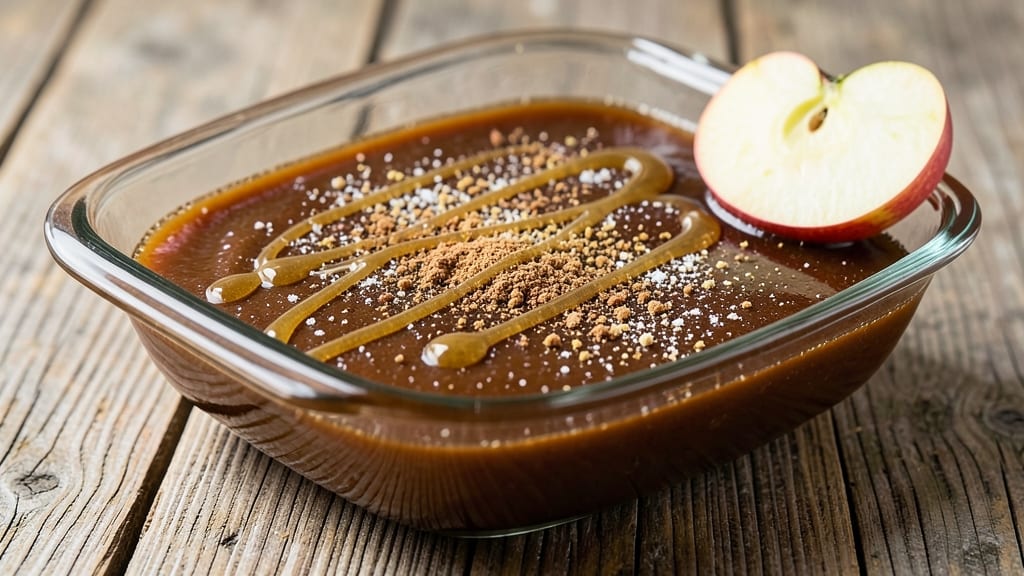
This applejack sauce recipe transforms ordinary dishes into something extraordinary with its perfect balance of spiced apple cider, warm vanilla, and rich brandy notes. 🍂 The secret lies in simmering apple cider with applejack, cinnamon, and nutmeg until it thickens into a glossy, aromatic glaze that clings beautifully to everything it touches.
What makes this sauce special is its versatility—it’s equally at home as a glaze for ham or pork tenderloin, a dip for warm donuts, or a drizzle over pancakes and waffles.
The slow simmering process allows the spices to meld together, creating layers of flavor that feel both comforting and sophisticated. Unlike store-bought versions, this recipe delivers depth and warmth that comes from fresh ingredients and careful technique.
With just 10 minutes of active prep and 20 minutes of simmering, you’ll have a sauce that’s rich, slightly sticky, and packed with autumnal spices.
The applejack adds a subtle warmth, while the vanilla rounds out the flavors, making it the perfect finishing touch for holiday meals or cozy weeknight breakfasts. Once you taste it, you’ll never go back to bottled sauces again.
The best part? This sauce keeps beautifully in the fridge for up to two weeks, so you can make a big batch and enjoy it throughout the season.
Whether you’re glazing a holiday ham or drizzling it over fresh biscuits, this applejack sauce will elevate any dish with its velvety texture and complex, spiced sweetness.
Ingredients for applejack sauce
Nine ingredients, autumn in a bottle—this sauce is pure comfort with sophisticated flair.
| Ingredient | Amount | Notes |
|---|---|---|
| Applejack Brandy 🍷 | 1 cup | High-quality, aged brandy preferred |
| Unsweetened Apple Cider 🍎 | 2 cups | Freshly pressed, no added sugar |
| Pure Vanilla Extract 🌿 | 1 tbsp | Real vanilla, not imitation |
| Ground Cinnamon 🌶️ | 1 tsp | Freshly ground for best flavor |
| Ground Nutmeg 🌶️ | ½ tsp | Finely grated for smooth texture |
| Granulated Sugar 🍚 | ½ cup | Light brown sugar for depth |
| Heavy Cream 🥛 | ¼ cup | Full-fat for richness |
| Unsalted Butter 🧈 | 2 tbsp | Cold, cubed for easier melting |
| Fresh Lemon Juice 🍋 | 1 tbsp | Brightens the flavor profile |
The applejack makes or breaks this sauce—skip the cheap stuff. Look for Woodford Reserve or Christian Brothers at Total Wine or your local liquor store. Freshly pressed apple cider is non-negotiable; the grocery store kind with added sugar won’t cut it. For the vanilla, Madagascar bourbon vanilla from Trader Joe’s adds that extra depth. The spices? Penzeys or McCormick’s for that restaurant-quality punch. And don’t even think about using imitation vanilla—it’s a crime against this sauce. The butter and cream need to be full-fat; Plugrá butter and Organic Valley cream are my go-tos for that velvety texture.
No applejack? Brandy or bourbon in a pinch—just reduce the amount by half. Short on vanilla? Vanilla bean paste works wonders if you’ve got one. The sugar can be swapped for maple syrup (reduce other liquids by 1 tbsp), but the caramel notes won’t be the same. For a dairy-free version, coconut cream replaces the heavy cream, though the texture will be slightly lighter. The lemon juice can be omitted if you’re sensitive to acidity, but trust me, it brightens everything. And if you’re making this ahead, store the sauce without the butter—add it fresh before serving so it stays glossy.
This sauce keeps like a dream—two weeks in the fridge in an airtight jar, or three months in the freezer. The butter will separate if stored too long, so add it fresh when reheating. For a restaurant-worthy finish, strain it through a fine-mesh sieve before serving—gets rid of any stray cinnamon specks. Double the batch if you’re hosting; it disappears faster than you can say ‘holiday ham.’ And if you’ve got leftover sauce? Freeze it in ice cube trays for perfect single-use portions.
Why You'll Love This Recipe
- No-Simmer Struggle: I swear by this recipe because it doesn’t require babysitting a pot. Just toss the apple cider and brandy into a saucepan, let it warm through—no reducing, no constant stirring—then stir in the spices. Ten minutes max, and no one’s glaring at the clock.
- Spice-Soaked Warmth: That first sip? Pure autumn in a spoon. The applejack’s caramel notes mingle with the cinnamon’s toasty kick and nutmeg’s earthy whisper—like a hug from a cozy kitchen. Honestly, I’ve drizzled it over vanilla ice cream and called it dessert, but the real magic? It turns bland roasted chicken into something you’d fight for.
- Holiday Hacker: Between us, this is my secret weapon for Thanksgiving leftovers. Drizzle it over mashed potatoes or glaze the turkey carcass bones for gravy—suddenly, Tuesday dinner feels like a celebration. And the best part? It’s already in my pantry, so I’m never scrambling for cranberry sauce again.
- Pantry Goldmine: I make a big batch and keep it in the fridge for weeks. A splash in coffee when I’m tired, a quick glaze for store-bought cookies, or even a fancy drizzle over buttered toast when I’m lazy. The vanilla and spices mellow over time, so it only gets better—no waste, just flavor.
Step-by-step instructions for applejack sauce
This rich, spiced glaze transforms simple ingredients into something extraordinary—let's make it together.
🍳 Step 1: Simmer the Apple Cider Base
In a medium saucepan, combine the 2 cups unsweetened apple cider, 0.5 cup granulated sugar, 1 tsp ground cinnamon, and 0.5 tsp ground nutmeg. Bring to a boil over medium-high heat, then immediately reduce to medium-low to maintain a gentle simmer. You want the cider to reduce by about half—this takes roughly 15-20 minutes—until it thickens to a syrupy consistency and smells intensely aromatic.
Here's the thing—don't walk away. Watch for the cider to darken slightly and coat the back of a spoon. If it starts sticking, add 1-2 tablespoons water to keep it moving. The sugar will dissolve completely, creating a smooth foundation for our sauce. I like to stir occasionally with a wooden spoon, scraping up any browned bits from the bottom—they're packed with flavor.
🔥 Step 2: Incorporate the Brandy and Vanilla
Once the cider has reduced, carefully remove the pan from heat and let it cool for 2 minutes. Then, stir in the 1 cup applejack brandy and 1 tbsp pure vanilla extract. Here's where it gets magical—the brandy will sizzle slightly as it hits the warm cider, infusing those warm apple notes with deep caramel undertones. Return the pan to low heat and simmer gently for 5 minutes to allow the alcohol to cook off and the flavors to meld.
I know it seems counterintuitive to cook off alcohol, but this step ensures the sauce has a smooth, cohesive finish without any harsh boozy notes. You'll see the mixture bubble gently as the brandy evaporates—just keep stirring until it smells rich and complex, like warm apple cider with a hint of spice and vanilla.
🥘 Step 3: Add Butter and Cream for Richness
Reduce the heat to low and whisk in the 2 tbsp cold unsalted butter and 0.25 cup heavy cream. The butter should melt completely, creating a glossy sheen on the sauce. If it looks too thick, add 1 tablespoon water at a time until it reaches a pourable consistency—you want it to coat the back of a spoon but still flow smoothly. Simmer for another 3-4 minutes until everything is fully incorporated and the sauce is velvety smooth.
This is the moment that matters: the butter adds richness, while the cream gives it that luxurious, restaurant-quality texture. Don't rush this step—let the sauce sit undisturbed for 1 minute after removing it from heat. The residual heat will finish melting the butter and blending everything together perfectly.
⏰ Step 4: Finish with Lemon and Rest
Off the heat, stir in the 1 tbsp fresh lemon juice and taste immediately. The lemon brightens the sauce, cutting through the richness and adding a fresh, tangy note that balances all the warm spices. If you want it sweeter, add a pinch more sugar; if it needs more acidity, add a splash more lemon juice. The sauce should be perfectly balanced—sweet, spiced, and slightly tangy.
Transfer the sauce to a clean jar or bowl and let it rest at room temperature for 15-20 minutes. This resting period allows the flavors to fully develop and the sauce to thicken slightly. If you're using it immediately, it'll be slightly thinner, but it'll thicken as it cools. For the best results, store any leftovers in the refrigerator for up to 1 week—it actually tastes better the next day as the flavors deepen!
Pro Tips For Making Applejack Sauce
- Simmer Slow and Steady: I learned this the hard way—rushing the reduction turns your sauce into a sad, boozy syrup instead of a rich, caramelized glaze. Keep the heat at a gentle simmer (you should see tiny bubbles, not a rolling boil) and give it 15-20 minutes. The alcohol needs time to cook off evenly, or you’ll end up with a harsh burn instead of that warm, spiced depth.
- Use Freshly Ground Spices: Pre-ground cinnamon and nutmeg lose their punch fast, and that dulls your sauce. If you’re not grinding your own, buy whole spices and toast them lightly in a dry pan for 30 seconds before adding—it wakes up their flavor. (Yes, even if you’re impatient like me, resist the urge to skip this.)
- Balance the Alcohol: Applejack’s strong flavor can overpower if you’re not careful. Start with ¼ cup per 1 cup of cider, then taste as you go—reduce more if needed. If it’s too sharp, a splash of extra cider or even a pinch of brown sugar (just a teaspoon) can smooth it out without sacrificing the brandy’s character.
- Strain for Smoothness: After simmering, let the sauce cool slightly, then strain it through a fine-mesh sieve lined with cheesecloth. This catches any sediment from the spices and makes the sauce silky. (I know, it’s an extra step, but your sauce will taste like it came from a fancy restaurant, not a rushed weeknight.)
Troubleshooting your applejack sauce
Too Thin or Watery
If your sauce ends up too thin, don’t panic—simmer it uncovered for an extra 5-10 minutes to evaporate excess liquid. For a quicker fix, whisk in 1 tsp cornstarch mixed with 1 tbsp cold water until it thickens.
I’ve found that reducing heat to low and letting the sauce sit undisturbed for 10 minutes often helps it naturally thicken as it cools. 🥄
Too Thick or Syrupy
When the sauce is too thick, thin it with 1 tbsp water or apple cider at a time until it reaches a glossy, pourable consistency. If you’re using it as a glaze, aim for a texture that coats the back of a spoon but still flows smoothly.
For a more liquid consistency (like a dipping sauce), add 2-3 tbsp of warm water or cream. Always thin gradually—you can’t add more liquid later if it’s too runny.
Alcohol Taste Lingers
If your sauce still tastes boozy, simmer it uncovered for an additional 5-8 minutes on low heat. The alcohol will continue to evaporate, leaving behind only the warm, caramelized flavors.
For a stronger flavor without the alcohol kick, reduce the applejack to ½ cup and add ½ cup apple cider instead. The extra liquid will help dilute any lingering booze notes while keeping the depth of flavor. 🍷
Sauce Separates or Curdles
If the sauce separates (especially after refrigeration), gently reheat it over low heat while whisking constantly. The butter and cream will re-emulsify as they warm. To prevent separation, always store the sauce in an airtight container and avoid adding the butter until just before serving.
If you’re reheating leftovers, whisk in a splash of warm water or cream to restore its silky texture.
Spices Overpower the Flavor
If the cinnamon or nutmeg tastes too strong, balance it with a pinch of sugar or a splash of lemon juice. For a smoother finish, strain the sauce through a fine-mesh sieve to remove any excess spices.
If you’re sensitive to heat, reduce the nutmeg to ¼ tsp and add ½ tsp ground ginger for warmth without overpowering the apple flavor. Taste as you go—adjust gradually to avoid fixing it later. 🌶️
Sauce Crystallizes in Fridge
If your sauce develops a grainy texture after refrigeration, it’s likely due to sugar crystallization. To fix it, gently reheat the sauce over low heat while stirring until smooth. To prevent this, avoid stirring the sauce too vigorously while it’s hot, as this can cause sugar to crystallize. For extra insurance, add ½ tsp lemon juice while reheating—it helps dissolve sugar crystals and adds brightness. Store the sauce in a jar with a tight seal to keep it fresh and smooth.
Nutrition facts
Frequently asked questions
Can I make this sauce without applejack brandy?
Yes! If you don’t have applejack, substitute with ½ cup brandy or bourbon plus ½ cup extra apple cider to maintain balance. The alcohol will cook off during simmering, leaving rich caramel notes. For a non-alcoholic version, use ½ cup apple cider vinegar and add 1 tsp vanilla bean paste for depth.
How do I know when the sauce is thick enough?
The sauce is ready when it coats the back of a spoon but still flows smoothly—like thin honey. Test by chilling a small spoonful in the fridge for 5 minutes; if it thickens further, it’s perfect. If it’s too runny, simmer uncovered for 5 more minutes to evaporate excess liquid.
Can I use this sauce for savory dishes?
This sauce glazes meats beautifully—try it on ham, pork chops, or roasted chicken. For a savory twist, reduce the sugar to ⅓ cup and add ½ tsp smoked paprika. Brush it on during the last 10 minutes of cooking for a caramelized finish.
Why does my sauce taste too sweet?
Balance excess sweetness with 1 tbsp lemon juice or a pinch of salt. If it’s still too strong, simmer the sauce with 1 extra cinnamon stick (remove before serving) to add warmth without sugar. For future batches, reduce sugar to ¼ cup and taste as you go.
How do I reheat leftovers without separating?
Reheat gently over low heat while whisking constantly. For extra insurance, add 1 tsp warm water or cream to help re-emulsify. Never microwave—it causes butter and cream to separate. If the sauce is grainy, strain it through a fine-mesh sieve for a silky texture.