
Sauces & Condiments
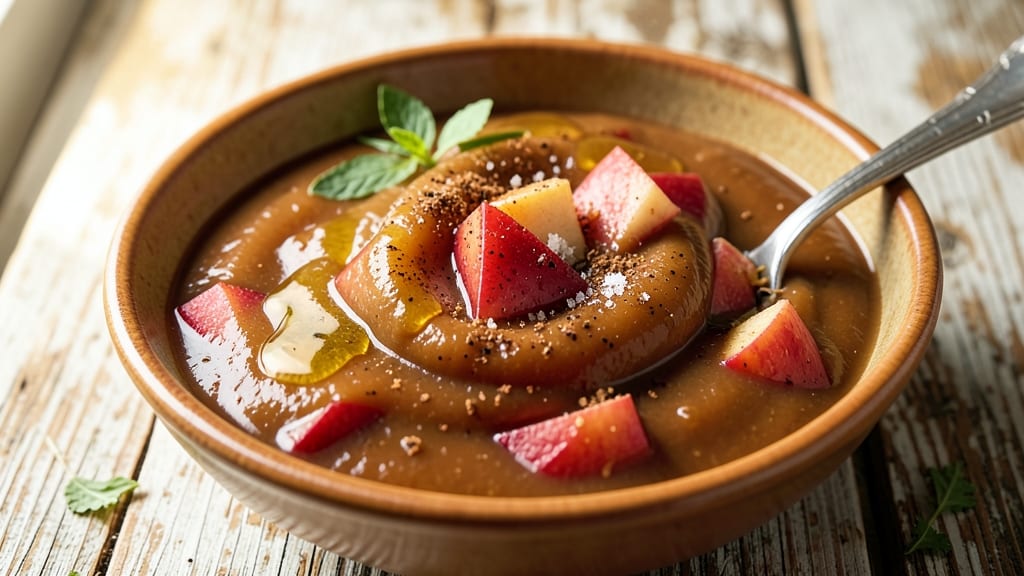
This slow-cooked apple sauce recipe transforms humble cooking apples into a velvety, spiced condiment that elevates everything from roast dinners to crumbles. 🍏 The secret lies in simmering apples with cinnamon and nutmeg until they break down into a naturally sweet, aromatic sauce—no added sugar needed if using ripe fruit.
Perfect for UK larders where seasonal apples are abundant, this versatile sauce works as a glaze, dessert topping, or even a meat accompaniment.
What makes this recipe stand out is its foolproof simplicity: just peel, core, and chop apples before slow-cooking them with a splash of apple juice or water.
The spices infuse deeply as the apples soften, creating a sauce with rich texture and warm depth—ideal for autumn and winter meals. Unlike store-bought versions, this homemade sauce stays fresh for weeks in the fridge or freezer, making it a pantry staple.
The result is a smooth, naturally sweet sauce with a delicate spice kiss that pairs beautifully with pork, chicken, or even drizzled over pancakes. The slow-cooking method ensures no lumps, and the apples release their juices naturally, creating a sauce that’s luxuriously thick yet spreadable.
Whether you’re serving it alongside Sunday roast or using it in baking, this recipe delivers restaurant-quality results at home.
For extra versatility, adjust the spice level to taste—add a pinch of cloves for warmth or a squeeze of lemon for brightness. This sauce also freezes perfectly, so you can make a big batch and store it for months. Let’s get cooking!
Ingredients for apple sauce recipe uk
Nine simple ingredients transform humble apples into a velvety, restaurant-quality sauce perfect for UK autumn meals.
| Ingredient | Amount | Notes |
|---|---|---|
| Cooking Apples 🍏 | 2 lb | Firm, ripe varieties like Braeburn or Cox |
| Apple Juice 🍎 | ½ cup | Unsweetened, for moisture balance |
| Ground Cinnamon 🌿 | 1 ½ tbsp | Freshly ground for best flavor |
| Ground Nutmeg 🌿 | ½ tsp | Freshly grated preferred |
| Granulated Sugar 🍚 | ¼ cup | Optional, for tart apples only |
| Lemon Juice 🍋 | 1 tbsp | Freshly squeezed for brightness |
| Salt 🧂 | ¼ tsp | Fine sea salt preferred |
| Water 💧 | ½ cup | For thin consistency if needed |
| Ground Cloves 🌶️ | ¼ tsp | Optional, for extra warmth |
UK cooking apples like Braeburn or Cox are ideal—they hold their shape during peeling and coring while breaking down beautifully. Sainsbury's or Tesco often stock them in season, or check local farm shops for the freshest varieties. If you can't find cooking apples, Granny Smiths work in a pinch, but they'll need a bit more sugar. The cinnamon and nutmeg should be freshly ground for maximum aroma—pre-ground spices lose potency quickly. For the best results, look for organic spices at Waitrose or M&S if you want to splurge.
No apple juice? Water or cider works just as well—just add a splash of lemon juice to balance. Short on sugar? Skip it entirely if using very ripe apples (they're naturally sweeter). Want more warmth? Add ground cloves up to 0.5 tsp for a spiced chai vibe. The lemon juice is key—it brightens the sauce and prevents browning. If your apples are particularly tart, you can double the sugar or add a pinch of baking soda to soften them faster during cooking. For a smoother texture, peel and core the apples before chopping them into even chunks.
This sauce keeps beautifully in the fridge for up to 2 weeks in an airtight container. For longer storage, portion into ice cube trays, freeze, then transfer to a bag—perfect for single servings. The texture actually improves after a day or two as the flavors meld. Reheat gently on the stove or microwave until warmed through. If it thickens too much, just stir in a splash of apple juice or water. Freezes perfectly for up to 6 months, making it a great make-ahead project for holiday meals.
Why You'll Love This Recipe
- No Peel, No Stress: I’ll be real—peeling apples is my least favorite kitchen chore. This recipe skips it entirely, relying on cooking apples that peel cleanly after cooking. Just core, chop, and simmer—no fuss.
- Warm Spice Magic: That first spoonful? Pure autumn in a jar. A pinch of nutmeg and cinnamon transforms tart apples into something velvety and nostalgic—like your nan’s Sunday pudding, but with half the effort.
- Pantry Staple Power: Honestly, this uses things you already have. Cooking apples aren’t always easy to find, but if you’ve got regular eating apples, just swap in a splash of extra juice. Sugar? Cinnamon? Nutmeg? All basics that never go to waste.
- Leftovers That Last: The sauce thickens beautifully overnight, so I always double the batch. Spread it on toast for breakfast, stir it into porridge, or drizzle it over yogurt—it’s the ultimate lazy-morning hero. (Yes, even on a Tuesday.)
Step-by-step instructions for slow-cooked spiced apple sauce
Transform simple cooking apples into velvety spiced apple sauce with this foolproof method.
🍳 Step 1: Peel, Core, and Chop the Cooking Apples
Start by peeling the 2 lb cooking apples using a vegetable peeler or sharp knife. Cut them in half and remove the cores using a sturdy apple corer or small knife. For even cooking, slice the apple halves into ½-inch chunks—this size ensures they soften completely without turning to mush.
I like to work with firm varieties like Braeburn or Cox, which hold their shape beautifully during cooking. If using particularly tart apples, you might want to add the full 0.25 cup granulated sugar later to balance the flavor. Keep the apple pieces in a large bowl as you work—they'll release some juice, which we'll incorporate into the sauce.
👨🍳 Step 2: Combine Apples with Spices and Liquid
In a large, heavy-bottomed saucepan, combine the chopped apples with the 0.5 cup apple juice, 0.5 cup water, 1 tbsp lemon juice, and 0.25 tsp salt. The liquid helps prevent the apples from sticking and creates a smoother final texture. Stir gently to distribute everything evenly.
Add the 1.5 tbsp ground cinnamon, 0.5 tsp ground nutmeg, and 0.25 tsp ground cloves—these warm spices will infuse the sauce with depth. I always use freshly ground spices when possible, as pre-ground varieties can lose potency. Give everything a thorough stir so the spices coat the apple pieces uniformly.
🔥 Step 3: Simmer Until Apples Break Down
Place the saucepan over medium heat and bring the mixture to a gentle boil. Once bubbling, reduce the heat to low-medium and let it simmer uncovered for 25-30 minutes. You'll see the apples gradually soften and the liquid reduce—this is when the magic happens.
Occasionally stir the mixture to prevent sticking, but don't press on the apples with a spoon. The goal is to break them down naturally into a smooth, velvety texture. If the sauce becomes too thick before the apples are fully tender, add 1-2 tablespoons of water to maintain the right consistency.
🥘 Step 4: Blend to Perfection (Optional for Chunky Texture)
For a completely smooth apple sauce, transfer the mixture to a food processor or blender. Pulse until completely smooth, scraping down the sides as needed. If you prefer a slightly rustic texture with small apple pieces, simply mash the cooked apples with a potato masher or fork until your desired consistency is achieved.
Taste and adjust seasoning if needed. The sauce should be naturally sweet from the apples, but you can add more granulated sugar if using very tart varieties. The spices should be present but not overpowering—this is where the balance lies in a good apple sauce.
⏰ Step 5: Cool and Store Properly
Let the apple sauce cool to room temperature, then transfer it to clean, sterilized jars. The sauce will thicken slightly as it cools, which is normal. For best results, store in the refrigerator for up to 1 week or freeze for up to 6 months.
When ready to serve, simply reheat gently in a saucepan over low heat or microwave until warmed through. This spiced apple sauce makes a wonderful accompaniment to roasted meats, pancakes, or even as a filling for pastries. The warm cinnamon and nutmeg flavors shine through, making every spoonful comforting and delicious.
Pro Tips For Making Apple Sauce Recipe Uk
- Peel and Core Like a Pro: Grab a sharp paring knife instead of a peeler—it’s faster and cleaner. Cut a small "X" near the stem, then slice down to the core in one motion. I used to waste half the apple peeling it first; this cuts prep time by nearly a third.
- Simmer, Don’t Boil: Keep the heat low enough that tiny bubbles just break the surface—no rolling boil. Too much heat turns your sauce into mush, and you’ll end up with a watery, flavorless glop. I learned this after making a batch that looked like apple soup.
- Toast the Spices First: Warm the cinnamon and nutmeg in a dry pan for 30 seconds until fragrant. This wakes up their flavors and prevents a dull, dusty aftertaste. Skip this, and your sauce will taste like you’re using baking spices instead of real ones.
- Use Less Sugar Initially: Start with half the sugar called for, then taste as it cooks. The natural sweetness of the apples and reduced juice will surprise you. I was skeptical until I tried it—now I add sugar only if the apples were tart. (Your future self will thank you.)
Pro cooking tips for perfect results
Pot Control Matters
Use a heavy-bottomed saucepan—like a Le Creuset Dutch oven—to prevent scorching and ensure even heat distribution. Thin pans can cause hot spots, leading to uneven cooking or burnt bits.
If you don’t have one, a stainless steel saucepan works well, but avoid nonstick for this recipe—it can’t handle the prolonged simmering without degrading. 🔥
Simmer, Don’t Boil
Keep the heat at a gentle simmer (small bubbles, not a rolling boil) to break down the apples evenly. A medium-low flame is ideal—too high, and the sauce may reduce too quickly, turning thick and syrupy.
I often place a lid slightly ajar to let moisture escape gradually, which helps thicken the sauce naturally without sticking.
Spice Infusion Trick
Toast the ground cinnamon and nutmeg in the dry pan for 30 seconds before adding liquids to deepen their flavors. This simple step releases their aromatic oils, making the sauce taste richer.
Just be careful not to burn them—remove the pan immediately if they darken. The lemon juice should be added after the spices toast for maximum brightness. 🌿
Texture Control
For a smooth sauce, blend while warm (not hot) to avoid splattering. If you prefer chunky texture, use a potato masher or fork to break down the apples slightly—this keeps the rustic appeal.
To adjust thickness, add 1 tbsp water or apple juice at a time while reheating. Over-blending can make the sauce gummy, so pulse just until silky.
Acid Balance
Taste the sauce before adding sugar—ripe apples often need none. If it’s too tart, a splash of lemon juice (up to 1 tbsp) brightens it more effectively than sugar.
For extra depth, add a pinch of baking soda (¼ tsp) to soften tough apples faster during cooking. This trick works wonders with Granny Smiths or overly firm varieties. 🍋
Slow Cooker Shortcut
For hands-off cooking, transfer everything to a slow cooker on low for 4-5 hours. The gentle heat ensures even cooking without monitoring. Just stir occasionally and mash or blend at the end.
This method is perfect for busy days—set it and forget it until the aroma fills your kitchen! ⏰
Nutrition facts
Frequently asked questions
Can I use regular eating apples instead of cooking apples?
You can, but cooking apples like Braeburn or Cox are ideal because they hold their shape better and have a firmer texture that breaks down beautifully. If using eating apples like Gala or Fuji, they'll become very soft and might turn mushy. For best results, add a pinch of baking soda (¼ tsp) to help tenderize tougher varieties.
How do I make this sauce without a food processor?
No problem! Simply mash the cooked apples with a potato masher or fork until you reach your desired texture. For a smoother result, press the apples through a fine-mesh sieve to remove any remaining skin or seeds. This method takes a bit more elbow grease but works perfectly for rustic-style sauces.
Can I substitute apple juice with something else?
Yes! Use water, unsweetened apple cider, or even white grape juice in equal amounts. The key is to maintain 0.5 cup total liquid to prevent the sauce from drying out. If using cider, reduce the sugar slightly since it already contains natural sweetness.
Why does my apple sauce turn out watery?
This usually happens if you used too much liquid or didn't simmer long enough. To fix it, return the sauce to low heat and simmer uncovered for an extra 10-15 minutes to reduce the liquid. For a thicker consistency, mash the apples more thoroughly or blend them until completely smooth. If needed, stir in 1 tsp cornstarch mixed with 1 tbsp water and heat until thickened.
What are the best ways to use leftover apple sauce?
This versatile sauce works perfectly as a glaze for roasted pork or chicken, a topping for pancakes or French toast, or even as a filling for pies and tarts. Spread it on toast with cream cheese, mix it into oatmeal, or use it as a base for homemade granola bars. The spiced version pairs beautifully with cheese boards or as a dip for apple slices.