
Sauces & Condiments
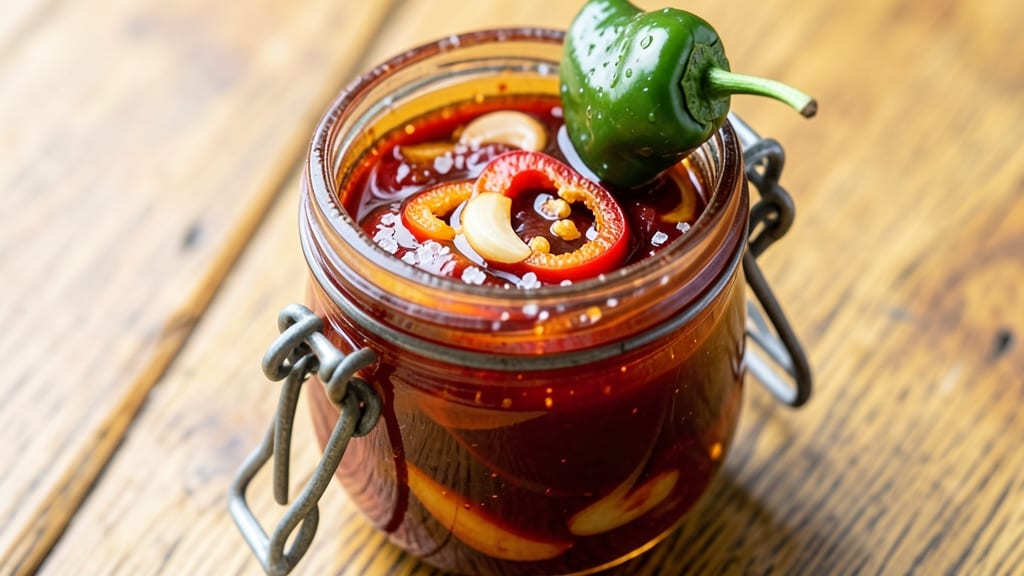
This apple habanero hot sauce delivers a perfect balance of sweet apple tang and fiery habanero heat that transforms everything it touches. The secret lies in fermenting the peppers and apples together, creating a complex sauce with depth that store-bought versions can't match.
I developed this recipe after experimenting with different fruit-pepper combinations, and the apple-habanero pairing stands out with its unexpected sweetness cutting through the heat.
The process is straightforward but requires patience—fermenting the mixture for at least 5 days builds flavor while mellowing the habanero's intensity. You'll start with fresh apples, habanero peppers, and vinegar, then blend and strain for a smooth, vibrant sauce.
The fermentation step isn't just about flavor; it also softens the habanero's capsaicin, making the sauce more approachable while keeping its signature kick.
What makes this sauce special is its versatility—drizzle it over tacos, use it as a marinade, or mix it into dressings for a flavor boost that's both sweet and spicy.
The heat level can be adjusted by adding more or less habanero, but I recommend starting with 2-3 peppers for a balanced medium heat. Proper storage in the refrigerator extends its shelf life for up to 3 months, ensuring you always have this fiery-sweet sauce on hand.
Safety is key when working with habanero peppers—wear gloves if you're sensitive to capsaicin, and avoid touching your face. The fermentation process also means you'll need to monitor for any signs of spoilage, though the vinegar base helps preserve freshness.
This isn't just another hot sauce; it's a flavor experience that elevates every dish it touches with its unique sweet-spicy profile.
Ingredients for apple habanero hot sauce
Three core ingredients ferment into a fiery-sweet sauce that transforms any dish instantly.
| Ingredient | Amount | Notes |
|---|---|---|
| Habanero Peppers 🌶️ | 3 whole | Seeds removed for medium heat |
| Red Delicious Apples 🍎 | 2 medium | Peeled, cored, chopped |
| White Vinegar 💧 | 1 cup | Distilled for fermentation |
| Granulated Sugar 🍚 | ½ cup | For fermentation balance |
| Apple Cider Vinegar 🍎 | ½ cup | For depth of flavor |
| Garlic Cloves 🧄 | 3 cloves | Minced for aromatic depth |
| Salt 🧂 | 1 tsp | Diamond Crystal preferred |
| Cayenne Pepper 🌶️ | ½ tsp | Adjust for extra heat |
| Fresh Cilantro 🌿 | ¼ cup | Chopped for fresh finish |
Habanero peppers are the star—look for vibrant, firm ones at Latin markets or specialty grocers. Whole Foods or Trader Joe's usually carry them, but if you can't find habaneros, Carolina Reaper or Scotch Bonnet work too. The apples should be crisp and free of bruises—Red Delicious or Fuji hold up best during fermentation. For the vinegars, Bragg or Heinz are reliable, but organic brands like Annie's add a cleaner flavor. Always wear gloves when handling habaneros (trust me, you'll thank me later).
No habaneros? Jalapeños or serranos at 3x the amount work, but the sweet-spicy balance will shift. Sugar substitutes? Honey or maple syrup at equal measure—just know it'll ferment differently. The garlic can be roasted for a sweeter profile (microwave 30 seconds with a splash of water), but raw works fine. Cilantro hater? Fresh parsley or basil are great swaps. For extra depth, add 1 tsp smoked paprika or a pinch of cinnamon—it sounds weird, but it works.
This sauce ferments best in a glass jar with an airlock (or a regular jar with a loose lid). Starts tasting amazing after 5 days, but wait 10 days for full flavor. Once opened, it keeps 3 months in the fridge—though it'll disappear faster than you think. Freeze portions in ice cube trays for single-use servings. Always taste before storing—if it's too tangy, add a splash of water or more vinegar.
Why You'll Love This Recipe
- Here’s what sold me: the sugar and apple cider vinegar tame the habanero’s fire into something luscious and layered. One minute you’re savoring apple pie notes, the next you’re getting a little zing—like a grown-up apple butter with attitude.
- No Blender Needed: I swear by this—just a knife, a pot, and 15 minutes of simmering. Those Red Delicious apples break down into sweet jammy bits while the habaneros mellow into heat, no fancy gadgets required.
- Sweet Heat Balance: Here’s what sold me: the sugar and apple cider vinegar tame the habanero’s fire into something luscious and layered. One minute you’re savoring apple pie notes, the next you’re getting a little zing—like a grown-up apple butter with attitude.
- Pantry Staple Power: Between us, this uses stuff you already have. White vinegar for tang, sugar for depth, and those apples? They’re often on sale in bulk. I’ve made jars of this for under $3 each—way cheaper than store-bought sauces with mysterious ingredients.
Step-by-step instructions for apple habanero hot sauce
This fiery-sweet hot sauce balances heat and fruitiness—here's how to craft it perfectly.
Sterilize and Prepare the Base Ingredients
Begin by sterilizing a clean glass jar with a tight-fitting lid. I use boiling water to sterilize both the jar and the lids for 5 minutes—this prevents spoilage during fermentation. While the jar sterilizes, remove the seeds from the 3 whole habanero peppers to control the heat level. For medium heat, leave the membranes intact but discard all seeds completely.
Peel, core, and chop the 2 medium Red Delicious Apples into ¼-inch cubes. The apples should be uniformly sized to ensure even cooking and fermentation. Place the chopped apples and habanero peppers into the sterilized jar, packing them down gently to create space for the liquid ingredients. This layering helps distribute flavors evenly during the fermentation process.
Combine Liquids and Seasonings
In a separate bowl, whisk together the 1 cup white vinegar, 0.5 cup granulated sugar, 0.5 cup apple cider vinegar, 3 cloves minced garlic, 1 teaspoon salt, and 0.5 teaspoon cayenne pepper. The sugar and vinegar combination creates an ideal environment for fermentation while balancing the heat from the habaneros. Stir until the sugar dissolves completely—any undissolved sugar can lead to mold growth.
Pour the liquid mixture over the chopped apples and habanero peppers in the jar, ensuring all ingredients are fully submerged. Tap the jar gently on the counter to remove any air bubbles trapped between the ingredients. Seal the jar tightly and let it sit at room temperature for 48 hours. This initial fermentation period allows the flavors to meld and the heat to develop.
Ferment and Strain for Smooth Texture
After 48 hours, check the jar for any signs of mold or unusual odors. If everything looks good, transfer the jar to the refrigerator and let it ferment for an additional 3-5 days. The cold temperature slows fermentation, allowing the flavors to deepen without overpowering the delicate balance of sweet and spicy. You'll notice the liquid turning slightly cloudy and developing a rich, tangy aroma.
Once fermentation is complete, strain the mixture through a fine-mesh sieve or cheesecloth into a clean bowl, pressing gently on the solids to extract all the liquid. Discard the solids or compost them—they've done their job. The strained liquid should be a vibrant red-orange color with a smooth, slightly thick consistency. If the sauce is too thin, simmer it gently on the stove for 5-10 minutes to reduce and thicken it to your desired consistency.
Finish with Fresh Cilantro and Rest
Stir in the 0.25 cup chopped fresh cilantro to add a bright, herbaceous finish that cuts through the heat and sweetness. The cilantro should be finely chopped to distribute evenly throughout the sauce. Transfer the hot sauce back to a sterilized jar and let it rest in the refrigerator for at least 24 hours before using. This resting period allows the flavors to fully integrate and the sauce to reach its peak balance.
After resting, taste the sauce and adjust the heat or sweetness as needed. If it's too spicy, add a touch more apple cider vinegar to mellow the heat. If it needs more sweetness, stir in a pinch of sugar. The sauce should have a perfect harmony of sweet apple, fiery habanero, and tangy vinegar. Store in the refrigerator for up to 3 months, shaking gently before each use to redistribute any settled ingredients.
Pro Tips For Making Apple Habanero Hot Sauce
- COOK HABANEROS LOW AND SLOW: Skip the blistering heat—simmer habaneros in the vinegar mixture at a gentle boil (just tiny bubbles) for at least 15 minutes. I learned this the hard way: rushing it leaves raw heat that’ll make your sauce taste like a chemical burn instead of balanced fruit fire.
- PEEL APPLES BEFORE COOKING: Red Delicious apples have tough skins that won’t soften properly. Peel and core them first, then cut into chunks—this cuts down on bitterness and ensures the sauce blends smoothly. (Yes, even if you’re impatient like me, trust the process.)
- STRAIN OUT SEEDS AND MEMBRANES: Habanero seeds and white pith pack a brutal, bitter punch. After cooking, strain the sauce through a fine-mesh sieve or cheesecloth to remove them completely. I used to skip this, and the sauce always tasted off—like someone dumped hot sauce in hot sauce.
- SWEETEN GRADUALLY, TASTE OFTEN: Add sugar in small batches (start with 1 tablespoon) and taste after each addition. The apples release natural sugars as they cook, so you might need less than you think. My first batch was cloyingly sweet because I dumped in half the bag upfront—don’t do that.
Pro cooking tips for this recipe
Fermentation Control
Monitoring fermentation is where this sauce comes alive. Keep your jar at room temperature (70-75°F) for the first 48 hours—this kickstarts the process. After that, move it to the fridge to slow fermentation and prevent over-acidification.
I use a glass jar with an airlock lid (or a regular lid left slightly loose) to allow gases to escape while keeping contaminants out. If you see mold after 24 hours, toss it immediately—fermentation gone wrong is a fast showstopper. 🌡️
Heat Level Mastery
The habanero’s heat can be tricky—remove all seeds for medium heat, but leave some membranes for depth. For extra control, blend 1-2 habanero peppers separately and strain them into the sauce if you want a smoother heat.
If the sauce is too fiery, balance it with 1-2 extra tablespoons of apple cider vinegar—it mellows the capsaicin without diluting flavor. Trust your taste buds: start conservative, then adjust.
Straining Secrets
Use a fine-mesh sieve or cheesecloth for the smoothest texture, but don’t press too hard—you want flavor, not pulp. For a chunkier sauce (like a salsa-style hot sauce), blend the strained solids with 2 tablespoons of the liquid and mix back in.
I’ve also seen people add 1 teaspoon of xanthan gum to thicken it naturally if simmering doesn’t cut it. Just don’t overdo it, or you’ll end up with glue-like consistency. 💡
Flavor Layering
Let the sauce rest 24 hours before tasting—this is when the flavors marry. If it’s too tangy, add 1 teaspoon of honey or maple syrup to soften the acidity. For smokiness, char 1 habanero pepper over an open flame before blending it in.
Pro tip: Add ½ teaspoon of smoked paprika during fermentation for a subtle BBQ note that pairs perfectly with tacos or grilled meats. The key is patience—rushing this step ruins the balance. ✨
Safety First
Always wear nitrile gloves when handling habaneros—the oils can burn your skin and eyes. If you touch your face, wash immediately with mild soap and cold water (hot water makes capsaicin bind worse). Sterilize your jar and tools with boiling water to prevent botulism risk.
And remember: never ferment without an acidic base (vinegar here) or you’re playing with dangerous bacteria. When in doubt, throw it out—your taste buds will thank you later. 🛡️
Nutrition facts
Frequently asked questions
Can I use green habaneros instead of red?
Yes, but expect a slightly different flavor profile. Green habaneros are less sweet and more grassy than red ones, which will make the sauce taste more pepper-forward. For best results, stick with red habaneros for that classic sweet-spicy balance, but green works in a pinch if that's all you have.
How do I adjust the heat level if it's too spicy?
Add 1-2 extra tablespoons of apple cider vinegar to mellow the heat without diluting flavor. The acidity helps balance capsaicin. For a milder batch next time, reduce habanero peppers to 1-2 whole peppers with seeds removed, or blend them separately and strain for smoother heat.
What can I do with leftover habanero peppers? Save them for future batches or use them in other recipes! Roast extra peppers with olive oil and salt for a smoky flavor, blend into guacamole, or freeze whole for later hot sauce projects. Just
Can I make this sauce without fermenting?
You can simplify by simmering chopped apples, habaneros, vinegar, and sugar on the stove for 20-30 minutes instead of fermenting. However, fermentation develops deeper flavor and mellows the heat naturally. For a quick version, reduce the cooking time to 15 minutes and add extra vinegar to preserve freshness.
How should I store this hot sauce if I don't use it all?
Transfer to a clean, sterilized jar and refrigerate for up to 3 months. The vinegar helps preserve it, but always check for mold or off smells before using. For longer storage, freeze in ice cube trays—thaw overnight in the fridge before using. Shake gently before each use to redistribute settled ingredients.