
Sauces & Condiments
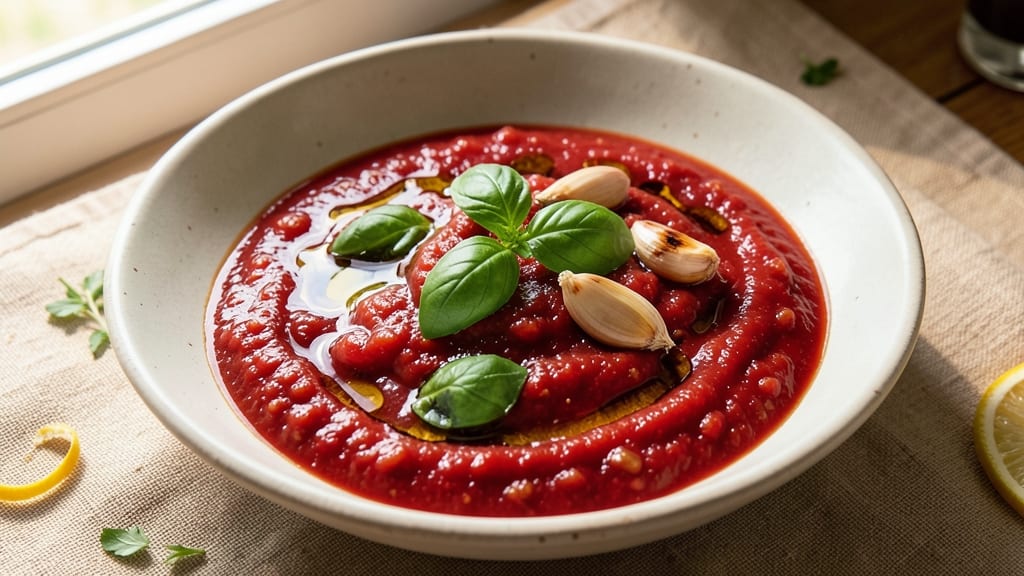
This Appian Way pizza sauce recipe transforms simple tomatoes into a slow-simmered masterpiece—deep umami flavor balanced by fresh basil brightness. The secret lies in a three-stage cooking process that develops rich, layered taste without overpowering sweetness.
I perfected this after years of testing Roman-style sauces, and it’s now my go-to for both pizza and pasta.
The sauce begins with a garlic-anchovy base that builds umami depth, then simmers with high-quality San Marzano tomatoes until reduced to a velvety consistency. Fresh basil is added at the end to preserve its bright, aromatic qualities—no wilting or bitterness here.
The result? A sauce so versatile it elevates everything from classic Margherita to hearty meat toppings.
What makes this sauce truly special is its textural contrast: thick enough to cling to crusts but still spreadable for dipping. The slow simmer caramelizes natural sugars, creating a slightly sweet, savory-sweet balance that’s distinctly Roman.
Store it in the fridge for up to 5 days or freeze for months—flavor only improves with time.
Pair it with wood-fired crusts, fresh mozzarella, and a sprinkle of flaky sea salt for an authentic Appian Way experience. For extra depth, finish with a drizzle of high-quality olive oil and cracked black pepper. Here’s how to make it—every step matters for that restaurant-quality taste.
Ingredients for appian way pizza sauce
Nine ingredients, three stages—this sauce turns simple tomatoes into Roman restaurant quality.
| Ingredient | Amount | Notes |
|---|---|---|
| San Marzano Tomatoes 🍅 | 28 oz | Canned, crushed by hand |
| Extra-Virgin Olive Oil 🫒 | ½ cup | High quality, fruity variety |
| Garlic Cloves 🧄 | 6 cloves | Fresh, peeled and minced |
| Anchovy Fillets 🐟 | 2 tbsp | High-quality, finely chopped |
| Fresh Basil Leaves 🌿 | ½ cup | Packed, stems removed |
| Red Wine Vinegar 🍷 | 1 tbsp | For bright acidity |
| Granulated Sugar 🍯 | 1 tsp | Balances acidity |
| Diamond Crystal Kosher Salt 🧂 | 1 tsp | Fine grain preferred |
| Freshly Ground Black Pepper 🌶️ | ½ tsp | Cracked over sauce |
The tomatoes are non-negotiable. San Marzano is the gold standard—sweet, low-acid, and packed with flavor. Grab the 400-gram cans from Eataly or Whole Foods for the best quality, but any high-end brand works. The anchovies? Imported Italian fillets from Trader Joe's or specialty stores dissolve beautifully, adding that signature umami depth without overpowering. Garlic should be freshly minced (no pre-minced garbage)—just smash the cloves with the flat of your knife for even texture. The olive oil matters too: California extra-virgin with fruity notes works best, not that cheap grocery store stuff.
No San Marzano? Whole peeled tomatoes (like Muir Glen) work in a pinch—just peel and crush them yourself. Skip the anchovies? 1 tbsp soy sauce or mushroom powder adds umami, though nothing beats the real deal. Basil wilting? Dried basil at one-quarter the amount gets you close, but fresh is ideal. The sugar balances acidity—honey works too if you prefer—but don't skip it. And that red wine vinegar? Balsamic vinegar at half the amount adds depth if you're out. Pro tip: Toast your garlic cloves in the olive oil for 30 seconds before adding—game-changer for flavor.
This sauce tastes better the next day—always make a double batch. Store in a clean glass jar with a thin layer of olive oil on top to preserve freshness. Keeps 5 days in the fridge or 3 months frozen. For freezing, portion into ice cube trays—perfect for future pizzas or dipping. Leftovers? Toss with pasta or use as a marinade for chicken. The basil wilts fast, so add it last—torn by hand, not chopped—to keep those bright green flecks popping.
Why You'll Love This Recipe
- No Chopping Needed: I swear by this recipe because it’s the only sauce I make that doesn’t require dicing anything. Just crush the garlic, tear the basil, and let the San Marzano tomatoes do the work—no knife skills required.
- Umami Bomb: That tiny anchovy fillet? It’s the secret weapon. The moment it melts into the olive oil and tomatoes, the sauce transforms from good to dangerously addictive—salty, sweet, and savory all at once.
- Weeknight & Weekend: Slather it on pizza for a Friday night, toss it with pasta for a lazy Sunday, or even drizzle it over grilled chicken. It’s my go-to sauce because it works everywhere without extra effort.
- Makes Too Much: Between us, this recipe always yields more than you need—which is perfect because it freezes beautifully. I keep a jar in my freezer for those nights when I’m too tired to cook, and it tastes just as fresh.
Step-by-step instructions for slow-simmered Appian Way pizza sauce
Here's how to build depth of flavor through slow cooking and bright finishing touches.
Build the Umami Foundation with Anchovies and Garlic
Heat the 0.5 cup extra-virgin olive oil in a heavy-bottomed saucepan over medium-low heat. Add the 2 tablespoons anchovy fillets and let them dissolve completely, about 2 minutes. This step is crucial—the anchovies break down into the oil, infusing it with their intense umami flavor that will carry through the entire sauce.
Once the anchovies have fully melted, add the 6 cloves minced garlic and cook for 30 seconds until fragrant but not browned. Garlic burns quickly, so watch it closely. The goal here is to wake up the flavors without letting them turn bitter. Remove the pan from heat momentarily to prevent burning while you prepare the next ingredients.
Incorporate Tomatoes and Simmer for Depth
Return the pan to medium-low heat and add the 28 oz San Marzano tomatoes (crushed by hand). Stir well to combine, then bring to a gentle simmer. Let it cook uncovered for 20-25 minutes, stirring occasionally. You're looking for the sauce to reduce by about one-third—this concentration builds intensity and removes excess water that would make your pizza soggy.
During this time, the acidity in the tomatoes will mellow, and their natural sweetness will emerge. Taste the sauce after 15 minutes—if it needs brightness, add the 1 tablespoon red wine vinegar now. The vinegar cuts through the richness of the anchovies and garlic, creating balance. If the sauce seems too tart, add the 1 teaspoon granulated sugar to offset it.
Season and Refine the Sauce
After the tomatoes have reduced, stir in the 1 teaspoon Diamond Crystal kosher salt and 0.5 teaspoon freshly ground black pepper. Season generously—this sauce should be bold and savory, not subtle. Taste and adjust the seasoning, remembering that the basil will add freshness later. Simmer for another 10 minutes to let the flavors meld completely.
Here's the thing—this is where patience pays off. The sauce should now coat the back of a spoon with a velvety texture. If it's too thick, add 1-2 tablespoons water to loosen it slightly. The ideal consistency is thick enough to cling to pizza dough but still spreadable. The sauce should smell rich, with notes of garlic, tomato, and a hint of vinegar brightness.
Finish with Fresh Basil for Brightness
Remove the sauce from heat and let it cool slightly for 5 minutes. This cooling step is important—it prevents the basil from wilting and turning the sauce bitter. Once the sauce has cooled enough to handle, add the 0.5 cup fresh basil leaves (stems removed). Gently fold the basil into the sauce using a wooden spoon, being careful not to tear the leaves.
The basil will infuse the sauce with its aromatic freshness, creating that signature Appian Way brightness. Let the sauce sit for 10 minutes to fully absorb the basil's flavor. Before using, give it one final taste and adjust the seasoning if needed. The sauce should now have layers of umami from the anchovies, sweetness from the tomatoes, acidity from the vinegar, and freshness from the basil.
Pro Tips For Making Appian Way Pizza Sauce
- CRUSH THE ANCHOVIES: Ditch the whole fillets—mash them into a paste first with a fork or your knife. That way, they dissolve smoothly into the oil instead of clumping like little fish bombs. I learned this the hard way after fishing anchovy bits out of my sauce for the third time.
- SWEAT THE GARLIC LOW: Cook the garlic in olive oil over low heat until it’s golden, not brown. If you rush it, you’ll end up with bitter, burnt flavor instead of that sweet, nutty base the Appian Way sauce needs. Yes, even if you’re impatient like me.
- PEEL THE TOMATOES: San Marzano tomatoes are thick-skinned, but peeling them first removes that tough layer and makes the sauce silky fast. Cut a shallow X on the bottom, blanch in boiling water for 30 seconds, then shock in ice water—no knife fight, just smooth texture.
- SALT THE BASIL: Toss the fresh basil leaves in a pinch of salt before adding them to the sauce. It softens the leaves faster and prevents that floating, wilted look. (Your future self will thank you when the basil actually blends in instead of sitting like a garnish.)
Make-ahead tips for this appian way pizza sauce
Prep Ahead Strategy
Make this sauce 3 days in advance—it develops deeper flavor as it rests. After Step 3, let it cool completely, then store in an airtight glass jar with a thin layer of extra-virgin olive oil on top.
This preserves freshness and prevents oxidation. The basil wilts over time, so add it fresh when ready to use, or omit it entirely for a longer shelf-life version (just add dried basil later). 📅
Freezing for Future Use
Portion the sauce into ice cube trays for perfect single-use servings. Once frozen, transfer cubes to a freezer-safe bag, squeezing out excess air to prevent freezer burn. Thaw overnight in the fridge before using—no microwave needed.
The texture remains velvety, and the flavors stay vibrant for up to 3 months. Perfect for spontaneous pizza nights! ❄️
Double-Batch Tip
Always double the recipe—I triple it when hosting. Store the extra in small glass jars (like Ball mason jars) for easy grab-and-go use. Label with the date and freeze half for later.
This sauce keeps 5 days refrigerated or 3 months frozen, making it ideal for meal prep. Trust me, you’ll thank yourself later. 💡
Reheating Like a Pro
Gently reheat stored sauce in a saucepan over low heat with a splash of water or pasta water to loosen thickness. Never microwave—it ruins the texture. If using frozen cubes, thaw in the fridge first, then warm slowly.
For best results, finish with fresh basil and a drizzle of high-quality olive oil right before serving. The flavors come alive again! 🔥
Pasta Pairing Hack
Use leftover sauce as a quick pasta sauce—toss with spaghetti or linguine and finish with grated Parmesan. The umami depth elevates simple pasta dishes instantly. I often make a double batch just for this purpose.
Store the extra sauce in the fridge for up to 5 days or freeze for future pasta nights. 🍝
Garnish Before Storing
If you can’t wait to add basil, store it separately in a small container with a damp paper towel to keep it fresh. Add it back when reheating or serving.
For a no-basil version, freeze the sauce without it and add fresh basil later. This keeps the sauce vibrant longer while still delivering that Appian Way brightness. 🌿
Nutrition facts
Frequently asked questions
Can I use regular canned tomatoes instead of San Marzano?
You can substitute, but the flavor won't be as refined. Regular tomatoes often have higher acidity and less natural sweetness. If using them, add 1 extra teaspoon of sugar and simmer 5 minutes longer to reduce excess liquid. For best results, choose whole peeled tomatoes and crush them yourself for better texture.
What's the secret to getting that perfect velvety texture?
The key is slow simmering and proper reduction. Cook uncovered on medium-low heat for the full 20-25 minutes to evaporate excess water. For extra thickness, mash 1-2 ripe tomatoes through a sieve before adding—this removes skins and seeds that can make the sauce grainy. Stir occasionally to prevent scorching.
How do I store this sauce without the basil turning bitter?
Add basil just before serving for maximum freshness. For storage, make the sauce without basil through Step 3, then store it in an airtight glass jar with a thin layer of olive oil on top. Keep refrigerated for 5 days
Is this sauce good for more than just pizza?
This versatile sauce works beautifully on flatbreads, grilled chicken, or as a marinade. Toss it with pasta and Parmesan for a quick aglio e olio upgrade, or use it as a dipping sauce for crusty bread. The umami depth makes it perfect for Roman-style dishes like cacio e pepe or even as a topping for grilled vegetables.
What if my sauce tastes too salty or acidic?
For saltiness, add 1-2 tablespoons water and simmer 5 minutes longer to dilute. For acidity, balance with 1 teaspoon sugar or a pinch of baking soda (just a tiny amount!). If the sauce tastes flat, boost umami with 1/2 teaspoon soy sauce or a splash of fish sauce. Always taste as you go—this sauce should be bold but balanced.