
Sauces & Condiments
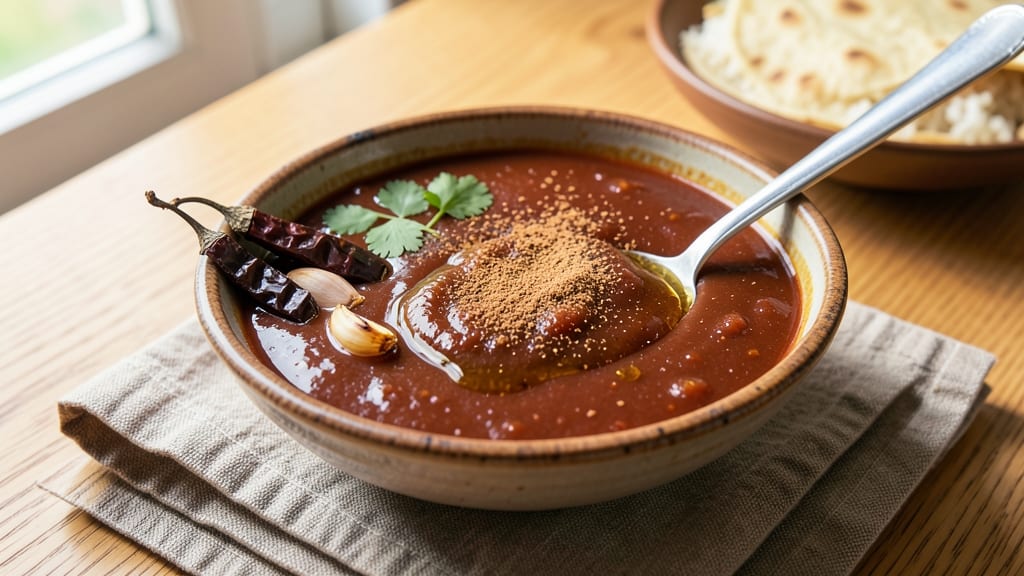
This ancho enchilada sauce recipe transforms dried chiles into a velvety, smoky masterpiece perfect for enchiladas, tacos, or dips. The secret lies in roasting ancho chiles until their deep, earthy flavors unfold, then blending them with tomatoes and broth for a sauce that's rich yet balanced.
I've perfected this method over years of testing—no bitterness, just layers of warm, smoky complexity that elevate any dish.
The process is straightforward but essential: soak the dried chiles to soften, then roast them until charred for maximum depth. Blending with roasted tomatoes and simmering in broth creates a sauce that's silky yet robust.
What sets this apart is the careful balance of spices—cumin, garlic, and a touch of cinnamon—that complement the chiles without overpowering them. The result? A sauce that's versatile enough for weeknight meals or weekend feasts.
Once made, this sauce keeps beautifully in the fridge for up to 5 days or freezes for months, making it a pantry staple. Use it to smother enchiladas, drizzle over grilled meats, or serve as a dip with tortilla chips.
The smoky-sweet flavor profile works equally well in vegetarian dishes or alongside hearty proteins. Every batch delivers that restaurant-quality depth you crave.
For extra richness, stir in a spoonful of nut butter or a splash of cream before serving. Or, for heat, add a pinch of cayenne or a dash of hot sauce.
The possibilities are endless, but the foundation—roasted chiles and tomatoes—remains the same. Let's get started on creating this sauce that's as rewarding to make as it is delicious to eat.
Ingredients for ancho enchilada sauce
Four chiles, tomatoes, and spices—this is your smoky sauce foundation.
| Ingredient | Amount | Notes |
|---|---|---|
| Dried Ancho Chiles 🌶️ | 4 whole | Stems and seeds removed |
| Medium Tomatoes 🍅 | 4 whole | Roma or vine-ripened, halved |
| Garlic Cloves 🧄 | 4 cloves | Peeled, roughly chopped |
| Ground Cumin 🌿 | 1 tbsp | Toasted for deeper flavor |
| Ground Cinnamon 🌶️ | ½ tsp | For subtle warmth |
| Vegetable Broth 💧 | 2 cups | Low-sodium preferred |
| Extra-Virgin Olive Oil 🫒 | ¼ cup | For roasting and richness |
| Salt 🧂 | 1 tsp | Kosher or sea salt |
| Black Pepper 🌶️ | ¼ tsp | Freshly ground preferred |
| Lemon Juice 🍋 | 1 tbsp | Freshly squeezed |
Ancho chiles are the heart of this sauce, so pick the plumpest, darkest ones—they pack the most flavor. Mexican grocery stores or specialty shops like La Tienda carry the best selection, but any Latin market will have them. Skip the pre-stuffed ones—they’re usually bitter and lack depth. For tomatoes, Roma or vine-ripened work best—they roast up sweeter and smoother. If you can’t find anchos, guajillo chiles work in a pinch, but they’ll give a slightly tangier result. Toast your cumin seeds in a dry pan for 30 seconds before grinding—they’ll add a nutty depth that transforms the sauce.
No ancho chiles? Dried pasilla chiles can stand in, but reduce the amount to 3 chiles since they’re more intense. Running low on tomatoes? Fire-roasted canned tomatoes save time—they’ve already got that smoky base you’re chasing. The broth matters too: homemade vegetable broth is ideal, but even low-sodium store-bought works. For extra richness, stir in 1 tbsp of almond butter at the end (trust me, it’s magic). And if you’re feeling bold, add a pinch of smoked paprika to the blend for an instant smoky boost without roasting.
This sauce keeps like a dream—5 days in the fridge or 3 months frozen. For freezing, portion into ice cube trays, then transfer to a bag. Thaw overnight in the fridge, then stir in a splash of water to restore silky texture. The flavor actually improves after a day or two as everything melds. Double the batch—you’ll want it on hand for everything from enchiladas to grilled fish. And if you make extra, freeze half immediately so you always have a backup for lazy nights.
Why You'll Love This Recipe
- No-Soaking Required: I’ll admit, I used to dread soaking dried chiles—until I realized you can just toast them whole and blend them straight into the tomatoes. Five minutes max, and that smoky depth comes through without the fuss.
- Cinnamon-Kissed Heat: Between us, the cinnamon and cumin in this sauce are chef’s kiss—warm, earthy, and just a whisper of sweetness that makes the heat sing. It’s the kind of flavor that lingers, like a hug from a spice cabinet.
- Weeknight to Party: This sauce works for tacos on a Tuesday or enchiladas for guests. Double the batch, freeze half, and suddenly you’ve got a backup for any occasion. (Yes, even when your friend cancels last-minute.)
- Pantry Magic: Honestly, the ingredients cost me less than $5 for a full batch—tomatoes you already have, chiles from the bulk bin, spices you’re not using enough. It’s the kind of recipe that turns grocery money into restaurant-quality meals.
Step-by-step instructions for ancho enchilada sauce
Here's how to build that rich, smoky sauce with perfect balance of heat and depth.
Toast the Dried Ancho Chiles
Heat a dry skillet over medium heat and add the 4 whole dried ancho chiles, stems and seeds already removed. Toast them for 30-45 seconds per side until they darken slightly and smell deeply aromatic. This step unlocks their natural sweetness and smoky flavor—don't skip it, or your sauce will taste flat.
Watch carefully—they'll darken quickly. When they're fragrant and just beginning to blister, transfer them to a heatproof bowl and cover with 2 cups vegetable broth. Let them soak for 15 minutes while you prepare the rest. This rehydration step makes them tender and ready to blend into a silky sauce.
Roast the Tomatoes and Garlic
Preheat your oven to 425°F. On a baking sheet, arrange the 4 halved medium tomatoes cut-side up and scatter the 4 peeled garlic cloves around them. Drizzle everything with the ¼ cup extra-virgin olive oil and sprinkle with ½ teaspoon ground cinnamon and 1 tablespoon ground cumin. Toss gently to coat.
Roast for 20-25 minutes until the tomatoes are blistered and deeply caramelized at the edges. You'll know they're ready when they smell intensely sweet and smoky. Let them cool slightly before handling—they'll be hot and juicy. This roasting builds the sauce's natural sweetness and depth that balances the chiles' heat.
Blend the Sauce Base
Once the tomatoes and garlic have cooled for 10 minutes, transfer everything to a blender along with the soaked chiles and their soaking liquid. Add the 1 teaspoon salt and ¼ teaspoon black pepper. Blend on high until completely smooth, scraping down the sides as needed. This should yield about 4 cups of thick, vibrant sauce.
Taste and adjust seasoning—you might need a pinch more salt or cinnamon to balance the flavors. The sauce should be rich and slightly spicy but not overpowering. If it's too thick, whisk in 1-2 tablespoons water to reach your desired consistency for dipping or cooking.
Finish with Acid and Simmer
Return the blended sauce to a saucepan and bring to a gentle simmer over medium-low heat. Let it cook for 10-12 minutes to deepen the flavors and mellow any sharpness. Stir occasionally, but don't let it boil vigorously—this prevents the sauce from separating.
Just before serving, stir in the 1 tablespoon lemon juice. This brightens the sauce and cuts through the richness, giving it that perfect balance of smoky, sweet, and tangy notes. The sauce is now ready to use—whether for dipping, cooking enchiladas, or serving over grilled meats.
Pro Tips For Making Ancho Enchilada Sauce
- STEAM THE CHILES FIRST: I learned this the hard way—dried ancho chiles straight into hot oil will burn before they soften. Instead, cover them in hot water for 10 minutes to plump up and remove their stems/seeds. This also mellows the heat and makes blending easier. (Yes, even if you're impatient like me.)
- CHAR THE TOMATOES UNTIL DARK: You’re not done when they’re just soft—keep those tomatoes over medium heat until their edges blacken and the liquid reduces by half. That caramelized depth is what turns a basic sauce into something rich and complex. I know, I know, but trust the process.
- TOAST THE SPICES SEPARATELY: Cumin and cinnamon play different roles—lightly toast the cumin in the dry skillet for 30 seconds until fragrant, then bloom it with the garlic. Add cinnamon later, just before the tomatoes, so it doesn’t overpower. This isn’t the prettiest method, but it’s the tastiest.
- BLITZ THE SAUCE BEFORE SALTING: After blending, let the sauce simmer uncovered for 5 minutes to drive off excess acid. Taste then salt—this guarantees you’re balancing flavor, not just masking it. (Your future self will thank you.)
Storing and reheating this ancho enchilada sauce
Fridge Storage Tips
Transfer your ancho enchilada sauce to an airtight glass container—I recommend Pyrex with a snap-on lid—and let it cool completely before refrigerating. Store it at 40°F or below for up to 5 days, but honestly?
The flavors get even better after 24-48 hours as the spices meld together. I always make a double batch so I have leftovers for lazy weeknights. Just give it a quick stir before reheating to restore that velvety texture. 💛
Freezer Magic
For long-term storage, portion the sauce into quart-sized freezer bags or silicone ice cube trays—this makes thawing a breeze. Leave ½-inch headspace to prevent expansion cracks, then freeze for up to 3 months. When ready to use, transfer a portion to the fridge and let it thaw overnight.
The texture might thicken slightly, so whisk in 1-2 tablespoons water to restore smoothness. Pro tip: Freeze extra sauce in 1-cup portions for perfect enchilada dips or quick tacos. ❄️
Reheating Perfection
For stovetop reheating, pour the sauce into a saucepan and warm over medium-low heat for 5-7 minutes, stirring occasionally. Avoid high heat—it can break the sauce's silky emulsion. If it thickens too much, add 1-2 tablespoons broth or water.
For microwave reheating, use 30-second intervals on 50% power, stirring between each, until warmed through. The sauce should reach 165°F internally for safety. 🔥
Reviving Stale Sauce
If your sauce has separated or lost brightness in storage, don’t toss it! Blend again for 10 seconds to recombine, then simmer for 3-5 minutes with a splash of broth or lemon juice to restore vibrancy. A pinch of smoked paprika or cumin can also wake up flat flavors.
This trick works like magic for sauces that’ve been frozen or refrigerated too long. Trust me, you’ll save money—and meals—by mastering this rescue technique. ✨
Sauce Consistency Hacks
Need a thinner sauce for dipping? Whisk in 1-2 tablespoons water or broth while warm. For thicker consistency (like for enchiladas), simmer uncovered for 5-10 minutes to reduce. If the sauce tastes too acidic after reheating, balance it with a pinch of brown sugar or honey.
The key is adjusting while warm—cold sauce resists blending. Always taste as you go! 💡
Nutrition facts
Frequently asked questions
Can I substitute ancho chiles with other dried chiles?
Yes, but adjust the quantity and expect flavor variations. For milder heat, use pasilla chiles (reduce to 3 chiles) or mulato chiles (same quantity). For spicier sauce, try guajillo chiles (reduce to 3) or arbol chiles (use 2). Always toast and soak them first to soften and deepen flavors.
Why does my sauce taste bitter?
Bitter flavor usually means the chiles were under-toasted or over-blended. Toast chiles until fragrant (not burnt) and blend with tomatoes to balance. If already made, fix it by simmering with 1 tbsp brown sugar or lemon juice to mellow harshness. For next time, remove chile stems/seeds completely before toasting.
How can I make this sauce vegetarian?
This recipe is already vegetarian-friendly! Just use vegetable broth instead of chicken broth. For extra richness, stir in 1 tbsp almond butter or 1/4 cup coconut milk at the end. The sauce works perfectly with veggie enchiladas, black beans, or roasted vegetables. The smoky depth shines even without meat.
Can I use canned tomatoes instead of fresh?
Fire-roasted canned tomatoes work beautifully—they've already got that smoky base. Drain them well before roasting, then proceed with the recipe. For best results, use 1 (14.5 oz) can instead of 4 fresh tomatoes. The sauce will be slightly smoother but just as flavorful.
What's the best way to use leftover sauce?
This versatile sauce works in so many ways! Use it for:
- Enchiladas (classic!)
- Taco dipping sauce (thin with broth)
- Grilled meat marinade (reduce first)
- Pasta sauce (toss with cooked noodles)
- Breakfast scramble (stir into eggs) The possibilities are endless—just reheat gently to preserve texture.