
Sauces & Condiments
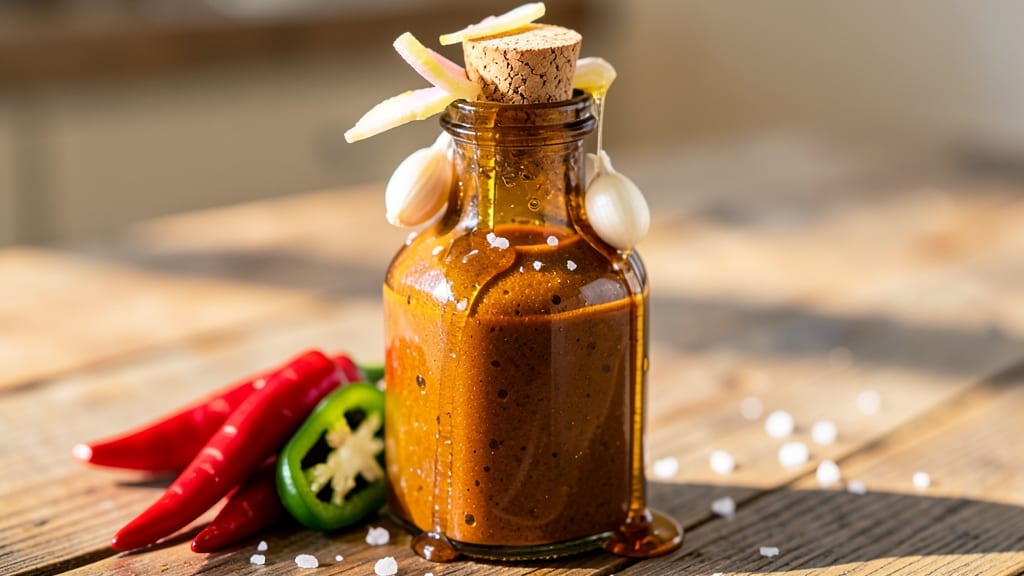
This amazing hot sauce recipe delivers the perfect balance of fiery heat and complex flavor that turns every bite into an experience. 🔥 The secret lies in fresh chili peppers—whether you use habaneros for extreme heat or jalapeños for a milder kick—and a tangy vinegar base that cuts through the spice while adding depth.
I developed this after years of experimenting with homemade hot sauces, and it’s become my go-to for adding serious flavor to everything from tacos to grilled meats.
The process is simple but precise: blend fresh peppers with vinegar, garlic, and a touch of salt, then let the mixture ferment for a few days to develop layers of flavor. No fancy equipment is needed—just a blender, a jar, and patience.
The fermentation step is what transforms this from a basic hot sauce into something truly special, with a depth you won’t find in store-bought versions. Plus, you can adjust the heat level to your taste by adding more or fewer peppers.
What you’ll end up with is a vibrant, aromatic hot sauce that’s bright, tangy, and packed with heat—without being overwhelming. The vinegar base keeps it shelf-stable for months in the fridge, so you can make a big batch and enjoy it all season long.
Whether you’re drizzling it over wings, mixing it into marinades, or using it as a dipping sauce, this recipe will elevate your meals in a way that’s impossible to ignore.
Ready to make it? Here’s everything you need to create your own batch of this fiery, flavorful hot sauce at home.
Ingredients for amazing hot sauce
Fresh peppers, vinegar, and a touch of sweetness—this is all you need for fiery, flavorful hot sauce.
| Ingredient | Amount | Notes |
|---|---|---|
| Fresh Habanero Peppers 🌶️ | 4 whole | Seeds removed for milder heat |
| Fresh Jalapeño Peppers 🌶️ | 4 whole | Seeds removed for milder heat |
| White Vinegar 💧 | 1 cup | Distilled preferred for clarity |
| Garlic Cloves 🧄 | 4 cloves | Peeled, roughly chopped |
| Fresh Ginger 🌿 | 1 tbsp | Grated, fresh preferred |
| Granulated Sugar 🍯 | 2 tbsp | Balances acidity |
| Sea Salt 🧂 | 1 tsp | Fine grain preferred |
| Extra-Virgin Olive Oil 🫒 | ¼ cup | For richness |
| Apple Cider Vinegar 🍎 | ½ cup | For depth of flavor |
| Water 💧 | ½ cup | For thinning consistency |
The peppers are everything. Habaneros bring the heat, while jalapeños add a bright, fresh kick—use more of one if you want to dial up or down the spice. Trader Joe's and Whole Foods usually have fresh peppers year-round, but if you're in a pinch, frozen works too (just thaw first). For the vinegar, distilled white vinegar keeps things clear, but apple cider vinegar adds complexity. Look for organic garlic and ginger at the store—they’ve got more punch. And if you’re feeling fancy, Penzeys spices have some killer hot sauce blends to inspire you.
No habaneros? Serrano peppers are a great substitute—they’ve got a similar heat level. Short on jalapeños? Poblano peppers (seeds removed) give a milder, earthier flavor. The sugar might seem odd, but it’s key—it balances the acidity of the vinegar and mellows the heat just enough. Coconut sugar, but regular granulated is fine. If you’re making a big batch, sterilize your jars first to keep things fresh longer. And if you’re worried about the heat, wear gloves when handling the peppers—trust me, you’ll thank me later.
This sauce gets better with time. Let it ferment in the fridge for at least 3 days) for maximum flavor. Once opened, it’ll keep for 3-4 months in the fridge—just give it a shake before each use. If it gets too thick, add a splash of water or vinegar. And if you make extra? Freeze in ice cube trays for single-serving portions. Perfect for gifting or sneaking into recipes later.
Why You'll Love This Recipe
- No-Chop Nightmare: I swear, this sauce only needs three things chopped—peppers, garlic, ginger—and I do it all at once while watching a show. The habanero’s heat mellows into something smooth, and the vinegar cuts through the funk without needing fancy tools.
- Heat with Depth: That first bite? Chef’s kiss. The habanero gives it a fruity punch, but the ginger and garlic add layers—like a spicy hug with a little sass. Honestly, I’ve tried store-bought, but this tastes like it was made with love (and a little sweat).
- Pantry Staple Magic: This stuff turns everything better—eggs, tacos, even grilled cheese. I keep a jar in the fridge because it’s my secret weapon for lazy nights or when company drops by. No fancy plating needed, just drizzle and go.
- Lasts All Week: A single batch stretches for ages—I’ve had it survive three weeks in my fridge, still packing heat. Plus, vinegar’s cheap, so you’re not breaking the bank. Between us, I’ve made this so often, I’ve memorized the burn level.
Step-by-step instructions for fiery chili hot sauce
Here's how to craft a balanced, vibrant hot sauce with layers of heat and depth.
🔥 Step 1: Sterilize and Prepare the Peppers
Start by thoroughly washing the 4 whole fresh habanero peppers and 4 whole fresh jalapeño peppers under cool running water. I like to use a vegetable brush to remove any dirt from the ridges. Then, carefully slice off the tops and remove all seeds and membranes using a small spoon - this reduces the heat while keeping the flavor.
Place the deseeded peppers in a clean glass jar and pour the 1 cup white vinegar over them. Seal the jar and let it sit for 10 minutes while you prepare the remaining ingredients. The vinegar will begin extracting color and flavor immediately, creating a vibrant base for your sauce.
👨🍳 Step 2: Blend the Chili-Vinegar Mixture
After the peppers have soaked, transfer them along with the vinegar to a high-speed blender. Add the 4 peeled garlic cloves and 1 tablespoon freshly grated ginger to the blender. I like to use a microplane for the ginger to get fine, even shreds that blend smoothly.
Blend everything on high for 30-45 seconds until you achieve a smooth, chunk-free purée. The mixture should be vibrant red-orange with no visible texture. If any large pieces remain, pulse briefly to break them down. Here's the thing - a completely smooth blend creates a professional-quality sauce without any gritty texture.
🍳 Step 3: Simmer the Base Ingredients
Transfer the blended mixture to a medium saucepan and add the 0.5 cup apple cider vinegar, 0.5 cup water, 2 tablespoons granulated sugar, and 1 teaspoon sea salt. Stir everything together until the sugar and salt dissolve completely. Here's where it gets interesting - the sugar helps balance the acidity while the apple cider vinegar adds depth.
Place the saucepan over medium-high heat and bring to a gentle boil. Once boiling, reduce heat to medium-low and let it simmer uncovered for 15-20 minutes, stirring occasionally. You'll notice the mixture reducing slightly and developing a richer color. This simmering step is crucial for developing the sauce's complex flavor profile.
🥘 Step 4: Incorporate the Olive Oil
After the sauce has simmered, remove it from heat and let it cool for 5 minutes. This cooling period prevents the oil from separating. Then, slowly drizzle in the 0.25 cup extra-virgin olive oil while whisking constantly. The oil should emulsify completely, creating a silky texture.
For best results, I like to use a fine-mesh strainer to remove any remaining solids if you prefer an ultra-smooth sauce. Transfer the hot sauce to clean glass bottles or jars, leaving about ½ inch of headspace at the top. The oil will rise to the surface as it cools, creating a protective layer that helps preserve your sauce.
⏰ Step 5: Rest and Age for Maximum Flavor
Let the hot sauce cool completely to room temperature, then refrigerate for at least 24 hours before using. This resting period allows all the flavors to meld together and the heat to mellow slightly. I know it's tempting to use it immediately, but patience here makes a huge difference in the final result.
The sauce will continue to improve over time, developing even more depth of flavor. It should keep in the refrigerator for up to 3 months, with the flavor actually improving as it ages. The oil layer on top is completely normal and indicates a properly emulsified sauce - just give it a good shake before each use.
Pro Tips For Making Amazing Hot Sauce
- REMOVE PEPPER SEEDS AND MEMBRANES: I learned this the hard way—leaving them in turns your hot sauce bitter and muddy. For habaneros, slice open the peppers and scrape out the seeds and white veins with a spoon. Jalapeños are milder, but still give them the same treatment if you want clean, bright heat.
- SIMMER LOW AND SLOW: High heat burns the peppers and makes the sauce taste harsh. Once your peppers, garlic, and ginger are blended, keep the heat at a gentle simmer—just enough to see tiny bubbles. This lets the flavors meld without turning the vinegar sharp or the peppers bitter.
- STRAIN THE GINGER: Fresh ginger adds depth, but its fibrous texture can make the sauce gritty. After cooking, press the ginger through a fine-mesh strainer or cheesecloth to remove all chunks. Trust me, your future self will notice the difference when you’re not chewing on stringy bits.
- ADD VINEGAR GRADUALLY: Dumping all the vinegar at once can overwhelm the peppers and garlic. Start with half, taste, then add the rest slowly while simmering. This lets you balance the heat and acidity—if it’s too sharp, you can fix it; if it’s too mild, you’re stuck.
Wine and beer pairings for these flavors
Bright Whites Pair
A crisp Sauvignon Blanc from New Zealand or Loire Valley is my go-to pairing—its bright acidity and citrus notes mirror the hot sauce's tang while keeping the palate fresh. Look for wines with 12-13% ABV like Cloudy Bay or Oyster Bay.
The zesty grapefruit and green apple flavors cut through the heat beautifully, creating a refreshing contrast. 🍷
Malbec for Bold Heat
If you prefer red wine, a medium-bodied Argentinian Malbec stands up to the spice without overpowering it. I love Catena Zapata or Trapiche—their dark fruit and subtle oak complement the sauce's smoky depth.
The wine's 13.5-14% ABV balances the heat while adding a touch of earthiness that enhances the chili flavors.
Craft Beer Pairings
A Belgian witbier like Hoegaarden or Stella Artois is perfect—its coriander and orange peel notes play off the sauce's citrusy vinegar base. For a hoppier option, try an American IPA (like Deschutes Mirror Pond) to cleanse the palate after each spicy bite.
The effervescence helps cool the heat while the bitterness provides balance. 🍺
Cocktail Enhancer
Use your hot sauce to spice up cocktails! A dash in a Margarita (with reposado tequila) adds a fiery twist, while a splash in a Whiskey Sour (made with bourbon) creates a smoky-sweet contrast.
For non-alcoholic drinks, mix a teaspoon into ginger beer or sparkling limeade for a zesty kick.
Cheese Board Balance
Pair your hot sauce with a cheese board featuring aged cheddar, blue cheese, and creamy goat cheese. The sharpness of the cheddar and the creaminess of the goat cheese help tame the heat, while the funk of the blue cheese adds complexity.
Serve with crackers or crusty bread to soak up any extra sauce. 🧀
Spicy Grilled Meats
Drizzle your hot sauce over grilled chicken thighs, ribeye steak, or pork chops for an instant flavor boost. The sauce's acidity tenderizes the meat while the heat adds excitement.
For extra depth, marinate the meat in the sauce for 30 minutes before grilling. The result? Juicy, flavorful meat with a perfect spicy finish. 🔥
Nutrition facts
Frequently asked questions
Can I adjust the heat level in this recipe?
For milder heat, reduce the number of habanero peppers to 2 or replace them with serrano peppers. Want more fire? Add 1-2 extra habaneros or include some ghost pepper seeds (start with a pinch). Always taste as you go—vinegar helps balance the heat, but you can add more sugar if needed to mellow it further.
Why does my hot sauce separate after adding oil?
This happens when the sauce cools too quickly or isn't emulsified properly. Always let the sauce cool for 5 minutes before adding oil, and whisk vigorously while drizzling. For extra stability, add 1/2 teaspoon xanthan gum when simmering. Once separated, simply shake the bottle before use—the flavors will still be great!
How long should I ferment the sauce for best results?
For maximum depth, ferment for 3-7 days in the fridge. Start tasting after 3 days—the flavors develop gradually, with day 5-7 offering the most complex balance. If you're short on time, 24 hours will still give you a great sauce, though it won't be as refined. The longer it ferments, the smoother and more mellow the heat becomes.
Can I make this hot sauce without a blender?
Yes! Use a food processor or even a mortar and pestle for small batches. For a rustic texture, finely chop the peppers and garlic by hand, then strain through a fine-mesh sieve to remove skins. The flavor will be slightly less smooth but still delicious. Just simmer the strained mixture longer (25 minutes) to compensate for the extra texture.
What are the best ways to use up extra hot sauce?
Freeze in ice cube trays for single-serving portions—perfect for gifting or sneaking into recipes later. Mix into marinades, drizzle over tacos, or blend into mayo for spicy sandwich spreads. For cooking, add a splash to soups, stews, or braising liquids. The sauce also makes a fantastic dipping sauce for fries, wings, or spring rolls!