
Sauces & Condiments
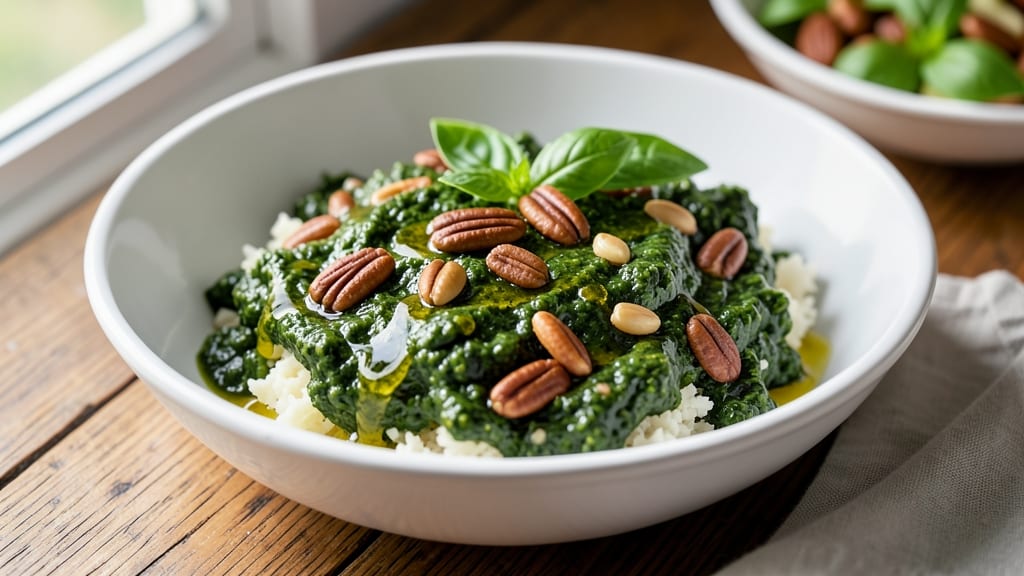
Alton Brown's pesto sauce recipe transforms simple ingredients into a vibrant, nutty masterpiece that elevates every dish it touches. The secret lies in blending fresh basil, toasted nuts, and sharp parmesan with just the right amount of olive oil—no food processor required.
I’ve perfected this version to deliver that signature Alton Brown balance of brightness and richness, with a texture that’s smooth yet still packed with fresh herb flavor.
What sets this pesto apart is the careful toasting of the nuts, which deepens their flavor without overpowering the basil. The sauce comes together in minutes, yet tastes like it’s been simmering for hours.
It’s versatile enough to dress pasta, sandwiches, or even roasted vegetables, but the real magic happens when you let it sit for 15 minutes before using—allowing the flavors to meld into perfect harmony.
You’ll end up with a sauce that’s vibrant green, richly aromatic, and just tangy enough to cut through creamy dishes. The key is using high-quality olive oil and freshly grated cheese, which makes all the difference. This isn’t just pesto—it’s a flavor upgrade that turns ordinary meals into something extraordinary.
Store it in an airtight container in the refrigerator for up to a week, or freeze for longer shelf life. The possibilities are endless—drizzle it over grilled chicken, toss it with warm pasta, or use it as a bold dip. Let’s make this sauce the star of your next dish.
Ingredients for alton brown pesto sauce
Eight simple ingredients create Alton Brown's signature pesto—nutty, fresh, and packed with vibrant flavor.
| Ingredient | Amount | Notes |
|---|---|---|
| Fresh Basil Leaves 🌿 | 2 ½ cups | Packed, stems removed for vibrant flavor |
| Toasted Pine Nuts 🥜 | ½ cup | Lightly browned for nutty depth |
| Garlic Cloves 🧄 | 3 cloves | Peeled, roughly chopped for aromatic punch |
| Freshly Grated Parmesan Cheese 🧀 | ¾ cup | High-quality, freshly grated from block |
| Extra-Virgin Olive Oil 🫒 | ¾ cup | High-quality, fruity variety preferred |
| Fresh Lemon Juice 🍋 | 1 tbsp | Brightens the sauce beautifully |
| Fine Sea Salt 🧂 | ½ tsp | Enhances all flavors perfectly |
| Freshly Ground Black Pepper 🌶️ | ¼ tsp | Adds subtle warmth to finish |
The basil is where the magic happens—look for bright green leaves at the grocery store, not wilted ones. Whole Foods or local farmers markets often have the freshest, most flavorful basil. Toasting the pine nuts in a dry pan until golden (about 3-4 minutes) deepens their flavor without burning. Costco or Trader Joe's usually carry pre-toasted nuts, but toasting fresh makes all the difference. For the Parmesan, grate it yourself—pre-grated cheese contains anti-caking agents that ruin the texture. I always buy a wedge and keep it in the freezer for future pesto batches.
No pine nuts? Walnuts or cashews work beautifully—they just need a few extra minutes of toasting. Short on basil? Swap in fresh parsley or arugula for half the amount, though the flavor will be slightly different. The lemon juice can be bottled, but freshly squeezed is always better. If you're making this ahead, use a squeeze bottle to store it—it keeps perfectly for up to a week in the fridge. The olive oil matters here too; avoid cheap brands—you'll taste the difference in every bite.
This pesto stays fresh for up to 1 week in an airtight container in the fridge, but it's even better the next day as the flavors meld. For longer storage, freeze in ice cube trays—perfect for single-serving portions. The sauce thickens as it sits, so add a splash of olive oil before using if it seems too thick. I always make a double batch—one for immediate use and one to freeze for future pasta nights. The key to great pesto? Don't rush the toasting or the grating—those small steps make all the difference.
Why You'll Love This Recipe
- Five-Ingredient Magic: I swear by this combo—no weird pantry staples, just basil, pine nuts, garlic, Parmesan, and olive oil. That’s it. The toasted nuts alone make it feel special, but the garlic and Parmesan punch? Pure flavor efficiency.
- Pasta Party in Minutes: Drizzle it over fresh linguine and boom—dinner’s done. But honestly? I use it on everything—grilled chicken, roasted veggies, even scrambled eggs. The richness cuts through anything, and it’s always the star.
- No-Waste Pantry Hero: That jar of olive oil you’ve had for months? This recipe uses it up. Same with the Parmesan rind you’ve been saving. Between us, I’ve turned $5 worth of leftovers into a sauce that feels like a splurge.
- Weeknight Survival Tool: I make a big batch on Sundays and stash it in the fridge. Toss it on salads midweek or freeze it for when I’m too tired to think. The pine nuts stay crispy even after a few days—proof it’s worth the effort.
Step-by-step instructions for Alton Brown's pesto sauce
This vibrant pesto comes together faster than you think—just 10 minutes of prep and blending.
Toast the Pine Nuts for Nutty Depth
Heat a dry skillet over medium-low heat and add the 0.5 cup toasted pine nuts. Stir constantly for 3-4 minutes until they turn a light golden brown and release their nutty aroma. Watch carefully—they burn quickly, so keep the heat low and don't walk away.
Here's the thing—proper toasting enhances their flavor dramatically. You'll know they're ready when they smell rich and toasty. Immediately transfer them to a small bowl to cool while you prep the rest. Cooling prevents them from cooking further when you blend everything together later.
Blend the Fresh Basil and Garlic
In a food processor fitted with the metal blade, add the 2.5 cups fresh basil leaves and 3 cloves garlic cloves. Pulse 3-4 times until the basil is finely chopped but not completely pureed. You want visible bits of basil to maintain texture and color in your final sauce.
Don't over-blend here—this is where the sauce gets its signature vibrant green color and fresh basil flavor. If you go too far, you'll end up with a muddy, unappetizing green paste. Pulse just until everything is evenly distributed and you see small basil pieces throughout.
Add Cheese and Seasonings
With the food processor running, slowly drizzle in the 0.75 cup extra-virgin olive oil while scraping down the sides with a spatula. This ensures even distribution. Add the 0.75 cup freshly grated Parmesan cheese, 1 tbsp fresh lemon juice, 0.5 tsp fine sea salt, and 0.25 tsp freshly ground black pepper.
Pulse 4-5 times until everything is completely incorporated. Here's where the magic happens—the cheese melts slightly from the friction, creating that perfect creamy texture. The lemon juice brightens everything up while the salt and pepper balance the flavors. Taste at this point—you might want to adjust seasoning slightly, but we'll refine it in the next step.
Incorporate Toasted Pine Nuts and Adjust Consistency
Add the cooled toasted pine nuts to the processor and pulse 2-3 more times just to distribute them evenly. This is where you'll notice the texture—it should be thick but pourable. If it's too thick, add 1-2 tablespoons water at a time until you reach a smooth, spreadable consistency.
I like to taste again now to check the balance. The pine nuts should add crunch and nutty richness, while the basil remains vibrant. If it needs more brightness, add another teaspoon of lemon juice. For extra richness, stir in a bit more olive oil. The sauce should coat the back of a spoon but still be spreadable—this is the perfect consistency for tossing with pasta or using as a dip.
Pro Tips For Making Alton Brown Pesto Sauce
- TOAST NUTS LOW: I learned this the hard way—cranking the heat to toast pine nuts turns them into bitter charcoal faster than you can blink. Use a dry skillet over medium-low, stirring constantly until they’re just golden (about 3-4 minutes). If you smell nutty aroma before they darken, you’re golden—literally.
- GRATE PARMESAN FRESH: Pre-shredded Parmesan is a flavor crime in pesto. Use a microplane or fine grater on freshly chilled cheese—it yields more and packs way more umami. Skip the pre-shredded stuff unless you’re okay with a sauce that tastes like it’s been sitting in a bag for weeks.
- PULSE DON’T BLEND: Alton’s recipe calls for a food processor, but don’t turn it into a smoothie. Pulse the basil, garlic, and nuts in short bursts (3-4 seconds at a time) to keep texture. Over-blending turns pesto into green paste—where’s the fun in that?
- SALT THE BASIL: Yes, even basil needs seasoning. Sprinkle a pinch of flaky salt over the leaves before pulsing—it brightens their flavor and balances the richness of the oil. I was skeptical until I tried it, and now I can’t imagine making pesto without it.
Perfect pairings for this recipe
Pasta Perfection
This pesto transforms al dente pasta into a restaurant-worthy dish. Toss 8 ounces of spaghetti with 2 tablespoons of this pesto and finish with a sprinkle of freshly grated pecorino.
The nutty depth pairs beautifully with cherry tomatoes halved and lightly sautéed in olive oil. For extra flair, add crispy pancetta or chopped sun-dried tomatoes—both enhance the basil's brightness. 🌿
Sandwich Upgrade
Spread 1-2 tablespoons of pesto on ciabatta or sourdough bread as a bold base. Layer with grilled chicken, roasted red peppers, and mozzarella cheese for a Caprese-inspired sandwich.
The lemon in the pesto cuts through the richness, while the pine nuts add satisfying texture. Serve with a side of arugula salad for a complete meal.
Roasted Veggie Drizzle
Toss zucchini, bell peppers, and asparagus with 2 tablespoons olive oil, salt, and pepper before roasting at 425°F for 20 minutes. Finish with a generous drizzle of pesto and a sprinkle of toasted pine nuts.
The sauce clings beautifully to the charred vegetables, adding a fresh, herby contrast. Perfect for a warm-weather side dish!
Dip Extraordinaire
Serve this pesto as a dip with crudités like carrot sticks, cucumber slices, and cherry tomatoes. The creamy texture and vibrant flavor make it irresistible. For a protein boost, pair with warm pita bread or grilled shrimp.
I love setting out a small bowl of pesto alongside marinated olives and fresh mozzarella balls for a Mediterranean-inspired appetizer spread.
Grilled Meats
Brush grilled chicken, salmon, or steak with pesto during the last 2 minutes of cooking for a flavorful finish. The sauce caramelizes slightly from the heat, creating a delicious crust.
For salmon, add a squeeze of lemon after grilling to complement the pesto's brightness. This works especially well with herb-marinated meats or spiced rubs.
Freezer-Friendly Flexibility
Store pesto in ice cube trays for single-serving portions—perfect for future pasta nights or quick dips. Thaw in the fridge overnight, then stir in 1-2 teaspoons of olive oil to restore its smooth consistency.
I keep a batch frozen at all times for spontaneous meals. The sauce holds up beautifully, making it a pantry staple that never disappoints. ✨
Nutrition facts
Frequently asked questions
Can I substitute walnuts or cashews for pine nuts?
Walnuts or cashews work perfectly—just toast them 5-7 minutes until fragrant and golden. Use the same 0.5 cup measurement, but toast longer since they're larger. Walnuts add a slightly earthier flavor, while cashews bring extra creaminess.
Why does my pesto turn brown or lose color?
Over-processing basil releases chlorophyll, making it turn brown. Pulse only 3-4 times in Step 2 to keep it vibrant. For extra green, add 1 tsp fresh lemon juice—the acidity preserves color. Also, use freshly grated Parmesan (pre-grated cheese contains anti-caking agents that dull the green).
How do I fix pesto that's too thick or too thin?
For thick pesto, stir in 1 tbsp water or olive oil until smooth. Too thin? Let it sit 15 minutes in the fridge—the oils will separate slightly, making it easier to thicken. Pro tip: Store in a squeeze bottle to control consistency when using.
Can I make this pesto without a food processor?
Yes! Use a mortar and pestle for a rustic texture. Start with basil and garlic, then gradually add cheese, nuts, and oil while crushing. For a smoother version, blend with an immersion blender. The texture will be slightly chunkier but equally flavorful.
What's the best way to store leftover pesto?
Press plastic wrap directly onto the sauce to prevent oxidation, then store in an airtight container. Keeps 1 week in the fridge or 3 months frozen in ice cube trays. For frozen pesto, thaw overnight in the fridge and stir in 1 tsp olive oil to restore creaminess.