
Sauces & Condiments
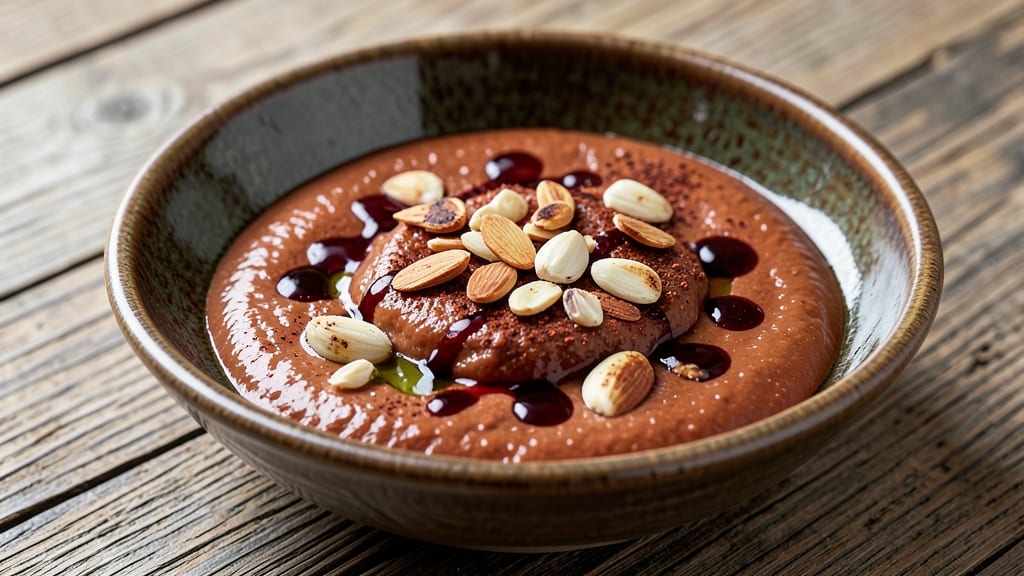
Almond romesco sauce transforms ordinary meals into flavorful experiences with its nutty depth and smoky paprika heat. This Spanish-inspired sauce blends roasted red peppers, garlic, and toasted almonds into a velvety paste that elevates grilled meats, seafood, or crusty bread. The secret lies in slow-roasting the vegetables to concentrate their natural sweetness, then blending with olive oil and vinegar for balance.
What sets this version apart is the almond base, which adds a rich, buttery texture and subtle crunch. Unlike traditional recipes that include anchovies, this version stays vegan-friendly while delivering the same complex, layered flavor.
The sauce can be made smooth for dipping or left slightly chunky for texture—both work beautifully with charred vegetables or as a marinade.
Storage is simple: keep it in an airtight container in the fridge for up to 10 days or freeze for 3 months. The flavors deepen over time, making it perfect for meal prep. A drizzle over grilled shrimp or a spoonful with roasted potatoes turns simple dishes into restaurant-worthy creations.
For extra depth, toast the almonds until golden and roast the red peppers until blistered. The key is patience—letting the sauce sit for 30 minutes before serving allows the flavors to meld perfectly. This is the kind of sauce that makes every bite unforgettable.
Ingredients for almond romesco sauce
Nine essential ingredients create this Spanish-inspired sauce with nutty depth and smoky warmth.
| Ingredient | Amount | Notes |
|---|---|---|
| Roasted Red Peppers 🍅 | 1 ½ cups | Jarred or homemade, chopped |
| Toasted Almonds 🥜 | 1 cup | Raw or roasted, skin-on preferred |
| Garlic Cloves 🧄 | 4 cloves | Peeled, roasted for depth |
| Smoked Paprika 🌶️ | 2 tbsp | Sweet or hot variety |
| Extra-Virgin Olive Oil 🫒 | ¾ cup | High-quality, fruity |
| Red Wine Vinegar 🍷 | 2 tbsp | For brightness and balance |
| Salt 🧂 | 1 tsp | Diamond Crystal preferred |
| Ground Black Pepper 🌶️ | ½ tsp | Freshly ground for heat |
| Dried Oregano 🍃 | 1 tsp | Mexican oregano preferred |
| Cumin Seeds 🌿 | ½ tsp | Toasted for aroma |
The almonds and roasted red peppers are non-negotiable for that signature buttery texture and concentrated sweetness. Trader Joe's carries excellent jarred roasted red peppers, but homemade is worth the effort—roast until blistered for maximum flavor. For almonds, skin-on varieties add subtle bitterness and better texture. Toast them in a dry pan until golden—about 5 minutes—then let cool before blending. The garlic should be roasted too: wrap the whole cloves in foil with a drizzle of olive oil, roast at 400°F until soft. Smoked paprika is key here; Penzeys or Goya brands deliver consistent quality.
No smoked paprika? Substitute with a mix of regular paprika and a pinch of liquid smoke—about 1/4 teaspoon of the latter. Running out of almonds? Cashews or walnuts work in a pinch, though texture will differ slightly. For extra depth, add 1/2 teaspoon of ground coriander or a pinch of cayenne for heat. The vinegar can be swapped for lemon juice if you prefer a brighter tang. And if you're short on time, pre-toasted almonds from the bulk section save prep work without sacrificing flavor.
This sauce keeps beautifully—10 days in the fridge or 3 months frozen. For storage, transfer to an airtight container and press a layer of olive oil on top to preserve freshness. The flavors actually improve with time, so make a big batch. When reheating, warm gently on the stove or microwave in 20-second bursts. A drizzle of this sauce over grilled vegetables or a spoonful with roasted potatoes transforms simple meals into restaurant-quality dishes. Leftovers? Use within a week for peak flavor.
Why You'll Love This Recipe
- No-Fuss Pantry Magic: I swear by this sauce because it thrives on what I already have. Toasted almonds from last week’s snack stash? Perfect. Jarred roasted peppers from the discount bin? Even better. Honestly, the only thing I need to buy fresh is garlic—and honestly, I always have that.
- Smoky Nutty Obsession: That first bite of crispy almonds blending with smoky paprika? It’s like a flavor hug. The roasted peppers add sweetness, while the garlic ties it all together—rich, nutty, and just a little bit addictive. Between us, I’ve caught myself dipping bread just to taste it.
- Weeknight to Dinner Party: This sauce works everywhere. Slather it on grilled fish for a fancy-feeling meal, toss it with roasted veggies for a no-stress weeknight, or drizzle it over eggs for a weekend brunch that’ll impress. (Yes, even on a Tuesday night.)
- Leftovers That Don’t Let You Down: Make a double batch—it keeps for weeks in the fridge, and the flavor only deepens. I’ve used it to revive stale bread, bulk up a simple soup, or even as a marinade. Not the prettiest, but the taste makes up for it every time.
Step-by-step instructions for almond romesco sauce
This method builds deep flavor through roasting and slow blending—key to authentic romesco texture.
Toast the Almonds and Cumin Seeds
Heat a dry skillet over medium heat. Add the 1 cup toasted almonds and toast for 3-4 minutes until golden brown and fragrant. Watch carefully—they burn quickly. Immediately transfer to a plate to cool.
In the same skillet, toast the 0.5 tsp cumin seeds for 30 seconds until they darken slightly and release their aroma. This step unlocks their earthy depth. Let them cool completely before proceeding—hot spices can scorch the sauce.
Roast Garlic and Red Peppers
Preheat oven to 400°F. Place the 4 cloves garlic cloves and 1.5 cups roasted red peppers on a baking sheet. Roast for 15-20 minutes until the garlic is golden and the peppers are slightly charred. This caramelization creates the sauce's signature sweetness.
Let everything cool completely before processing. Warm ingredients release oils that can make the sauce too thin. I like to spread the peppers on a wire rack while cooling—it prevents steam buildup and keeps them crisp.
Blend the Base Ingredients
In a food processor, combine the cooled almonds, garlic, roasted red peppers, 2 tbsp smoked paprika, 1 tsp dried oregano, 1 tsp salt, and 0.5 tsp ground black pepper. Pulse 5-6 times until you achieve a coarse, chunky texture—you want visible almond pieces and pepper bits for authentic texture.
With the processor running, slowly drizzle in the 0.75 cup extra-virgin olive oil through the feed tube. This gradual addition prevents the sauce from becoming too thick. The oil should be fully incorporated but still leave visible flecks of almond.
Finish with Vinegar and Adjust Seasoning
Transfer the mixture to a bowl and stir in the 2 tbsp red wine vinegar. This brightens the sauce and balances the richness. Taste immediately—romesco should have a perfect harmony of smoky, nutty, and slightly tangy flavors. Adjust seasoning if needed, adding more salt or vinegar in small increments.
For the smoothest texture, blend again briefly if you prefer a finer consistency. However, I recommend keeping some texture—this is what makes romesco special. The sauce will thicken as it sits, so don't worry if it looks slightly loose right after blending.
Pro Tips For Making Almond Romesco Sauce
- ROAST PEPPERS UNTIL BLACKENED: I learned this the hard way—skip the "lightly charred" look and aim for deep black spots on the peppers. That’s where the smoky depth hides, and it makes the sauce taste like it’s been simmering for hours instead of minutes.
- TOAST ALMONDS LOW AND SLOW: Ditch the high-heat blitz in a pan—toss whole almonds on a dry baking sheet at 300°F (150°C) for 8-10 minutes until golden and fragrant. They’ll stay crisp and nutty instead of burning into bitter bits that ruin the sauce.
- BLEND IN STAGES: Don’t dump everything into the blender at once or you’ll end up with a greasy paste. First blend the roasted peppers and garlic with just 2 tablespoons of oil, then add the toasted almonds and paprika in pulses, scraping down as needed. This keeps the texture silky, not gluey.
- SAVE THE SKINS: After blending, strain the sauce through a fine-mesh sieve to remove almond skins and pepper seeds—yes, it’s extra work, but those skins turn the sauce gritty and dull. Press with a spoon to extract every last drop of flavor.
Essential equipment for this recipe
Food Processor Essentials
A high-quality food processor is non-negotiable for achieving that perfect romesco texture. I swear by the Cuisinart DLC-8SC with its 8-cup capacity—it handles the almonds, roasted peppers, and garlic without overheating.
The sharp stainless steel blades create a consistent, chunky texture that’s essential for authentic romesco. If you’re on a budget, the Ninja FP101 delivers similar results for half the price. 💫
Skillet for Toasting
You’ll need a 10-inch cast-iron skillet for toasting the almonds and cumin seeds—cast iron retains heat evenly and prevents burning. I use my Lodge Pre-Seasoned skillet because it develops a natural nonstick surface over time.
For nonstick alternatives, a well-seasoned stainless steel pan works too. Just keep the heat at medium to avoid scorching the almonds in under 3-4 minutes.
Baking Sheet and Rack
A half-sheet baking pan (18x13 inches) is perfect for roasting the garlic and red peppers at 400°F until blistered. For faster cooling, I use a wire cooling rack placed over a baking sheet—this prevents steam buildup and keeps the peppers slightly crisp.
If you don’t have a rack, spread the peppers on a clean kitchen towel instead. Pro tip: Line the pan with parchment paper for easy cleanup.
Measuring Tools
Precision matters with romesco, so invest in a stainless steel measuring spoons set (like OXO Good Grips) for accurate spices and vinegar. A digital kitchen scale is ideal for weighing toasted almonds—aim for 120 grams (about 1 cup).
For vinegar and olive oil, a glass measuring cup with markings ensures consistency. Don’t skimp here; even small variations can throw off the balance of flavors. ✨
Storage Containers
For fridge storage, use glass airtight containers with screw-top lids (like Le Parfait) to preserve freshness for up to 10 days. If freezing, opt for silicone molds or freezer-safe jars—leave 1-inch headspace to prevent expansion cracks.
I also recommend pressing a layer of extra-virgin olive oil on top before sealing to lock in moisture and prevent oxidation. Label containers with the date for easy tracking.
Nutrition facts
Frequently asked questions
Can I make this almond romesco sauce without a food processor?
Yes! For a chunkier texture, use a high-powered blender or mortar and pestle. Pulse the almonds, roasted peppers, and garlic in short bursts, leaving some texture. If using a blender, add the olive oil last and blend just until combined. For a truly rustic version, crush the almonds with a rolling pin first, then mix everything by hand with a wooden spoon.
How do I adjust the heat level in this sauce?
For milder heat, reduce the smoked paprika to 1 tbsp and omit the cayenne. For extra spice, add ½ tsp cayenne pepper or a pinch of red pepper flakes. Remember, roasted red peppers already add natural sweetness—balance is key. Taste as you go and adjust gradually.
What's the best way to use leftover romesco sauce?
Leftover sauce works beautifully as a marinade for grilled chicken or fish, a dip for crusty bread, or a topping for roasted vegetables. It also makes an incredible sandwich spread—try it on avocado toast or grilled cheese. For extra richness, stir in a spoonful of Greek yogurt or crème fraîche before serving.
Why does my romesco sauce look too thin?
This happens when the sauce hasn't rested long enough. Let it sit for 30 minutes—the starches from the almonds and peppers will thicken naturally. If it's still too loose, simmer gently for 5-10 minutes to reduce. For immediate results, add 1 tsp cornstarch mixed with 1 tbsp water and stir well. The sauce should coat the back of a spoon.
Can I substitute jarred roasted peppers with fresh?
Fresh red peppers work but require extra effort. Roast them whole at 400°F for 45-60 minutes until charred, then peel, seed, and chop. For convenience, jarred peppers are ideal—they're already concentrated in flavor. If using fresh, reduce the smoked paprika to 1.5 tbsp since fresh peppers have less natural depth.