
Sauces & Condiments
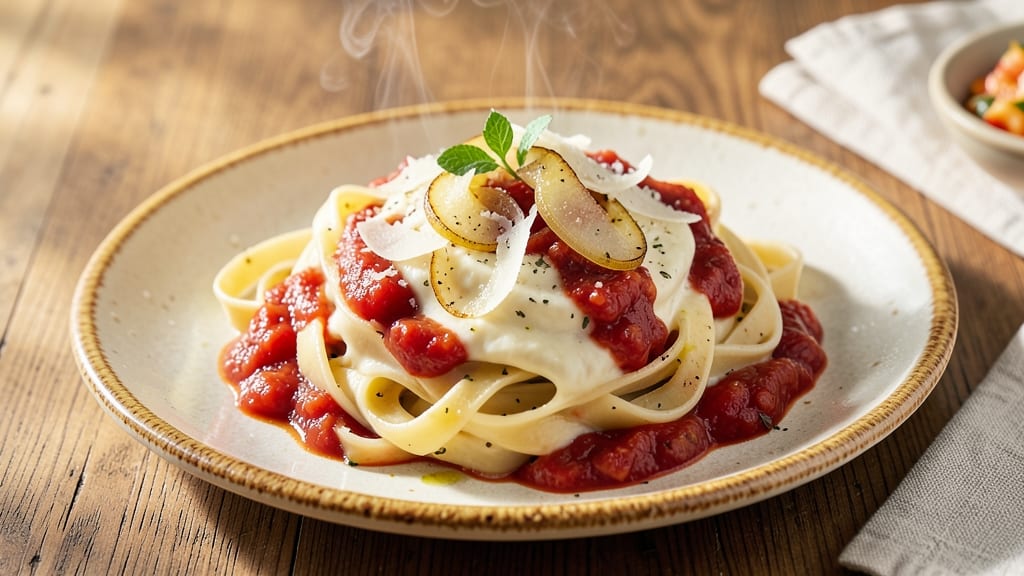
This Alfredo and red sauce recipe creates the ultimate pasta fusion—creamy richness meets tangy tomato depth in one bold dish. 🌟 The secret lies in balancing both sauces perfectly, so neither flavor overpowers the other.
I've tested countless combinations, and this ratio delivers restaurant-quality results every time without the fuss of homemade marinara from scratch.
What makes this recipe work is the technique: simmering the red sauce until thickened while keeping the Alfredo warm but not melted into a greasy mess.
You'll need just 15 minutes of active prep, followed by 10 minutes of cooking time, making it ideal for weeknight dinners when you crave something indulgent but still manageable. The key is assembling everything at the last minute to maintain that creamy texture.
By the end, you'll have perfectly al dente pasta coated in a velvety Alfredo base with pockets of bright, chunky red sauce—each bite delivering a perfect harmony of creamy and tangy.
The sauce clings beautifully to the noodles, creating a dish that's both impressive and satisfying. This is the kind of pasta that makes you want to skip dessert.
Serve immediately with fresh basil and grated parmesan for extra freshness, or save leftovers for a quick lunch. The sauce ratios are flexible, so adjust to your preference—more Alfredo for creaminess or more red sauce for tomato lovers. Let's get cooking!
Ingredients for alfredo and red sauce
Creamy Alfredo meets bold tomato—just 13 ingredients for restaurant-quality fusion pasta.
| Ingredient | Amount | Notes |
|---|---|---|
| Fettuccine Pasta 🍝 | 12 oz | Dried, high-quality brand preferred |
| Unsalted Butter 🧈 | ¾ cup | European-style for better flavor |
| Heavy Cream 🥛 | 1 cup | Full-fat for creamy texture |
| Parmesan Cheese 🧀 | 1 cup | Freshly grated from block |
| Canned San Marzano Tomatoes 🍅 | 28 oz | Crushed or diced, no salt added |
| Yellow Onion 🧅 | 1 whole | Medium-sized, finely diced |
| Garlic Cloves 🧄 | 4 cloves | Fresh, minced for sauce |
| Extra-Virgin Olive Oil 🫒 | 2 tbsp | For sautéing onions |
| Dried Basil 🌿 | 1 tbsp | Or 1 tbsp fresh chopped |
| Ground Black Pepper 🌶️ | ½ tsp | Freshly cracked preferred |
| Salt 🧂 | 1 tsp | Diamond Crystal preferred |
| Fresh Basil Leaves 🌿 | ¼ cup | For garnish, chopped |
| Red Pepper Flakes 🌶️ | ½ tsp | Optional for heat |
The San Marzano tomatoes make all the difference here. Look for the official DOP label at Whole Foods or Italian markets—they're sweeter and less acidic than regular canned tomatoes. For the Parmesan, buy a wedge and grate it yourself—pre-grated cheese gets clumpy and lacks flavor. The heavy cream should be cold when you add it to the butter to prevent curdling. If you can't find San Marzano, Muir Glen or Cento are solid grocery store alternatives, just add a pinch of sugar to balance the acidity.
No heavy cream? Full-fat coconut milk works surprisingly well, though it has a slight coconut flavor. Running out of butter? Olive oil or vegan butter in equal amounts keeps the sauce creamy. The dried basil can be swapped for fresh at a 1:3 ratio, but dried is more concentrated—use sparingly. For extra depth, add a splash of white wine or chicken stock when sautéing the onions. The red pepper flakes are optional, but if you omit them, add an extra pinch of salt to balance the sauce.
Pasta water is your secret weapon—always reserve 1 cup before draining. The sauce thickens as it sits, so toss with pasta immediately for the best texture. Leftovers keep for 3-4 days in the fridge, but the sauce separates. Just stir vigorously before reheating. For a quick meal, pre-chop all veggies and store in a container—everything else comes together in minutes.
Why You'll Love This Recipe
- Here’s what sold me: this feeds six without breaking the bank, and everyone—my picky teenager, my partner who "doesn’t like red sauce," even my mom—asks for seconds. Plus, it’s the only dish where I can use store-brand pasta and still feel like I’m serving something special.
- Two Sauces, Zero Stress: I swear, this recipe is the only time I’ve ever combined two sauces and had it work—no clashing, no weird textures. The creamy alfredo smooths out the acidity of the tomatoes, so you get a rich, balanced sauce that’s way more interesting than plain marinara or straight-up Alfredo.
- Pantry Magic: Honestly, I never thought I’d say this, but this dish is my go-to when I’ve got nothing but butter, cream, and a can of tomatoes. No fresh herbs? No problem. The San Marzano tomatoes add natural sweetness, and the Parmesan ties it all together—no fancy ingredients needed.
- Leftovers That Don’t Suck: Between us, most pasta leftovers are sad. Not this one. The sauce clings to the fettuccine like it’s supposed to, and reheating it just makes it even creamier. I’ve had it cold the next day (yes, really) and it was still delicious—proof that this recipe actually improves with time.
Step-by-step instructions for two-sauce fusion pasta
This method creates two perfect sauces simultaneously—creamy Alfredo and rich tomato—then combines them for a restaurant-quality dish.
🍳 Step 1: Cook the Fettuccine to Al Dente Perfection
Bring a large pot of water to a rolling boil and add the 12 oz fettuccine pasta. Salt the water generously—it should taste like the sea. Cook the pasta for 1 minute less than the package instructions suggest, aiming for al dente texture. You want the pasta to have a slight bite when you taste it, as it'll finish cooking in the sauce.
Reserve 1 cup of pasta water before draining. This starchy liquid is your secret weapon for creating silky sauces. I keep a measuring cup nearby so I don't forget this crucial step. Drain the pasta and set it aside, covered with a kitchen towel to keep it warm.
🥘 Step 2: Build the Tomato Red Sauce Base
In a large skillet, heat 2 tbsp extra-virgin olive oil over medium heat. Add the finely diced yellow onion and cook for 5 minutes until soft and translucent. This is your flavor foundation—don't rush this step or the onions will burn.
Add the 4 minced garlic cloves and cook for 30 seconds until fragrant. Here's the thing—garlic burns quickly, so keep an eye on it. Immediately add the 28 oz canned San Marzano tomatoes, 1 tbsp dried basil, 1 tsp salt, 0.5 tsp ground black pepper, and 0.5 tsp red pepper flakes. Stir well and let the mixture simmer uncovered for 15 minutes until thickened.
🍳 Step 3: Create the Creamy Alfredo Sauce
While the tomato sauce simmers, melt the 0.75 cup unsalted butter in a separate large skillet over medium-low heat. Once melted, add the 1 cup heavy cream and bring to a gentle simmer. Let it cook for 3 minutes until slightly thickened but not curdled.
Gradually whisk in the 1 cup freshly grated Parmesan cheese until fully melted and smooth. Here's where it gets fun—taste and adjust the seasoning with more salt or black pepper if needed. The sauce should be rich, velvety, and perfectly balanced. Remove from heat and keep warm.
🥘 Step 4: Combine Sauces with Pasta
Add the cooked fettuccine to the tomato sauce and toss gently to coat. Let it sit for 2 minutes to absorb some of the flavors. Then transfer half the pasta to the Alfredo sauce and toss well. You'll end up with two distinct sauces—one creamy, one tomato-based.
For presentation, divide the pasta between plates. Spoon the tomato sauce over half of each portion and the Alfredo sauce over the other half. Garnish with 0.25 cup chopped fresh basil leaves and an extra sprinkle of Parmesan cheese for that restaurant-quality finish.
Pro Tips For Making Alfredo And Red Sauce
- Simmer Cream Low: Heavy cream curdles fast—keep the Alfredo sauce on lowest heat while stirring constantly. I learned this the hard way after watching a batch split like a bad soap opera.
- Grate Parmesan Fresh: Pre-shredded cheese packs anti-caking agents that turn your sauce grainy. Grab a box of Parmigiano-Reggiano and grate it yourself—it’s worth the 30 seconds.
- Reserve Tomato Juice: After crushing San Marzano tomatoes, save the juices in a small bowl. Stirring in just a splash later balances acidity without thinning the sauce too much.
- Toss Pasta Dry: Drain fettuccine just al dente, then shake off excess water before tossing with sauce. Wet pasta makes Alfredo cling like glue and turns red sauce watery—neither is ideal.
Creative variations of these flavors
Italian-American Fusion
This dish blends classic Italian red sauce with American-style Alfredo—a perfect marriage of tangy tomato depth and creamy richness. I love how the San Marzano tomatoes bring natural sweetness that balances the buttery Alfredo.
For extra authenticity, add a pinch of red pepper flakes to the tomato sauce and finish with fresh basil—just like Nonna would make, but with a modern twist. 🌟
Spicy Arrabbiata Twist
For heat lovers, crank up the spice by adding 1 tbsp Calabrian chili paste to the tomato sauce and ½ tsp cayenne pepper to the Alfredo. The chili paste adds smoky depth while the cayenne gives the cream sauce a subtle kick.
Serve with crispy pancetta on top for a Southern Italian-inspired variation that’s anything but basic.
Vegetarian Protein Boost
Swap the meaty red sauce for a mushroom ragù by sautéing 8 oz cremini mushrooms with the onions. Deglaze with ½ cup white wine and simmer until thick.
The umami-rich mushrooms pair beautifully with the creamy Alfredo, making this dish hearty enough for vegetarians. I often add spinach at the end for extra greens. 💚
White Wine & Herb Variation
Deepen the Alfredo sauce by deglazing the pan with ¼ cup dry white wine after melting the butter. Add 2 tbsp fresh thyme and 1 tbsp fresh rosemary with the Parmesan for an Italian truffle-inspired twist.
The wine adds brightness that cuts through the richness, while the herbs elevate the dish to restaurant-worthy levels.
Slow-Cooked Tomato Base
For a restaurant-quality tomato sauce, simmer the San Marzano tomatoes with 1 tbsp tomato paste and 1 tsp sugar for 30 minutes instead of 15. The extra time develops deeper flavor, and the sugar balances acidity.
This method works especially well if you’re making the sauce ahead—it tastes even better the next day. 🍅
Creamy Alfredo Upgrade
Take the Alfredo to the next level by whisking in 2 oz mascarpone cheese with the Parmesan. The mascarpone adds a luxurious silkiness that makes the sauce feel like a decadent dessert.
For extra richness, replace 2 tbsp of the heavy cream with 2 tbsp crème fraîche—it adds tangy brightness without curdling. 🧈
Nutrition facts
Frequently asked questions
Can I use store-bought red sauce instead of making it from scratch?
For convenience, use a high-quality San Marzano-based marinara (like Rao's or Mutti) and simmer it for 10 minutes to thicken. Reduce the garlic to 2 cloves since store-bought sauces already have seasoning. Just avoid sauces with added sugar—they can make the Alfredo taste flat.
Why does my Alfredo sauce get grainy when I add Parmesan?
Graininess happens when cheese isn't melted smoothly or the sauce gets too hot. Always grate Parmesan fresh and whisk it in gradually over low heat. If it happens, stir in 1 tbsp cold butter or 1 tbsp heavy cream to emulsify. Never boil the sauce—keep it at a gentle simmer.
What's the best pasta shape for this two-sauce combo?
Fettuccine is ideal for its flat surface that holds both sauces beautifully, but pappardelle or tagliatelle work too. For extra fun, try penne rigate—the ridges catch both sauces, creating a textural contrast. Just avoid thin noodles like angel hair, as they can get overwhelmed by the creamy Alfredo.
Can I make this dish ahead of time?
Prepare the sauces separately up to 2 days ahead and store in airtight containers. Reheat the tomato sauce gently, then combine with pasta and Alfredo sauce just before serving. The Alfredo should only be reheated for 1-2 minutes to prevent separation. For best results, assemble everything fresh—this keeps the creamy texture perfect.
What wine pairs best with this dish?
Go for a medium-bodied Italian red like Chianti or Sangiovese—their bright acidity cuts through the richness. For white wine lovers, a crisp Pinot Grigio or Vermentino complements the tomato sauce beautifully. Avoid heavy cabernets, as they can overpower the delicate flavors.