
Sauces & Condiments
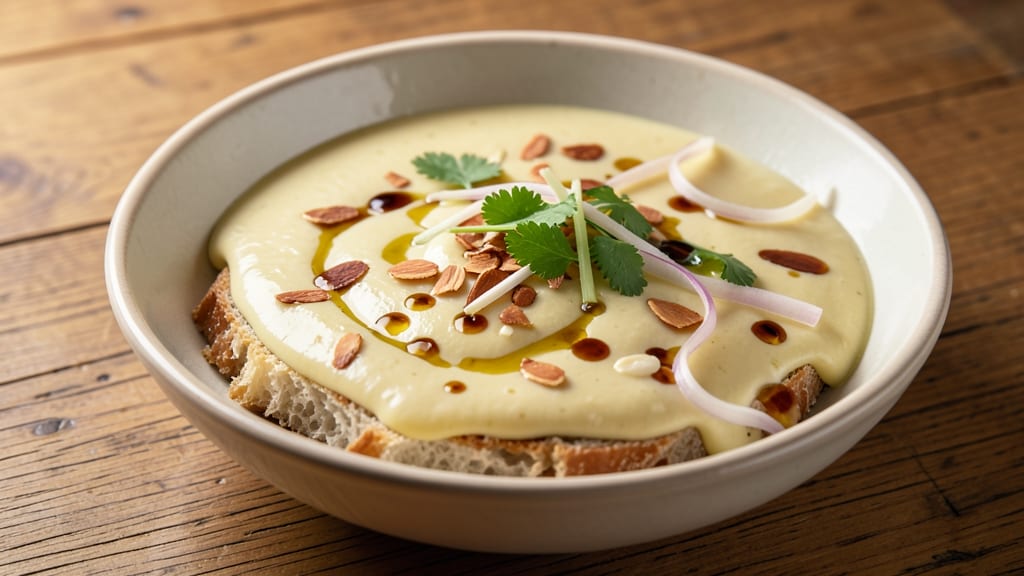
This ajo blanco sauce recipe transforms humble ingredients into a velvety, chilled masterpiece that bridges Spanish tradition and modern versatility. ✨ The secret lies in blending almonds, garlic, and stale bread into a silky emulsion—no heavy cream needed—that delivers both richness and refreshing brightness.
Perfect for drizzling over salmorejo or serving as a sophisticated dip, this sauce proves cold dishes can be just as impressive as their hot counterparts.
What sets ajo blanco apart is its delicate balance of textures and flavors: the nutty depth of almonds, the sharp punch of garlic, and the subtle tang of vinegar create a sauce that's both comforting and complex.
The chilling process allows flavors to meld beautifully, resulting in a velvety consistency that coats every bite or spoonful. Unlike traditional creamy sauces, this one stays light yet satisfying, making it ideal for warm weather or elegant gatherings.
The preparation is straightforward but requires attention to detail—blending the ingredients until completely smooth is key to achieving that signature silky texture. Once chilled, the sauce develops even more depth, becoming the perfect complement to grilled vegetables, crusty bread, or as a base for chilled soups.
Its versatility makes it a staple in any kitchen, offering restaurant-quality results with minimal effort.
Whether you're serving it as a refreshing starter or using it to elevate simple dishes, ajo blanco delivers an experience that feels both nostalgic and innovative.
The combination of almonds, garlic, and vinegar creates a flavor profile that's impossible to resist, proving that sometimes the most elegant dishes come from the simplest ingredients. Let's create this chilled masterpiece together.
Ingredients for ajo blanco sauce
Eight essential ingredients blend into velvety ajo blanco perfection—no heavy cream needed.
| Ingredient | Amount | Notes |
|---|---|---|
| Raw Almonds 🥜 | ¾ cup | Unsalted, toasted for nutty depth |
| Garlic Cloves 🧄 | 6 whole | Peeled, roasted for mellow sweetness |
| Stale Bread 🍞 | ½ cup | Crusts removed, cubed |
| Extra-Virgin Olive Oil 🫒 | 1 ¼ cups | High-quality, fruity variety |
| Fresh Ginger Root 🌿 | 1 ½ tbsp | Grated, for subtle zing |
| Sherry Vinegar 🍷 | ½ cup | Dry, for authentic tang |
| Salt 🧂 | 1 tsp | Diamond Crystal preferred |
| Ice Water ❄️ | ½ cup | For emulsification |
The almonds and garlic are the sauce's soul. Whole almonds from Trader Joe's toast best—skip pre-ground, which oxidizes fast. For garlic, Spanish roasted cloves from the international aisle add natural sweetness. Stale bread (yes, use the ends from your loaf) absorbs excess moisture while adding subtle sweetness. The extra-virgin olive oil should be fruity enough to taste—California Olive Ranch or Colavita are reliable choices. Fresh ginger is non-negotiable here; dried lacks the bright zing that balances the richness.
No sherry vinegar? White wine vinegar or apple cider vinegar work in a pinch, though the flavor profile shifts slightly. Running out of almonds? Cashews or macadamias blend smoothly, though texture differs. For a nut-free version, silken tofu or avocado can replace almonds (adjust liquid accordingly). The ice water is critical—it helps emulsify the sauce while keeping it light. If your blend looks curdled, add another 1 tbsp of ice water and pulse again. The bread should be stale but not moldy; freeze crusts for 24 hours to dry them out if needed.
This sauce develops flavor as it chills, so plan ahead. Store in an airtight container in the fridge for up to 5 days, though it's best within 24 hours. The texture may thicken slightly after chilling—simply whisk with a splash of ice water to restore silkiness. For parties, divide into small jars; the sauce keeps beautifully for 3 months frozen. Garnish with a drizzle of olive oil and a sprinkle of toasted almonds just before serving to elevate presentation.
Why You'll Love This Recipe
- Pantry Magic: I swear by this sauce because it turns scraps into gold. That stale bread? Perfect for soaking up the garlic and almond milk. No waste, just flavor—no shopping list needed.
- Ginger-Garlic Punch: The moment I added fresh ginger to the almond base, everything changed. It’s like a creamy, nutty hug with a kick—smooth enough for seafood, bold enough to stand up to grilled meats.
- Weeknight Workhorse: This sauce is my secret weapon for busy evenings. Toss it with roasted veggies, drizzle over rice, or slather it on toast—it’s the one thing I always have on hand (and always regret not making more of).
- Budget-Friendly Luxury: Between us, this costs pennies but tastes like a fancy restaurant dish. Raw almonds and stale bread stretch into a rich sauce that feeds four for under five bucks—no compromises, just smart cooking.
Step-by-step instructions for ajo blanco sauce
Transform simple ingredients into a velvety, chilled Andalusian masterpiece with this authentic method.
🔥 Step 1: Toast Almonds and Roast Garlic
Preheat your oven to 350°F. Spread the 0.75 cup raw almonds on a baking sheet and toast for 8-10 minutes until they turn a light golden color and release their nutty aroma. This toasting enhances their flavor and prevents bitterness.
While the almonds toast, wrap the 6 whole garlic cloves tightly in aluminum foil and roast them alongside the almonds. The foil traps the heat, creating perfectly mellow, sweet garlic cloves. After 8-10 minutes, remove from the oven and let cool slightly before peeling. You'll see the skins slide off easily once cooled.
👨🍳 Step 2: Create the Base with Bread and Olive Oil
In a food processor, combine the toasted almonds, roasted garlic cloves, 0.5 cup stale bread (cubed and crusts removed), and 1.5 tbsp grated fresh ginger root. Pulse until you achieve a fine, crumbly texture—this ensures a smooth sauce without any gritty bits. The stale bread acts as a natural thickener while absorbing excess moisture.
With the processor running, slowly drizzle in the 1.25 cups extra-virgin olive oil. Process continuously until the mixture becomes a thick, creamy paste. This emulsification step is crucial—it creates the sauce's signature velvety texture. Scrape down the sides as needed to ensure even blending.
🥘 Step 3: Incorporate Vinegar and Salt
Transfer the almond-garlic mixture to a medium bowl. Stir in the 0.5 cup sherry vinegar and 1 tsp salt until fully combined. The vinegar adds the signature tang that balances the richness, while the salt enhances all the flavors. At this stage, the mixture will look thick and almost grainy.
Here's the thing—don't rush this step. Let the mixture sit for 5 minutes while you prepare the next component. This resting period allows the flavors to meld and the texture to begin smoothing out naturally. The vinegar will start to break down the bread crumbs slightly, creating a more cohesive base.
⏰ Step 4: Emulsify with Ice Water
Gradually add the 0.5 cup ice water to the bowl while whisking vigorously. The ice water serves two purposes: it thins the mixture to the perfect consistency and prevents the sauce from curdling. You're looking for a smooth, creamy texture—almost like a thick mayonnaise—without any lumps.
If the sauce still appears too thick after adding all the water, you can thin it further with an additional 1-2 tablespoons of ice water. Conversely, if it's too thin, let it sit for 10 minutes in the refrigerator to thicken slightly. The sauce should coat the back of a spoon but still flow smoothly when poured.
🍽️ Step 5: Chill and Serve
Transfer the ajo blanco to a serving bowl and refrigerate for at least 1 hour before serving. Chilling allows the flavors to fully develop and the texture to set properly. The sauce should be completely smooth and velvety, with no visible separation.
Serve the ajo blanco chilled, drizzled with a bit more extra-virgin olive oil if desired. It's perfect as a refreshing starter, a dipping sauce for grilled seafood, or a cooling accompaniment to tapas. The contrast between the rich, creamy texture and the bright garlic-ginger flavor makes it a standout dish in any Spanish-inspired meal.
Pro Tips For Making Ajo Blanco Sauce
- Toast the almonds low and slow: I learned this the hard way—blasting them on high turns them bitter fast. Instead, spread them on a dry pan over medium heat and stir every 30 seconds until they’re just golden, not brown. The goal is nutty aroma, not char.
- Peel garlic cloves first: No one wants to fish out burnt skins later. Peel all your garlic before cooking—it’s faster than you think, and you’ll avoid that one clove that sticks to the pan like glue. Trust me, your sauce won’t taste like regret.
- Soak bread in oil, not water: Dumping bread straight into liquid makes a gluey mess. Tear it into chunks, toss with olive oil first, then add the garlic and almonds. The oil coats the bread, keeping the sauce thick and rich instead of turning it into a sad, watery paste.
- Blend in stages, starting rough: Dump everything in the blender at once and it’ll seize up. Pulse the almonds and garlic first until they’re a coarse paste, then add the bread and oil in batches. This keeps the motor happy and gives you control over the texture—smooth or rustic, your call.
Dietary considerations for this dish
Gluten-Free Adaptation
Traditional ajo blanco uses bread as a thickener, but gluten-free cooks can easily adapt this recipe. Replace the 0.5 cup stale bread with 0.5 cup gluten-free breadcrumbs or 1 cup cooked white rice, both of which blend smoothly.
For extra richness, add 1 tbsp neutral oil (like avocado) to help emulsify the sauce. The texture will still be velvety, though slightly lighter than the original. 🌱
Nut-Free Version
Almonds are the heart of ajo blanco, but you can create a nut-free version using 1 cup silken tofu or 1 large avocado instead. For tofu, drain and pat it dry before blending with the other ingredients.
Avocado adds creaminess but requires balancing with an extra 0.25 cup ice water to maintain the right consistency. The flavor will be slightly different but still delightful. 🥑
Dairy-Free & Vegan
Ajo blanco is naturally dairy-free, but the vegan adaptation focuses on maximizing the almonds' creaminess. Use 1 cup extra almonds (1 cup total) and reduce the olive oil to 1 cup to prevent heaviness.
For extra tang, add 1 tsp lemon juice alongside the sherry vinegar. This version works perfectly as a dip for vegan tapas or drizzled over chilled gazpacho. ✨
Low-Fat Option
To reduce fat while keeping the sauce rich, use 0.5 cup almond flour instead of whole almonds and cut the olive oil to 0.75 cup. Add 1 tbsp tahini for extra depth without extra fat.
The texture will be slightly lighter but still luxurious. This version pairs beautifully with grilled vegetables or as a light salad dressing. 💚
Allergy-Friendly Notes
For those with multiple allergies, ajo blanco can be adapted to avoid common triggers. Use sunflower seed butter (1/4 cup) instead of almonds, and ensure your bread is both gluten-free and nut-free.
Check sherry vinegar labels for sulfite allergies—some brands use added preservatives. Always test small batches first, as ingredient swaps can affect texture. 🛡️
Nutrition facts
Frequently asked questions
Can I make ajo blanco without a food processor?
Yes, but with extra effort! Blend the toasted almonds and roasted garlic into a fine powder using a mortar and pestle, then mix with bread crumbs by hand. For the oil, whisk it in gradually while blending with a hand mixer or whisking vigorously. The texture will be slightly less smooth but still delicious. Patience is key—this method takes about 15-20 minutes of active mixing!
Why does my ajo blanco look curdled or separated?
This usually happens when oil and water aren't properly emulsified. To fix it, whisk in 1 tbsp ice water at a time until smooth. For prevention, add ingredients slowly while blending continuously. The ice water helps stabilize the emulsion—never skip this step! If it still separates, strain through a fine-mesh sieve for a silky result.
How long can I store ajo blanco in the fridge?
This sauce keeps beautifully for up to 5 days in an airtight container. The flavors actually improve after 24 hours of chilling! For longer storage, freeze in small portions for up to 3 months. Thaw overnight in the fridge—never at room temperature—to preserve texture. The sauce may thicken slightly after chilling; whisk with a splash of ice water to restore creaminess.
What's the best way to serve ajo blanco?
Serve it chilled as a refreshing starter, drizzled with extra olive oil and sprinkled with toasted almonds. It pairs perfectly with grilled seafood, crusty bread, or as a dip for roasted vegetables. For a Spanish touch, serve with crispy fried cod or alongside salmorejo. The cool, creamy texture contrasts beautifully with warm dishes—ideal for summer meals or tapas nights!
Can I adjust the spice level in ajo blanco?
For extra heat, add ½ tsp smoked paprika or a pinch of cayenne during blending. For a milder version, reduce the garlic to 4 cloves and omit the ginger. The sauce's natural richness balances flavors well—start with small adjustments and taste as you go. Remember, the vinegar adds tanginess, so don't overdo the spices or they'll compete with the garlic's sharpness.