
Sauces & Condiments
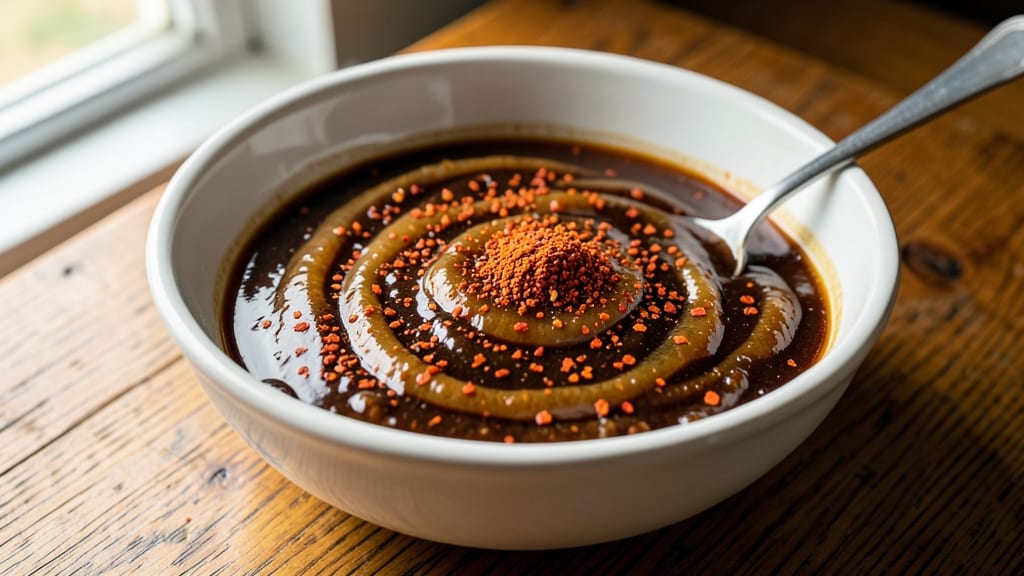
Aaron Franklin's brisket BBQ sauce delivers that signature smoky-sweet heat that makes every bite unforgettable. The key lies in balancing caramelized molasses with vinegar's tang and a whisper of cayenne for controlled fire.
I've spent years perfecting this recipe to capture the essence of Franklin's Texas-style sauce—rich, complex, and impossible to resist.
What sets this sauce apart is the slow reduction process that intensifies the flavors without overpowering them. You'll start with a simple base of vinegar, molasses, and spices, then let it simmer until it thickens to that perfect glaze-like consistency.
The secret weapon? A touch of brown sugar to deepen the caramel notes while keeping the sauce from becoming too sweet.
By the time you're done, you'll have a sauce that clings to brisket like it belongs there—glossy, aromatic, and packed with layers of smoky, sweet, and slightly spicy flavors. This isn't just a sauce; it's the finishing touch that transforms good BBQ into legendary BBQ. Ready to make it?
The best part? This sauce keeps beautifully in the fridge for up to two weeks, so you can make a big batch and use it all season long. Whether you're slathering it on brisket, ribs, or even grilled chicken, this recipe will elevate your cookouts to competition-level quality.
Ingredients for aaron franklin brisket bbq sauce
Six ingredients. One slow simmer. That signature Franklin smoky-sweet heat in your saucepan.
| Ingredient | Amount | Notes |
|---|---|---|
| Apple Cider Vinegar 🍎 | 1 ½ cups | Raw, unfiltered preferred for depth |
| Unsalted Molasses 🍯 | 1 cup | Blackstrap for authentic Franklin flavor |
| Light Brown Sugar 🍚 | ½ cup | Packed, not scooped |
| Granulated Sugar 🍚 | ¼ cup | For balance, not sweetness |
| Smoked Paprika 🌶️ | 2 tbsp | Honduran or Spanish for authentic smoke |
| Ground Cayenne Pepper 🔥 | 1 ½ tsp | Adjust for heat preference |
| Ground Black Pepper 🌶️ | 1 tsp | Freshly cracked for depth |
| Ground Cinnamon 🌿 | ½ tsp | Ceylon preferred for subtle warmth |
| Salt 🧂 | 1 ½ tsp | Kosher or sea salt |
| Garlic Powder 🧄 | 1 tsp | Freshly ground preferred |
The vinegar is the backbone—Bragg or Texas Pete if you're near a store, but any raw apple cider vinegar works. Molasses is non-negotiable here; blackstrap from a specialty store or bulk bin at Whole Foods gives that deep, almost bitter edge Franklin loves. I always grab mine from Penzeys—it's worth the extra coin for that authentic Texas brisket vibe. The smoked paprika? Honduran if you can find it, but Spanish smoked works too. Test it: if it smells like campfire smoke, you're golden.
No molasses? Barbados or dark corn syrup in a pinch, but it won't be the same. Short on cayenne? Red pepper flakes at half the amount—just know it'll be milder. The sugars are key: brown sugar for caramel depth, granulated to keep it from getting cloying. Want more smoke? Add 1/2 tsp liquid smoke at the end. Fresh garlic powder? Toast it in a dry pan for 30 seconds first—game changer. And if you're worried about the sauce being too sweet, trust the process: the vinegar and spices will balance it perfectly.
This sauce gets better with time—2-3 weeks in the fridge if you can wait. Store it in a glass jar with a tight seal to keep those flavors locked in. Double the batch if you can; you'll want it. Freezes beautifully for up to 6 months, though it's best used fresh. I always make a big batch in the fall—brisket season calls for it. The first time you slather this on a perfectly smoked brisket? You'll understand why Franklin's sauce is legendary.
Why You'll Love This Recipe
- Pantry Magic: I swear by this sauce because it uses stuff I already have—no fancy shopping trips. That molasses and apple cider vinegar combo? Deep, smoky-sweet perfection without a single specialty trip to the store.
- Smoke Bomb Flavor: The smoked paprika and brown sugar caramelize into this rich, tangy-sweet glaze that sticks to brisket like a dream. It’s the kind of flavor that makes people pause mid-bite and ask, "What’s in this?"—then demand the recipe.
- Game Day Hero: This sauce is my go-to for tailgates, BBQ cook-offs, or lazy Sundays because it’s bold enough for a crowd but simple enough to throw together while the smoker’s doing its thing. (Between us, it’s also my secret weapon for turning grocery-store brisket into a showstopper.)
- Budget Stretch: A single batch coats a whole brisket with leftovers that taste just as good on sandwiches or drizzled over baked beans. Honestly, I’ve made this for under $5 and still felt like I fed the whole neighborhood—no guilt, all flavor.
Step-by-step instructions for Aaron Franklin's brisket BBQ sauce
Here's how to blend Franklin's signature flavors into a sauce that's bold, balanced, and unforgettable.
Combine Wet Ingredients in a Heavy Saucepan
Start by placing the 1.5 cups apple cider vinegar in a heavy-bottomed saucepan over medium-high heat. I like to use a saucepan with sloped sides—it helps prevent spattering when the vinegar heats up. Bring the vinegar to a gentle simmer, then reduce the heat to medium-low so it maintains a steady bubble without boiling over.
Once the vinegar is simmering, add the 1 cup unsalted molasses all at once. Stir continuously for 2-3 minutes until the mixture thickens slightly and the molasses is fully incorporated. You'll notice the sauce darken and develop a rich, almost syrupy consistency. This is where the deep, smoky-sweet foundation forms—don't rush this step. The molasses needs time to meld with the vinegar's tang.
Next, whisk in the 0.5 cup light brown sugar and 0.25 cup granulated sugar. Stir for another 1-2 minutes until the sugars dissolve completely. The sauce should start to coat the back of a spoon, indicating it's beginning to thicken. If you see any undissolved sugar, keep stirring gently—this ensures a smooth, velvety texture in the final sauce.
Add Spices and Build Complexity
With the sugars fully incorporated, it's time to add the spices. Reduce the heat to low to prevent the sauce from boiling over as you introduce the dry ingredients. First, sprinkle in the 2 tbsp smoked paprika, stirring constantly to distribute it evenly. The sauce will darken further and develop a subtle smokiness—this is the signature Franklin touch.
Next, add the 1.5 tsp ground cayenne pepper, 1 tsp ground black pepper, 0.5 tsp ground cinnamon, 1.5 tsp salt, and 1 tsp garlic powder. Stir vigorously for 1-2 minutes to ensure the spices dissolve and infuse the sauce. You'll smell the warmth of the cinnamon, the sharp kick of the cayenne, and the earthy depth of the black pepper. Taste the sauce at this stage—it should be bold but not overwhelmingly spicy. If you prefer more heat, add a pinch more cayenne later.
Here's the thing—don't walk away. The spices need time to bloom and mingle with the wet ingredients. Let the sauce simmer gently for 5-7 minutes, stirring occasionally, until it thickens into a glossy, syrupy consistency. You're looking for a sauce that coats the spoon but isn't so thick it's paste-like. If it thickens too quickly, add 1-2 tablespoons of water to loosen it.
Simmer and Reduce to Perfection
Once the spices are fully incorporated and the sauce has thickened, increase the heat back to medium-low and let it simmer uncovered for 20-25 minutes. This is where the magic happens—the sauce will reduce and concentrate, deepening its flavor and achieving that signature Franklin stickiness. Stir occasionally to prevent it from sticking to the bottom of the pan.
You'll know it's ready when the sauce coats the back of a spoon and has a glossy, almost lacquer-like finish. It should smell rich, smoky, and slightly sweet with a hint of spice. If you're unsure, taste it—it should balance sweet, smoky, and spicy notes without any single flavor overpowering the others. The sauce should be thick enough to cling to brisket or ribs but still flow smoothly.
Remove the sauce from heat and let it cool slightly. As it cools, it will thicken further—this is normal. If you plan to use it immediately, you can thin it slightly with a splash of water or apple cider vinegar to reach your desired consistency. For best results, let it cool completely, then transfer it to a clean jar. This sauce keeps well in the refrigerator for up to 2 weeks or can be frozen for 3 months. The flavors will only deepen over time.
Pro Tips For Making Aaron Franklin Brisket Bbq Sauce
- Whisk Like You Mean It: Aaron Franklin’s sauce isn’t just sweet—it’s balanced, and that starts with dissolving the sugars properly. Simmer the vinegar, molasses, and sugars together for at least 10 minutes on medium heat, stirring constantly. I used to rush this, and the sauce would clump or taste grainy. (Yes, even if you’re impatient like me.)
- Use Real Molasses, Not Syrup: Skip the "molasses-flavored" syrup—it’s thinner and lacks depth. Unsalted molasses gives that rich, caramel-like backbone Franklin’s sauce needs. If you can’t find it, reduce blackstrap molasses by half with water first, but the texture won’t be the same. Trust me, your sauce will taste like it’s missing something if you cut corners here.
- Simmer, Don’t Boil: Once you add the smoked paprika and other spices, keep the heat at a gentle simmer. Boiling burns the paprika, turning it bitter and overpowering the sauce’s sweet-tart balance. A slow simmer (3–5 minutes) lets the flavors meld without scorching. —I learned this the hard way after a batch tasted like a campfire mishap.
- Strain for Smoothness: Franklin’s sauce is velvety, not gritty. After simmering, strain it through a fine-mesh sieve to remove any undissolved sugar crystals or paprika flecks. I skip this sometimes, but the difference in texture—and how it coats the brisket—is noticeable. (Your future self will thank you.)
Dietary considerations for this recipe
Gluten-Free Adaptation
This sauce is naturally gluten-free, but always double-check your ingredients—molasses and vinegar can sometimes contain traces. I use blackstrap molasses from Penzeys and Bragg apple cider vinegar, both certified gluten-free.
The spices and sugars are also safe, so you won’t need substitutions. Just be mindful if you’re highly sensitive to cross-contamination. 🌾
Low-Sugar Version
For a lower-sugar option, reduce the brown sugar to 0.25 cup and swap the granulated sugar for 0.25 cup erythritol or monk fruit sweetener. The sauce will still develop depth, but with less sweetness.
I’ve found that cutting the molasses to 0.75 cup helps balance the flavors without sacrificing smokiness. Taste as you go—you might need an extra splash of vinegar to brighten the profile.
Spicy-Free Adjustment
Skip the cayenne entirely for a mild version, or replace it with 1 tsp ground coriander for warmth without heat. The black pepper and smoked paprika will still deliver that signature Franklin smokiness. If you want a hint of spice, use ½ tsp sweet paprika instead—it adds color without kick.
This adjustment keeps the sauce approachable for kids or sensitive palates while maintaining its soulful flavor. 🌶️
Vegan-Friendly Tweaks
This sauce is already vegan, but if you’re using it on plant-based meats, I recommend adding 1 tbsp soy sauce or coconut aminos to deepen the umami. The extra saltiness helps the sauce cling better to tofu or seitan.
For extra richness, stir in 1 tsp miso paste at the end of cooking. The fermentation in miso adds complexity that plant-based proteins crave. 🌱
Allergy-Friendly Notes
Watch for hidden allergens in your molasses and vinegar—some brands process in facilities with nuts or soy. If you’re allergic to cinnamon, omit it or use ½ tsp ground allspice for warmth.
For nut-free kitchens, ensure your smoked paprika is processed in a nut-free facility. Always label your sauce clearly if sharing with others. A little caution goes a long way! 🚨
Keto Considerations
To make this keto-friendly, replace the sugars with 0.25 cup granulated erythritol or monk fruit sweetener and reduce the molasses to 0.5 cup. The sauce will still caramelize beautifully, though it’ll be less sweet.
For extra depth, add 1 tsp liquid smoke at the end. This version keeps the smoky-sweet balance while fitting into low-carb diets. Just remember—keto or not, this sauce is still a flavor powerhouse! 💪
Nutrition facts
Frequently asked questions
What makes this sauce different from store-bought BBQ sauces?
This recipe captures Aaron Franklin's signature balance of smoky, sweet, and slightly spicy flavors using real ingredients like blackstrap molasses and smoked paprika instead of artificial additives. The slow reduction process creates a thicker, stickier consistency that clings perfectly to brisket, unlike many commercial sauces that rely on thickeners like corn syrup or guar gum.
Can I use this sauce on foods other than brisket?
While it's perfect for brisket, this sauce works beautifully on ribs, pulled pork, grilled chicken, or even baked beans. For seafood, use it sparingly on shrimp or salmon—the smoky-sweet profile pairs well with grilled fish too. Just remember, the sauce's bold flavors can overpower delicate proteins, so adjust quantity based on the dish.
How do I adjust the heat level if cayenne is too spicy?
Start by reducing the cayenne to 1 teaspoon instead of 1.5. For a milder sauce, replace it with ½ teaspoon sweet paprika or 1 teaspoon ground coriander for warmth without heat. If you want to keep some kick but mellow it, add 1 extra tablespoon of vinegar—it helps balance the spice. Taste as you go!
Why does my sauce turn out too thin or too thick?
If your sauce is too thin, simmer it uncovered for 5-10 more minutes to reduce the liquid. For thickening, stir in 1 teaspoon cornstarch mixed with 1 tablespoon cold water while simmering. If it's too thick, thin it with 1 tablespoon apple cider vinegar or water. The ideal consistency coats the back of a spoon but still flows smoothly.
How long should I let the sauce rest before using it?
Let the sauce cool completely to room temperature, then refrigerate for at least 1 hour before using. This allows the flavors to meld and thicken naturally. For best results, make it a day ahead—resting 24 hours deepens the smoky-sweet profile. The sauce will thicken further in the fridge, so thin it slightly with vinegar if needed before applying.